

The best home insulation products solve very different problems, and that’s the first thing any buyer needs to understand before spending money. Owens Corning R-19 Fiberglass Batts earn my top overall spot because they deliver the highest R-value per dollar for the spaces where most homes lose the most heat — walls and attics. For sealing the small leaks that batts can’t reach, Loctite Tite Foam Gaps & Cracks is the standout companion pick, while EcoFoil Single Bubble Insulation offers a lightweight, DIY-friendly radiant barrier alternative for garages, crawlspaces, and windows. The core tradeoff in this category is between bulk insulation (which slows conductive heat) and radiant barriers and sealers (which block heat transfer and air leaks) — most homes need some of both, not one or the other. Keep reading for the full breakdown of all 13 products, including which ones are worth the money and which jobs each one is actually built for.

Get business pricing on tools and workshop supplies
- Business-only prices and quantity discounts
- Tax-exempt purchasing
- Multiple users, one account, clear invoices
Complete the kit


Key Takeaways
- Fiberglass batts (Owens Corning R-19) still deliver the best R-value per dollar for large wall and attic cavities — no radiant barrier product in this lineup replaces them for primary insulation.
- Several products in this roundup are nearly identical in function (EcoFoil, Reflectix, DGSL, LSGCQ bubble insulation); the real differences come down to roll size, foil reflectivity, and fire ratings, so buying on coverage per dollar matters more than brand.
- The cheap fixes — outlet sealers, window film, and an attic stair cover — often pay for themselves fastest because they attack the leakiest square inches in a house rather than the biggest ones.
- The two Loctite spray foams are not interchangeable: Gaps & Cracks is formulated for narrow penetrations around windows and pipes, while Big Gaps handles oversized voids where low-expansion foam would sag.
- US Energy Products sells perforated and non-perforated versions of the same radiant barrier — the non-perforated foil doubles as a vapor barrier, which is wrong for humid climates where attics need to breathe.
| US Energy Products Commercial Grade Solid White Foil Non-Perforated Radiant Barrier, 1000 sq ft (4ft x 250ft) |  | Best Heavy-Duty Attic Radiant Barrier | Coverage: 1,000 sq ft (4 ft x 250 ft roll) | Material: 5-layer reflective foil with woven polyethylene scrim | Reflectivity: 97% radiant heat, double-sided 99.9% pure aluminum | VIEW LATEST PRICE | See Our Full Breakdown |
| Wakhow Outlet Insulators Draft Sealers, 30 Pack EVA Foam Electrical Outlet Insulation Pads |  | Best Budget Draft-Sealing Starter Fix | Quantity: 30 pre-cut pads per pack | Material: EVA foam (Ethylene Vinyl Acetate) | Pad Dimensions: 2.48 in W x 4.21 in H (63mm x 107mm) | VIEW LATEST PRICE | See Our Full Breakdown |
| Loctite Tite Foam Gaps & Cracks Spray Foam Sealant, 12 fl oz |  | Best Gap and Crack Sealant | Size: 12 fl oz can (1 pack) | Type: Polyurethane expanding foam sealant | Max Gap Size: Up to 1 inch | VIEW LATEST PRICE | See Our Full Breakdown |
| Owens Corning R-19 Unfaced Fiberglass Insulation Batt, 15 in x 93 in (77.5 sq ft, 8 Batt Bag) |  | Best Wall and Attic Batt Insulation | Brand / Model: Owens Corning E55 | R-Value: R-19 | Material: Fiberglass (unfaced) | VIEW LATEST PRICE | See Our Full Breakdown |
| US Energy Products Perforated Green Energy Radiant Barrier, 1000 sq ft (4ft x 250ft) |  | Best Breathable Radiant Barrier for Hot Climates | Coverage: 1,000 sq ft (4 ft x 250 ft roll) | Reflectivity: 99.7% double-sided reflective value | Design: Perforated for breathability | VIEW LATEST PRICE | See Our Full Breakdown |
| US Energy Products R-8 HVAC Duct Wrap Insulation, 2FT x 25FT (50 SQFT) |  | Best for HVAC Ductwork | Size: 2ft x 25ft (50 sq ft) | R-Value: R-8 | Thickness: 1/4 inch (5mm) | VIEW LATEST PRICE | See Our Full Breakdown |
| DGSL Attic Door Insulation Cover, Attic Tent 25 x 54 x 11 in | 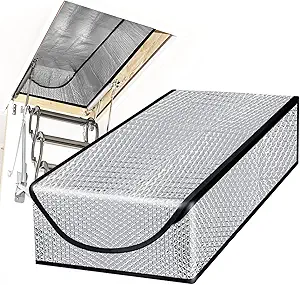 | Best for Attic Hatch Drafts | Fits Openings Up To: 25 x 54 x 11 inches | R-Value: 14.5 (claimed) | Radiant Heat Reflection: 97% | VIEW LATEST PRICE | See Our Full Breakdown |
| Loctite Tite Foam Big Gaps Spray Foam Sealant, 12 fl oz |  | Best for Sealing Big Gaps | Volume: 12 fl oz | Pack Size: 1 can | Material: Polyurethane expanding foam | VIEW LATEST PRICE | See Our Full Breakdown |
| DGSL Double Reflective Bubble Foil Insulation Foam, 23.6 in X 10 FT |  | Best Budget Spot-Treatment Roll | Roll Size: 23.6 in x 10 ft | Material: Double aluminum foil with bubble core | Weight: 200 g / approx. 10.76 sq ft per listed sheet | VIEW LATEST PRICE | See Our Full Breakdown |
| Duck MAX Strength Window Insulation Kit, 62 In. x 210 In. |  | Best for Drafty Windows | Film Roll Size: 62 in x 210 in | Tape Roll: 0.5 in x 84 ft | Coverage: Up to 5 standard 3′ x 5′ windows | VIEW LATEST PRICE | See Our Full Breakdown |
| EcoFoil Single Bubble Insulation Roll 48″ x 125′ (500 sq. ft.) |  | Best for Large-Scale Radiant Barrier Projects | Coverage: 500 sq. ft. | Roll Dimensions: 48 in. x 125 ft. | Thickness: 3.175mm (approx. 1/8 in.) | VIEW LATEST PRICE | See Our Full Breakdown |
| Reflectix BP24025 24-Inch by 25-Feet Bubble Pack Insulation |  | Best Small-Roll Premium Bubble Insulation | Roll Dimensions: 24 in. x 25 ft. | Coverage: 50 sq. ft. (7,200 sq. in.) | Thickness: 5/16 in. | VIEW LATEST PRICE | See Our Full Breakdown |
| LSGCQ Reflective Insulation Roll, 23.6″ x 10 ft Double Bubble Sheet |  | Best Budget Pick for Windows and RVs | Roll Dimensions: 23.6 in. x 10 ft. (120 in.) | Construction: Double reflective aluminum foil with bubble core | Included Accessories: Double-sided tape | VIEW LATEST PRICE | See Our Full Breakdown |
| home insulation product | Material | Coverage |
|---|---|---|
| US Energy Products Commercial | 5-layer reflective foil with woven polyethylene scrim | 1,000 sq ft (4 ft x 250 ft roll) |
| Wakhow Outlet Insulators Draft | EVA foam (Ethylene Vinyl Acetate) | — |
| Loctite Tite Foam Gaps & Crack | — | — |
| Owens Corning R-19 Unfaced Fib | Fiberglass (unfaced) | 77.5 sq ft per bag (8 batts, 9.69 sq ft each) |
| US Energy Products Perforated | Tear-resistant scrim-reinforced reflective foil, 70 gram | 1,000 sq ft (4 ft x 250 ft roll) |
| US Energy Products R-8 HVAC Du | — | — |
| DGSL Attic Door Insulation Cov | 2 layers of aluminum with bubble insulation | 9.38 sq ft |
| Loctite Tite Foam Big Gaps Spr | Polyurethane expanding foam | — |
| DGSL Double Reflective Bubble | Double aluminum foil with bubble core | — |
| Duck MAX Strength Window Insul | — | Up to 5 standard 3′ x 5′ windows |
| EcoFoil Single Bubble Insulati | — | 500 sq. ft. |
| Reflectix BP24025 24-Inch by 2 | Aluminum foil / polyethylene | 50 sq. ft. (7,200 sq. in.) |
| LSGCQ Reflective Insulation Ro | Aluminum foil / bubble wrap | — |
More Details on Our Top Picks
US Energy Products Commercial Grade Solid White Foil Non-Perforated Radiant Barrier, 1000 sq ft (4ft x 250ft)
This roll stands out for large-scale radiant heat control, thanks to its 5-layer construction with woven polyethylene scrim that is genuinely hard to tear by hand — a step up in durability from single-layer foil products like the US Energy Products perforated green barrier. The double-sided 99.9% aluminum reflects up to 97% of radiant heat, which matters most in hot-climate attics where roof-driven heat gain dominates cooling loads. What sets this version apart is its non-perforated, 0.0 perm vapor-impermeable design: it doubles as a vapor barrier, which is exactly what you want in cold, humid-winter climates where blocking moisture migration into the attic is the priority. The tradeoff is real, though — in humid southern climates, a non-breathable barrier can trap moisture if moisture management isn’t handled separately. At 1,000 square feet, this is a big commitment best matched to whole-house projects rather than spot fixes.
Pros:- 5-layer scrim-reinforced construction that resists tearing during rough attic installation
- Blocks up to 97% of radiant heat from both sides for summer and winter benefit
- Non-perforated 0.0 perm rating doubles as a full vapor barrier
- Class 1 / Class A fire rating meets ASTM E84 building code requirements
Cons:- Vapor-impermeable design risks trapped moisture in humid climates without separate moisture management
- Massive 1,000 sq ft roll is unwieldy and overkill for small repair or spot-sealing jobs
Best for: Homeowners in cold or mixed climates tackling a whole-attic or house-wrap project who want radiant reflection and vapor blocking in one tear-proof material
Not ideal for: DIYers in hot, humid southern climates where a perforated, breathable barrier like the green US Energy roll is safer against trapped condensation
- Coverage:1,000 sq ft (4 ft x 250 ft roll)
- Material:5-layer reflective foil with woven polyethylene scrim
- Reflectivity:97% radiant heat, double-sided 99.9% pure aluminum
- Vapor Permeability:0.0 perms (non-perforated, acts as vapor barrier)
- Thickness:8 mils
- Recommended Use:Attics, sheds, warehouses, house wrap
Our verdict“This is the pick for a serious whole-attic or house-wrap project where tear resistance and combined vapor blocking justify handling a 250-foot roll.”
Wakhow Outlet Insulators Draft Sealers, 30 Pack EVA Foam Electrical Outlet Insulation Pads
Not every insulation win requires a 250-foot roll. These pre-cut EVA foam gaskets target one of the most overlooked sources of winter drafts: the gaps behind outlet and switch cover plates. Compared with the Loctite Tite Foam sealant, which handles large structural gaps up to an inch, these pads attack tiny perimeter leaks — the kind that add up across a whole house but are invisible one outlet at a time. Installation takes minutes per plate: shut off the power, match the shape, trim, and reattach the cover. The 30-count box is sized to cover a typical single-family home’s outlets and switches. The honest limitation is that foam this thin only seals the cover-plate interface — if cold air is pouring through the electrical box itself, you’ll still need spray foam or caulking behind it. Treat this as a complement to bigger insulation work, not a substitute for it.
Pros:- Tool-free installation under existing cover plates in minutes
- Pre-cut shapes fit toggle, duplex, and rocker plate styles
- 30-count pack covers most outlets and switches in an average home
- Safe EVA foam suitable for any room including bedrooms and nurseries
Cons:- Thin foam cannot seal larger gaps around damaged or misaligned electrical boxes
- Non-standard or oversized plates require trimming, which can leave imperfect edges
Best for: Renters and first-time DIYers who want a low-cost, tool-free draft fix they can complete room by room in an afternoon
Not ideal for: Anyone expecting meaningful whole-wall R-value gains — these seal small perimeter drafts only, not structural air leakage
- Quantity:30 pre-cut pads per pack
- Material:EVA foam (Ethylene Vinyl Acetate)
- Pad Dimensions:2.48 in W x 4.21 in H (63mm x 107mm)
- Compatible Plates:Toggle, duplex, rocker, and combined wall plates
- Color:White
- Installation:Screw-in under existing cover plate
- Package Weight:0.07 kg
Our verdict“A cheap, fast first step for draft-proofing that pays off when paired with real insulation work elsewhere.”
Loctite Tite Foam Gaps & Cracks Spray Foam Sealant, 12 fl oz
Between full batts and outlet gaskets lies the middle territory of penetration gaps up to one inch — pipe penetrations, rim joists, sill plates, wire holes — and this is where Loctite Tite Foam earns its slot. Its high-density polyurethane formula with uniform cell structure insulates better than cheap low-density foams that collapse into hollow pockets, and it bonds to wood, concrete, brick, metal, and PVC without a primer. Compared with the Loctite Big Gaps sibling in this roundup, this version is the tighter, more controlled fill for smaller cracks rather than cavernous voids. The UV resistance is a genuine advantage over standard foams that degrade and turn chalky when exposed to sunlight in crawlspaces or exterior penetrations. The downsides are familiar to anyone who has used expanding foam: application is sticky and imprecise, and the cured bead usually needs trimming flush. It’s a spot tool, not a coverage product — one can covers linear feet, not square feet.
Pros:- Fills and insulates gaps up to 1 inch with a dense, uniform cell structure
- Bonds to wood, concrete, brick, stone, metal, and PVC without primer
- Withstands UV exposure and building movement for long-term durability
- Single-can format suits targeted DIY air-sealing projects
Cons:- Expanding foam is messy to apply and hard to control in tight visible spaces
- Cured excess must be trimmed, adding a second step to every application
Best for: Homeowners air-sealing rim joists, sill plates, and pipe or wire penetrations before adding insulation layers
Not ideal for: Large voids or whole-surface coverage — bigger gaps need the Big Gaps formula, and broad areas need rolls or batts instead
- Size:12 fl oz can (1 pack)
- Type:Polyurethane expanding foam sealant
- Max Gap Size:Up to 1 inch
- UV Resistance:Yes
- Bonds To:Wood, concrete, brick, stone, metal, PVC
- Primary Use:Gap and crack filling, sealing, and insulating
Our verdict“The go-to detail tool for sealing the one-inch-and-smaller gaps that batts and foil rolls can’t reach.”
Owens Corning R-19 Unfaced Fiberglass Insulation Batt, 15 in x 93 in (77.5 sq ft, 8 Batt Bag)
While the radiant barriers in this roundup reflect heat, this is the pick for true thermal mass insulation — the R-19 rating is what actually slows conductive heat loss through walls, floors, and attics in winter. At 6.5 inches thick, these batts are dimensioned for 2×6 wall framing, the standard in modern construction, and the 15-inch width matches standard stud spacing so the batts friction-fit without slumping. Compared with foil products like the US Energy Products radiant barrier, fiberglass delivers measurable year-round R-value rather than radiant-only benefit, but it demands far more installation effort and protective gear — the two categories solve different problems and many attics need both. The unfaced design is the key decision point: with no attached kraft or foil vapor retarder, your wall assembly needs separate moisture control, which makes these batts ideal for retrofit layering over existing insulation but the wrong choice for someone expecting an all-in-one product. Cutting and fitting around obstructions is easy, and the batts recover their loft quickly after unpacking.
Pros:- R-19 rating provides genuine conductive thermal resistance for all-season performance
- Sized at 6.5 inches for standard 2×6 framing with secure friction fit
- Adds meaningful sound reduction alongside thermal insulation
- Cuts easily and resists moisture absorption for reliable long-term performance
Cons:- Unfaced design requires separate vapor retarder or moisture management in the assembly
- Fiberglass demands gloves, long sleeves, and a respirator during installation
Best for: Homeowners and contractors insulating 2×6 walls, floors, or attic layers who have a separate moisture-control plan
Not ideal for: DIYers wanting a vapor barrier built in — the unfaced design requires the wall assembly to handle moisture separately
- Brand / Model:Owens Corning E55
- R-Value:R-19
- Material:Fiberglass (unfaced)
- Batt Dimensions:93 in L x 15 in W x 6.5 in thick
- Coverage:77.5 sq ft per bag (8 batts, 9.69 sq ft each)
- Facing:Unfaced — no vapor barrier
- Recommended Use:2×6 walls, floors, and attics in wood or metal framing
Our verdict“The workhorse choice for structural insulation where real R-value matters, provided your wall assembly handles moisture on its own.”
US Energy Products Perforated Green Energy Radiant Barrier, 1000 sq ft (4ft x 250ft)
This roll is the counterpart to the solid white non-perforated US Energy barrier in this lineup, and the difference between them is the single most important radiant-barrier decision you’ll make. This version is perforated for breathability, letting moisture pass through so condensation can’t build up against the foil — exactly what hot, humid climates demand. With 99.7% double-sided reflectivity, it targets the same enemy: the radiant heat pouring through your roof that can account for the majority of summer attic heat gain. Compared with bulkier options like the EcoFoil single bubble roll or Reflectix bubble insulation, this thin scrim foil installs faster, weighs less, and doesn’t add the thickness that complicates tight attic rafter spacing — though bubble products do offer a small amount of conductive insulation this lacks. It cuts with ordinary scissors, needs no protective equipment, and its weatherproof construction means zero maintenance after installation. Like all radiant barriers, it does nothing for winter conductive heat loss, so pair it with batts like the Owens Corning R-19 if you need year-round performance.
Pros:- Perforated design allows moisture to escape, preventing condensation buildup
- 99.7% double-sided reflectivity blocks the majority of radiant attic heat gain
- Tear-resistant scrim cuts with plain scissors and installs with no protective gear
- Unaffected by humidity and weather, requiring no post-installation maintenance
Cons:- Provides no meaningful R-value against conductive winter heat loss
- 1,000 sq ft roll is a large commitment for partial or small attic projects
Best for: Homeowners in hot, humid southern climates who want attic heat reduction without trapping moisture against the roof deck
Not ideal for: Cold-climate homeowners seeking winter insulation value — radiant-only performance won’t slow conductive heat loss the way fiberglass batts do
- Coverage:1,000 sq ft (4 ft x 250 ft roll)
- Reflectivity:99.7% double-sided reflective value
- Design:Perforated for breathability
- Material:Tear-resistant scrim-reinforced reflective foil, 70 gram
- Breathability:Meets ASTM 96-00 breathability standards
- Origin:Made in USA
Our verdict“The right radiant barrier where humidity rules out a solid vapor-blocking foil, ideal for cooling-focused climates.”
US Energy Products R-8 HVAC Duct Wrap Insulation, 2FT x 25FT (50 SQFT)
Most insulation in this roundup targets walls, windows, or attics, but duct wrap solves a problem the others can’t touch: conditioned air losing heat (or picking it up) as it travels through uninsulated duct runs. This roll pairs a 1/4-inch double-sided reflective foam core with an R-8 rating, which is the number to look for if you’re chasing condensation control and energy loss on metal duct. Compared with the Owens Corning R-19 fiberglass batt, this is far cleaner to work with — it’s fiber-free and non-toxic, so no gloves, mask, or itchy arms. The Class 1/A ASTM fire rating also means it passes code in spaces where DIY materials often fail inspection. The honest tradeoff is coverage: 50 square feet per roll goes fast, and wrapping a full duct system in a basement or crawlspace usually means ordering several rolls.
Pros:- Class 1/A fire rated and ASTM certified, so it satisfies code where cheaper wraps fail
- Fiber-free and non-toxic — install with a utility knife and no protective gear
- Waterproof core that inhibits condensation on cold duct surfaces
- Attaches four ways: staple, nail, glue, or spray adhesive
Cons:- Only 50 sq ft per roll, so multi-duct systems require repeat purchases
- Reflective foam R-value depends on an air gap to perform as rated
Best for: Homeowners insulating exposed HVAC duct runs in basements, crawlspaces, or garages who want condensation control without handling fiberglass
Not ideal for: Whole-attic or wall-cavity projects — 50 sq ft per roll makes large-scale jobs expensive and tedious versus batts or radiant barrier rolls
- Size:2ft x 25ft (50 sq ft)
- R-Value:R-8
- Thickness:1/4 inch (5mm)
- Core Material:Double-sided reflective foam
- Waterproof:Yes
- Installation Methods:Staple, nail, glue, or spray adhesive
Our verdict“This is the pick for sealing up ductwork specifically, but skip it if your project is walls or attics where batts and barriers cover far more area per dollar.”
DGSL Attic Door Insulation Cover, Attic Tent 25 x 54 x 11 in
Pull-down attic stairs are one of the worst thermal leaks in a typical house, and no roll of batt or radiant barrier fixes them — which is exactly why this dedicated attic tent earns its slot. The two-layer aluminum and bubble construction claims an R-value of 14.5 and reflects 97% of radiant heat, numbers that matter most in summer when your attic acts like a radiator above the hatch. Unlike the Duck Max Strength window kit, which seals glass seasonally, this works year-round and adds a bonus the film can’t: it blocks dust and attic pollutants from sifting into living space. Installation is a staple-to-the-frame job with zipper access so you can still use the ladder. The catch is sizing — it fits openings up to 25 x 54 x 11 inches, so measure your frame before ordering, and expect the zipper to be the first thing to wear out after years of weekly trips up the ladder.
Pros:- Year-round performance in both summer heat and winter cold
- Zipper access preserves ladder usability after installation
- Blocks dust and pollutants along with heat, not just temperature
- Staple-on installation is a one-person, under-an-hour job
Cons:- Fixed size fits only openings up to 25 x 54 x 11 inches
- Zippers and staples are the weak points over years of repeated use
Best for: Owners of pull-down attic stair hatches who feel drafts or summer heat pouring from the attic opening
Not ideal for: Homes with walk-in attic doors or non-standard hatch sizes — the fixed dimensions won’t stretch to fit
- Fits Openings Up To:25 x 54 x 11 inches
- R-Value:14.5 (claimed)
- Radiant Heat Reflection:97%
- Material:2 layers of aluminum with bubble insulation
- Access:Zipper opening for ladder use
- Installation:Staple to door frame
- Coverage:9.38 sq ft
Our verdict“If your attic hatch is the standard size, this is the fastest single fix for that overhead draft — just measure first.”
Loctite Tite Foam Big Gaps Spray Foam Sealant, 12 fl oz
Sometimes the insulation problem isn’t a surface — it’s a hole. This is the tool for gaps up to 3 inches wide around pipe penetrations, rim joists, and sill plates, spots where the Reflectix bubble roll or the EcoFoil barrier simply can’t reach. The polyurethane formula expands to fill the void and then stays flexible enough to move with the building, which matters in older homes where framing shifts seasonally. It also bonds to wood, concrete, brick, stone, metal, and PVC without a primer. Compared with its sibling, the Loctite Tite Foam Gaps & Cracks version, this Big Gaps formula is the one to reach for when the opening is fist-sized rather than finger-sized — the standard can will underfill wide cavities. The tradeoffs are the usual spray foam ones: the cured foam is messy to trim, one-directional once dispensed, and a single 12 oz can doesn’t go as far as you’d expect.
Pros:- Fills and insulates gaps up to 3 inches wide in a single application
- Stays flexible to absorb building movement without cracking
- Adheres to wood, concrete, brick, metal, PVC and more
- Resists UV exposure better than standard spray foams
Cons:- One 12 oz can runs out quickly on multi-gap projects
- Overspill is difficult to clean and requires trimming once cured
Best for: DIYers sealing rim joists, pipe and wire penetrations, and other wide gaps before or alongside larger insulation work
Not ideal for: Large-scale coverage jobs like walls or attics — one can covers a handful of gaps, not a project
- Volume:12 fl oz
- Pack Size:1 can
- Material:Polyurethane expanding foam
- Maximum Gap Size:3 inches
- Compatible Surfaces:Wood, concrete, brick, stone, metal, PVC and more
- UV Resistance:Yes, resists UV exposure
Our verdict“Grab this for the odd holes nothing else can fill, not as your primary insulation — pair it with batts or barriers for the big surfaces.”
DGSL Double Reflective Bubble Foil Insulation Foam, 23.6 in X 10 FT
Not every insulation job needs a 500-square-foot roll. This compact double-reflective bubble foil roll is built for targeted problem spots — a scorching garage door, west-facing windows, an RV cab, or a roof section — and its 23.6-inch width is sized for exactly those surfaces. Compared with the EcoFoil Single Bubble roll, you give up massive coverage but gain a much easier handling experience for small jobs, plus 60 included self-adhesive mounting pads that mean no staples, no glue, and no tools. The double foil face blocks sun and adds a privacy bonus the Duck window film doesn’t: an opaque surface nobody can see through. The limitation is the same one all bubble-foil shares — it works by reflecting radiant heat, so it does little against conductive heat loss in dead winter, and 10 feet of length runs out fast if your ambition grows past one window or door panel.
Pros:- Includes 60 self-adhesive pads for tool-free installation and removal
- Double reflective foil blocks sun and adds window privacy
- Cuts easily with scissors or utility knife for custom sizing
- Removable without damage, making it renter-friendly
Cons:- Only about 20 sq ft of material — one roll covers roughly one garage door or a few windows
- Reflective-only design does little against winter conductive heat loss
Best for: Renters and RV owners targeting single hot windows, garage doors, or roof panels with a cut-to-fit radiant blocker
Not ideal for: Whole-room or attic-wide insulation — the small roll size and radiant-only performance can’t replace batts or barriers
- Roll Size:23.6 in x 10 ft
- Material:Double aluminum foil with bubble core
- Weight:200 g / approx. 10.76 sq ft per listed sheet
- Mounting Hardware:60 self-adhesive pads included
- Cutting:Utility knife or scissors
- Typical Uses:Windows, garage doors, RVs, roofs
Our verdict“A sensible low-commitment pick for one or two problem surfaces, but buy a bigger roll like the EcoFoil if the project grows.”
Duck MAX Strength Window Insulation Kit, 62 In. x 210 In.
Old windows leak, and replacing them costs thousands. This kit takes the opposite approach: a heavy-duty shrink film that creates an airtight interior seal for the heating season. The claim that matters is that the Max Strength film is two times thicker than standard kits and puncture-resistant — cheap window film tears the first time a cat or curtain rod touches it, and this is the version that survives a household. One roll covers up to five standard 3′ x 5′ windows, with tape included, and the no-measure install (apply, shrink with a hair dryer, trim) makes it the most beginner-friendly product in this roundup — no staples or adhesives on framing like the DGSL bubble foil, and no cutting accuracy required. Be clear-eyed about what it is: a seasonal fix, not insulation. It comes down in spring, does nothing for summer heat gain the way reflective foil does, and the crystal-clear film is still slightly visible at grazing angles.
Pros:- Film is 2x thicker than standard kits and puncture-resistant for real households
- Covers up to five standard 3′ x 5′ windows with tape included
- No-measure installation — apply, shrink with a hair dryer, and trim
- Removes cleanly at season’s end without damaging paint or finishes
Cons:- Seasonal product only — useless against summer heat gain unlike foil insulation
- Shrink film is visible at certain angles despite being crystal clear
Best for: Renters and owners of older drafty windows who need a low-cost, removable winter draft fix across several windows at once
Not ideal for: Year-round insulation or summer heat blocking — this is a cold-weather-only film that must be removed each spring
- Film Roll Size:62 in x 210 in
- Tape Roll:0.5 in x 84 ft
- Coverage:Up to 5 standard 3′ x 5′ windows
- Film Type:Heavy-duty puncture-resistant shrink film, 2x standard thickness
- Tools Required:Scissors and hair dryer
- Installation Surface:Indoor painted/finished wood, aluminum, or vinyl
- Clarity:Clear and transparent after shrinking
Our verdict“The easiest winter draft stopper here for anyone who can run a hair dryer, as long as you accept it’s a five-month solution rather than permanent insulation.”
EcoFoil Single Bubble Insulation Roll 48″ x 125′ (500 sq. ft.)
When the job is a pole barn, metal building, or full crawl space, most reflective rolls simply don’t come big enough — and that’s where EcoFoil’s 500 sq. ft. single bubble roll earns its place. Compared with the Reflectix BP24025, which covers roughly 50 sq. ft., this roll handles whole-structure projects without piecing together a dozen smaller packages. The white/foil facing also matters: the white side gives finished spaces a cleaner look than bare foil, which is a real advantage in workshops or basements. Installation is forgiving for a first-timer — it cuts with scissors, staples up fast, and doubles as a vapor barrier when seams are taped. The tradeoff is thermal performance: single-bubble construction is thinner and less resistant to conductive heat flow than Reflectix’s double-bubble, seven-layer build, so cold-climate buyers should temper expectations. It’s a radiant heat blocker first and foremost.
Pros:- 500 sq. ft. of coverage handles large structures in a single roll
- Doubles as a vapor barrier when seams are properly taped
- Fiber-free, non-toxic, and Class 1/Class A fire rated for safe bare-hands installation
- White facing option looks cleaner in finished spaces than all-foil rolls
Cons:- Single-bubble layer provides less conductive insulation than double-bubble products like Reflectix
- Best suited to warm regions; performance drops where snow and ice are common
- Full vapor-barrier performance depends on meticulous seam taping, adding labor
Best for: Owners of pole barns, metal buildings, or large crawl spaces in warmer climates who need bulk radiant barrier coverage in one roll
Not ideal for: Cold-climate homeowners seeking primary insulation — single-bubble construction blocks radiant heat well but offers limited resistance to conductive winter heat loss
- Coverage:500 sq. ft.
- Roll Dimensions:48 in. x 125 ft.
- Thickness:3.175mm (approx. 1/8 in.)
- Construction:Single bubble, white/foil facing
- Radiant Heat Reflection:96%
- Origin:Made in USA
Our verdict“Buy this if you’re insulating a big metal or agricultural structure in a warm climate and need serious coverage without buying multiple small rolls.”
Reflectix BP24025 24-Inch by 25-Feet Bubble Pack Insulation
Reflectix takes the opposite approach from the EcoFoil bulk roll: instead of maximum square footage, it delivers maximum build quality in a compact package. The seven-layer construction — twin aluminum foil skins, two bubble layers, and a center polyethylene core — reflects 97% of radiant heat and resists conductive flow better than single-bubble products. At 5/16 inch thick, it’s more than double the thickness of EcoFoil’s roll, which translates to noticeably better performance in cold crawl spaces or against chilly garage walls. The 24-inch width is genuinely useful: wide enough for joist bays and pipe runs, narrow enough for one person to handle in tight attic corners. The catch is coverage — at roughly 50 sq. ft. per roll, covering a whole building means buying many rolls and seaming them together. Where the EcoFoil is a big-job workhorse, Reflectix is the better-built material for smaller, detail-oriented jobs.
Pros:- Seven-layer build with double bubbles outperforms single-bubble rolls on conductive heat flow
- Reflects 97% of radiant heat, slightly edging out EcoFoil’s 96%
- Fiber-free and lightweight, so no gloves or respirator needed during installation
- Compact 24-inch width is easy to maneuver in crawl spaces and attics
Cons:- Only about 50 sq. ft. per roll — poor value for large coverage areas
- Narrow width means more seams and taping on wider walls
- Higher cost per square foot than bulk single-bubble alternatives
Best for: Homeowners tackling targeted projects — crawl space walls, rim joists, duct runs, or a single cold room — who want thicker, more durable bubble insulation
Not ideal for: Whole-barn or full-attic coverage — at roughly 50 sq. ft. per roll, the material cost and seaming labor scale up fast
- Roll Dimensions:24 in. x 25 ft.
- Coverage:50 sq. ft. (7,200 sq. in.)
- Thickness:5/16 in.
- Construction:7 layers: foil, polyethylene, double bubble, center poly core
- Radiant Heat Reflection:97%
- Material:Aluminum foil / polyethylene
- Recommended Uses:Crawl spaces, attics, walls, metal buildings, post-frame structures
Our verdict“Choose Reflectix when the job is small but the performance bar is high, and skip it when square footage is the priority.”
LSGCQ Reflective Insulation Roll, 23.6″ x 10 ft Double Bubble Sheet
Not every insulation job is a construction project — sometimes it’s a drafty window, an RV windshield, or a greenhouse panel — and that’s the niche this roll fills. Unlike the Reflectix BP24025, which is built for structural cavities, the LSGCQ sheet is designed around convenience: it cuts to size with household scissors, folds flat for seasonal storage, and ships with double-sided tape included, so there’s no staple gun or separate fastener run to the hardware store. The scratch-resistant foil surface also matters here, because a window covering gets handled and repositioned far more often than insulation hidden inside a wall. The obvious tradeoff is scale — 10 feet of material covers a few windows or one RV’s glass, not a building. And like all thin reflective products, it’s a radiant blocker, not a substitute for the Owens Corning R-19 fiberglass batts when true thermal mass is what a wall needs.
Pros:- Includes double-sided tape for tool-free, damage-free installation
- Cuts easily with scissors and folds flat for off-season storage
- Scratch-resistant foil holds up to repeated handling on windows and RV glass
- Waterproof and works as a sunshade as well as insulation
Cons:- Only 10 feet of material — one of the smallest rolls in this roundup
- Tape attachment is temporary; not a substitute for fastened or stapled insulation
- No published R-value or fire rating, unlike EcoFoil and Reflectix
Best for: RV owners, renters, and apartment dwellers who want a removable, cut-to-fit heat blocker for windows and glass without permanent installation
Not ideal for: Anyone insulating walls, attics, or crawl spaces — the short 10-foot length and tape-on mounting aren’t meant for structural applications
- Roll Dimensions:23.6 in. x 10 ft. (120 in.)
- Construction:Double reflective aluminum foil with bubble core
- Included Accessories:Double-sided tape
- Material:Aluminum foil / bubble wrap
- Features:Waterproof, scratch-resistant, foldable, cut-to-size
- Recommended Uses:Windows, RVs, garages, attics, sheds, greenhouses, cars
Our verdict“Grab this for seasonal window and RV coverage on a budget, and leave it off the list for anything resembling a real construction job.”

How We Picked
My ranking starts with a simple question: how much thermal performance does each product deliver for the effort and expense of installing it? Fiberglass batts sit at the top because R-19 is a measurable, code-relevant rating that meaningfully changes heating and cooling costs in the largest surfaces of a home. Radiant barriers and bubble foils were judged on reflectivity claims, fire ratings (Class 1/1-A matters for code compliance), and whether the roll size suits real attic and crawlspace dimensions. Sealants and draft blockers were evaluated on expansion behavior, adhesion, and how forgiving they are for a first-time DIYer.
Because this category spans everything from a $10 outlet pad to a 1,000 sq ft roll, I also weighted fit-to-job precision heavily. A spray foam designed for half-inch gaps is the wrong tool for a three-inch void, and a non-perforated vapor barrier is the wrong choice for a vented southern attic. Products were ordered so that the most broadly useful, highest-impact options come first, while specialized picks — duct wrap, attic stair covers, window kits — fill defined roles later in the list rather than pretending to be all-purpose solutions.
Factors to Consider When Choosing Best Home Insulation Products
Choosing insulation is less about finding one best product and more about matching each product to a specific surface, gap, or leak. These are the factors that actually change outcomes.Conductive vs. Radiant Heat: Know Which Problem You Have
Bulk materials like fiberglass batts slow conductive heat transfer and are measured in R-value — this is what building codes require in walls and attics. Radiant barriers, foil bubble wraps, and reflective rolls work differently: they reflect radiant heat and are nearly useless in cold climates without air gaps, but they excel at keeping attics cooler in hot sun-exposed regions. The most common buying mistake is treating a reflective foil roll as a substitute for R-19 batts in a Minnesota wall — it isn’t, and no reflectivity percentage changes that. Conversely, stuffing batts into a garage door or against a radiant-heavy roof deck wastes money where a $50 foil roll would outperform them. Diagnose your heat-loss mode first, then buy the material built for it.
R-Value and Where It Actually Matters
R-value only tells part of the story because it assumes the insulation is installed correctly — compressed, gap-riddled batts can lose a third of their rated performance. Code minimums have risen in most regions, so check what your attic and walls are supposed to hit before buying; retrofitting from R-11 to R-19 in an attic is usually the single highest-return upgrade in a house. The mistake I see most often is buying the cheapest thin batt that technically fits the cavity. Pay more for the correct thickness and width, because a 15-inch batt in a 16-inch on-center bay has to be friction-fit without squeezing — fit precision beats headline R-value every time.
Perforated vs. Non-Perforated Foil
This detail is buried in product listings and causes real problems when ignored. Non-perforated radiant barrier doubles as a vapor barrier, which is desirable over a crawlspace or in a wall assembly that needs moisture control, but in a humid vented attic it traps condensation against the roof deck and can promote mold and rot. Perforated foil breathes, letting moisture escape while still reflecting radiant heat — the right choice for most southern-climate attic installations. If a listing doesn’t specify, ask before buying, because installing the wrong one is a slow-motion moisture problem you won’t notice for years.
Expansion Behavior in Spray Foams
Spray sealants are not interchangeable, and using the wrong one creates mess or failure. Low-expansion foams are formulated for window and door rough openings because they fill without bowing the frame; high-expansion, big-gap formulas are built for rim joists, foundation penetrations, and oversized voids where ordinary foam sags or underfills. A first-timer should also buy canned foam planning for waste — one-pass application rarely goes cleanly, and half-cured cans don’t store well once opened. Budget one can per few major gaps rather than stretching a single can across a whole house.
Fire Ratings and Code Compliance
Insulation is one of the few product categories where an unrated roll can fail a home inspection or void an insurance claim. Look for an ASTM Class 1/1-A fire rating on any foil or foam product, and remember that exposed foam products often require a thermal barrier like drywall to meet residential code. This is where the cheapest reflective rolls on the market quietly cut corners — the foil looks identical in photos, but the fire certificate doesn’t exist. If the product is going in an occupied space rather than a sealed attic or crawlspace, the rating isn’t optional, it’s the difference between a legal install and a liability.
Coverage Math and Waste
Manufacturers quote generous coverage figures that assume zero cutting loss, and real installs waste 10–20% on overlaps, cutouts, and mistakes. A 500 sq ft roll that theoretically covers your attic will likely come up short once you account for stapling flanges and working around penetrations. Measure each surface separately and buy to the next roll size up rather than piecing together a shortfall — seams and patchwork are exactly where insulation underperforms. This matters double for window film kits and outlet pads, which are cheap per unit but sold in fixed counts that rarely match a real room.
Frequently Asked Questions
Can I use reflective bubble insulation instead of fiberglass batts in my walls?
Not if you’re aiming for the R-value that codes and real winter performance demand. Bubble foil products like Reflectix and EcoFoil primarily block radiant heat and carry very low R-values — typically R-1 to R-3.5 even with air gaps — while an R-19 fiberglass batt slows conductive heat loss by an order of magnitude more. Bubble foil shines on garage doors, windows, ducts, and roof decks where radiant gain dominates and there’s no cavity to fill. In a wall cavity, use it as a supplement over batts at most, never as the replacement.
Should I choose the perforated or non-perforated radiant barrier?
Choose perforated for a vented attic, especially in a humid climate, because the tiny holes let moisture pass through instead of condensing against the roof deck. The non-perforated version works as a combined radiant barrier and vapor barrier, which suits crawlspaces, house wrap applications, and wall assemblies that need moisture control. Installing non-perforated foil in a southern attic is the classic mistake that leads to hidden condensation and wood rot years later. If you’re unsure, perforated is the safer default for any attic application.
Is it worth insulating outlets and switches, or is that a gimmick?
It’s genuinely worthwhile, but as a complement rather than a fix on its own. Each outlet and switch plate on an exterior wall is a small hole in the building envelope, and foam sealers close that leak for cents apiece — a 30-pack typically costs less than a single can of spray foam. The impact shows up in comfort (cold rooms stop feeling drafty near walls) more than in dramatic bill reductions. Do this alongside weatherstripping and attic hatch coverage; doing it alone while your attic has R-11 in it is rearranging deck chairs.
What’s the difference between Loctite Gaps & Cracks and Big Gaps spray foam?
Gaps & Cracks is a low-expansion, window-and-door-rated formula that fills narrow voids — around pipe penetrations, wire holes, and framing gaps — without building pressure that bows jambs. Big Gaps is designed for oversized voids like rim joist bays, sill plates, and foundation holes, expanding aggressively to fill volume that standard foam would sag out of. Using Big Gaps around a window frame can warp it; using Gaps & Cracks in a three-inch void leaves an underfilled pocket. Most homes doing a full air-sealing pass benefit from having one can of each on hand.
Do attic door insulation covers actually make a difference?
Yes, and often more than buyers expect, because a pull-down attic stair is essentially an uninsulated, unsealed hole in your ceiling. An insulated cover like the DGSL attic tent blocks the convective loop where warm house air escapes into the cold attic all winter. It won’t change anything if the attic itself is under-insulated, but as a finishing move after topping up attic insulation it eliminates the last major leak. Look for a snug fit to your stair dimensions, since a gap around the cover undermines most of its benefit.
Conclusion
The right pick here depends entirely on what surface you’re attacking. For best overall, the Owens Corning R-19 Unfaced Fiberglass Batts remain the highest-impact purchase in home insulation — nothing else in this lineup changes heat loss in a large cavity as effectively. For best value, the 30-pack of outlet insulators and the Loctite Gaps & Cracks foam deliver the cheapest measurable comfort gains per dollar. Best premium goes to the US Energy Products R-8 HVAC Duct Wrap, a fire-rated, dual-reflective product built to commercial spec rather than hobbyist spec. Beginners should start with the Duck MAX Strength Window Insulation Kit or the DGSL attic door cover — both are forgiving, tool-light installs with immediate, noticeable results that build confidence. For specific needs: EcoFoil Single Bubble for large radiant-barrier coverage in a hot climate, Reflectix for smaller duct and window projects where a compact roll is enough, and Loctite Big Gaps when the void is too large for anything else. Whatever you choose, seal the air leaks first — insulation over a leak performs like a blanket with the window open.
Evergreen bestsellers Picks

Roborock Q7 M5+ Robot Vacuum and Mop with Self-Emptying Dock

Ninja Luxe Café Mini Plus Espresso and Drip Coffee Machine with AutoFroth, Stainless Steel, ES351

Bose QuietComfort Ultra Wireless Noise Cancelling Earbuds, 2nd Gen, with 20W 2-Port Wall Charger
As an affiliate, we earn on qualifying purchases.