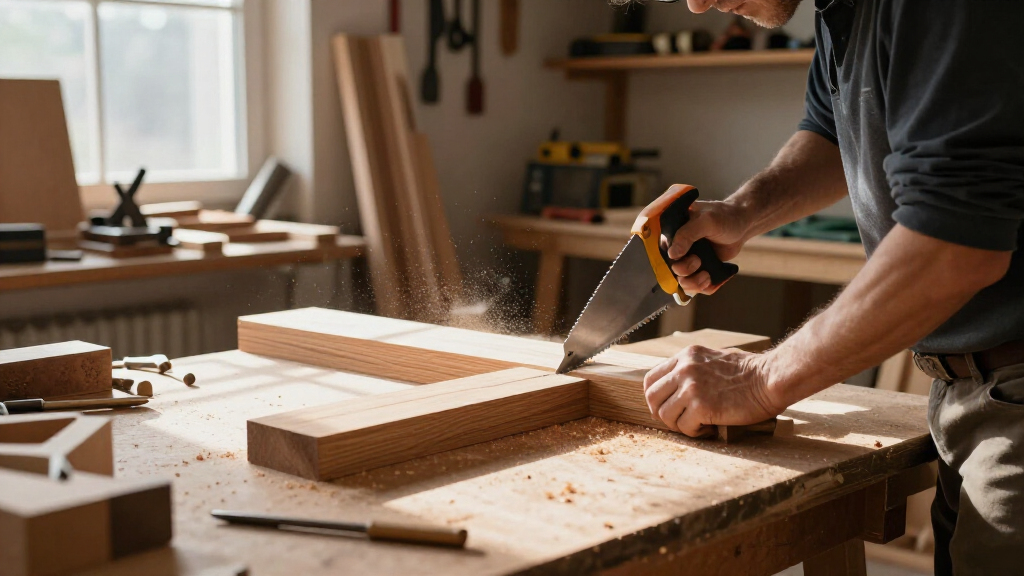

Choosing among precision woodworking hand saws mostly comes down to one decision: Japanese pull-stroke saws versus Western push-stroke designs. Pull saws, like the Jorgensen 10-Inch Pro Double Edge (my best overall pick for its replaceable SK5 blade and dual rip/crosscut teeth), cut thinner kerfs with less effort, while Western-style fine-cut saws like the 14-inch Pro Hand Saw favor builders who want a familiar stroke and faster coarse work. For curved and interior cuts, the Irwin ProTouch Coping Saw and the KATA coping saw fill a role no straight saw can. Budget matters here too — inexpensive 6-inch double-edge saws deliver surprising accuracy, but blade rigidity and tooth quality drop off at the low end. Read on for the full breakdown of all 13 saws and which one fits your bench.

Get business pricing on tools and workshop supplies
- Business-only prices and quantity discounts
- Tax-exempt purchasing
- Multiple users, one account, clear invoices
Complete the kit


Key Takeaways
- Pull-stroke Japanese saws dominated this comparison for precision work — their thinner blades and finer teeth (14–17 TPI) produced cleaner lines than every push-stroke option except the 14-inch fine-cut Pro saw on straight rougher work.
- Replaceable blades emerged as the biggest long-term value divider: the Jorgensen 10-Inch Pro and WORKPRO folding saw keep cutting accurately for years, while fixed-blade budget saws effectively become disposable once teeth dull.
- Coping saws (Irwin ProTouch and KATA) are not substitutes for a joinery saw — they excel at curves and coped moldings but cannot match a pull saw for straight tenon and dovetail cuts.
- The 5–6 inch flush-cut saws (SUIZAN, RUITOOL) are specialist tools: unbeatable for trimming dowels and protruding tenons, but too flexible and short to serve as an only saw.
- Handle ergonomics varied more than expected — the Jorgensen soft-grip models and Irwin ProTouch clearly outperformed bare-wood handles on longer sessions, which matters more than a few dollars of price difference.
| Japanese Hand Saw, 6-Inch Double-Edge Pull Saw with SK5 Blade |  | Best for Flush Cuts | Blade Length: 6 inches | Teeth per Inch: 14/17 TPI double edge | Blade Material: SK5 steel | VIEW LATEST PRICE | See Our Full Breakdown |
| Japanese Pull Saw 6 Inch, SK5 Double Edge 14/17 TPI for Woodworking |  | Best for Beginners | Blade Length: 6 inches | Teeth per Inch: 14/17 TPI double edge | Blade Material: SK5 steel | VIEW LATEST PRICE | See Our Full Breakdown |
| Irwin Tools ProTouch Coping Saw |  | Best for Curved Cuts | Blade Length: 6.5 inches | Tooth Count: 17-point | Blade Material: High-speed steel | VIEW LATEST PRICE | See Our Full Breakdown |
| RUITOOL Japanese Hand Saw 6 Inch Double Edge Ryoba Pull Saw for Flush Cuts |  | Best Overall | Blade Length: 6 inches | Blade Material: SK5 high-carbon steel | Handle Material: Beechwood | VIEW LATEST PRICE | See Our Full Breakdown |
| GARTOL Hand Saw for Wood Cutting, 2-Piece Japanese Pull Saw Set |  | Best Value | Blade Length: 6 inches | Blade Material: SK5 steel | Number of Pieces: 2 (flush cut saw + double-edge Ryoba) | VIEW LATEST PRICE | See Our Full Breakdown |
| 14-inch Pro Hand Saw, 11 TPI Fine-Cut, Soft-Grip Hardpoint Handsaw |  | Best Western-Style Workhorse | Blade Length: 14 inches | Blade Material: 65Mn steel | Teeth per Inch: 11 TPI | VIEW LATEST PRICE | See Our Full Breakdown |
| SUIZAN 5-inch Japanese Flush Cut Pull Saw |  | Best Compact Flush-Cut Specialist | Blade Length: 5 inches | Blade Material: Japanese steel | Cut Type: Japanese pull-cut | VIEW LATEST PRICE | See Our Full Breakdown |
| KATA 6.5″ Coping Saw with 6 Blades |  | Best for Curves and Scrollwork | Blade Size: 6.5 inches | Blades Included: 6 replaceable blades | Blade Types: 14T, 18T, 24T | VIEW LATEST PRICE | See Our Full Breakdown |
| Jorgensen Japanese Pull Saw, 10 Inch Pro Double Edge with Replaceable SK5 Blade |  | Best Overall Pull Saw | Blade Length: 10 inches | Teeth per Inch: 7-12 TPI coarse edge, 18 TPI fine edge | Blade Material: SK5 Japanese steel | VIEW LATEST PRICE | See Our Full Breakdown |
| Jorgensen Japanese Pull Saw, 7.25″ with Soft Grip Handle |  | Best for Fine Detail Work | Blade Length: 7.25 inches | Teeth per Inch: 17 TPI | Blade Material: SK5 steel | VIEW LATEST PRICE | See Our Full Breakdown |
| Jorgensen Ryoba 7 Inch Double Edge Japanese Pull Saw |  | Best Mini Ryoba for Fine Work | Blade Length: 7 inches | Teeth per Inch (TPI): 18 TPI (hardwood side), 7-12 TPI (rip side) | Blade Material: SK5 Japanese steel | VIEW LATEST PRICE | See Our Full Breakdown |
| WORKPRO 6” Folding Japanese Hand Saw, Double-Edged Pull Saw with 11&17 TPI |  | Best Portable Pick | Blade Length: 6 inches | TPI: 11 and 17 | Blade Thickness: 0.02 inches | VIEW LATEST PRICE | See Our Full Breakdown |
| Frocopo 6-Inch Hand Saw for Woodworking and Garden Trimming | 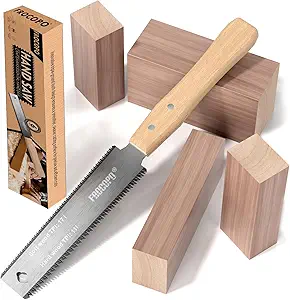 | Best Budget Starter Saw | Blade Length: 6 inches | Teeth per Inch: 11/17 TPI | Blade Material: SK5 steel | VIEW LATEST PRICE | See Our Full Breakdown |
| precision woodworking hand saw | Blade Length | Blade Material | Handle Material | Teeth per Inch |
|---|---|---|---|---|
| Japanese Hand Saw | 6 inches | SK5 steel | Plastic with soft grip | 14/17 TPI double edge |
| Japanese Pull Saw 6 Inch | 6 inches | SK5 steel | Wood | 14/17 TPI double edge |
| Irwin Tools ProTouch Coping Sa | 6.5 inches | High-speed steel | — | — |
| RUITOOL Japanese Hand Saw 6 In | 6 inches | SK5 high-carbon steel | Beechwood | 14 TPI (softwood) / 17 TPI (hardwood) |
| GARTOL Hand Saw for Wood Cutti | 6 inches | SK5 steel | Wood | — |
| 14-inch Pro Hand Saw | 14 inches | 65Mn steel | Thermoplastic rubber | 11 TPI |
| SUIZAN 5-inch Japanese Flush C | 5 inches | Japanese steel | — | — |
| KATA 6.5" Coping Saw with 6 Bl | — | — | — | — |
| Jorgensen Japanese Pull Saw | 10 inches | SK5 Japanese steel | — | 7-12 TPI coarse edge, 18 TPI fine edge |
| Jorgensen Japanese Pull Saw | 7.25 inches | SK5 steel | — | 17 TPI |
| Jorgensen Ryoba 7 Inch Double | 7 inches | SK5 Japanese steel | European beech wood | — |
| WORKPRO 6” Folding Japanese H | 6 inches | SK5 high-carbon steel | Beechwood | — |
| Frocopo 6-Inch Hand Saw for Wo | 6 inches | SK5 steel | Wood | 11/17 TPI |
More Details on Our Top Picks
Japanese Hand Saw, 6-Inch Double-Edge Pull Saw with SK5 Blade
This saw earns its spot for flush-cut work, where the flexible SK5 blade can ride flat against a surface without marring it — something a rigid frame saw like the Irwin ProTouch Coping Saw simply cannot do. The double-edge layout with 14 and 17 TPI means one side handles coarser trimming while the other cleans up fine joinery, so a single tool covers most detail tasks. Compared with the RUITOOL Ryoba, the soft-grip handle here is more comfortable for longer sessions, though the plastic construction feels less refined. The tradeoff is scale: at 6 inches, this is a detail saw, not a board-breaking tool, and anyone expecting to rip lumber will hit its limits fast.
Pros:- Flexible blade lays flat for true flush cuts without surface damage
- Dual 14/17 TPI edges cover both rough and fine work in one tool
- Soft-grip handle keeps control steady during fiddly cuts
- Featherweight build maneuvers easily inside cabinets and tight corners
Cons:- Plastic handle feels less durable than wooden alternatives
- Blade flexibility can cause wander if you push instead of pull
Best for: Woodworkers doing trim work, dowel flush cuts, and delicate joinery where a scar-free surface matters
Not ideal for: Anyone cutting sheet goods or rough stock — the 6-inch blade makes quick work of small tasks only
- Blade Length:6 inches
- Teeth per Inch:14/17 TPI double edge
- Blade Material:SK5 steel
- Handle Material:Plastic with soft grip
- Weight:0.11 kg
- Cut Types:Cross cut, trim, flush cut
Our verdict“Pick this if flush cuts and fine trim work are your main jobs and you want one compact blade to handle both.”
Japanese Pull Saw 6 Inch, SK5 Double Edge 14/17 TPI for Woodworking
For a first pull saw, this model keeps things simple: a wooden handle, a straightforward pull-cut mechanism, and the same 14/17 TPI dual-edge format as pricier options. The pull stroke is genuinely forgiving for newcomers — the blade tensions itself on the cut, so sloppy technique produces fewer blowouts than a Western push saw would. Compared with the B0DZ6Z2YK8 double-edge saw, the wooden handle gives a more traditional feel but lacks the soft-grip comfort during long sessions. Unlike the GARTOL 2-piece set, you only get one saw here, which keeps the learning curve and cost of entry low. The honest tradeoff: there’s no flush-cut flexibility and no spare blade in the box, so outgrowing it is a real possibility.
Pros:- Pull-cut action is inherently accurate and easy for beginners to control
- SK5 steel holds an edge through steady hobby-level use
- Wooden handle offers a classic, stable grip
- Dual TPI edges teach you which tooth pitch suits which cut
Cons:- Single-tool kit with no backup or flush-cut blade included
- Blade is very sharp with no guard, demanding careful storage and handling
Best for: New woodworkers and DIYers learning pull-saw technique without committing to a multi-saw set
Not ideal for: Experienced makers who need flush-cut capability or a full toolkit in one purchase
- Blade Length:6 inches
- Teeth per Inch:14/17 TPI double edge
- Blade Material:SK5 steel
- Handle Material:Wood
- Cutting Mechanism:Pull-cut
- Best Use:Trimming, joinery, small DIY projects
Our verdict“A sensible first pull saw that teaches good technique, as long as you accept you may upgrade later.”
Irwin Tools ProTouch Coping Saw
This is the only frame-style coping saw in this batch of Japanese pull saws, and that difference is the whole point. A tensioned 6.5-inch blade in a rigid Flat-Bar frame can turn tight curves — coped moldings, arches, cutouts — that a straight double-edge blade like the RUITOOL Ryoba cannot follow. The ProTouch ergonomic handle is genuinely more comfortable for the rotating, twisting motion coping work demands, and DuraSteel pins hold blade tension through repeated pivoting. The catch is that it’s a specialist: it won’t do flush cuts, rip cuts, or general trimming anywhere near as efficiently as the GARTOL or SUIZAN pull saws, and the 17-point blade will need replacing as it dulls. Think of it as a complement, not a competitor, to the pull saws here.
Pros:- Tensioned frame blade tracks tight curves and coped joints cleanly
- DuraSteel pins and Flat-Bar frame maintain tension through repeated turns
- ProTouch handle reduces fatigue during the rotating motion of coping work
- High-speed steel blade cuts a range of materials beyond wood
Cons:- Single-purpose tool that overlaps little with general sawing tasks
- Blades are consumables and will need periodic replacement
Best for: Trim carpenters and woodworkers cutting coped joints, curves, and interior cutouts
Not ideal for: General woodworking — it can’t do flush cuts, ripping, or straight trim work efficiently
- Blade Length:6.5 inches
- Tooth Count:17-point
- Blade Material:High-speed steel
- Frame Depth:5.5 inches
- Frame:Flat-Bar with DuraSteel pins
- Handle:ProTouch ergonomic grip
Our verdict“Buy this for curved and coped cuts specifically; pair it with a pull saw for everything else.”
RUITOOL Japanese Hand Saw 6 Inch Double Edge Ryoba Pull Saw for Flush Cuts
This is the pick I’d point most precision woodworkers toward, because it balances the three things that matter in a small Ryoba: three-side ground teeth that cut noticeably cleaner than stamped teeth, a genuine beechwood handle that outclasses the plastic grips on the B0DZ6Z2YK8, and dedicated rip and crosscut edges so the tool genuinely replaces two saws. The 14 TPI side rips softwood dowels and tenons while the 17 TPI side leaves glass-smooth crosscuts — that dual-purpose logic is what separates a Ryoba from a single-purpose flush saw like the SUIZAN 5-inch. The compromises are real, though: the handle shape gets tiring over long sessions, and the 6-inch blade caps your reach. For detail joinery, trimming, and flush work in one package, nothing else in this lineup matches its balance.
Pros:- Three-side ground teeth produce cleaner kerfs than stamped-tooth budget saws
- True Ryoba layout with dedicated rip and crosscut edges
- Beechwood handle is sturdier and more traditional than plastic grips
- Lightweight at 0.11 kg for extended fine control
Cons:- Handle geometry isn’t ideal for long cutting sessions
- Demands proper pull-stroke technique to perform at its best
Best for: Precision woodworkers who want one refined saw for joinery, trimming, and flush cuts
Not ideal for: Carpenters breaking down full-size boards — the 6-inch blade and fine teeth will slow you down
- Blade Length:6 inches
- Blade Material:SK5 high-carbon steel
- Handle Material:Beechwood
- Teeth per Inch:14 TPI (softwood) / 17 TPI (hardwood)
- Tooth Grind:Three-sided grinding gear
- Cut Types:Rip cut and cross cut, flush cutting
- Weight:0.11 kg
Our verdict“The most well-rounded precision saw here — buy it if joinery quality matters more than cutting speed.”
GARTOL Hand Saw for Wood Cutting, 2-Piece Japanese Pull Saw Set
Buying this set is cheaper logic than buying two saws separately: you get a dedicated flush-cut saw and a double-edge Ryoba, which together cover the two most common precision tasks in small woodworking. Compared with the RUITOOL Ryoba, the flush-cut saw here has a more rigid spine, meaning it’s worse at flexing over surfaces but better at holding a dead-straight line — a genuine tradeoff depending on your work. Compared with the B0GBXX27PS single pull saw, you’re getting a complete starter kit rather than one blade, which makes this the better buy for someone building out a workshop. The downsides: both blades need regular care to avoid dulling, and neither saw forgives ham-fisted technique, so complete novices should expect a learning curve.
Pros:- Two specialized saws cover both flush cuts and general joinery
- SK5 blades on both tools hold sharpness through regular hobby use
- Wooden handles give a secure, traditional grip
- Compact pair stores easily and travels well to job sites
Cons:- Both saws demand decent technique to get clean results
- Blade maintenance is required to prevent premature dulling
Best for: Hobbyists and DIY woodworkers who want a complete two-saw precision kit without buying premium individually
Not ideal for: Professionals who’d rather own one exceptional saw than two adequate ones
- Blade Length:6 inches
- Blade Material:SK5 steel
- Number of Pieces:2 (flush cut saw + double-edge Ryoba)
- Handle Material:Wood
- Blade Types:Flush cut and double-edged Ryoba
- Best Use:Woodworking, carpentry, DIY projects
Our verdict“The smart buy if you want flush-cut and Ryoba capability together for less than two separate purchases.”
14-inch Pro Hand Saw, 11 TPI Fine-Cut, Soft-Grip Hardpoint Handsaw
Most saws in this roundup are Japanese pull saws, but this 14-inch hardpoint model takes the opposite approach: a stiff rectangular blade with a hardened push-cut tooth geometry that feels familiar to anyone trained on Western saws. The 65Mn steel blade and low-friction coating translate into fast, straight cuts in construction lumber, drywall, and plastic pipe — tasks where the flexible SUIZAN flush cut saw would feel out of its depth. At 11 TPI, it sits in a genuine middle zone: smoother than a coarse framing saw, but nowhere near as refined as the Jorgensen 7.25-inch’s 17 TPI for joinery. That stiffness is its real advantage over the pull saws here — the blade won’t wander or flex mid-cut. The tradeoff is precision; it’s a site saw, not a furniture saw.
Pros:- Stiff 14-inch blade resists bending and wandering during long straight cuts
- Low-friction heat-treated blade cuts wood, drywall, and plastic pipe without clogging
- Ergonomic soft-grip handle suits all-day jobsite use
- Cuts on both push and pull strokes for faster material removal
Cons:- 11 TPI is a compromise pitch — too coarse for fine joinery, too fine for aggressive ripping
- 14-inch blade is awkward in tight spaces where the 5-6 inch pull saws excel
- Thermoplastic handle may loosen with years of heavy daily use
Best for: Contractors and DIYers who need one dependable saw for jobsite rough-in work across wood, drywall, and PVC
Not ideal for: Fine furniture makers — the tooth pitch and stiff blade lack the control needed for tight joinery or flush cuts
- Blade Length:14 inches
- Blade Material:65Mn steel
- Teeth per Inch:11 TPI
- Blade Thickness:0.9mm
- Handle Material:Thermoplastic rubber
- Weight:12 ounces
- Coating:Low-friction, heat-treated
Our verdict“Buy this if you need one rugged general-purpose saw for mixed jobsite materials rather than dedicated fine woodworking.”
SUIZAN 5-inch Japanese Flush Cut Pull Saw
At just 5 inches, the SUIZAN is the smallest saw in this lineup, and that’s exactly the point. This is a dedicated flush-cut tool for trimming dowels, plugs, and tenon shoulders without marring surrounding surfaces — a job the 14-inch hardpoint saw physically cannot do without gouging your work. The Japanese steel blade and pull-cut action mean the blade stays in tension during the stroke, letting it be thinner and sharper than Western equivalents. Compared with the Jorgensen 10-inch double-edge, the SUIZAN trades versatility for accessibility: it reaches into spots a longer blade can’t, but it won’t serve as your general bench saw. The real drawback is the non-replaceable blade — once those fine teeth dull, the whole tool is done, which the Jorgensen design solves with its replaceable SK5 blade.
Pros:- Ultra-compact 5-inch blade accesses tight spaces and delicate trim work
- High-quality Japanese steel delivers razor-sharp, clean cuts in hardwood
- Extremely lightweight, reducing fatigue on fiddly detail tasks
- Pull-cut geometry keeps the thin blade stable for flush cuts
Cons:- Blade is not replaceable, so the saw’s lifespan is fixed
- Only suited to flush and light detail cuts — no general ripping or crosscutting
- Small size offers little leverage for anything beyond fine work
Best for: Woodworkers who frequently trim dowels, plugs, and protruding joinery and need a tool that reaches into tight corners
Not ideal for: Anyone wanting a primary bench saw — the tiny blade and single-purpose design make it a supplement, not a workhorse
- Blade Length:5 inches
- Blade Material:Japanese steel
- Cut Type:Japanese pull-cut
- Made in:Japan
- Suitable Materials:Hardwood and softwood
- Weight:Lightweight
Our verdict“This pick makes the most sense for woodworkers adding a dedicated flush-cut specialist to complement a larger bench saw.”
KATA 6.5″ Coping Saw with 6 Blades
Every other saw here cuts straight lines; the KATA coping saw exists for the cuts they can’t make. Its 6.5-inch pinned blade under high tension follows curves, arcs, and interior cutouts — think coped moldings, puzzle-style scrollwork, and cutouts for outlets. Compared with the Irwin ProTouch coping saw elsewhere in this roundup, the KATA’s advantage is the bundled six replaceable blades in 14T, 18T, and 24T configurations, letting you match tooth count to material thickness on the spot. The tensioning frame is what separates a coping saw from a flexible pull saw like the Jorgensen 7.25-inch: the taut blade resists bowing through curves. Tradeoffs are real, though. Cutting speed is slow, blades snap when over-torqued in thick stock, and despite the marketing, the soft-metal claim should be read cautiously — stick to wood and plastic for best results.
Pros:- High-tension frame keeps blades straight for accurate curved cuts
- Six included blades across 14T, 18T, and 24T cover coarse and fine work
- Ergonomic TPR handle makes long scroll sessions comfortable
- Handles wood, plastic, and soft metals for craft versatility
Cons:- Slow material removal compared with any pull saw or hardpoint saw in this guide
- Thin blades break easily if twisted during aggressive curves
- Not suitable for hard metals despite the multi-material claim
Best for: Woodworkers and craft hobbyists doing coped moldings, curves, and interior cutouts who want blade options out of the box
Not ideal for: Anyone needing straight, fast crosscuts — a coping saw is slow and a straight rip is a struggle for it
- Blade Size:6.5 inches
- Blades Included:6 replaceable blades
- Blade Types:14T, 18T, 24T
- Frame:Steel, high-tension
- Handle:TPR ergonomic
- Intended Use:Wood, plastic, soft metals
Our verdict“Choose this if your projects involve curves and cutouts rather than straight cuts — it complements rather than replaces a standard hand saw.”
Jorgensen Japanese Pull Saw, 10 Inch Pro Double Edge with Replaceable SK5 Blade
This is the saw I’d point most woodworkers toward if they’re buying one Japanese pull saw. The double-edged SK5 blade pairs a 7-12 TPI coarse edge for ripping with an 18 TPI fine edge for crosscutting — effectively two saws in one handle, something neither the SUIZAN flush saw nor the 14-inch hardpoint model offers. The replaceable blade system is the deciding advantage over the SUIZAN: when teeth dull, you swap rather than rebuy. Compared with its smaller Jorgensen sibling at 7.25 inches, this model’s longer stroke cuts faster on larger stock while remaining light enough for one-handed control. The tradeoff for that flexible blade is discipline — the thin steel will wander if you rush the cut, and it demands a light touch. It’s also not a jobsite tool; drywall and pipe work belong to the hardpoint saw.
Pros:- Double-edge design covers both fast ripping and fine crosscutting
- Replaceable SK5 blade extends the tool’s working life indefinitely
- Lightweight ergonomic handle reduces fatigue on long sessions
- Triple-ground teeth cut fast and leave a clean surface
Cons:- Flexible blade demands careful technique to keep cuts straight
- Blade replacement takes more effort than expected
- Overkill for buyers who only need occasional flush or trim cuts
Best for: Serious hobbyist and intermediate woodworkers who want one saw covering both ripping and crosscutting at the bench
Not ideal for: Jobsite and demolition users — the flexible blade and pull-cut action aren’t built for rough construction work
- Blade Length:10 inches
- Teeth per Inch:7-12 TPI coarse edge, 18 TPI fine edge
- Blade Material:SK5 Japanese steel
- Blade Type:Replaceable, flexible, double-edge
- Handle:Ergonomic, non-slip
- Cut Type:Japanese pull-cut
Our verdict“This model is the best single purchase for a woodworker who wants bench-saw versatility with the longevity of a replaceable blade.”
Jorgensen Japanese Pull Saw, 7.25″ with Soft Grip Handle
Sitting between the SUIZAN’s 5-inch specialty blade and the Jorgensen 10-inch Pro, this 7.25-inch saw targets fine, controlled cutting rather than speed or reach. Its 17 TPI SK5 blade produces an exceptionally clean kerf in softwood, bamboo, and even thin PVC — noticeably finer than the 14-inch hardpoint saw’s 11 TPI, which tears out on delicate stock. One-handed control is its standout trait; the soft-grip handle and light weight make it easy to steer around small work like model building, dovetail cleanups, and trim fitting. Where the Jorgensen 10-inch doubles as a ripping saw, this one stays firmly in the fine-work lane. The thin flexible blade cuts both ways: beautiful results with a light touch, but impatient hands will kink it, and the fine teeth dull faster than coarser pitches.
Pros:- 17 TPI fine pitch leaves a glass-smooth kerf with minimal tear-out
- One-handed control excels at small, delicate, and flush work
- Flexible SK5 blade handles softwood, bamboo, and thin PVC
- Comfortable soft-grip handle suits long detail sessions
Cons:- Thin blade is easy to kink or damage with careless technique
- Not built for heavy-duty cutting or thick stock
- Fine teeth dull faster and need frequent attention to stay sharp
Best for: Detail-oriented woodworkers, model builders, and crafters working in softwood, bamboo, and trim materials
Not ideal for: Users cutting thick hardwoods or doing heavy stock removal — the fine teeth and light frame will slow you down
- Blade Length:7.25 inches
- Teeth per Inch:17 TPI
- Blade Material:SK5 steel
- Handle:Soft grip, ergonomic
- Cut Type:Japanese pull-cut
- Applications:Fine woodworking, flush cuts, softwood, bamboo, PVC
Our verdict“Buy this for precision and finesse on small stock, and skip it if your work leans toward fast, coarse cutting.”
Jorgensen Ryoba 7 Inch Double Edge Japanese Pull Saw
Most ryoba-style saws in this roundup ask you to choose between a 6-inch compact blade and a full-size 10-inch tool like the Jorgensen 10 Inch Pro Double Edge. This 7-inch model sits in the useful middle ground: enough blade to make confident tenon and dovetail cuts, small enough to stay nimble on joinery. The double-edged SK5 blade gives you a dedicated 18 TPI hardwood crosscut side and a coarser rip side, which means one saw handles both directions of a joint without forcing compromises. Compared with the WORKPRO 6-inch folding saw, the beech wood handle here is more traditional and slightly less pocketable, but the replaceable blade system means the saw outlives its first dull edge. The tradeoff is that separate replacement blades add ongoing cost, and a true ryoba demands technique — pull-stroke control takes practice before cuts look clean.
Pros:- Dual-purpose blade covers both rip and crosscut work in one tool
- SK5 Japanese steel holds an edge well on hardwood
- Replaceable blade extends the life of the saw indefinitely
- 7-inch length balances control with cutting capacity
Cons:- Replacement blades sold separately, adding long-term cost
- Requires pull-saw technique that takes time to develop
Best for: Woodworkers doing small to mid-size joinery who want one saw for both ripping and crosscutting
Not ideal for: Beginners who have never used a pull saw, or anyone wanting a self-contained tool with no replacement-blade purchases
- Blade Length:7 inches
- Teeth per Inch (TPI):18 TPI (hardwood side), 7-12 TPI (rip side)
- Blade Material:SK5 Japanese steel
- Handle Material:European beech wood
- Blade Type:Double-edged ryoba
- Replaceable Blade:Yes
Our verdict“The best compact ryoba choice for someone who wants genuine joinery capability without stepping up to a full 10-inch saw.”
WORKPRO 6” Folding Japanese Hand Saw, Double-Edged Pull Saw with 11&17 TPI
The folding design is what separates this saw from every fixed-blade option here, including the Frocopo 6-inch and the RUITOOL 6-inch flush-cut saw. When closed, it shrinks to 6.5 inches and 0.33 lbs, which means it slides into a tool roll, camp kit, or garden bucket without a sheath — a genuine safety and convenience advantage over the Frocopo, which ships with no blade cover at all. The 11/17 TPI double edge handles rough pruning on one side and finer crosscuts on the other. The compromise is real, though: a 6-inch blade with a 0.02-inch thickness flexes more than the Jorgensen Ryoba 7-inch, so long, straight rip cuts wander if you rush. Compared with the Jorgensen, this model trades cutting capacity for portability, and heavy-duty stock removal is simply not its job.
Pros:- Folding design protects the blade and eliminates the need for a sheath
- Featherweight at 0.33 lbs for all-day carry
- SK5 steel with corrosion resistance suits outdoor use
- Dual 11/17 TPI edges cover coarse and fine tasks
Cons:- Thin 0.02-inch blade flexes on aggressive or long cuts
- 6-inch length limits it to lighter-duty work
Best for: Campers, gardeners, and woodworkers who want one grab-and-go saw that stores safely without a sheath
Not ideal for: Anyone cutting thick hardwood or making long rip cuts where blade stiffness matters
- Blade Length:6 inches
- TPI:11 and 17
- Blade Thickness:0.02 inches
- Blade Material:SK5 high-carbon steel
- Handle Material:Beechwood
- Weight:0.33 lbs
- Folded Length:6.5 inches
Our verdict“The clear choice if portability and safe storage matter more than maximum cutting power.”
Frocopo 6-Inch Hand Saw for Woodworking and Garden Trimming
At 2.82 ounces, this is the lightest saw in the entire lineup — noticeably lighter than the WORKPRO 6-inch folding saw, which already feels barely there at 0.33 lbs. That featherweight build suits it to detail trimming, small craft cuts, and garden touch-ups where a heavier tool causes fatigue. The 11/17 TPI double edge mirrors the WORKPRO’s tooth configuration, so cutting versatility is comparable; where the two diverge is storage and reassurance. The Frocopo has no folding mechanism and no case, so the exposed teeth demand careful handling in a drawer or bag — the WORKPRO wins that comparison cleanly. What the Frocopo offers instead is a lifetime warranty and a lower barrier to entry, which makes it a sensible first pull saw. Just don’t expect the wooden handle to suit every grip, and don’t push it into thick stock.
Pros:- Featherlight 2.82-ounce build minimizes fatigue on long sessions
- Coarse and fine tooth edges handle both pruning and detail cuts
- SK5 steel balances sharpness with blade flexibility
- Lifetime warranty backs the purchase long-term
Cons:- No folding mechanism or protective case, so the blade is exposed in storage
- Fixed wooden handle grip won’t suit every hand size
- 6-inch blade restricts it to light-duty tasks
Best for: First-time pull-saw buyers and casual hobbyists who want low-cost versatility for light woodworking and garden trimming
Not ideal for: Users who need protected blade storage or who cut dense, thick hardwood regularly
- Blade Length:6 inches
- Teeth per Inch:11/17 TPI
- Blade Material:SK5 steel
- Handle Material:Wood
- Weight:2.82 ounces
- Blade Type:Double-edged
Our verdict“A low-commitment entry point into pull-saw woodworking, as long as you solve the blade-storage problem yourself.”

How We Picked
My ranking for this roundup came down to four factors: cut accuracy, blade quality and replaceability, handling comfort, and versatility for the money. Accuracy carried the most weight because these are precision saws — I favored thin-kerf blades, consistent tooth sets, and SK5 high-carbon steel, which holds a sharper edge longer than softer alternatives. Saws with replaceable blades scored higher on long-term value, since a dull fixed blade turns the whole tool into waste. I also judged how many distinct jobs each saw covers, which is why double-edge ryoba-style saws with both rip and crosscut teeth ranked above single-purpose models at similar prices.
The lineup is ordered so each pick earns a distinct role: best overall for all-around joinery, best value for budget-limited buyers, dedicated picks for beginners, flush cutting, curved work, and coarse tasks. Where two saws looked similar on paper — the three 6-inch double-edge pull saws, for example — handle design, blade retention, and included accessories broke the tie. Every product here has real drawbacks noted in its review, because no single saw does everything well.
| precision woodworking hand saw | Handle Material |
|---|---|
| Japanese Hand Saw | Plastic with soft grip |
| Japanese Pull Saw 6 Inch | Wood |
| Irwin Tools ProTouch Coping Sa | — |
| RUITOOL Japanese Hand Saw 6 In | Beechwood |
| GARTOL Hand Saw for Wood Cutti | Wood |
| 14-inch Pro Hand Saw | Thermoplastic rubber |
| SUIZAN 5-inch Japanese Flush C | — |
| KATA 6.5" Coping Saw with 6 Bl | — |
| Jorgensen Japanese Pull Saw | — |
| Jorgensen Japanese Pull Saw | — |
| Jorgensen Ryoba 7 Inch Double | European beech wood |
| WORKPRO 6” Folding Japanese H | Beechwood |
| Frocopo 6-Inch Hand Saw for Wo | Wood |
Factors to Consider When Choosing Precision Woodworking Hand Saws
Before settling on a specific saw, it helps to understand the broader landscape of precision hand saws. The 13 products above overlap less than you might think, and the most common buying mistake is choosing one saw expecting it to handle every cutting task. These sections cover the decisions that matter most before you spend anything.
Pull-Stroke vs. Push-Stroke: The Foundational Choice
Japanese pull saws cut on the pull stroke, which puts the blade under tension rather than compression. That lets manufacturers use thinner blades with finer teeth, producing narrower kerfs, less tear-out, and more control — exactly what dovetails and tenons demand. Western push-stroke saws cut on the push, requiring a thicker, stiffer blade that removes more material per stroke and is harder to steer on fine lines, but cuts faster on coarse work and survives rougher treatment. A common mistake is assuming pull saws are only for experts; the opposite is true, because the pull stroke is self-correcting and harder to jam. If your work is mostly joinery and detail cutting, pull-stroke should be your default. If you’re trimming lumber, cutting drywall, or working construction-grade stock, a push saw serves you better.
Tooth Count and Blade Length Must Match the Job
Teeth per inch (TPI) determines finish quality versus speed, and mismatching this is the second most common error. Fine teeth in the 14–22 TPI range leave smooth surfaces for joinery, while coarser 10–11 TPI blades cut faster but leave visible tooth marks. Blade length matters just as much: a 5–6 inch blade suits small work, dovetails, and flush cuts, but forces more strokes and more chances to wander on longer joints. A 10–14 inch blade covers larger panels and tenons but sacrifices some fine control in tight spots. Double-edge ryoba saws solve this by pairing rip teeth on one edge with crosscut teeth on the other — but that flexibility means neither edge is specialized. Buy for the cuts you actually make most often, not the biggest blade available.
Blade Replaceability Determines Total Cost of Ownership
A precision saw blade dulls from hard use, cutting abrasive materials, or simply dropping the tool on a concrete floor. Saws with replaceable blades cost a bit more upfront but stay accurate for years, while cheap fixed-blade saws become scrap once the teeth lose their set. This is where budget shoppers often miscalculate: three disposable saws at a low price cost more over time than one quality saw with replacement blades. Check whether replacement blades are actually available before buying — some imported saws have no aftermarket blade supply. Blade attachment method matters too; tool-free retention systems are faster but can develop play over time, while screw-mounted blades hold tighter but slow you down. Coping saw buyers should confirm blade availability as well, since these thin blades break regularly during curved work.
Handle Ergonomics and Grip Comfort
The handle is the only part of the saw you actually touch, and it directly controls your cut accuracy. Wrapped or rubberized grips, like the soft-grip handles on the Jorgensen models and Irwin’s ProTouch design, reduce hand fatigue and improve feedback during long sessions. Bare plastic or wood handles are workable for short tasks but cause slipping when hands sweat, which is precisely when a precision cut goes wrong. Handle angle also matters: Japanese-style straight handles suit pulling from the shoulder, while pistol grips favor a different wrist position that some find unnatural on pull strokes. Beginners in particular underestimate ergonomics, buying on blade specs alone and then fighting an uncomfortable tool. If you’ll saw for more than fifteen minutes at a time, handle quality deserves equal weight to blade quality.
Specialist Saws: Don’t Expect One Tool to Do Everything
Flush-cut saws, coping saws, and general joinery saws each exist because the others fail at their specialty. Flush-cut saws have flexible blades and offset teeth so they can ride flat against a surface without scratching it — but that flexibility makes them poor for straight-line joinery. Coping saws pivot through curves and interior cutouts no straight blade can manage, yet their narrow blades wander badly on long straight cuts. A ryoba pull saw handles the majority of joinery but cannot turn a corner or trim a dowel flush. The practical takeaway: most woodworkers eventually own at least two of these types. If you can only buy one first, a double-edge pull saw covers the widest range of work, and specialty saws can follow later as specific projects demand them.
Steel Quality and Build Consistency
Blade steel determines how long a saw stays sharp and how well it resists bending during use. SK5 high-carbon steel is the standard to look for — it takes a fine edge and holds it through hardwood work, which is why most of the top picks in this roundup use it. Cheaper saws sometimes use unspecified steel that dulls after a few projects or bends the first time the blade binds. Build consistency varies even within the same design: look for evenly set teeth, a blade that sits straight when sighted down its length, and a handle attachment without rattle. Folding saws add another variable — the hinge must lock solidly, because any blade play ruins accuracy. These details separate saws that look identical in photos, which is why I weighed build quality as heavily as raw specifications.
Frequently Asked Questions
Is a Japanese pull saw better than a Western hand saw for precision woodworking?
For fine joinery like dovetails, tenons, and trim work, a Japanese pull saw is generally the better choice because the pull stroke keeps the blade under tension, allowing a thinner plate and finer teeth that produce a narrower kerf and cleaner surface. Western push-stroke saws still win when cutting speed matters, when working coarse construction lumber, or when you need a stiffer blade that tolerates less-than-perfect technique. Pull saws are also easier for beginners to control because the blade can’t buckle mid-stroke. That said, some woodworkers who learned on push saws never adjust to the different rhythm. The honest answer is that most benches eventually hold one of each, but if precision is your priority, start with the pull saw.
What does the TPI number on a hand saw actually mean for my cuts?
TPI stands for teeth per inch, and it’s the main tradeoff between speed and finish quality. A 14–17 TPI blade leaves smooth surfaces ready for glue or light sanding, which is what you want for visible joinery. An 11 TPI blade removes wood noticeably faster but leaves tooth marks you’ll need to plane or sand out afterward. Very fine teeth also clog more easily in soft, resinous woods like pine, so a mid-range tooth count can actually outperform a fine one in that material. If you’re doing furniture-grade work, favor the higher TPI; if you’re roughing stock to size, go coarser. Double-edge saws split the difference by giving you both on one tool.
Do I need a coping saw if I already have a pull saw?
If you ever cut curves, circles, or interior openings, yes — the two tools don’t overlap much. A pull saw blade is straight and rigid by design, so it physically cannot follow a tight radius or start a cut in the middle of a board. Coping saws use narrow blades that pivot through curves and can be threaded through a drilled hole for cutouts, which is how coped moldings and pierced work get made. On the other hand, a coping saw is a poor substitute for joinery: its blade wanders on long straight runs and lacks the beam strength for accurate tenon cheeks. Treat them as complements, not competitors. The Irwin ProTouch and KATA models in this roundup are inexpensive enough that owning both rarely strains a tool budget.
Why do some saws have replaceable blades and is that worth paying more for?
Replaceable blades turn a saw from a disposable item into a long-term tool, and for anyone who saws regularly, that’s worth the premium. Even excellent SK5 steel dulls eventually, and sharpening fine Japanese teeth by hand is beyond most hobbyists — with a fixed-blade saw, a dulled edge means replacing the entire tool. With a replaceable-blade design like the Jorgensen Pro or WORKPRO folding saw, you swap in a fresh blade in minutes and regain factory-sharp accuracy. One caution: confirm that replacement blades are actually purchasable before committing, since some imported models have no reliable supply. If you only saw a few times a year on softwood, a fixed blade may honestly outlast your interest. For regular use, replaceability is one of the best value plays in this category.
Can a cheap 6-inch pull saw really deliver precision cuts, or should I spend more?
Modern budget pull saws with SK5 blades are genuinely capable of accurate cuts — the tooth geometry does most of the work, and several sub-premium models in this roundup performed well on dovetails and small tenons. Where cheap saws fall short is consistency and durability: you may get a blade with slightly uneven tooth set, a handle that loosens over time, or a blade that dulls faster than a quality one. For occasional hobby work, those compromises are acceptable, and buying budget first lets you learn what you value before spending more. If you saw weekly or work hardwoods, step up to models with replaceable blades and better handles, because the cost per accurate cut drops fast. The practical middle path: start budget, and upgrade once you can name what your current saw fails at.
Conclusion
The right pick here depends less on price than on the cuts you make. For best overall, the Jorgensen 10-Inch Pro Double Edge earns the top spot with its replaceable SK5 blade, dual rip/crosscut edges, and enough reach for real joinery. The best value goes to the RUITOOL 6-inch double-edge saw, which delivers accurate flush and joinery cuts at a budget-friendly level, with the GARTOL two-piece set close behind for buyers who want a flush saw included. For best premium, the Jorgensen 7.25-inch with soft grip handle offers the most refined cutting experience in the lineup for dedicated fine woodworking.
Beginners should start with the WORKPRO 6-inch folding pull saw — the folding design protects the blade, the two tooth pitches teach you the difference, and it’s forgiving to learn on. For specific needs: choose the SUIZAN 5-inch flush cut saw for trimming dowels and tenons flush, the Irwin ProTouch or KATA for curved and interior cuts, the 14-inch fine-cut push saw for fast coarse work on lumber and drywall, and the Jorgensen 7-inch Ryoba for a compact ryoba that travels well to job sites. Whichever route you take, match the saw to your dominant task rather than chasing one tool that does everything — that’s the real lesson of comparing these 13 side by side.