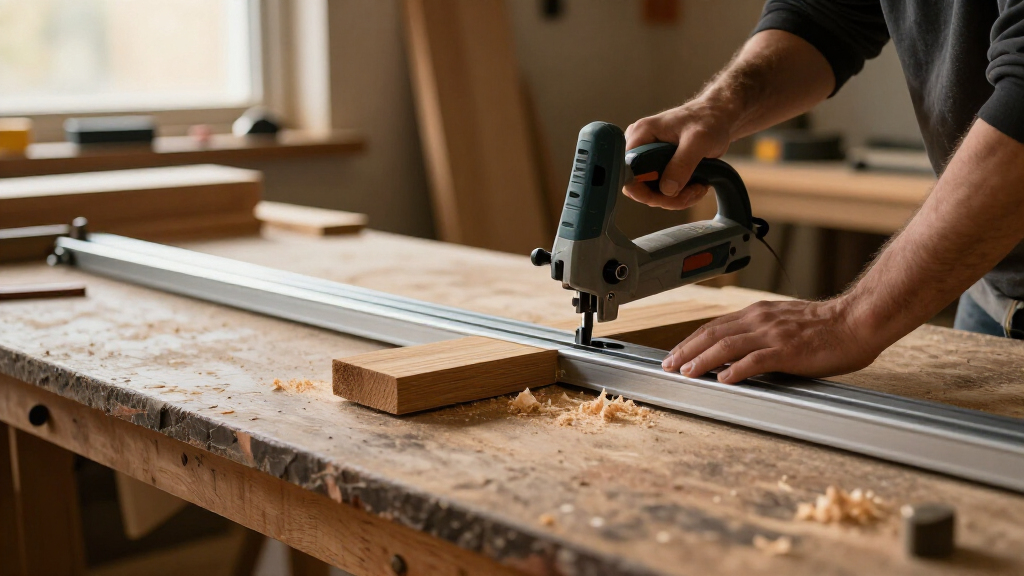
Track saws for woodworking exist to solve one problem: making dead-straight, splinter-free cuts in sheet goods and wide boards without a table saw. After comparing 13 leading models, the Festool TS 55 FEQ-F-Plus stands out as the best overall pick thanks to its unmatched cut quality, precise depth control, and integrated splinter guard system. For woodworkers who want most of that performance at a lower cost, the Makita SP6000J corded saw and the DEWALT DWS520K are the strongest challengers, while cordless options like the Milwaukee M18 FUEL and Makita X2 LXT trade a little runtime convenience against raw cutting power. The main tradeoffs in this category come down to corded versus cordless, blade capacity and depth range, rail system compatibility, and whether you’re paying for refinements you’ll actually notice. Read on for the full breakdown of what each saw does well, where it falls short, and which one fits your workshop.

Get business pricing on tools and workshop supplies
- Business-only prices and quantity discounts
- Tax-exempt purchasing
- Multiple users, one account, clear invoices
Complete the kit


Key Takeaways
- Festool‘s TS 55 FEQ-F-Plus earned the top spot because its splinter-guard design, rail compatibility, and cut-to-line precision beat every rival — but the Makita SP6000J1 kit with a 55-inch rail delivers roughly 90% of that capability for considerably less money.
- Cordless models (Milwaukee M18 FUEL, Makita X2 LXT, DEWALT 20V MAX) all cut well, but none matched the sustained power and zero-downtime workflow of corded saws when ripping multiple full sheets of plywood.
- Budget track saws from VEVOR, WEN, and Evolution are genuinely usable for occasional woodworking — their main weaknesses are softer rail systems, less refined depth stops, and noticeably more splintering on melamine and veneered ply without scoring passes.
- Two products in this lineup are nearly identical (Festool TS 55 with and without the included 55-inch guide rail), so the deciding factor is whether you already own Festool rails — buying the rail separately later usually costs more than the kit.
- Makita appears four times in this roundup for good reason: the SP6000 family offers the best balance of price, cut quality, and rail ecosystem, making it the default recommendation for most hobbyist woodworkers.
| DEWALT 20V MAX XR 6-1/2 in. Cordless Plunge Track Saw (DCS525B) |  | Best Cordless System Integration | Blade Diameter: 6-1/2 in. | Power Source: 20V MAX XR battery (cordless) | No-Load Speed: 2,500 – 5,400 RPM | VIEW LATEST PRICE | See Our Full Breakdown |
| Makita SP6000J 6-1/2-Inch Plunge Circular Saw |  | Best Corded Value | Motor: 12.0 AMP | Speed: 2,000-5,200 RPM variable | Blade Size: 6-1/2 in. | VIEW LATEST PRICE | See Our Full Breakdown |
| Makita XPS01Z 36V (18V X2) LXT Brushless 6-1/2″ Plunge Circular Saw (Tool Only) |  | Best for Makita LXT Owners | Voltage: 36V (18V X2 LXT) | Motor: Brushless, up to 6,300 RPM | Variable Speed: 2,500 – 6,300 RPM | VIEW LATEST PRICE | See Our Full Breakdown |
| Milwaukee M18 FUEL 6-1/2-Inch Plunge Track Saw (Bare Tool) |  | Best Single-Battery Cordless Pick | Power Source: 18V M18 lithium-ion battery (bare tool) | Motor: Brushless POWERSTATE | Maximum Speed: 6,300 RPM | VIEW LATEST PRICE | See Our Full Breakdown |
| Makita XPS01PTJ 18V X2 LXT Brushless Cordless 6-1/2-Inch Plunge Circular Saw Kit with 5.0Ah Batteries |  | Best Complete Cordless Kit | Model: XPS01PTJ | Voltage: 18V X2 (36V) | Motor: Brushless | VIEW LATEST PRICE | See Our Full Breakdown |
| DEWALT DWS520K 6-1/2-Inch Corded TrackSaw Kit |  | Best Corded Workhorse | Brand: DEWALT | Model: DWS520K | Blade Size: 6-1/2 inches | VIEW LATEST PRICE | See Our Full Breakdown |
| VEVOR 6.5-Inch Plunge-Cut Track Saw Kit with 48-Tooth Blade |  | Best Budget Entry Point | Motor Power: 1200W | Speed: 5500 RPM | Blade Diameter: 6.5 inches | VIEW LATEST PRICE | See Our Full Breakdown |
| Festool TS 55 FEQ-F-Plus Plunge-Cut Circular Track Saw |  | Best Premium Precision | Type: Plunge-Cut Circular Track Saw | Bevel Range: 90° to 47° | Guide Rail: Not included (sold separately) | VIEW LATEST PRICE | See Our Full Breakdown |
| WEN 7.25-Inch Variable-Speed Track Saw (CT1274), Corded |  | Best for Thick Stock and Blade Flexibility | Blade Diameter: 7.25 inches | Cutting Depth: Up to 2.6 inches | 45° Bevel Depth: Up to 1.85 inches | VIEW LATEST PRICE | See Our Full Breakdown |
| Evolution Power Tools R185CCSX 7-1/4″ Multi-Material Circular Track Saw Kit with 40″ Track |  | Best Complete Starter Kit | Power Source: Corded Electric | Motor: 15 Amp hi-torque, 1800 watts | Speed: 3700 RPM | VIEW LATEST PRICE | See Our Full Breakdown |
| Festool Plunge-Cut Track Saw TS 55 FEQ-F-Plus-FS with 55-Inch Guide Rail |  | Best Premium System | Power: 1200 watts, 110V corded | Blade: 48-tooth, 20 mm arbor | Bevel Range: 90° to 47° | VIEW LATEST PRICE | See Our Full Breakdown |
| WEN CT1065 10-Amp 6.5-Inch Plunge Cut Sidewinder Circular Track Saw |  | Best Budget Entry Point | Motor: 10 amps, corded | Blade Diameter: 6.5 inches (165 mm) | Blade: 24-tooth carbide-tipped, 20 mm arbor | VIEW LATEST PRICE | See Our Full Breakdown |
| Makita SP6000J1 6-1/2-Inch Plunge Circular Saw Kit with 55-Inch Guide Rail and Stackable Case |  | Best Corded All-Rounder | Motor: 12 amps, corded | Blade Size: 6-1/2 inches | Variable Speed: 2,000–5,200 RPM | VIEW LATEST PRICE | See Our Full Breakdown |
| track saws for woodworking | Motor |
|---|---|
| DEWALT 20V MAX XR 6-1/2 in. Co | — |
| Makita SP6000J 6-1/2-Inch Plun | 12.0 AMP |
| Makita XPS01Z 36V | Brushless, up to 6,300 RPM |
| Milwaukee M18 FUEL 6-1/2-Inch | Brushless POWERSTATE |
| Makita XPS01PTJ 18V X2 LXT Bru | Brushless |
| DEWALT DWS520K 6-1/2-Inch Cord | 12A, 1300W |
| VEVOR 6.5-Inch Plunge-Cut Trac | — |
| Festool TS 55 FEQ-F-Plus Plung | — |
| WEN 7.25-Inch Variable-Speed T | — |
| Evolution Power Tools R185CCSX | 15 Amp hi-torque, 1800 watts |
| Festool Plunge-Cut Track Saw T | — |
| WEN CT1065 10-Amp 6.5-Inch Plu | 10 amps, corded |
| Makita SP6000J1 6-1/2-Inch Plu | 12 amps, corded |
More Details on Our Top Picks
DEWALT 20V MAX XR 6-1/2 in. Cordless Plunge Track Saw (DCS525B)
This model stands out for the way its features work as a connected system rather than a collection of parts. The Integrated Wireless Tool Control fires a compatible vacuum the instant the trigger is pulled, and the up to 94% dust capture that results is a genuine workflow advantage for anyone working indoors on cabinetry or built-ins. Compared with the Milwaukee M18 FUEL plunge saw, which also offers strong dust collection, the DEWALT adds the KICKBACK BRAKE safety system and tighter stated accuracy of within 1/32 in.. The tradeoff is real, though: this is a bare tool, so battery, charger, tracks, and vacuum all cost extra on top of an already premium price. Buyers already inside the 20V MAX ecosystem will get the most value here; anyone starting from scratch should budget for the full system.
Pros:- Repeatable straight cuts within 1/32 in. for furniture-grade accuracy
- KICKBACK BRAKE shuts the saw down on pinch, stall, or bind-up
- Wireless vacuum trigger activation captures up to 94% of dust
- Variable speed from 2,500 to 5,400 RPM handles everything from veneer to thick stock
Cons:- Bare tool — battery, charger, tracks, and vacuum all sold separately
- Premium system cost once accessories are added
Best for: DEWALT 20V MAX tool owners and finish carpenters who need jobsite-grade dust control and safety tech
Not ideal for: Buyers on a starter budget — the bare-tool pricing plus separate track, battery, and vacuum purchases adds up quickly
- Blade Diameter:6-1/2 in.
- Power Source:20V MAX XR battery (cordless)
- No-Load Speed:2,500 – 5,400 RPM
- Cut Accuracy:Within 1/32 in.
- Runtime:Up to 70 cuts or 280 linear ft of 3/4 in. MDF per charge
- Dust Extraction:Up to 94% dust capture
- Safety Feature:DEWALT KICKBACK BRAKE System
Our verdict“This pick makes the most sense for DEWALT ecosystem users who want the safest, cleanest cordless track cutting setup available.”
Makita SP6000J 6-1/2-Inch Plunge Circular Saw
For woodworkers who want plunge-cut precision without cordless prices, this corded workhorse hits a sweet spot. The 12 AMP motor with electronic speed control holds RPM under load better than battery platforms can when ripping thick hardwood, and there is no runtime anxiety mid-project. Compared with its cordless sibling, the Makita XPS01Z, this model trades portability for unlimited continuous cutting — a fair swap for a shop-based builder. The depth-stop feature for a 1/16 in. scoring pass is a detail veneer workers will appreciate, minimizing tear-out on delicate faces. The catch: the guide rail is optional, and like the DEWALT DCS525B you are buying into a system piecemeal. Still, for raw capability per dollar in a stationary shop, this option is hard to beat.
Pros:- 12 AMP motor with electronic speed control maintains cutting speed under load
- Splinter-free cuts when paired with the guide rail system
- Variable speed dial (2,000-5,200 RPM) matches blade speed to material
- Bevel range to 48° with positive stops at 22.5° and 45° for repeatable angles
Cons:- Guide rail system sold separately
- Corded design limits portability compared with cordless rivals
Best for: Shop-based woodworkers and remodelers with wall power who cut sheet goods all day without wanting to manage batteries
Not ideal for: Job-site users without reliable power access, or anyone expecting rail-guided cuts straight out of the box
- Motor:12.0 AMP
- Speed:2,000-5,200 RPM variable
- Blade Size:6-1/2 in.
- Cutting Capacity at 90°:2-3/16 in.
- Cutting Capacity at 45°:1-9/16 in.
- Bevel Range:-1° to 48° with positive stops
- Close-to-Wall Cutting:11/16 in.
Our verdict“This model is better suited to plugged-in shop work than any cordless option here, delivering pro-grade plunge cutting for less.”
Makita XPS01Z 36V (18V X2) LXT Brushless 6-1/2″ Plunge Circular Saw (Tool Only)
Running on two 18V LXT batteries for a combined 36V of power, this brushless saw is built for woodworkers already carrying Makita cordless tools. The 6,300 RPM top speed edges out the corded Makita SP6000J, and automatic speed change technology adjusts torque mid-cut — useful when a long rip transitions from soft ply into dense hardwood. Compared with the Milwaukee M18 FUEL, the dual-battery platform delivers more sustained voltage, though at the cost of added weight and managing two packs instead of one. Like the DEWALT DCS525B, it arrives as a bare tool with no rail included, which stings at this price. For existing LXT users with batteries on the shelf, however, this is the cheapest path into full-size cordless track cutting.
Pros:- Brushless motor reaches 6,300 RPM for clean, fast cuts
- Automatic speed change technology optimizes torque during demanding cuts
- 36V dual-battery platform sustains power through thick material
- Soft start and electric brake improve control and safety
Cons:- Tool only — batteries, charger, and guide rail all sold separately
- Requires two batteries, doubling pack management and cost for newcomers
Best for: Makita 18V LXT owners who already own batteries and chargers and want to add track-saw capability affordably
Not ideal for: Buyers without Makita batteries — the required two-pack setup makes this an expensive starting point, and the rail is extra
- Voltage:36V (18V X2 LXT)
- Motor:Brushless, up to 6,300 RPM
- Variable Speed:2,500 – 6,300 RPM
- Blade:6-1/2 in. 55T carbide-tipped (B-57071)
- Cutting Capacity at 90°:2-3/16 in.
- Bevel Capacity:-1° to 48° with positive stops
Our verdict“This pick makes the most sense for Makita loyalists who can skip the battery tax and jump straight into cordless track cutting.”
Milwaukee M18 FUEL 6-1/2-Inch Plunge Track Saw (Bare Tool)
For woodworkers who value a lighter, simpler cordless setup, this single-battery 18V design is the appeal. Unlike the Makita XPS01Z, which needs two packs strapped on, the Milwaukee runs on one M18 battery — meaning less weight to manage on long, careful rips and one less battery to keep charged. The brushless POWERSTATE motor at 6,300 RPM gives it the muscle for hardwood that buyers expect from this platform, and the smooth plunge action matters more than it sounds: jerky plunges ruin cut quality on visible faces. It shares the same bare-tool frustration as the DEWALT DCS525B — no battery, no track in the box — so the total system cost deserves a hard look before committing. Existing M18 FUEL users, though, are buying into one of the deepest cordless ecosystems around.
Pros:- Brushless POWERSTATE motor delivers hardwood-cutting power at 6,300 RPM
- Single 18V battery keeps weight and pack management simple
- Smooth plunging action supports clean, controlled entries
- Dust collection efficiency over 90% keeps the work area cleaner
Cons:- Battery not included — bare tool only
- Track not included, adding to system cost
- Single-battery platform may sag under extended heavy ripping versus dual-pack rivals
Best for: Milwaukee M18 ecosystem users, especially installers who want one-battery simplicity and lighter handling on the job
Not ideal for: Anyone outside the Milwaukee system — the bare-tool pricing makes no sense if you also have to buy batteries and a charger
- Power Source:18V M18 lithium-ion battery (bare tool)
- Motor:Brushless POWERSTATE
- Maximum Speed:6,300 RPM
- Blade Teeth:50
- Bevel Capacity:Up to 45°
- Dust Collection:Over 90% efficiency
- Weight:11.7 lb
Our verdict“This option stands out for Milwaukee owners who want capable cordless track cutting without the two-battery bulk of the Makita.”
Makita XPS01PTJ 18V X2 LXT Brushless Cordless 6-1/2-Inch Plunge Circular Saw Kit with 5.0Ah Batteries
Unlike every other cordless entry in this lineup, this kit arrives ready to work out of the case — two 5.0Ah batteries and a charger included. That single difference explains the placement: compared with the identical-capability Makita XPS01Z bare tool, the buyer here avoids the piecemeal purchasing that defines the DEWALT DCS525B and Milwaukee purchases. The brushless motor with automatic speed adjustment behaves identically to its bare-tool sibling, tuning torque and RPM mid-cut, and the variable dial from 2,500 to 6,300 RPM covers everything from melamine to solid stock. The remaining gap is the guide rail, still sold separately — so a first-time buyer should factor one in. For someone starting a cordless workshop from zero, though, this is the most complete package of the cordless group.
Pros:- Complete kit includes two 5.0Ah LXT batteries and charger
- Brushless motor delivers up to 6,300 RPM
- Automatic speed adjustment optimizes torque across materials
- Variable speed control from 2,500 to 6,300 RPM for delicate or aggressive cuts
Cons:- Guide rail sold separately despite the kit format
- Two-battery platform adds weight compared with single-pack options like the Milwaukee
Best for: First-time cordless track saw buyers who want batteries and charger in the box instead of shopping for components separately
Not ideal for: Woodworkers who already own Makita LXT batteries — the XPS01Z bare tool delivers the same performance for less
- Model:XPS01PTJ
- Voltage:18V X2 (36V)
- Motor:Brushless
- Blade Size:6-1/2 in.
- Variable Speed Range:2,500–6,300 RPM
- Battery Capacity:Two 5.0Ah LXT batteries included
- Close-to-Wall Cutting:11/16 in.
Our verdict“This model is better suited to buyers starting from scratch, since the included batteries and charger make it the most turnkey cordless option here.”
DEWALT DWS520K 6-1/2-Inch Corded TrackSaw Kit
The DWS520K earns its place as the dependable corded option for woodworkers who want jobsite-grade power without battery anxiety. Its 1300W motor slices through hardwoods up to 2-1/8 inches thick, matching the cutting depth of the VEVOR 6.5-inch saw while adding a zero-clearance track system that produces noticeably cleaner edges than generic plunge saws. Where the WEN CT1274 relies on separate accessory purchases, this kit’s anti-kickback mechanism, riving knife, and low-profile guard make it one of the safest choices in this lineup. The tradeoff is straightforward: compared with cordless rivals like the Makita XPS01Z, you’re tethered to an outlet and lose portability on remote sites. Buyers should also confirm whether the dual-edged track is bundled, since some kits ship without it.
Pros:- Zero-clearance track system delivers splinter-free cuts on both faces of the kerf
- 12A motor powers through hardwoods up to 2-1/8 inches thick
- Continuous anti-kickback mechanism and riving knife add real safety margin
- Low-profile blade guard fits into confined plunge-cut situations
Cons:- Corded design limits portability compared to cordless rivals
- Dual-edged tracks may need to be purchased separately depending on the kit
Best for: Woodworkers with shop power access who cut thick hardwood sheet goods and prioritize kickback safety
Not ideal for: Mobile carpenters or those working on unfinished sites where outlets are scarce
- Brand:DEWALT
- Model:DWS520K
- Blade Size:6-1/2 inches
- Power Type:Corded
- Motor:12A, 1300W
- Cut Depth at 90°:2-1/8 inches (54mm) on track
- Cut Depth at 45°:1-5/8 inches (41mm) on track
Our verdict“This pick makes the most sense for shop-based woodworkers who want maximum corded power and safety features over cordless convenience.”
VEVOR 6.5-Inch Plunge-Cut Track Saw Kit with 48-Tooth Blade
For woodworkers who want to try track cutting without a large upfront investment, this VEVOR model is the logical entry point. Its 1200W motor and 5500 RPM blade speed put it in the same performance neighborhood as the DEWALT DWS520K on paper, with a nearly identical 2.16-inch cutting depth at 90 degrees. The catch is that the guide rail is not included, so buyers need to factor in that purchase — and the 45-degree locking alignment needs checking against the rail before bevel work. Compared with the Festool TS 55 FEQ-F-Plus, the cut quality and system polish fall short, but the price gap buys a lot of clamps and sheet goods. This model is better suited to occasional cabinet breaks and plywood sizing than fine joinery.
Pros:- 1200W motor with 5500 RPM handles hardwood and sheet goods capably
- Bevel cuts adjust from 0° to 45° for versatile joinery prep
- 48-tooth carbide blade included for reasonably clean cuts
- Vacuum-compatible dust port keeps the workshop cleaner
Cons:- Guide rail is not included, adding a required extra purchase
- 45° locking alignment needs manual verification against the track
Best for: Hobbyists and first-time track saw buyers who already own or can cheaply source a guide rail
Not ideal for: Precision woodworkers who need consistent factory-tuned bevel alignment out of the box
- Motor Power:1200W
- Speed:5500 RPM
- Blade Diameter:6.5 inches
- Blade Teeth:48 carbide-tipped
- Cutting Angles:0° to 45°
- Cutting Depth at 90°:2.16 inches (55 mm)
- Cutting Depth at 45°:1.65 inches (42 mm)
- Guide Rail:Not included
Our verdict“A sensible low-commitment way into track cutting, provided you budget for a guide rail and verify bevel setup yourself.”
Festool TS 55 FEQ-F-Plus Plunge-Cut Circular Track Saw
The Festool TS 55 FEQ-F-Plus sits at the top of this roundup for woodworkers whose priority is cut quality above everything else. Its attachable splinter guard produces virtually tear-out-free cuts on both sides of the blade — something the DEWALT DWS520K achieves on one face via zero-clearance design — and the cutting edge position stays consistent from 90 degrees through 47 degrees of bevel, so scribe lines stay accurate without re-measuring. Festool also claims up to twice the work progress with longer blade life, which matters on production cabinet runs. The real tradeoff is the system cost: the guide rail is sold separately, and the ecosystem of accessories adds up quickly. Compared with the Evolution R185CCSX, this is a precision instrument, not a multi-material brute.
Pros:- Splinter guard delivers tear-out-free cuts on both sides of the kerf
- Cutting edge position stays constant from 90° to 47° bevel
- Faster work progress with extended blade service life
- Expandable accessory ecosystem for dust extraction, stops, and rails
Cons:- Guide rail must be purchased separately
- Full system investment climbs well beyond the bare tool
Best for: Furniture makers and cabinet builders who demand splinter-free finishes and repeatable bevel accuracy
Not ideal for: Budget-conscious buyers or general contractors who need a track, blade, and everything else in one affordable kit
- Type:Plunge-Cut Circular Track Saw
- Bevel Range:90° to 47°
- Guide Rail:Not included (sold separately)
- Splinter Guard:Attachable, for splinter-free cuts on both sides
Our verdict“The choice for woodworkers who treat track cutting as core to their craft and will pay for finish-grade precision.”
WEN 7.25-Inch Variable-Speed Track Saw (CT1274), Corded
This WEN model stands out for two things the 6-1/2-inch crowd can’t match: a 2.6-inch plunge depth and acceptance of standard 7-1/4-inch blades with 5/8-inch arbors. That depth advantage over the DEWALT DWS520K and VEVOR saws means it can break down thicker stock in a single pass, and using off-the-shelf blades keeps running costs low. The 2,000–6,000 RPM variable speed range lets you slow down for melamine and veneered panels where chipout is the enemy. On the downside, both the track and clamps are sold separately, and WEN’s accessory track ecosystem is more limited than Festool’s or Makita’s. For woodworkers cutting mixed panel thicknesses on a budget, the flexibility here outweighs the system polish you give up.
Pros:- 2.6-inch plunge capacity handles thicker stock than 6-1/2-inch rivals
- Variable speed from 2,000 to 6,000 RPM tames chipout on delicate panels
- Accepts standard 7-1/4-inch blades for cheap replacements
- Two-year warranty and included dust port adapter
Cons:- Track and clamps are not included
- Smaller accessory track ecosystem than Festool or Makita
Best for: Woodworkers who cut thick stock and veneered panels and want affordable, widely available blades
Not ideal for: Buyers who want a complete ready-to-cut kit out of the box without sourcing a track and clamps
- Blade Diameter:7.25 inches
- Cutting Depth:Up to 2.6 inches
- 45° Bevel Depth:Up to 1.85 inches
- Variable Speed:2,000–6,000 RPM
- Blade Compatibility:Standard 7-1/4-inch blades with 5/8-inch arbors
- Included Blade:40-tooth carbide-tipped
- Warranty:Two years
Our verdict“A strong pick if cutting depth and blade flexibility matter more to you than a complete branded system.”
Evolution Power Tools R185CCSX 7-1/4″ Multi-Material Circular Track Saw Kit with 40″ Track
Unlike the VEVOR and WEN options that ship without rails, the Evolution R185CCSX arrives as a genuinely complete kit: saw, 40-inch track, TCT blade, and dust extraction adapter in one box. Its 15 Amp hi-torque motor is the most powerful in this batch, and the multi-material blade cuts wood, plastic, and even mild steel without swapping blades — something no other pick here can claim. The 40-inch track is fine for crosscutting sheet goods but too short for ripping full plywood sheets, where the longer rails sold for the Makita SP6000J1 or Festool systems make more sense. At 18.1 pounds, it’s also the heaviest saw here, which adds fatigue on long rips. This pick makes the most sense for mixed-material hobbyists starting from zero.
Pros:- Includes 40-inch track and TCT blade — nothing else to buy before cutting
- Cuts wood, plastic, and metal with a single blade
- 15 Amp hi-torque motor handles demanding material
- Dust extraction port and soft-grip handles improve comfort
Cons:- 40-inch track is too short for full-sheet rips
- At 18.1 pounds it is heavy for extended use
Best for: Multi-material makers who want a ready-to-cut kit with track and blade included from day one
Not ideal for: Woodworkers doing full-sheet ripping or those sensitive to tool weight during long sessions
- Power Source:Corded Electric
- Motor:15 Amp hi-torque, 1800 watts
- Speed:3700 RPM
- Blade Size:7-1/4 inches, 40-tooth TCT
- Cutting Depth:Adjustable up to 2-1/2 inches
- Bevel Range:0–45°
- Track Length:40 inches
- Weight:18.1 pounds
Our verdict“The most complete out-of-box value here, ideal for mixed-material work if you can live with a short rail and a heavy body.”
Festool Plunge-Cut Track Saw TS 55 FEQ-F-Plus-FS with 55-Inch Guide Rail
This is the most refined option in the lineup, and the gap between it and everything else is felt in the details rather than the spec sheet. Compared with the Makita SP6000J1, the Festool’s splinter guard and riving knife deliver noticeably cleaner results on veneered plywood and let it re-enter an existing cut without binding — something cheaper saws simply can’t do safely. The concentrated torque and faster blade speed translate into smoother cuts with less feed effort, which matters on long rip cuts in hardwood. The tradeoff is real: at 22.8 pounds it’s the heaviest saw here, and it’s priced for professionals. Compared with the WEN CT1065, it’s a different class of tool entirely — the WEN wins on accessibility, the Festool wins on finish quality and system depth.
Pros:- Virtually splinter-free cuts on both sides of the blade
- Up to twice the cutting speed of previous generations with extended blade life
- Riving knife allows safe re-entry into existing cuts
- Includes the 55-inch guide rail as part of a complete system
Cons:- Heavy at 22.8 pounds, tiring during extended or overhead work
- Premium price that dwarfs budget rivals like the WEN CT1065
Best for: Professional woodworkers and serious hobbyists who cut sheet goods regularly and want splinter-free finishes straight off the saw
Not ideal for: Budget-conscious buyers or occasional DIYers — the premium price buys refinements a weekend project rarely demands
- Power:1200 watts, 110V corded
- Blade:48-tooth, 20 mm arbor
- Bevel Range:90° to 47°
- Guide Rail:55 inches (1400 mm) included
- Weight:22.8 pounds
- Warranty:Limited warranty
Our verdict“If finish quality on expensive sheet goods is your priority and budget is secondary, this is the saw the rest of the lineup is measured against.”
WEN CT1065 10-Amp 6.5-Inch Plunge Cut Sidewinder Circular Track Saw
The WEN CT1065 is the cheapest credible way into track sawing, and it covers the fundamentals better than its price suggests. It rips up to 2-1/3 inches thick, matches the Makita SP6000J1 in bevel capability, and handles internal plunge cuts for cutouts — a genuinely useful trick at this price. The catch is that the track and clamps are sold separately, so the true cost of a working system creeps closer to mid-range rivals. Compared with the Festool TS 55, the cut quality gap shows up on delicate veneers, but for breaking down construction plywood and solid stock, most of that difference disappears under a good blade. The 10-amp motor is adequate rather than effortless, and it will bog in thick hardwood where pricier saws keep their composure.
Pros:- Clean, splinter-free cuts up to 2-1/3 inches thick
- Handles 45° bevels and internal plunge cuts
- Carbide-tipped blade included in the box
- Compatible with affordable WEN track and clamp accessories
Cons:- Track and clamps sold separately, adding to the real system cost
- 10-amp motor lacks the power reserve of the Makita or Festool in dense stock
Best for: Hobbyists and first-time track saw buyers who want straight, splinter-free cuts without a professional tool budget
Not ideal for: Woodworkers cutting thick hardwoods or fragile veneers regularly — the modest motor and basic cut quality will frustrate daily use
- Motor:10 amps, corded
- Blade Diameter:6.5 inches (165 mm)
- Blade:24-tooth carbide-tipped, 20 mm arbor
- Max Rip Depth:2-1/3 inches
- Bevel Capacity:45 degrees (1-5/8 inch depth)
- Compatible Track:WEN CT9502 100-Inch Track (sold separately)
Our verdict“A sensible low-risk entry into track sawing for weekend woodworkers, provided you budget for the separately sold rail.”
Makita SP6000J1 6-1/2-Inch Plunge Circular Saw Kit with 55-Inch Guide Rail and Stackable Case
This kit lands in the sweet spot between price and performance. Unlike the WEN CT1065, the SP6000J1 arrives with its 55-inch guide rail and a stackable case, so the box price reflects the actual working system. Its electronic speed control maintains RPM under load, which means consistent cut quality even when you’re pushing through thick maple — a stability the WEN can’t match. The -1° to 48° bevel range with positive stops at 22.5° and 45° out-bevels the Festool TS 55 on paper, and variable speed from 2,000 to 5,200 RPM lets you tune the cut to the material. It’s not as refined as the Festool on tear-out, and the cord tethers you to an outlet — a limitation cordless options like the Milwaukee M18 FUEL sidestep entirely.
Pros:- Electronic speed control holds RPM steady under load
- Complete kit with 55-inch guide rail and stackable case
- Wide -1° to 48° bevel range with positive 22.5° and 45° stops
- Variable speed from 2,000 to 5,200 RPM for material-specific cuts
Cons:- Corded design limits mobility compared with cordless rivals
- Slightly more tear-out on fragile veneers than the Festool TS 55
Best for: Woodworkers who want near-Festool capability with a complete rail-included kit at a mid-range price
Not ideal for: Builders working on remote job sites without reliable power — a cordless platform would serve better
- Motor:12 amps, corded
- Blade Size:6-1/2 inches
- Variable Speed:2,000–5,200 RPM
- Cutting Capacity at 90°:2-3/16 inches
- Cutting Capacity at 45°:1-9/16 inches
- Bevel Range:-1° to 48° with 22.5° and 45° stops
- Guide Rail:55 inches included
Our verdict“The most balanced buy in this trio — a full corded system with genuine professional features for woodworkers who don’t need to go cordless.”
How We Picked
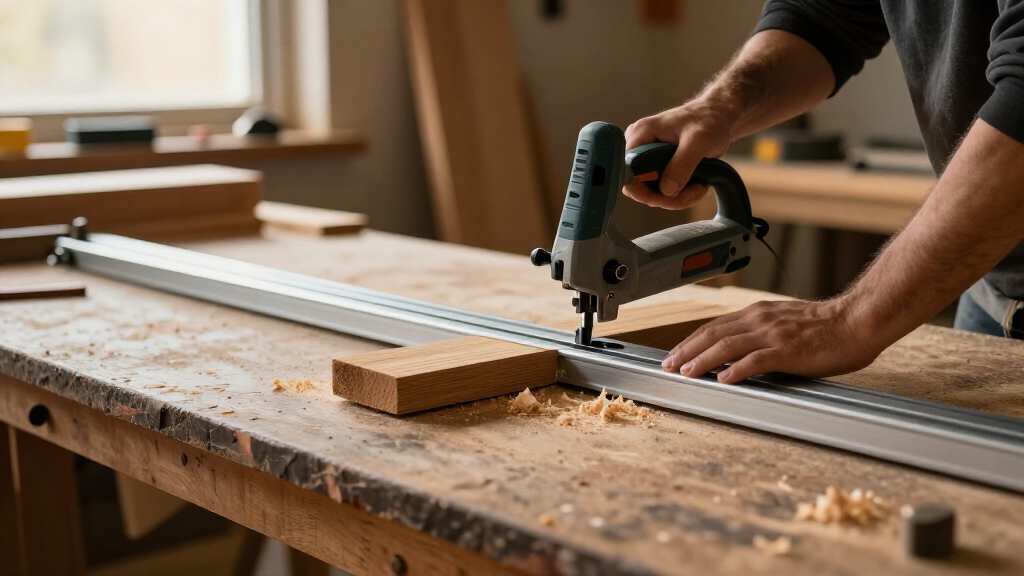
I ranked these track saws on five factors that actually affect woodworking outcomes: cut quality (splinter control on veneered plywood and melamine, smoothness of plunge action), depth capacity and accuracy (whether depth stops and bevel adjustments stay repeatable), rail system quality (anti-slip strips, connector compatibility, and how well the saw tracks without drift), ergonomics and dust extraction, and value relative to intended user. A budget saw wasn’t penalized for lacking Festool-level refinements — it was judged on whether a hobbyist making occasional cabinets would be satisfied.
The ranking logic favors saws that balance all five criteria over one-trick picks. That’s why the Festool TS 55 leads despite its cost, the Makita SP6000J1 sits right behind it as the smarter buy for most people, and the cordless models slot in based on how well they handle sustained sheet-goods work rather than just short crosscuts. Budget models from VEVOR, WEN, and Evolution round out the list for woodworkers whose projects don’t justify professional-grade tooling.
Factors to Consider When Choosing Track Saws For Woodworking
Before committing to a track saw, it helps to understand the tradeoffs that shape real-world performance in a woodworking shop. These are the factors that separated the top picks from the rest — and the mistakes buyers make most often.Corded vs. Cordless: Match the Power Source to Your Workflow
Cordless track saws from Milwaukee, Makita, and DEWALT have closed the power gap considerably, but the decision is less about torque and more about workflow. If you break down sheet goods in a shop with outlets nearby, a corded saw wins on sustained power, zero battery cost, and consistent RPM under load — batteries sag when you’re ripping a full 8-foot sheet of 3/4-inch ply. Cordless shines for site work, garage shops without convenient power, or anyone already invested in a battery platform. A common mistake is buying cordless for the convenience and then discovering that heavy sheet-ripping drains batteries fast enough that you end up buying a second set anyway. Also note that some bare-tool listings assume you already own batteries and a charger, which can erase the price advantage if you’re starting from scratch.
The Rail System Matters as Much as the Saw
Many buyers fixate on the saw and treat the rail as an accessory, but the rail determines whether your cut is straight, splinter-free, and repeatable. Premium rails from Festool and Makita use anti-slip strips and replaceable splinter guards that hold the material edge clean on both sides of the cut; budget rails often rely on friction pads that can slip on smooth surfaces and lack integrated splinter control. Check whether extra rails and connectors are affordable and available — you’ll eventually want to join rails for cutting full 8-foot sheets, and proprietary systems vary widely in cost. Rail clamps are another hidden expense on entry-level kits. If you expect to build cabinets regularly, factor the total rail ecosystem cost into your comparison rather than just the saw’s sticker.
Blade Size and Depth Capacity: Know Your Thickest Material
Most of these saws use 6-1/2-inch blades with roughly 2-inch cutting depth at 90 degrees — enough for single-pass cuts in standard hardwood lumber and plywood. The 7-1/4-inch models from WEN and Evolution add depth headroom for thicker stock, but bigger blades also mean slightly more tear-out risk on fragile veneers unless you slow the feed rate. Where capacity really matters is bevel cutting: depth drops quickly at 45 degrees, and some saws struggle to bevel through 1-1/2-inch hardwood in one pass. Think honestly about what you cut most often. If it’s sheet goods and 4/4 lumber, the standard 6-1/2-inch format is fine; if you work with thick beams or timbers alongside woodworking tasks, the larger format earns its place.
Plunge Mechanism and Depth Stops: The Refinement Tax
The difference between a $200 and a $600 track saw is mostly felt here. Premium saws have smooth, dampened plunge action with micro-adjustable depth stops, fixed-depth detents for scoring passes, and bevel detents you can trust without checking with a square every time. Budget saws plunge with more friction, and their depth scales can be vague enough that you test-cut scrap first — a real tax when you’re making twenty repeatable cabinet parts. Scoring capability deserves special attention if you cut melamine or veneered plywood: a shallow scoring pass followed by a full-depth pass eliminates tear-out almost entirely, and only some saws make this easy. This is the single biggest reason professionals pay for Festool and Makita.
Dust Extraction: Underrated Until You Breathe It
Track saws throw a fine cloud of dust exactly at torso height, so extraction quality affects both health and visibility of your cut line. Festool and Makita design their housings around vacuum attachment and capture the majority of dust when paired with a extractor; budget models often have token dust ports that clog or miss the plunge-point debris entirely. If you work in a shared garage or basement shop, budget for a shop vacuum or dust extractor alongside the saw, and verify the port size matches your hose — adapters are cheap but annoying. This is also a legitimate reason to stay within one brand ecosystem, since matched saw-and-extractor systems switch on automatically and seal properly.
Multi-Material Claims: Useful Flexibility or Compromise?
Saws like the Evolution R185CCSX advertise cutting wood, metal, and plastic with one tool, which sounds appealing to mixed-material makers. The tradeoff is that multi-material blades typically leave a slightly rougher wood edge than fine-tooth woodworking blades, so you may end up buying a dedicated blade anyway for furniture-grade cuts. My advice: treat multi-material capability as a bonus, not a primary buying reason, unless your projects genuinely mix materials. For pure woodworking, a saw optimized for wood with a 48-tooth or finer blade will outperform a jack-of-all-trades on the cuts that matter most. Blade availability and cost for your chosen format should also influence the decision, since blades are a recurring expense.
Frequently Asked Questions
Is a track saw better than a table saw for breaking down sheet goods?
For sheet goods specifically, a track saw is usually the better first tool. A full 4×8 sheet is awkward and borderline dangerous to handle alone on a table saw, while a track saw lets you cut it flat on a bench or on insulation boards with perfect accuracy. Table saws still win for repeatable narrow rips, tenons, and anything requiring a fence-and-miter-gauge workflow. Most serious woodworking shops end up owning both, but if you’re building cabinets or plywood-based furniture and can only buy one, the track saw handles the hardest, most dangerous task — sheet breakdown — more safely and often more accurately than a mid-range table saw.
Can I use Festool guide rails with a Makita or DEWALT track saw?
Largely yes, with caveats. Festool, Makita, and DEWALT rails share a similar profile, and many woodworkers run Makita saws on Festool rails successfully because both use adjustable cams to fine-tune the fit against the rail. The saw may need its guide-block adjustment dialed in to eliminate side play, otherwise you get slight cut drift over long rip lengths. What doesn’t transfer cleanly is the splinter guard alignment — each brand’s guard is cut to that saw’s blade position, so mixing systems means your marked cut line may sit slightly off. It works, but if precision repeatability matters, staying within one rail ecosystem reduces fiddling.
Do I need variable speed on a track saw for woodworking?
It depends on your materials. Solid wood and construction ply cut fine at full speed, so a single-speed saw handles typical furniture work. Variable speed earns its keep when cutting veneered plywood, melamine, or plastics — slowing the blade reduces heat, melting, and edge burnishing, especially on long cuts. It also helps when using finer-tooth blades that perform better below maximum RPM. In this lineup, the WEN CT1274 and Festool models offer variable speed while most standard plunge saws run fixed. If you primarily work with hardwood and standard ply, don’t pay extra for it; if melamine cabinets are in your future, it’s a worthwhile feature.
How long of a guide rail do I actually need?
For crosscutting standard 4×8 sheets, a 55-inch rail covers the 48-inch dimension, which is why most kits include that length. For ripping the full 96-inch length of a sheet, you’ll need either a second rail joined with a connector or a single 118-inch rail. Joined rails can develop a slight misalignment at the joint if not carefully squared, so a one-piece long rail is more reliable for repeated full-length rips. A practical starter setup is one 55-inch rail plus a good connector, then adding length only when a project demands it. Also consider rail clamps — on glossy melamine or thin stock, clamps prevent the heartbreak of a rail shifting mid-cut.
Are budget track saws under $200 worth buying for a hobbyist?
For a hobbyist cutting a few sheets a month, budget saws from VEVOR and WEN genuinely deliver straight, track-guided cuts that beat any circular saw with a straightedge clamped to the workpiece. The compromises show up in finish quality and consistency: expect more splintering on veneered ply without a scoring pass, plunge action with noticeable friction, and depth/bevel scales that need verification on scrap. Rails on these kits are also lighter and more prone to slipping on smooth surfaces, so clamps are close to mandatory. If your projects are utility-grade — shop furniture, subfloor patching, garage shelving — the savings are real. If you’re building fine furniture with visible ply edges, the upgrade to a Makita SP6000-class saw pays for itself in reduced rework.
Conclusion
The right track saw depends on what your woodworking actually demands. For the best overall choice, the Festool TS 55 FEQ-F-Plus (or the FEQ-F-Plus-FS kit if you don’t own rails) is the tool professionals reach for when cut quality can’t be compromised. The best value pick is the Makita SP6000J1 kit — it bundles a 55-inch rail and case at a price that undercuts Festool while delivering near-identical results on wood. For cordless convenience, the Milwaukee M18 FUEL and Makita X2 LXT brushless models are the strongest battery-powered options, best for site work or shops where mobility matters.
Beginners and casual hobbyists should look at the WEN CT1065 or the VEVOR kit — both make track cutting accessible without a big investment, and their limitations won’t matter for occasional projects. The Evolution R185CCSX earns its spot for mixed-material makers who occasionally cut aluminum or steel alongside wood, while the DEWALT DWS520K suits users tied to the DEWALT ecosystem who want a dependable corded workhorse. Whatever you choose, invest in a good blade and proper rail support — those two decisions shape cut quality as much as the saw itself.
Fall yard work Picks
leaf blowers
As an affiliate, we earn on qualifying purchases.