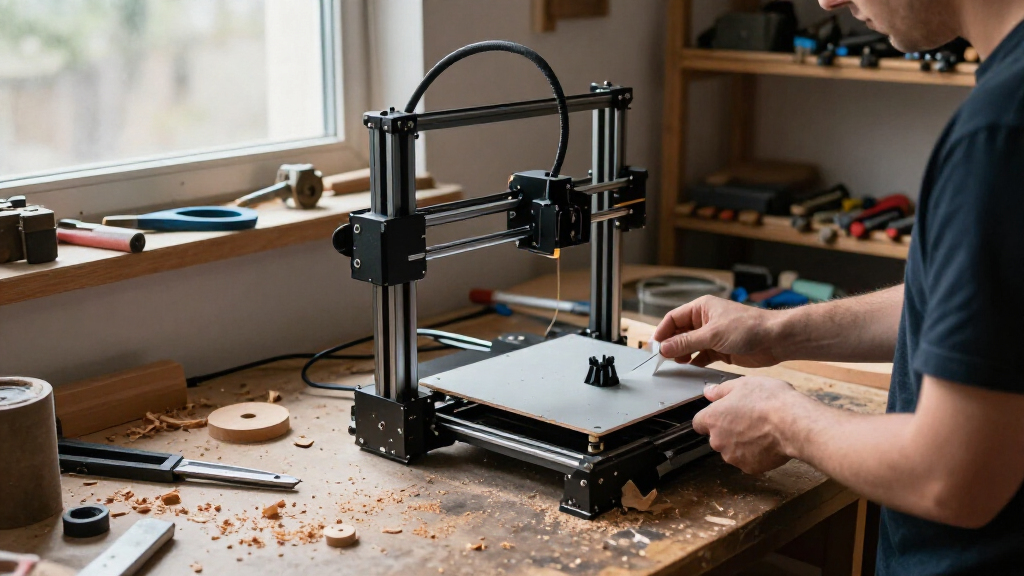
The best 3D printers balance dependable print quality and manageable setup with the features your projects actually need. My best overall pick is the Bambu Lab P2S Combo, which pairs a general-purpose printer with an enclosed multicolor system; the Bambu Lab A1 is a simpler fit for many first-time buyers, while the Creality K2 Plus Combo stands out for larger prints and a bundled multicolor workflow. The main tradeoffs are build volume versus desk space, ease of use versus hands-on control, and multicolor capability versus added hardware and filament handling. My ranking weighs those differences rather than treating speed or color count as the whole story. Read on for the full comparison, buying advice, and recommendations by buyer type.

Get business pricing on tools and workshop supplies
- Business-only prices and quantity discounts
- Tax-exempt purchasing
- Multiple users, one account, clear invoices
Complete the kit


Key Takeaways
- The Bambu Lab P2S Combo earns the overall lead by combining an enclosed printer and multicolor system, making it a more complete starting point than buying a printer and add-ons separately.
- The Creality K2 Plus Combo is the large-format pick: its bigger build capacity suits projects that would need to be split on smaller machines, though it asks for more room.
- The Bambu Lab A1 and Creality Ender 3 V3 SE Bundle suit different entry-level priorities: the A1 emphasizes a streamlined modern workflow, while the Ender bundle supplies PLA filament for getting started.
- Multicolor printers use different approaches: bundled filament systems and tool-changing designs can reduce some workflow friction, but color changes still add planning, hardware, and material-management demands.
- Several models share a family name but not the same buyer fit: compare the Kobra X, Kobra S1, and Creality K2 variants by enclosure, build capacity, and included color system instead of assuming the higher-sounding name is automatically better.
| Creality K2 Plus Combo 3D Printer |  | Best for Large Multicolor Prints | Build volume: 350 × 350 × 350 mm | Maximum print speed: 600 mm/s | Maximum nozzle temperature: 350°C | VIEW LATEST PRICE | See Our Full Breakdown |
| Creality K2 Plus 3D Printer |  | Best for Large-Format Speed | Build volume: 350 × 350 × 350 mm | Maximum print speed: 600 mm/s | Acceleration: 30,000 mm/s² | VIEW LATEST PRICE | See Our Full Breakdown |
| Bambu Lab P1S 3D Printer |  | Best Enclosed Printer for Easier Setup | Maximum print speed: 500 mm/s | Multicolor capability: Up to 16 colors with optional AMS | Enclosure: Enclosed design | VIEW LATEST PRICE | See Our Full Breakdown |
| Creality K2 Combo 3D Printer with Multi-Color Filament System |  | Best Included Multicolor Setup | Build volume: 10.24 × 10.24 × 10.24 inches | Maximum print speed: Up to 600 mm/s | Multicolor system: CFS; up to 16 colors | VIEW LATEST PRICE | See Our Full Breakdown |
| Creality Ender 3 V3 SE 3D Printer Bundle with PLA Filament |  | Best Starter Bundle | Printing speed: 250 mm/s | Acceleration: 2,500 mm/s² | Extruder: Sprite direct-metal dual-gear | VIEW LATEST PRICE | See Our Full Breakdown |
| Anycubic Kobra X 3D Printer – Native 4-Color, Expandable to 19 Colors with 4 ACE 2 Pro |  | Best for High-Throughput Multicolor Production | Build volume: 260 × 260 × 260 mm | Maximum print speed: 600 mm/s | Color capacity: 4 colors native; expandable to 19 with 4 ACE 2 Pro systems | VIEW LATEST PRICE | See Our Full Breakdown |
| Anycubic Kobra S1 Max FDM 3D Printer – Fully Enclosed CoreXY System |  | Best for Large Enclosed Prints | Build volume: 350 × 350 × 350 mm | Maximum print speed: 600 mm/s | Default print speed: 300 mm/s | VIEW LATEST PRICE | See Our Full Breakdown |
| Original Prusa CORE One+ DIY Enclosed High-Speed CoreXY 3D Printer Kit |  | Best for Hands-On Builders and Offline Workflows | Printer type: DIY enclosed CoreXY kit | Assembly time: 15–20 hours | Chamber temperature: Up to 55°C | VIEW LATEST PRICE | See Our Full Breakdown |
| Anycubic Kobra S1 ACE 2 Pro Combo 3D Printer with Auto Leveling |  | Best for Quiet Multicolor Desktop Printing | Build volume: 250 × 250 × 250 mm | Maximum print speed: 600 mm/s | Hotend temperature: Up to 320°C | VIEW LATEST PRICE | See Our Full Breakdown |
| Snapmaker U1 3D Printer with 4-Toolhead and 5-Second Tool Changer – Multi-Color Printing |  | Best for Fast Multi-Material Tool Changes | Printer type: CoreXY | Toolheads: 4 | Tool change time: 5 seconds | VIEW LATEST PRICE | See Our Full Breakdown |
| FLASHFORGE Creator 5 Pro 4-Toolhead 3D Printer |  | Best for Engineering Materials | Toolheads: 4 independent | Maximum print speed: 600 mm/s | Maximum chamber temperature: 65°C | VIEW LATEST PRICE | See Our Full Breakdown |
| Bambu Lab A1 3D Printer |  | Best for Beginners | Model: PF002-A | Acceleration: 10,000 mm/s² | Noise level: ≤48 dB | VIEW LATEST PRICE | See Our Full Breakdown |
| Bambu Lab P2S Combo – P2S 3D Printer & AMS 2 Pro Multi‑Color Printing |  | Best All-in-One Multi-Material Combo | Model number: PF004-U+SA007-AU | Maximum print speed: 600 mm/s | Included filament system: AMS 2 Pro | VIEW LATEST PRICE | See Our Full Breakdown |
| Flashforge Adventurer 5M 3D Printer with Auto Leveling, 600mm/s High Speed Printing, 280°C Direct Extruder, CoreXY All Metal Structure, Print Size 220x220x220mm |  | Best for Fast Prototyping | Print volume: 220 x 220 x 220 mm | Maximum print speed: 600 mm/s | Maximum extruder temperature: 280°C | VIEW LATEST PRICE | See Our Full Breakdown |
| Anycubic Kobra X Multicolor 3D Printer |  | Best for Expandable Color Printing | Build volume: 260 x 260 x 260 mm | Maximum print speed: 600 mm/s | Maximum nozzle temperature: 300°C | VIEW LATEST PRICE | See Our Full Breakdown |
| 3D printer | Maximum print speed | Dimensions | Weight | Build volume |
|---|---|---|---|---|
| Creality K2 Plus Combo 3D Prin | 600 mm/s | 16.1 × 15.4 × 18.7 inches | 70.4 pounds | 350 × 350 × 350 mm |
| Creality K2 Plus 3D Printer | 600 mm/s | 19.29 × 20.28 × 25.2 inches | 99 pounds | 350 × 350 × 350 mm |
| Bambu Lab P1S 3D Printer | 500 mm/s | 15.31 × 18.03 × 15.31 inches | 38.9 pounds | — |
| Creality K2 Combo 3D Printer w | Up to 600 mm/s | 17.24 × 18.58 × 16.7 inches | 39.7 pounds | 10.24 × 10.24 × 10.24 inches |
| Creality Ender 3 V3 SE 3D Prin | — | — | — | — |
| Anycubic Kobra X 3D Printer | 600 mm/s | 17.93 × 17.53 × 18.16 in | 20.9 lb | 260 × 260 × 260 mm |
| Anycubic Kobra S1 Max FDM 3D P | 600 mm/s | — | — | 350 × 350 × 350 mm |
| Original Prusa CORE One+ DIY E | — | 16.3 × 17.5 × 21.8 in | 53.9 lb | — |
| Anycubic Kobra S1 ACE 2 Pro Co | 600 mm/s | 15.76 × 16.14 × 19.19 in | 39.6 lb | 250 × 250 × 250 mm |
| Snapmaker U1 3D Printer with 4 | 500 mm/s | 22.6 × 13 × 14.2 in | 57.9 lb | 270 × 270 × 270 mm |
| FLASHFORGE Creator 5 Pro 4-Too | 600 mm/s | 16 x 14 x 18 inches | 39 pounds | — |
| Bambu Lab A1 3D Printer | — | 21.76 x 20.83 x 12.87 inches | 22 pounds | — |
| Bambu Lab P2S Combo | 600 mm/s | 18 x 22 x 18 inches | 46.3 pounds | — |
| Flashforge Adventurer 5M 3D Pr | 600 mm/s | — | — | — |
| Anycubic Kobra X Multicolor 3D | 600 mm/s | — | — | 260 x 260 x 260 mm |
More Details on Our Top Picks
Creality K2 Plus Combo 3D Printer
The K2 Plus Combo is the strongest fit here when both oversized parts and color variety matter. Its 350 × 350 × 350 mm build volume gives it room for larger one-piece prints or batches, while four CFS units support up to 16 colors. That combination sets it apart from the smaller Bambu Lab P1S, which is easier to accommodate but needs an optional AMS for multicolor work. The K2 Plus Combo also pairs a stated 600 mm/s top speed with dual AI cameras and sensor-based monitoring, aiming to reduce hands-on oversight during long jobs. The tradeoff is substantial: at 70.4 pounds, it needs a dedicated, sturdy workspace, and a four-unit filament system adds setup complexity. Its high-temperature capability also calls for appropriate ventilation and material-safety practices.
Pros:- Large 350 mm cubic build area accommodates parts and batches that exceed the P1S’s more compact format.
- Four CFS units support up to 16 colors in a print.
- 600 mm/s stated maximum speed and step-servo motors target faster production.
- Dual AI cameras and 18 smart sensors support monitoring and automated adjustments.
Cons:- At 70.4 pounds and with a large footprint, it is difficult to relocate and needs dedicated space.
- The four-unit CFS arrangement adds setup and filament-management complexity.
- The 350°C maximum nozzle temperature calls for careful material handling and suitable ventilation.
Best for: Makers and small shops printing large, multicolor models or batches who have room for a heavy enclosed machine and can manage a CFS setup.
Not ideal for: First-time users seeking a compact, simple printer, or anyone without a stable workspace and suitable ventilation.
- Build volume:350 × 350 × 350 mm
- Maximum print speed:600 mm/s
- Maximum nozzle temperature:350°C
- Filament temperature control:Up to 60°C
- Multicolor system:Four CFS units; up to 16 colors
- Monitoring and sensors:Dual AI cameras; 18 smart sensors
- Dimensions:16.1 × 15.4 × 18.7 inches
- Weight:70.4 pounds
Our verdict“Choose the K2 Plus Combo if large-format multicolor capacity matters more than a lighter, simpler setup.”
Creality K2 Plus 3D Printer
The K2 Plus makes more sense for buyers who want the K2 platform’s large build area and speed but do not need multicolor printing from day one. It offers a 350 mm cubic build volume and a stated maximum of 600 mm/s, matching the K2 Plus Combo’s headline capacity; however, this version requires a separately purchased CFS module for multicolor and multimaterial jobs. That makes it a more modular choice, not a ready-made multicolor package. Compared with the Creality K2 Combo, it is the pick for someone willing to add filament-system capability later, while its 99-pound weight makes it less convenient to move than the Ender 3 V3 SE. Pre-assembly, automatic leveling, dual cameras, and 18 sensors reduce initial setup work, but the machine still demands substantial space.
Pros:- 350 × 350 × 350 mm build volume accommodates large parts and batch jobs.
- Stated maximum speed of 600 mm/s and acceleration of 30,000 mm/s² target faster production.
- Pre-assembled setup and automatic leveling reduce initial assembly and bed setup.
- Dual AI cameras and 18 sensors provide monitoring and automated print checks.
Cons:- CFS is optional, so multicolor printing requires an additional module.
- At 99 pounds, the printer is especially difficult to move.
- Its large dimensions require more workspace than the P1S or Ender 3 V3 SE.
Best for: Makers who need a large build area and fast printing now, with the option to add CFS multicolor capability later.
Not ideal for: Buyers who want multicolor printing included immediately, or people who need a printer they can easily move between workspaces.
- Build volume:350 × 350 × 350 mm
- Maximum print speed:600 mm/s
- Acceleration:30,000 mm/s²
- Noise level:45 dB
- Multicolor capability:Available with optional CFS module
- Monitoring:Dual AI cameras
- Dimensions:19.29 × 20.28 × 25.2 inches
- Weight:99 pounds
Our verdict“Pick the K2 Plus if you need its large, fast platform and prefer to decide on multicolor hardware separately.”
Bambu Lab P1S 3D Printer
The Bambu Lab P1S is the more approachable enclosed option in this group: it is described as ready to use, with a stated 15-minute setup and automatic bed leveling. Its enclosed design helps manage printing conditions for advanced filaments, while its 500 mm/s maximum speed remains high even beside the Creality K2 Plus and its 600 mm/s claim. The P1S gives up the Creality machines’ much larger 350 mm build volume, so it is better suited to everyday projects than oversized parts. Multicolor printing is possible with an optional AMS, but that is another component to arrange rather than an included capability. It also is not suitable for carbon- or glass-fiber-reinforced polymers, which narrows its appeal for buyers focused on those materials.
Pros:- Enclosed design helps provide a more controlled printing environment than the open Ender 3 V3 SE.
- Up to 500 mm/s printing speed supports shorter jobs.
- Automatic bed leveling and a stated 15-minute setup simplify getting started.
- Optional AMS expands the printer to multicolor and multimaterial printing.
Cons:- AMS is required for multicolor printing and is not included in the stated setup.
- Its build area is smaller than the 350 mm cubic Creality K2 Plus models.
- It is not suitable for carbon- or glass-fiber-reinforced polymers.
Best for: Makers who want a fast, enclosed FDM printer for routine projects and advanced filaments, with the option to add an AMS later.
Not ideal for: Users needing a 350 mm build area, included multicolor hardware, or support for carbon- and glass-fiber-reinforced polymers.
- Maximum print speed:500 mm/s
- Multicolor capability:Up to 16 colors with optional AMS
- Enclosure:Enclosed design
- Bed setup:Automatic bed leveling
- Setup time:15 minutes, as stated in product information
- Supported material limitation:Not suitable for carbon- or glass-fiber-reinforced polymers
- Dimensions:15.31 × 18.03 × 15.31 inches
- Weight:38.9 pounds
Our verdict“Choose the P1S for an enclosed, quick-start printer that trades the K2 Plus models’ larger build area for a more compact setup.”
Creality K2 Combo 3D Printer with Multi-Color Filament System
The Creality K2 Combo brings a CFS multicolor system in the package, making it a clearer choice than the standalone K2 Plus for buyers who already know they want color changes in a single job. It supports up to 16 colors, prints at a stated maximum of 600 mm/s, and provides a 10.24-inch cubic build area. That is generous for many projects, though smaller than the 350 mm cubic volume of the K2 Plus Combo, so oversized parts may need splitting. Its aluminum frame and hardened-steel direct-drive extruder are aimed at a durable, capable setup, while auto-leveling and an AI camera add automation. The costs of this capability are physical bulk and a more involved multicolor workflow; new users may find filament handling less straightforward than the P1S’s simpler single-printer setup.
Pros:- Included CFS supports up to 16 colors without requiring a separate multicolor module purchase.
- 10.24-inch cubic build volume fits projects larger than many compact desktop printers.
- Stated print speed reaches 600 mm/s.
- Aluminum-alloy frame and hardened-steel direct-drive extruder provide a robust hardware foundation.
Cons:- Build volume is smaller than the 350 mm cubic K2 Plus Combo, limiting the size of one-piece prints.
- The CFS system adds filament setup and management work compared with the P1S.
- At 39.7 pounds, it needs a stable location and is not especially portable.
Best for: Makers who want CFS multicolor printing included and need a roomy printer for detailed models and moderate-sized parts.
Not ideal for: Buyers printing very large one-piece objects, or beginners who want the simplest possible filament setup.
- Build volume:10.24 × 10.24 × 10.24 inches
- Maximum print speed:Up to 600 mm/s
- Multicolor system:CFS; up to 16 colors
- Maximum nozzle temperature:300°C
- Frame material:Aerospace aluminum alloy
- Extruder:Hardened-steel direct-drive extruder
- Dimensions:17.24 × 18.58 × 16.7 inches
- Weight:39.7 pounds
Our verdict“Choose the K2 Combo if included 16-color printing matters more than the K2 Plus Combo’s larger build area.”
Creality Ender 3 V3 SE 3D Printer Bundle with PLA Filament
The Ender 3 V3 SE bundle is the practical entry point in this lineup: it includes four PLA spools and favors straightforward single-color printing over the CFS systems on the K2 models. Its stated 250 mm/s speed is lower than the 500 mm/s P1S and 600 mm/s Creality options, but the Sprite direct-drive extruder supports PLA, TPU, and PETG, giving new makers room to try several common materials. CR Touch leveling and a strain sensor for Z-offset reduce some routine calibration work. Unlike the enclosed P1S, though, this printer has no build chamber, so it is a less suitable pick for temperature-sensitive materials. Assembly and calibration are also required, meaning it is not the ready-to-use option for buyers who want to print immediately.
Pros:- Bundle includes four PLA spools in assorted colors, giving beginners material for early projects.
- Sprite direct-drive dual-gear extruder supports PLA, TPU, and PETG.
- CR Touch leveling and strain-sensor Z-offset reduce manual bed calibration.
- Dual Z-axis and steel Y-axis shafts support a stable motion system.
Cons:- Requires assembly and calibration, unlike the ready-to-use P1S.
- Open frame is less suited to temperature-sensitive materials than an enclosed printer.
- Its stated 250 mm/s speed is below the P1S and K2 models.
Best for: New hobbyists who want a conventional single-color printer, common filament compatibility, and several PLA spools to start with.
Not ideal for: Makers seeking enclosed printing, multicolor output, the fastest production, or a printer that needs little assembly.
- Printing speed:250 mm/s
- Acceleration:2,500 mm/s²
- Extruder:Sprite direct-metal dual-gear
- Auto leveling:CR Touch sensor
- Z-offset sensor:Strain sensor
- Motion system:Dual Z-axis lead screws; 8 mm steel Y-axis shafts
- Supported filaments:PLA, TPU, PETG
- Included filament:Four PLA spools in black, white, red, and blue
Our verdict“Choose the Ender 3 V3 SE bundle if you want an accessible single-color starter setup and do not need an enclosure or multicolor system.”
Anycubic Kobra X 3D Printer – Native 4-Color, Expandable to 19 Colors with 4 ACE 2 Pro
The Kobra X is the strongest fit here for buyers prioritizing color capacity and production throughput. It prints in four colors natively and can expand to 19 with four ACE 2 Pro systems, a wider palette than the Kobra S1 ACE 2 Pro Combo’s expansion to 16. Its 600 mm/s speed and top-mounted layout are geared toward producing more custom orders without taking up as much floor space as a large enclosed machine such as the Kobra S1 Max.
That focus comes with a setup cost: the expandable multicolor system may need additional calibration, so it is less appealing if you want the simplest path to single-color prints. Its 260 mm cube build area also gives you less room for oversized parts than the S1 Max. I’d choose it for repeatable, colorful production, not for maximum part size or a plug-and-play workflow.
Pros:- Native four-color printing with expansion up to 19 colors supports complex custom designs.
- 600 mm/s maximum speed is suited to higher-volume production.
- Top-mounted architecture can help conserve floor space in dense printer setups.
- AI monitoring, auto-leveling, and recovery features can reduce interruptions during unattended jobs.
Cons:- The expanded multicolor setup can require extra installation and calibration.
- The 260 mm cubic build volume is smaller than the Kobra S1 Max’s 350 mm cube.
- Its feature set is more involved than needed for buyers who only print in one color.
Best for: Small print-farm operators and custom-product makers who need fast multicolor output while keeping printer footprint compact.
Not ideal for: Buyers who mainly print large single-color parts or want a simple machine without extra multicolor setup and calibration.
- Build volume:260 × 260 × 260 mm
- Maximum print speed:600 mm/s
- Color capacity:4 colors native; expandable to 19 with 4 ACE 2 Pro systems
- Auto-leveling:LeviQ 3.0, 49-point mesh
- Camera:720p AI-powered monitoring
- Dimensions:17.93 × 17.53 × 18.16 in
- Weight:20.9 lb
Our verdict“Choose the Kobra X if fast, expandable multicolor production matters more than a simpler setup or the larger build area of the Kobra S1 Max.”
Anycubic Kobra S1 Max FDM 3D Printer – Fully Enclosed CoreXY System
The Kobra S1 Max earns its place through build volume and material range, not multicolor flexibility. Its 350 mm cubic workspace is substantially larger than the Kobra S1 ACE 2 Pro Combo’s 250 mm cube, giving buyers room for large prototypes, functional parts, or several smaller pieces in one job. A heated chamber and 350°C hotend also make it better suited to demanding filaments than the Kobra X, whose appeal centers on color capacity and production speed.
The tradeoff is a machine that is hard to tuck away: at 69.3 pounds and over 20 inches in two dimensions, it is the least convenient option here to move or reposition. The 600 mm/s maximum is useful, though the stated default is 300 mm/s. I’d pick it for large enclosed builds and skip it if desk space or frequent relocation matters more.
Pros:- 350 mm cubic build volume accommodates larger models than the Kobra X or Kobra S1 ACE 2 Pro Combo.
- Heated chamber and 350°C hotend support a broad range of materials.
- CoreXY motion system combines high stated speed with a stable enclosed design.
- Specified operating noise of 45–48 dB suits some shared home or studio spaces.
Cons:- At 69.3 pounds, it is difficult to relocate once set up.
- Its large enclosure needs considerably more space than compact desktop options.
- The 600 mm/s figure is a maximum; the listed default print speed is 300 mm/s.
Best for: Prototypers and workshop users who need an enclosed printer for large parts and temperature-sensitive engineering materials.
Not ideal for: Apartment users with limited workspace or anyone who needs a lightweight printer that can be moved between work areas.
- Build volume:350 × 350 × 350 mm
- Maximum print speed:600 mm/s
- Default print speed:300 mm/s
- Hotend temperature:Up to 350°C
- Heated bed temperature:Up to 120°C
- Chamber temperature:Up to 65°C
- Noise level:45–48 dB
- Dimensions and weight:20.08 × 22.83 × 18.9 in; 69.3 lb
Our verdict“Pick the Kobra S1 Max when large enclosed prints and material capability outweigh its heavy, space-demanding footprint.”
Original Prusa CORE One+ DIY Enclosed High-Speed CoreXY 3D Printer Kit
The CORE One+ is the pick for buyers who want to understand and assemble their printer rather than unbox a ready-built machine. Its solder-free kit and photo-led instructions make the 15–20-hour build more approachable, while the all-steel frame and enclosed chamber suit users working with engineering filaments. Compared with the Anycubic Kobra S1 Max, it is described as compact and offers offline-capable operation with a removable Wi-Fi module, a useful distinction for workshops that keep design files off connected devices.
The assembly time is the main tradeoff, and its 53.9-pound weight makes the finished printer no casual carry. The provided specs also do not give a build volume or a numerical print speed, so buyers seeking clearly stated capacity and speed may prefer the Kobra S1 Max or Snapmaker U1. I’d choose this kit for control and a hands-on build, not convenience.
Pros:- Solder-free assembly with detailed photographic guides gives builders a structured setup process.
- All-steel CoreXY frame is designed for stability during high-speed printing.
- Enclosure and chamber temperatures up to 55°C support engineering-material workflows.
- Removable Wi-Fi module allows an offline-capable setup.
Cons:- Assembly takes a stated 15–20 hours before printing can begin.
- At 53.9 pounds, the assembled printer is heavy to move.
- The supplied product data does not state build volume or a numerical print speed.
Best for: Technically curious makers, educators, and small workshops willing to spend time assembling a printer and wanting an offline-capable workflow.
Not ideal for: Buyers who need a ready-to-print machine, a quick setup, or clearly specified build volume and print speed before purchase.
- Printer type:DIY enclosed CoreXY kit
- Assembly time:15–20 hours
- Chamber temperature:Up to 55°C
- Connectivity:Offline-capable; removable Wi-Fi module
- Frame:All-steel exoskeleton
- Dimensions:16.3 × 17.5 × 21.8 in
- Weight:53.9 lb
- Manufacturer:Prusa Research
Our verdict“Choose the CORE One+ kit if you value a hands-on build and offline-capable enclosed printing more than immediate setup.”
Anycubic Kobra S1 ACE 2 Pro Combo 3D Printer with Auto Leveling
This combo makes the most sense for home users who want multicolor printing with filament care built in. It supports four colors as supplied and can expand to 16, while its ACE 2 Pro system dries filament at 65°C and stores it in a sealed environment. That gives it a practical advantage over the Snapmaker U1 if keeping moisture-sensitive material ready to print matters more than having four separate toolheads. Its 44 dB operating noise is also lower than the Kobra S1 Max’s stated 45–48 dB range.
Its 250 mm cube build area is smaller than the Kobra X’s 260 mm cube and far below the S1 Max’s 350 mm cube. The printer is still nearly 40 pounds, and the ACE Pro and ACE 2 Pro cannot run together. I’d pick it for quieter, managed multicolor desktop work, but not for oversized builds or a highly flexible accessory setup.
Pros:- Four-color printing can expand to 16 colors for more elaborate designs.
- Active drying at 65°C and sealed filament storage help manage moisture-sensitive material.
- Specified 44 dB noise level is lower than the Kobra S1 Max’s stated range.
- 320°C hotend and CoreXY motion support a broad set of printing tasks.
Cons:- The 250 mm cubic build area is smaller than the Kobra X and much smaller than the Kobra S1 Max.
- At 39.6 pounds, it is not an easy printer to move often.
- ACE Pro and ACE 2 Pro cannot be used at the same time.
Best for: Home makers who want enclosed multicolor printing, active filament drying, and relatively quiet operation in one desktop setup.
Not ideal for: Users printing oversized parts or owners who need to use ACE Pro and ACE 2 Pro together for a more flexible filament system.
- Build volume:250 × 250 × 250 mm
- Maximum print speed:600 mm/s
- Hotend temperature:Up to 320°C
- Filament drying temperature:Up to 65°C
- Color capacity:4 colors standard; expandable to 16
- Noise level:44 dB
- Dimensions:15.76 × 16.14 × 19.19 in
- Weight:39.6 lb
Our verdict“Choose this combo for quieter multicolor printing with built-in filament drying, provided its build area and accessory limits fit your workflow.”
Snapmaker U1 3D Printer with 4-Toolhead and 5-Second Tool Changer – Multi-Color Printing
The Snapmaker U1 stands apart from the Anycubic color systems by using four toolheads and a five-second automatic tool changer. Rather than relying on repeated filament swaps through one nozzle, it can switch between toolheads for multicolor or multimaterial jobs, including soluble supports. That makes it a stronger fit for prints combining different materials than the Kobra S1 ACE 2 Pro Combo, whose appeal leans more on color capacity and filament drying. Its 270 mm cubic build volume also exceeds that combo’s 250 mm cube.
The U1’s 500 mm/s maximum is below the 600 mm/s figures listed for the Anycubic Kobra models, and at 57.9 pounds it is a substantial machine to place or move. The extra toolhead system also makes it a more specialized choice than a basic single-material printer. I’d favor it when material separation and fast tool changes matter more than peak stated speed or portability.
Pros:- Four toolheads and a five-second automatic changer support rapid switching between colors and materials.
- Supports materials including PLA, TPU, ABS, and soluble supports.
- 270 mm cubic build volume is larger than the Kobra S1 ACE 2 Pro Combo’s 250 mm cube.
- Smart calibration, AI monitoring, and a touchscreen add hands-on control and print oversight.
Cons:- Its 500 mm/s maximum is lower than the 600 mm/s listed for the Anycubic Kobra models in this roundup.
- At 57.9 pounds, it is heavy and requires a stable, dedicated location.
- The four-toolhead system is more specialized than necessary for buyers who only print single-material parts.
Best for: Makers and small production teams printing multicolor parts, mixed materials, or soluble-support models who want fast automatic tool changes.
Not ideal for: Buyers focused on the highest stated speed, a lightweight desktop printer, or uncomplicated single-material printing.
- Printer type:CoreXY
- Toolheads:4
- Tool change time:5 seconds
- Build volume:270 × 270 × 270 mm
- Maximum print speed:500 mm/s
- Dimensions:22.6 × 13 × 14.2 in
- Weight:57.9 lb
Our verdict“Choose the Snapmaker U1 if fast tool changes and mixed-material printing matter more to you than peak speed or a lighter setup.”
FLASHFORGE Creator 5 Pro 4-Toolhead 3D Printer
The Creator 5 Pro is the specialist pick here: its four independent toolheads switch materials with near-zero purge waste, while an actively heated chamber reaching 65°C is designed for demanding filaments such as ABS, PC, and PA. That combination makes it a better fit for functional parts than the open-frame Bambu Lab A1, which is aimed more at accessible everyday printing and requires an optional module for multi-color work. CoreXY motion, vibration compensation, and speeds up to 600 mm/s add production pace, and HEPA 13 plus activated-carbon filtration supports a more controlled workspace. The tradeoff is size and complexity: at 39 pounds, it needs a sturdy, dedicated spot, and its industrial features bring a steeper learning curve than simpler options like the A1.
Pros:- Four independent toolheads reduce purge waste during multi-material and color prints.
- Heated chamber supports printing with ABS, PC, and PA.
- CoreXY motion system and vibration compensation support fast printing up to 600 mm/s.
- HEPA 13 and activated-carbon filtration provide filtration for the enclosed printer.
Cons:- At 39 pounds, it is heavy and needs a stable, dedicated work surface.
- Industrial features and four-toolhead operation can be a steep start for beginners.
- Its specialized engineering-material capabilities may be unnecessary for users printing mostly basic PLA models.
Best for: Experienced makers and small workshops printing engineering materials or frequent multi-material parts with minimal purge waste.
Not ideal for: First-time users seeking a straightforward, compact printer for occasional PLA projects; its heated chamber and multi-toolhead setup add complexity and require a sturdy workspace.
- Toolheads:4 independent
- Maximum print speed:600 mm/s
- Maximum chamber temperature:65°C
- Motion system:CoreXY with linear rails
- Filtration:Dual HEPA 13 and activated carbon
- Dimensions:16 x 14 x 18 inches
- Weight:39 pounds
Our verdict“Choose the Creator 5 Pro if engineering filaments and low-waste multi-material printing matter more than a simple setup or a lightweight machine.”
Bambu Lab A1 3D Printer
The Bambu Lab A1 is the most approachable choice in this group for someone who wants fast FDM printing without making calibration a project of its own. Full-auto calibration and active flow-rate compensation are designed to reduce setup adjustments and help keep extrusion consistent; the quiet operation, rated at ≤48 dB, is also a practical plus in a shared home workspace. Compared with the faster-feature-packed Flashforge Adventurer 5M, the A1 leans more heavily on beginner-friendly operation and a simple touchscreen interface rather than a list of workflow extras. Its quick-swap nozzle helps with routine maintenance. The main catch is multi-color printing: the AMS lite is optional, so it is not an all-in-one color setup out of the box. Its 22-pound weight and broad footprint also make it less convenient to move or tuck away.
Pros:- Full-auto calibration reduces manual setup work for first-time users.
- Active flow-rate compensation supports consistent extrusion.
- Active motor noise canceling keeps operation rated at no more than 48 dB.
- Quick-swap nozzle and touchscreen interface simplify routine use.
Cons:- Multi-color printing requires the optional AMS lite module.
- At 22 pounds, it is not especially convenient to move.
- Its listed dimensions call for a substantial amount of workspace.
Best for: New hobbyists and households who want automatic setup, quiet operation, and a clear path into everyday FDM printing.
Not ideal for: Buyers who want multi-color printing included from day one, or anyone needing a compact printer that is easy to move between workspaces.
- Model:PF002-A
- Acceleration:10,000 mm/s²
- Noise level:≤48 dB
- Dimensions:21.76 x 20.83 x 12.87 inches
- Weight:22 pounds
- Multi-color system:Optional AMS lite module
Our verdict“Pick the A1 for beginner-friendly, quiet printing, but look elsewhere if you want multi-color hardware included or a smaller footprint.”
Bambu Lab P2S Combo – P2S 3D Printer & AMS 2 Pro Multi‑Color Printing
The Bambu Lab P2S Combo earns its place as the ready-to-go multi-material pick: the printer and AMS 2 Pro are bundled, with filament drying built into the system. That gives it a more complete color-printing setup than the Bambu Lab A1, where the AMS lite is an additional module, and makes it a less specialized alternative to the four-toolhead FLASHFORGE Creator 5 Pro. AI error detection, automatic calibration, and quick-swap nozzles are intended to shorten the route from setup to printing, while adaptive airflow and a carbon filter support a more controlled printing environment. Speeds reach 600 mm/s, but the 46.3-pound package is bulky and difficult to relocate. Buyers who only need single-color prints may be carrying more hardware than their projects call for.
Pros:- AMS 2 Pro is included for multi-color and multi-material printing.
- Built-in filament drying supports more reliable material handling.
- AI error detection and automatic calibration reduce manual oversight.
- Print speeds reach 600 mm/s, with adaptive airflow and a carbon filter.
Cons:- The 46.3-pound weight makes relocation difficult.
- Its 18 x 22 x 18-inch dimensions require substantial workspace.
- The bundled multi-material system may be unnecessary for users who print only in one color.
Best for: Makers who want an integrated multi-color workflow, filament drying, and automated setup in one bundled system.
Not ideal for: Single-color hobbyists with limited workspace, or buyers who need a lighter printer they can regularly move.
- Model number:PF004-U+SA007-AU
- Maximum print speed:600 mm/s
- Included filament system:AMS 2 Pro
- Filament feature:Built-in drying
- Dimensions:18 x 22 x 18 inches
- Weight:46.3 pounds
- Manufacturer:Shenzhen Tuozhu Technology Co., Ltd.
Our verdict“Choose the P2S Combo if you want multi-color printing and filament drying bundled together and have room for a heavy machine.”
Flashforge Adventurer 5M 3D Printer with Auto Leveling, 600mm/s High Speed Printing, 280°C Direct Extruder, CoreXY All Metal Structure, Print Size 220x220x220mm
The Flashforge Adventurer 5M is a practical speed-focused choice for quick prototypes: automatic bed leveling handles a setup task that can slow down new users, while its CoreXY system is rated for travel speeds up to 600 mm/s. The 3-second detachable nozzle makes nozzle changes less of a production interruption, and warm-up to 200°C in 35 seconds helps get a print underway sooner. Compared with the beginner-oriented Bambu Lab A1, the 5M puts more emphasis on rapid workflow and hotend convenience than quiet operation and flow compensation. Its 220 mm cubed build volume is useful for many everyday parts, but it is not a large-format option, and the supplied details do not describe an enclosed heated chamber like the Creator 5 Pro. The 22-pound body and broad footprint also need a permanent spot.
Pros:- Automatic bed leveling reduces manual first-layer setup.
- CoreXY system supports travel speeds up to 600 mm/s.
- Detachable nozzle can be changed in about three seconds.
- Heats to 200°C in 35 seconds and supports remote monitoring through Flash Studio.
Cons:- The 220 x 220 x 220 mm build volume limits larger projects.
- At 22 pounds with a footprint over 15 inches in two dimensions, it needs dedicated space.
- The listed features do not include an actively heated chamber for engineering-material printing.
Best for: Makers, educators, and small prototyping teams who print mostly standard materials and value quick starts and fast nozzle changes.
Not ideal for: Users printing large parts or seeking an enclosed heated chamber for engineering materials; its build volume and described features are better suited to general prototyping.
- Print volume:220 x 220 x 220 mm
- Maximum print speed:600 mm/s
- Maximum extruder temperature:280°C
- Nozzle change:3-second detachable nozzle
- Warm-up:35 seconds to 200°C
- Bed leveling:Automatic
- Dimensions and weight:15.83 x 14.29 x 17.64 inches; 22 pounds
Our verdict“Choose the Adventurer 5M for fast, general-purpose prototyping and easy nozzle swaps, not for large prints or chamber-dependent materials.”
Anycubic Kobra X Multicolor 3D Printer
The Anycubic Kobra X makes multi-color printing its central appeal: four filament colors are built in, with expansion support for up to 19 hues. That is a more immediate color setup than the Bambu Lab A1, which needs an optional AMS lite, while its 260 mm cubed build volume offers more room than the Adventurer 5M’s 220 mm cubed space. AI-driven 49-point bed leveling is intended to help with first layers, and the hardened-steel nozzle reaches up to 300°C. Wi-Fi and LAN support remote access, with operation rated around 45 dB. The tradeoffs are practical: filament spools are not included, the listed ACE 2 Pro and ACE Pro units are incompatible, and the 23 x 13 x 22-inch body takes up considerable room. Buyers should confirm accessory compatibility before expanding the system.
Pros:- Four built-in filament colors, with expansion support up to 19 hues.
- 260 x 260 x 260 mm build volume exceeds the Adventurer 5M’s listed print volume.
- AI camera and 49-point auto bed leveling support first-layer setup.
- Dual-band Wi-Fi and LAN allow remote monitoring and control.
Cons:- Filament spools are not included.
- ACE 2 Pro and ACE Pro units are incompatible, which limits accessory choices.
- The 23 x 13 x 22-inch dimensions require substantial workspace.
Best for: Makers who want built-in four-color printing, room to expand the palette, and a larger build area for colorful models.
Not ideal for: Buyers with limited workspace or anyone planning to use ACE 2 Pro or ACE Pro units; those accessories are listed as incompatible.
- Build volume:260 x 260 x 260 mm
- Maximum print speed:600 mm/s
- Maximum nozzle temperature:300°C
- Built-in colors:4; expandable to 19 hues
- Connectivity:Dual-band Wi-Fi (2.4G/5G) and LAN
- Noise level:45 dB
- Dimensions and weight:23 x 13 x 22 inches; 20.9 pounds
- Accessory compatibility:ACE 2 Pro and ACE Pro units are incompatible
Our verdict“Pick the Kobra X if built-in multicolor printing and expansion matter more than a compact footprint or broad accessory compatibility.”
How We Picked
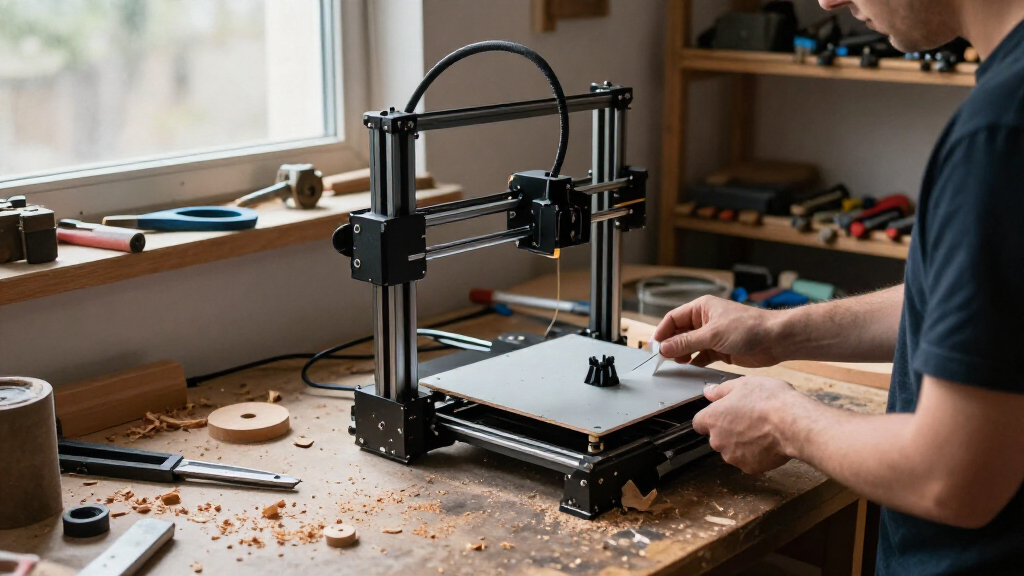
I compared these 15 machines on the things that shape ownership: expected usability, build volume, enclosure and motion design, material flexibility, multicolor workflow, and the amount of setup or maintenance a buyer may take on. I also considered whether a bundle includes useful equipment or mainly adds complexity, and whether the printer’s strengths match a clear use case. Product names and listed features help establish capability, but a headline speed or color count alone does not tell a buyer how well a machine fits a workspace or a typical project.
The ranking favors balanced capability and a clear audience over a single standout spec. That puts the Bambu Lab P2S Combo first as a broadly equipped option, while the Creality K2 Plus Combo ranks highly for buyers who need more build space. More focused machines follow: the A1 and Ender 3 V3 SE Bundle for entry-level needs, CoreXY and enclosed models for buyers prioritizing a different mix of speed, materials, and workspace, and multicolor or tool-changing designs for color-focused workflows. A lower position does not make a printer a poor choice; it usually means its strengths serve a narrower set of buyers or involve a more specific tradeoff.
Factors to Consider When Choosing Best 3D Printers
Before choosing a machine, I would match the printer to the parts you expect to make and the amount of involvement you want from setup through cleanup. A longer feature list can be useful, but each extra capability can bring new workflow steps, space needs, or maintenance. These factors help separate a printer that fits your routine from one whose headline specs go unused.
Choose Build Volume Around Your Actual Parts
Start with the largest objects you expect to print, not the biggest object you can imagine making someday. A generous build area can prevent splitting a model into several pieces, which means fewer joins and less assembly, but it also takes up more room. Measure the printer’s footprint and leave space for access, ventilation, filament, and any connected accessories. Buyers who mostly make brackets, miniatures, or small household replacements may gain little from a large-format machine. A common mistake is comparing build-volume figures without checking whether a tall, wide, or long part is the limiting dimension. If your work varies, choose enough capacity for a representative project rather than paying in space and complexity for rare exceptions.
Treat Multicolor as a Workflow Choice
Multicolor printing is useful for labeled parts, decorative objects, and prototypes that benefit from visible color separation, but it is not automatically the right upgrade. The printer may switch filament or tools during a job, adding steps and making the process more involved than a single-color print. Before choosing a system, ask how often you will use multiple colors and whether you need several colors in one object or simply want to swap filament between jobs. Consider where extra filament will sit and how you will keep it organized and ready. A high advertised color count does not by itself tell you how convenient a typical print will be. If color is occasional, a simpler printer may leave more room in your budget and routine for materials and useful accessories.
Match Enclosure and Materials to the Job
An enclosed printer can offer a more contained workspace and may suit jobs that call for materials or conditions beyond basic PLA printing. It also adds size and can limit where the printer fits, so check the enclosure’s external dimensions rather than just the printable area. If your projects are mainly small PLA parts, the practical benefit may be modest compared with an open design. Buyers often assume that an enclosure alone means every engineering material is a good fit; material compatibility also depends on the printer’s hot end, bed, and recommended operating conditions. Review those specifications for the filament you plan to use. Choose around your regular materials, since the most capable machine is not always the most useful one for a simple print queue.
Decide How Much Setup and Maintenance You Want
Some printers are marketed as ready to print, while kits and more specialized machines can ask the owner to do more assembly, calibration, or upkeep. A kit can appeal to buyers who want to understand the machine and are comfortable following build instructions, but it may not be the easiest route to a first successful print. Automatic leveling can reduce one recurring setup task; it does not remove the need to place the printer well, load filament correctly, or maintain moving parts. Think about whether troubleshooting is a hobby you enjoy or an interruption you would rather avoid. Also check the availability of replacement parts and guidance before committing to a less familiar design. A slightly less ambitious printer can be the better choice if it leaves you more time to make things.
Look Beyond Headline Speed
High maximum speed can shorten suitable jobs, but a single speed figure does not describe print quality across materials, shapes, and layer settings. Fine details, tall objects, and parts with complex movement may call for more conservative settings. Consider the motion system and overall machine design alongside speed claims, then ask whether your usual prints would benefit from faster production. If you print batches of functional parts, throughput may matter more than it does for occasional one-off models. Buyers can overvalue a maximum speed and overlook the time spent preparing files, changing materials, or finishing prints. Compare the full workflow, not just how quickly the printer can move under selected conditions.
Compare Bundles With the Accessories You Need
A bundle can simplify the first purchase by including a multicolor unit, filament, or other equipment, but included components only add value if they match your plans. Check exactly what is in the box and whether the printer can work as a straightforward single-color machine without add-ons. Filament supplied with a bundle can help you get started, yet it should not outweigh the printer’s fit, workspace needs, or ongoing material costs. A frequent buying mistake is comparing bundle titles instead of the actual included hardware. Make a short list of what you would otherwise buy separately, then compare that list with the package contents. This keeps an attractive bundle from steering you toward a machine whose core strengths do not suit your projects.
Frequently Asked Questions
Should I buy a multicolor printer if I am new to 3D printing?
Choose multicolor if you already have projects that benefit from several colors or you expect to use that feature regularly. If you are still learning how to prepare models, choose materials, and manage print jobs, a simpler single-color setup can keep the early workflow easier to understand. A multicolor system adds equipment and material handling, so its value depends on how often you use it. You can also begin with a capable printer that works well in single-color mode and add a color system only if your needs grow. In this roundup, the Bambu Lab A1 and Ender 3 V3 SE Bundle are better starting points for buyers who do not yet know whether they need multicolor.
Is a larger build volume worth giving up desk space?
It is worth it when your regular parts are too large for a smaller machine or when splitting a model would create extra assembly and weaker joints. For small models and everyday replacement parts, a compact build area may cover most jobs without consuming as much workspace. Measure both the print area and the printer’s external footprint, including clearance for doors, filament, and connected equipment. Larger machines can also make it easier to batch several parts, but that advantage matters most if you print regularly. The Creality K2 Plus Combo is the large-format choice here; buyers whose projects stay small may prefer a more space-conscious model.
What should I check before choosing a printer kit?
Check how much assembly is required, what tools or extra parts are needed, and whether the instructions and support fit your experience level. A kit can suit a buyer who wants more involvement and is comfortable working through a build, but assembly time is part of the ownership commitment. Confirm whether the package includes the components needed to begin printing or whether key items must be sourced separately. Also consider how you will handle troubleshooting if the printer does not behave as expected after assembly. The Original Prusa CORE One+ kit is the clearest kit-oriented option in this lineup, so it makes more sense for hands-on buyers than for someone seeking the simplest start.
Does an advertised high print speed mean every job finishes faster?
No. A maximum speed describes a capability under selected conditions, not a promise that every model will print quickly at that rate. Small details, material choice, layer settings, and the shape of a part can all affect how fast a good-quality job can run. A printer may be useful for production or repeated batches even if you choose slower settings for detailed work. Compare the design and workflow along with the speed claim, and decide whether your usual projects are limited by printer time. For occasional prints, ease of setup and consistent results may matter more than the highest stated speed.
How do I choose between a multicolor filament system and a tool-changing printer?
Start with the kinds of prints you want to make and the amount of setup you are willing to manage. A filament system and a tool-changing design handle color changes differently, so compare the included hardware, operating steps, and compatibility rather than focusing only on the number of colors listed. Tool-changing models such as the Snapmaker U1 and FLASHFORGE Creator 5 Pro may appeal to buyers seeking a dedicated multi-tool workflow, while bundled filament systems are a different route to color printing. Check whether single-color jobs remain straightforward and how the setup fits your available space. If multicolor work will be rare, a simpler machine may be easier to live with; if it is central to your projects, compare the complete color workflow before choosing.
Conclusion
For most buyers seeking one machine with a broad feature set, I recommend the Bambu Lab P2S Combo as best overall. The Bambu Lab A1 is my best pick for beginners who want a more approachable starting point, while the Creality Ender 3 V3 SE Bundle is a useful value-oriented option for buyers who want starter PLA included and do not need an elaborate color setup. Choose the Creality K2 Plus Combo as best for large-format work, and look at the enclosed CoreXY models or Original Prusa CORE One+ kit as premium-minded alternatives if their particular build approach and hands-on demands fit your plans. For buyers focused on multicolor production, compare the Snapmaker U1 and FLASHFORGE Creator 5 Pro with the bundled filament-system models, paying attention to the workflow rather than the color count alone. My final rule: buy for the projects you expect to print often, not for a feature you may rarely use.