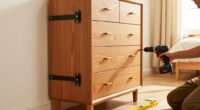
A benchtop planer is the fastest way to turn rough-sawn lumber into flat, consistent stock, and the field in 2026 splits cleanly into two camps: spiral or helical cutterheads that leave a glass-smooth finish with tiny replaceable inserts, and traditional straight-knife planers that cost less but demand more sanding and more frequent blade work. My overall pick is the DEWALT DW735X, which pairs a powerful 15-amp motor, two cutting speeds, and a fan-assisted chip exhaust in a package that has earned its reputation in small shops everywhere. If budget leads your decision, the VEVOR 13-Inch Two-Blade models deliver honest 13-inch capacity at a fraction of the price, while the WOODERS 13-Inch Spiral Helical brings insert-cutterhead cutting quality to mid-range money. The main tradeoffs you’ll weigh are finish quality versus price, snipe control versus machine weight, and cutterhead longevity versus upfront cost. Keep reading for the full breakdown of all 15 machines.

Get business pricing on tools and workshop supplies
- Business-only prices and quantity discounts
- Tax-exempt purchasing
- Multiple users, one account, clear invoices
Complete the kit


Key Takeaways
- Cutterhead type was the single biggest differentiator in this lineup: the spiral and helical models (WOODERS, WEN PL1337, FindBuyTool, VEVOR Spiral) produced visibly better finish and cheaper long-term maintenance than every straight-knife machine.
- The DEWALT DW735X earned best overall not for raw features but for the total package: three-knife cutting, two speeds, and best-in-class snipe control that budget 13-inch clones couldn’t match.
- VEVOR appears five times in this roundup, and the comparison revealed real quality gaps within the brand itself — the two-speed three-blade version outperforms the basic two-blade units noticeably for a small price step up.
- The CRAFTSMAN CMEW320 and DEWALT DW734 are the strongest straight-knife values because parts and replacement knives are widely available, unlike several imported brands with proprietary blade sizing.
- The Triton TPT125 is the only 12.5-inch machine here, and that narrower capacity — plus its lighter build — makes it a specialist pick for small shops rather than a head-to-head rival to the 13-inch models.
| WOODERS 13-Inch Thickness Planer with Spiral Helical Cutterhead |  | Best Premium Finish | Brand: WOODERS | Model: WDS-PL13-15S | Planing width: 13 inches | VIEW LATEST PRICE | See Our Full Breakdown |
| WEN PL1326 13-Inch Spiral Benchtop Thickness Planer |  | Best Value Spiral Cutterhead | Brand: WEN | Model: PL1326 | Motor: 15 amps | VIEW LATEST PRICE | See Our Full Breakdown |
| CRAFTSMAN 15-Amp Benchtop Planer with Two-Knife Solid Steel Cutter Head (CMEW320) |  | Best for Beginners | Brand: CRAFTSMAN | Model: CMEW320 | Motor: 15 amps | VIEW LATEST PRICE | See Our Full Breakdown |
| FindBuyTool 13-Inch Benchtop Thickness Planer with Helical Cutterhead |  | Best for Precision Repeat Cuts | Brand: FindBuyTool | Model: FB131H | Cutterhead: Helical, 4-row, 40 tungsten carbide insert knives | VIEW LATEST PRICE | See Our Full Breakdown |
| WOODERS 13-Inch Benchtop Thickness Planer, 15A, 2000W |  | Best Budget Workhorse | Brand: WOODERS | Model: PL13-15AB | Motor: 15A, 2000W all-copper | VIEW LATEST PRICE | See Our Full Breakdown |
| VEVOR 13-Inch Benchtop Thickness Planer |  | Best Complete Starter Package | Motor: 15 AMP, 1800W | Blade speed: 8000 rpm | Feed speed: 6 m/min (236 in/min) | VIEW LATEST PRICE | See Our Full Breakdown |
| WEN 13-Inch Two-Speed Benchtop Thickness Planer with Spiral Cutterhead (PL1337) | 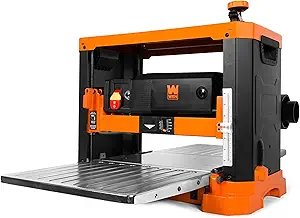 | Best Spiral Head for the Money | Model: PL1337 | Planing width: 13 inches | Maximum board thickness: 6 inches | VIEW LATEST PRICE | See Our Full Breakdown |
| VEVOR 13-Inch Two-Blade Benchtop Thickness Planer, 15-Amp 2000W Motor |  | Best Budget Workhorse | Planing width: 13 in | Maximum board thickness: 6 in | Motor power: 2000 W, 15 A | VIEW LATEST PRICE | See Our Full Breakdown |
| VEVOR 13-Inch Spiral Benchtop Thickness Planer |  | Best for Smooth Cuts on a Tight Budget | Model: M1B-LS-3301 | Planing width: 13 inches | Worktable: 28.2 inches long; supports boards up to 6 inches high | VIEW LATEST PRICE | See Our Full Breakdown |
| Triton TPT125 High-Performance Benchtop Planer, 12.5-Inch Cutting Width | 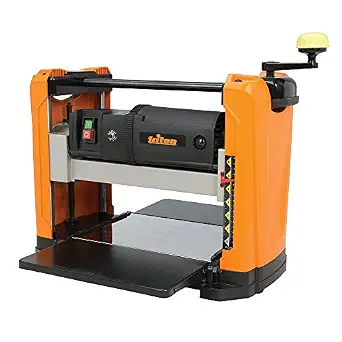 | Best for Precise Thickness Control | Model: TPT125 | Cutting width: 12.5 inches (317 mm) | Workpiece height range: 1/8 to 5.9 inches | VIEW LATEST PRICE | See Our Full Breakdown |
| VEVOR 13-Inch Two-Speed Benchtop Thickness Planer |  | Best Budget Two-Speed Pick | Planing width: 13 inches | Motor power: 2000 W | Cutting speed: Up to 24,000 CPM | VIEW LATEST PRICE | See Our Full Breakdown |
| VEVOR 13-Inch Two-Speed Benchtop Thickness Planer with Three-Blade Cutter |  | Best for Long Boards | Working width: 13 inches | Maximum board thickness: 6 inches | Table support length: 35 inches with extensions | VIEW LATEST PRICE | See Our Full Breakdown |
| VEVOR 13-Inch Two-Blade Benchtop Thickness Planer |  | Best Bare-Bones Starter | Planer width: 13 inches | Motor power: 1800W | Cutting speed: Up to 16,000 CPM | VIEW LATEST PRICE | See Our Full Breakdown |
| DEWALT 13-Inch Two-Speed Thickness Planer, 15 Amp (DW735X) |  | Best Overall | Planer width: 13 inches | Motor: 15 amp, 20,000 RPM | Cutter head: Three knives, 10,000 RPM | VIEW LATEST PRICE | See Our Full Breakdown |
| DEWALT 15-Amp 12.5-Inch Benchtop Planer with 3-Knife Cutter (DW734) |  | Best Mid-Range Workhorse | Motor: 15 amp, 20,000 RPM | Cutter head: Three-knife, 10,000 RPM | Cuts per inch: 96 | VIEW LATEST PRICE | See Our Full Breakdown |
| benchtop planers for woodworking | Motor | Model |
|---|---|---|
| WOODERS 13-Inch Thickness Plan | 15A, 2000W | WDS-PL13-15S |
| WEN PL1326 13-Inch Spiral Benc | 15 amps | PL1326 |
| CRAFTSMAN 15-Amp Benchtop Plan | 15 amps | CMEW320 |
| FindBuyTool 13-Inch Benchtop T | 15A, 20,000 RPM | FB131H |
| WOODERS 13-Inch Benchtop Thick | 15A, 2000W all-copper | PL13-15AB |
| VEVOR 13-Inch Benchtop Thickne | 15 AMP, 1800W | — |
| WEN 13-Inch Two-Speed Benchtop | 15 amps | PL1337 |
| VEVOR 13-Inch Two-Blade Bencht | — | — |
| VEVOR 13-Inch Spiral Benchtop | 2000W, 23,500 RPM | M1B-LS-3301 |
| Triton TPT125 High-Performance | — | TPT125 |
| VEVOR 13-Inch Two-Speed Bencht | — | — |
| VEVOR 13-Inch Two-Speed Bencht | 2000W, 23,500 rpm | — |
| VEVOR 13-Inch Two-Blade Bencht | — | — |
| DEWALT 13-Inch Two-Speed Thick | 15 amp, 20,000 RPM | — |
| DEWALT 15-Amp 12.5-Inch Bencht | 15 amp, 20,000 RPM | — |
More Details on Our Top Picks
WOODERS 13-Inch Thickness Planer with Spiral Helical Cutterhead
This option stands out for pairing a spiral helical cutterhead with tungsten carbide inserts with genuine micro-adjustable depth control — a combination usually reserved for machines costing far more. Compared with the FindBuyTool FB131H, the WOODERS trades the 40-insert count for a more serviceable setup: individual carbide inserts can be rotated or swapped, and four spares come in the box. The finish quality on figured hardwood is where this machine earns its slot, leaving surfaces that need minimal sanding. The tradeoff is weight — at 62 pounds, this is not a planer you will shuttle between job sites, and the 1/8-inch maximum cut per pass means heavy stock removal takes patience. This pick makes the most sense for a stationary hobbyist bench where finish quality outranks portability.
Pros:- Spiral carbide cutterhead delivers a smooth finish with reduced tear-out
- Micro-adjustable depth control enables fine, repeatable thicknessing
- Includes dust collector and four spare carbide inserts
- 13-inch width and 6.25-inch height capacity handles most stock
Cons:- 62-pound weight makes repositioning and transport difficult
- 1/8-inch maximum cut depth slows heavy stock removal
Best for: Woodworkers with a dedicated shop space who prioritize glass-smooth finishes on hardwood and figured lumber
Not ideal for: Anyone needing a portable or jobsite planer — at 62 pounds, moving it regularly is impractical
- Brand:WOODERS
- Model:WDS-PL13-15S
- Planing width:13 inches
- Material height range:1/4 to 6-1/4 inches
- Maximum cutting depth:1/8 inch per pass
- Motor:15A, 2000W
- Cutterhead:Spiral helical with tungsten carbide inserts, 10,000 RPM
- Weight:62 pounds
Our verdict“Buy this if finish quality on stubborn grain matters more than moving the machine around your shop.”
WEN PL1326 13-Inch Spiral Benchtop Thickness Planer
Getting a spiral cutterhead at a WEN price point is the whole story here. Most budget planers — like the WOODERS PL13-15AB — stick with straight HSS blades that tear out on tricky grain; the PL1326’s 26 staggered, rotatable blades produce a noticeably cleaner surface. Compared with the WOODERS WDS-PL13-15S, you give up carbide inserts (these are HSS, so they dull faster), but you gain a cast iron base and height-adjustable infeed and outfeed tables that reduce snipe — something several pricier competitors skip. The 26 FPM feed rate is steady rather than fast, and like everything in this class, removal tops out at 1/8 inch per pass. This model is better suited to weekend warriors who want spiral-cut quality without the premium price.
Pros:- Spiral cutterhead with 26 staggered blades leaves a smooth finish
- Cast iron base and adjustable feed tables help minimize snipe
- Depth stop and material removal gauge support precise results
- Adjustable dust port fits standard collection setups
Cons:- HSS blades dull faster than the carbide inserts on premium models
- Requires a sturdy bench or stand since it is not freestanding
Best for: Hobbyist woodworkers who want spiral-cutterhead finish quality on a modest budget
Not ideal for: High-volume production users — the HSS blades dull faster than carbide inserts under constant work
- Brand:WEN
- Model:PL1326
- Motor:15 amps
- Cutterhead:Spiral with 26 staggered rotatable HSS blades
- Maximum board width:13 inches
- Maximum board thickness:6 inches
- Feed rate:26 feet per minute
- Cutterhead speed:10,000 RPM
Our verdict“The smart middle ground for hobbyists who refuse to pay premium prices for a spiral cutterhead.”
CRAFTSMAN 15-Amp Benchtop Planer with Two-Knife Solid Steel Cutter Head (CMEW320)
Not everyone needs a helical cutterhead, and the CMEW320 makes that case well. Its quick-change two-knife cutter head is the friendliest blade-swap system in this lineup — beginners will appreciate not fussing with dozens of insert screws like on the WEN PL1326. The reversible, double-edged high-carbon steel knives effectively double cutting life before replacement, and the ball-bearing-mounted head runs smoothly for a straight-knife machine. The honest tradeoff: a two-knife straight head will show more tear-out on figured maple than any spiral option here, and it won’t match the DEWALT DW734’s three-knife cut quality. For dimensioning construction lumber, S4S boards, and first-project stock, though, those limits rarely matter. This pick makes the most sense for a first planer that stays simple.
Pros:- Quick-change knife system makes blade replacement genuinely easy
- Reversible double-edged knives extend cutting life
- 15-amp motor handles both hard and soft wood
- Vacuum port supports basic dust collection
Cons:- Two-knife straight head produces more tear-out than spiral cutterheads
- High-carbon steel knives are softer and less durable than carbide inserts
Best for: First-time planer owners who want simple maintenance and reliable dimensioning of common lumber
Not ideal for: Woodworkers working with figured or highly figured hardwoods — the two straight knives will tear out
- Brand:CRAFTSMAN
- Model:CMEW320
- Motor:15 amps
- Cutter head:Two-knife, quick-change solid steel
- Knife material:High-carbon steel
- Knives:Double-edged and reversible
- Dust collection:Vacuum port
Our verdict“A straightforward, low-fuss first planer for dimensioning ordinary stock — skip it if you mill figured hardwoods.”
FindBuyTool 13-Inch Benchtop Thickness Planer with Helical Cutterhead
Where the FindBuyTool FB131H separates itself is precision infrastructure: a four-column carriage design with an anti-wobble foundation, a stated thickness tolerance under 0.1 mm, and an eight-position depth stop for dialing in repeatable board thickness. The 40 tungsten carbide inserts across four rows out-blade the WEN PL1326’s 26 HSS cutters and should hold an edge longer. At 27.5 FPM with a 20,000 RPM cutterhead, it also runs faster than most of this batch. The catch is that this is built as a residential tabletop machine — lean on it with deep, aggressive passes and you will be making multiple light cuts to avoid bogging the motor. Compared with the WOODERS WDS-PL13-15S, it is faster and more precise but less robust for sustained heavy work.
Pros:- 40 carbide insert knives deliver smooth, low-noise, tear-free cuts
- Four-column design and tight under-0.1mm tolerance support precision
- Eight-position depth stop makes repeat thicknessing fast
- 27.5 FPM feed rate is quicker than most benchtop rivals
Cons:- Residential-duty frame requires multiple light passes on hardwood
- 1/8-inch maximum planing depth limits heavy stock removal
Best for: Woodworkers producing matched-thickness batches, like panel glue-ups and drawer stock, who need repeatable accuracy
Not ideal for: Users who rough-flatten thick, rough-sawn hardwood — the light-duty frame demands multiple shallow passes
- Brand:FindBuyTool
- Model:FB131H
- Cutterhead:Helical, 4-row, 40 tungsten carbide insert knives
- Motor:15A, 20,000 RPM
- Voltage:120V
- Feed rate:27.5 FPM
- Maximum planing width:13 inches
- Maximum planing depth:1/8 inch
- Depth stop:8 positions
Our verdict“The pick for batch-work accuracy — just plan on light passes rather than aggressive removal.”
WOODERS 13-Inch Benchtop Thickness Planer, 15A, 2000W
This is the straightforward, no-frills entry in the WOODERS line — and that is its appeal. The 2000W all-copper motor with overload protection gives it genuine grunt for a budget machine, and the inclusion of two spare blades plus a dust collector in the box stretches the value. Compared with its sibling, the WOODERS WDS-PL13-15S, you give up the spiral carbide cutterhead for a dual-edge HSS straight blade, which means more tear-out on difficult grain and more frequent sharpening. Against the CRAFTSMAN CMEW320, the advantage is the copper motor’s overload protection; the disadvantage is a less refined knife-changing system. Noise and vibration specs are not published, which is worth knowing going in. This option stands out for buyers who need honest 13-inch capacity at the lowest possible entry cost.
Pros:- 2000W copper motor with overload protection safeguards against burnout
- Two extra blades included extends usable life out of the box
- Full 13-inch width and 6.3-inch thickness capacity
- Dust port connects to a standard vacuum system
Cons:- Straight dual-edge HSS blades tear out more than spiral or helical cutterheads
- Noise and vibration performance is unspecified, and no warranty details are provided
Best for: Budget-conscious woodworkers who need full 13-inch capacity and motor protection without paying for a spiral cutterhead
Not ideal for: Finish-focused woodworkers milling figured hardwoods — the straight HSS blades will tear out
- Brand:WOODERS
- Model:PL13-15AB
- Motor:15A, 2000W all-copper
- Cutterhead speed:10,000 RPM
- Maximum width:13 inches
- Thickness range:1/4 to 6.3 inches
- Blade type:Dual-edge HSS
- Overload protection:Yes
Our verdict“The cheapest legitimate path to 13-inch planing — accept straight-blade finish limits and you get solid value.”
VEVOR 13-Inch Benchtop Thickness Planer
This VEVOR model stands out less for raw cutting performance and more for what comes in the box. While most benchtop planers arrive as a bare tool, this one includes a detachable stand, foldable extension tables, and return rollers, which means a woodworker can go from unboxing to dimensioning lumber without shopping for accessories or improvising a stable mounting surface. Compared with the VEVOR Two-Blade model (B0BYYHG7NJ), which requires you to supply your own work support, this package feels genuinely turnkey. The two HSS double-cutter blades and 8,000 rpm cutter speed deliver serviceable results on softwoods and lighter hardwoods, though the 6 m/min feed rate is fixed with no option for a slower finishing pass. The tradeoff for the bundled value is a more basic straight-knife cutterhead that will need more frequent sharpening than the spiral heads on the WEN PL1337 or VEVOR spiral model.
Pros:- Stand, extension tables, and return rollers are all included
- 13-inch width handles full-size boards
- Foldable design saves floor space in small shops
- Dust exhaust port connects to standard collection hose sizes
Cons:- Single fixed feed speed with no finish-quality option
- No published weight or noise data makes shop planning difficult
- Dust collection equipment must be purchased separately
Best for: Hobbyists setting up a first workshop who want a planer, stand, and material handling included in one purchase
Not ideal for: Woodworkers planing figured hardwoods — the straight HSS blades tear out more than a spiral cutterhead
- Motor:15 AMP, 1800W
- Blade speed:8000 rpm
- Feed speed:6 m/min (236 in/min)
- Maximum cutting width:13 in (330 mm)
- Cutting thickness:0.2–6.3 in (6–160 mm)
- Blades:2 HSS double-cutter blades
- Dust port:1.8 in inner / 2 in outer diameter
- Included components:Planer, stand, accessory set, 2 blades
Our verdict“Buy this if you want a ready-to-run planing station out of the box; skip it if you need variable feed speeds or spiral-head finish quality.”
WEN 13-Inch Two-Speed Benchtop Thickness Planer with Spiral Cutterhead (PL1337)
The PL1337 is the standout finish-quality pick in this batch because it pairs a 26-blade spiral cutterhead with two feed speeds, a combination usually reserved for pricier machines like the DEWALT DW735X. At 26 FPM you dimension quickly; at 16 FPM the cut density rises to 1,354 cuts per inch for a finer surface that often skips sanding. Compared with the VEVOR spiral model (B0FNX7VWGV), which is stuck at a single speed, the WEN gives you real control over the finish-versus-speed tradeoff. The staggered HSS inserts are also rotatable, so when one edge dulls or nicks, you turn it rather than replacing knives — a long-term cost saving that offsets the initial spend. The honest drawback is that you still need a dust collector; the combination 2-1/2-inch and 4-inch port will overwhelm a household shop vac on wide, deep cuts.
Pros:- Two feed speeds for fast dimensioning or fine finishing
- 26 rotatable HSS inserts reduce blade replacement costs
- Handles boards up to 13 inches wide and 6 inches thick
- Two-year warranty plus depth stop and removal gauge
Cons:- 13-inch width ceiling limits oversized stock
- Effective chip evacuation requires a real dust collector, not a shop vac
Best for: Serious hobbyists and small professional shops who want near-helical finish quality without paying premium-tool prices
Not ideal for: Occasional DIYers — the spiral head costs more upfront than straight-knife models and is overkill for rough construction lumber
- Model:PL1337
- Planing width:13 inches
- Maximum board thickness:6 inches
- Motor:15 amps
- Cutterhead:26 staggered, rotatable HSS blades; up to 10,000 RPM
- Feed rates:16 FPM and 26 FPM
- Cuts per inch:833 at 26 FPM; 1,354 at 16 FPM
- Max material removal per pass:1/8 inch
- Dust port:2-1/2-inch and 4-inch combination
Our verdict“This is the pick for woodworkers who judge a planer by its finish, since the spiral head and two-speed feed deliver results straight-knife rivals can’t match.”
VEVOR 13-Inch Two-Blade Benchtop Thickness Planer, 15-Amp 2000W Motor
If the goal is straightening and thicknessing construction lumber as cheaply as possible, this is the tool for that job. The 15-amp, 2000W motor is the strongest rating in this batch, and the quick-change two-knife solid steel cutterhead keeps blade swaps fast and inexpensive compared with replacing inserts on the WEN PL1337. Table extensions stretch total support to 35 inches, which helps keep longer boards flat without buying roller stands. Where it gives ground to the WEN and to the VEVOR spiral model is finish and flexibility: there’s no feed-speed choice, and straight knives will tear out on figured grain. Built-in over-current protection is a welcome safeguard when hogging off material near the 1/8-inch range. This model makes the most sense for deck builders and furniture makers working in pine, oak, and other predictable woods rather than exotic figured stock.
Pros:- Powerful 2000W, 15-amp motor handles aggressive cuts
- Quick-change two-knife head keeps blade costs low
- 35 inches of total table support stabilizes long stock
- Built-in over-current protection protects the motor
Cons:- Single-speed feed with no finish option
- Requires connection to a vacuum for acceptable chip removal
Best for: Budget-conscious makers who mostly plane softwoods and straight-grained lumber and want low blade-replacement costs
Not ideal for: Woodworkers running highly figured or tear-out-prone hardwoods — straight knives will frustrate them
- Planing width:13 in
- Maximum board thickness:6 in
- Motor power:2000 W, 15 A
- Motor speed:23,500 rpm
- Cutter head:Two-knife, quick-change solid steel
- Table support length:35 in total with extensions
- Over-current protection:20 A
Our verdict“A straightforward, low-cost workhorse for predictable woods — buy it for muscle and value, not for refined finish work.”
VEVOR 13-Inch Spiral Benchtop Thickness Planer
Positioned between the two VEVOR straight-knife models and the more feature-rich WEN PL1337, this machine brings a 24-insert spiral cutterhead to a lower price tier. The payoff is splinter-free cuts on both hard and soft woods, which neither the VEVOR Two-Blade planer nor the Triton TPT125 can promise with their conventional knives. A dual-roller feeding system keeps boards moving smoothly and reduces the snipe-inducing bounce you get on lighter machines, and the 28.2-inch worktable gives long boards real support. The obvious compromise versus the WEN PL1337 is the single feed speed — you can’t slow down for a finer final pass, so you’re accepting one compromise finish setting. Depth adjustment in 1/8-inch increments is coarser than the Triton’s 1/16-inch steps, which limits how precisely you can sneak up on a final thickness. Still, for tear-out-prone species, this is the cheapest path to spiral-head results here.
Pros:- 24-blade spiral cutterhead delivers splinter-free cuts
- Dual-roller feed keeps boards aligned and reduces vibration
- Large 28.2-inch worktable supports long boards
- Accepts both 2-inch and 4-inch dust hoses
Cons:- Single-speed operation with no finish feed option
- 1/8-inch depth increments limit fine adjustment
Best for: Woodworkers planing cherry, maple, or other tear-out-prone species who want spiral-head results at a budget price
Not ideal for: Precision woodworkers needing fine thickness control — 1/8-inch depth steps are too coarse for careful final passes
- Model:M1B-LS-3301
- Planing width:13 inches
- Worktable:28.2 inches long; supports boards up to 6 inches high
- Cutterhead:Spiral-style, 24 alloy blade inserts
- Motor:2000W, 23,500 RPM
- Cutting speed:Up to 8,000 CPM
- Depth adjustment:1/8-inch increments
- Dust hose compatibility:2-inch and 4-inch hoses
Our verdict“The most affordable route in this lineup to spiral-cutterhead smoothness, best for finish-conscious woodworkers who can live with coarse depth steps.”
Triton TPT125 High-Performance Benchtop Planer, 12.5-Inch Cutting Width
The TPT125 competes on precision rather than flashy cutterhead design. With 17,500 cuts per minute — the highest cut rate in this batch — and a depth crank set to 1/16-inch increments, it lets a woodworker creep up on a final dimension with twice the fineness of the VEVOR spiral model’s 1/8-inch steps. The four-post column keeps the cutterhead rigid under load, which translates directly to less snipe and more consistent thickness across a board’s length, a real advantage over lighter two-post designs. Its reversible dust chute, mountable on either side, is a thoughtful shop-layout touch none of the VEVOR models offer. The compromises are clear: at 12.5 inches wide it can’t quite match the 13-inch capacity of the others, and the 5.9-inch maximum workpiece height rules out reclaiming thick rough stock. This pick makes the most sense for fine furniture work where accuracy beats capacity.
Pros:- 17,500 cuts per minute produce a smooth finish
- 1/16-inch depth increments enable precise final passes
- Four-post column resists deflection and reduces snipe
- Reversible dust chute mounts on either side for shop flexibility
Cons:- 12.5-inch width falls short of the 13-inch standard
- 5.9-inch maximum workpiece height limits thick stock
Best for: Fine-furniture makers who prioritize repeatable 1/16-inch thickness accuracy over maximum capacity
Not ideal for: Woodworkers milling thick rough-sawn stock — the 5.9-inch height ceiling is the lowest in this batch
- Model:TPT125
- Cutting width:12.5 inches (317 mm)
- Workpiece height range:1/8 to 5.9 inches
- Cuts per minute:17,500
- Depth adjustment:1/16 inch (1.6 mm) increments
- Column design:Four-post
- Safety feature:Circuit breaker
- Dust extraction:Reversible dust chute, mounts either side
Our verdict“Choose the TPT125 when thickness precision and finish matter more than maximum width or tall-stock capacity.”
VEVOR 13-Inch Two-Speed Benchtop Thickness Planer
For buyers who want two feed speeds without the premium price, this model makes a strong case. The fast setting chews through rough hardwood while the slower one leaves a cleaner surface — a flexibility you normally pay more for, and something the closely related VEVOR Two-Blade Planer skips entirely with its single-speed feed. Dual rollers and a three-blade HSS cutter head keep boards moving steadily, and the 2-inch/4-inch dust hose compatibility means most shop vacs attach without adapters. Compared with the DEWALT DW735X, the tradeoff is clear: you get similar speed flexibility but not the build refinement, fan-assisted chip ejection, or warranty coverage. Capacity is also capped at 13 inches wide and 6 inches thick, so wide slabs are off the menu.
Pros:- Two feed speeds let you choose between fast stock removal and a smoother finish
- Dual feed rollers keep boards steady and reduce chatter
- Three HSS blades produce smoother cuts than two-blade budget rivals
- Works with both 2-inch and 4-inch dust hoses
Cons:- Maximum 6-inch workpiece height limits thick-stock projects
- HSS blades dull faster than the carbide cutters found on spiral-head competitors like the WOODERS spiral model
Best for: Hobbyist woodworkers who want two-speed flexibility for roughing and finishing passes on a tight budget
Not ideal for: Anyone planing wide boards or thick stock over 6 inches — the capacity ceiling rules that out
- Planing width:13 inches
- Motor power:2000 W
- Cutting speed:Up to 24,000 CPM
- Blades:Three HSS blades
- Feed system:Dual rollers, two speeds
- Depth adjustment:1/8-inch steps
- Dust hose compatibility:2-inch and 4-inch hoses
Our verdict“A sensible budget choice if you want speed control and solid feeding on a 13-inch workflow without paying DEWALT money.”
VEVOR 13-Inch Two-Speed Benchtop Thickness Planer with Three-Blade Cutter
Where most budget benchtop planers leave long stock teetering, this one stands out for its 35 inches of table support with extensions — a genuine advantage when flattening eight-foot shelving, as fewer mid-board wobbles mean less snipe. The quick-change three-knife solid steel cutter head and 24 ft/min / 15 ft/min feed pairing mirror the flexibility of the VEVOR Two-Speed model above, but the longer bed is the deciding difference between them. A 20A over-current breaker adds a layer of protection the cheaper VEVOR units don’t advertise. The catch: dust collection only works with a compatible vacuum, and like every VEVOR here, you’re still limited to 13 inches of width while the DEWALT DW735X offers a more refined overall package at a higher cost.
Pros:- 35 inches of extended table support reduces snipe on long boards
- Two feed speeds for roughing or finish passes
- Quick-change three-knife cutter head speeds up blade swaps
- 20A over-current protection guards against motor overload
Cons:- 13-inch width ceiling limits wider panel work
- Dust collection depends entirely on supplying your own vacuum
Best for: Small-shop woodworkers who regularly plane long lumber like shelving, tabletops, and trim stock
Not ideal for: Buyers without a shop vacuum — the dust port is effectively useless without one, and chip buildup becomes a problem fast
- Working width:13 inches
- Maximum board thickness:6 inches
- Table support length:35 inches with extensions
- Cutter head:Three-knife quick-change solid steel
- Feed speeds:24 and 15 ft/min
- Motor:2000W, 23,500 rpm
- Over-current protection:20A
Our verdict“The pick in this lineup if long-board support matters more to you than brand-name refinement.”
VEVOR 13-Inch Two-Blade Benchtop Thickness Planer
This is the simplest machine in the batch, and that’s the point. If you’re new to thickness planing and don’t want to think about feed speeds, the single-speed operation removes a variable — you set your 1/8-inch depth increment and feed the board. Compared with the VEVOR Three-Blade Two-Speed model, you give up a blade and both speed options, which means slower stock removal and a coarser finish, but you also sidestep complexity and cost. The 1800W motor and 16,000 CPM output are modest next to the DEWALT DW734’s 96 cuts per inch, so expect to take lighter passes on hardwood. The dual-roller feed and 2-inch/4-inch hose compatibility are genuinely useful touches at this level.
Pros:- Simple single-speed operation is beginner-friendly
- Dual rollers keep feeding steady with minimal snipe
- Fits common 2-inch and 4-inch dust hoses
- Large 28-inch worktable handles long or slightly warped boards
Cons:- No feed-speed adjustment limits finish control
- Two-blade cutter head is slower and rougher than three-knife rivals
- 6-inch maximum workpiece height restricts thick stock
Best for: First-time planer owners working on softwood projects who want a straightforward, no-settings machine
Not ideal for: Hardwood-heavy woodworkers or anyone wanting finish-pass quality — single speed and two blades will leave you sanding more
- Planer width:13 inches
- Motor power:1800W
- Cutting speed:Up to 16,000 CPM
- Blades:Two HSS blades
- Feed system:Dual rollers, single speed
- Depth adjustment:1/8-inch increments
- Dust hose compatibility:2-inch and 4-inch hoses
Our verdict“A learn-the-basics machine that does one thing simply — plan to upgrade if hardwood becomes your routine.”
DEWALT 13-Inch Two-Speed Thickness Planer, 15 Amp (DW735X)
This is the machine the rest of this roundup is measured against, and it earns the top spot through thoughtful engineering rather than raw specs alone. The fan-assisted chip ejection solves the clogging problem that plagues the VEVOR models’ vacuum-dependent dust ports, while the automatic carriage lock actively fights snipe — something no VEVOR here can claim. At 96 or 179 cuts per inch, the two-speed gearbox delivers a genuinely finer finish range than the VEVOR Two-Speed’s ft/min pairing. It also arrives with infeed/outfeed tables and an extra knife set, so the box is complete from day one, backed by a three-year warranty. The honest tradeoff: it costs considerably more than every VEVOR in this guide, and it’s heavy for a “benchtop” tool, so plan your workspace accordingly.
Pros:- Fan-assisted chip ejection keeps the cutter head clear without external dust collection
- Automatic carriage lock measurably reduces snipe
- Two feed speeds up to 179 cuts per inch for very fine finishes
- Includes infeed/outfeed tables, spare knives, and a 3-year warranty
Cons:- Higher price than every budget planer in this roundup
- Heavy for a benchtop machine — expect a dedicated station rather than frequent moving
Best for: Serious hobbyists and small professional shops that plan daily planing and want the most complete, dependable package
Not ideal for: Occasional DIYers — paying a premium for features you’ll rarely stress makes the VEVOR Three-Blade model the smarter spend
- Planer width:13 inches
- Motor:15 amp, 20,000 RPM
- Cutter head:Three knives, 10,000 RPM
- Feed speeds:Two — 96 or 179 cuts per inch
- Base:19-3/4-inch cast aluminum
- Warranty:3-year limited
Our verdict“If planing is central to your woodworking, this is the one that justifies its price; casual users can safely spend less.”
DEWALT 15-Amp 12.5-Inch Benchtop Planer with 3-Knife Cutter (DW734)
Sitting between the budget VEVORs and the flagship DW735X, the DW734 offers much of DEWALT’s durability at a friendlier price. Its strengths are consistency-focused: 96 cuts per inch from a three-knife head delivers a fine finish on par with the DW735X’s slower setting, and the four-column carriage lock plus 33.5-inch support tables work together to tame snipe better than any VEVOR in this guide. The half-inch width sacrifice (12.5 vs. 13 inches) rarely matters in practice unless you’re milling full-width boards. What you give up versus the DW735X is the two-speed gearbox, fan-assisted chip ejection, and included spare knives. And unlike reversible knives that extend life 30%, they’re still disposable — budget for replacements if you plane figured hardwoods.
Pros:- 96 cuts per inch produces a fine, ready-to-sand finish
- Four-column carriage lock reduces snipe effectively
- 33.5-inch infeed and outfeed tables support long stock
- Reversible disposable knives extend usable life by 30%
Cons:- 12.5-inch capacity is narrower than every other planer in this roundup
- Disposable knives add ongoing cost compared with sharpenable or carbide-insert heads
- Single feed speed limits flexibility versus the DW735X
Best for: Intermediate woodworkers who want DEWALT reliability and finish quality without the DW735X’s price jump
Not ideal for: Woodworkers milling full 13-inch-wide boards or those wanting variable feed speeds for roughing versus finishing
- Motor:15 amp, 20,000 RPM
- Cutter head:Three-knife, 10,000 RPM
- Cuts per inch:96
- Planing width:12.5 inches
- Material support:33.5-inch infeed and outfeed tables
- Knife type:Disposable, reversible
- Power source:Corded
Our verdict“The smart middle path — DW735X finishing quality on common board sizes, at a price closer to the budget picks.”

How We Picked
I evaluated each planer against the factors that actually decide whether a machine succeeds in a woodworking shop: cut quality and finish, snipe control, motor power under load, maximum cutting width and depth capacity, cutterhead design and long-term blade replacement costs, and overall build rigidity. Machines that flex under a heavy cut or leave long snipe at both ends of a board were penalized regardless of price, because those flaws cost you lumber — often the most expensive part of any project. I also weighed real-world ownership costs: a cheap two-blade planer that chews through $40 knife sets every few months can end up pricier than a helical model with $3 carbide inserts.
The ranking reflects a simple hierarchy: machines that combine consistent cut quality, durable cutterheads, and dependable support infrastructure placed highest, led by the DEWALT DW735X. Mid-tier spots went to planers offering a specific strength — usually a spiral cutterhead at a mid-range price, as with the WOODERS and WEN PL1337 — while the budget positions went to machines that deliver honest capacity for occasional use, led by the VEVOR and CRAFTSMAN entries. Where two machines looked similar on paper, I favored the one with better-documented parts availability and easier knife or insert replacement.
Factors to Consider When Choosing Benchtop Planers For Woodworking
Choosing between these 15 planers comes down to a handful of decisions that matter more than any single spec sheet line. Before you commit, work through these factors in order — they’ll eliminate most of the lineup quickly.Cutterhead Type: The Decision That Shapes Everything Else
The straight-knife versus spiral/helical question drives both your finish quality and your maintenance budget for years. Straight-knife heads use two or three long blades that cost $30–$60 per set, dull all at once, and require careful — sometimes fiddly — alignment during replacement. Spiral and helical heads use dozens of small carbide inserts that you rotate 90 degrees when worn, a five-minute job that costs pennies per insert. The catch is upfront cost and, on some imported machines, uncertain insert availability down the road. A common mistake is buying a helical planer from a brand with no documented parts channel — check that replacement inserts are actually purchasable before you buy. If you plane figured hardwoods like maple or quartersawn oak regularly, the reduced tear-out from a helical head justifies itself quickly; if you mostly dimension construction pine, straight knives are perfectly adequate.
Snipe Control and Machine Rigidity
Snipe — the deeper cut at the leading and trailing ends of a board — wastes more lumber than almost any other planer flaw, and it’s where cheap machines reveal themselves. Rigidity comes from heavy cast-iron or thick steel posts, a solid bed, and firm cutterhead lock mechanisms. The DEWALT DW735X’s four-column design is the benchmark here, which is part of why it commands its price. Lighter machines like the basic VEVOR units can produce acceptable results, but they demand you support the board by hand as it enters and exits, and even then expect some snipe on longer stock. A practical upgrade for any machine is a set of infeed and outfeed roller stands, which cost far less than stepping up a model tier and often solve most of the problem. Don’t assume a heavier listed shipping weight automatically means less snipe, though — frame design matters more than mass alone.
Motor Power and Realistic Capacity
Nearly every planer in this roundup carries a 15-amp motor, but amperage alone doesn’t tell you how a machine handles a 1/8-inch bite in hard maple. Gear reduction, cutterhead speed, and feed rate interact to determine whether the motor bogs down or powers through. Two-speed machines like the DW735X and the WEN PL1337 let you drop to a slower feed for a finer finish pass — a genuine advantage for furniture work. Be realistic about depth of cut ratings too: a claimed 3/32-inch maximum on paper often means 1/16-inch comfortable cuts in dense hardwoods. Buyers who regularly flatten wide, hard stock should prioritize machines with proven torque under load over those with impressive-sounding wattage conversions. And remember that your dust collection matters here — a choked chip chute forces you to slow your cuts, effectively reducing your machine’s capacity.
Cutting Width: 13 Inches Versus 12.5
Almost everything here is a 13-inch planer, with the Triton TPT125 and DEWALT DW734 at 12.5 inches, and that half-inch matters more than it sounds. Board edges glued up for tabletops frequently land just over 12.5 inches wide, forcing you to either rip, plane in two passes with a visible seam risk, or skip planing altogether. On the other hand, a 13-inch capacity doesn’t mean you can plane any 13-inch board — maximum thickness capacity (usually around 6 inches) and your motor’s ability to handle full-width hardwood cuts are the real constraints. If you buy rough-sawn lumber in random widths, pay the premium for full 13-inch capacity. If you work from pre-milled stock or narrower boards, the 12.5-inch DEWALT DW734 is one of the most proven machines in the category and shouldn’t be dismissed for its half-inch deficit.
Dust Collection and Shop Environment
A benchtop planer without dust collection creates an astonishing volume of chips — enough to bury a small shop in minutes during a batching session. The DEWALT DW735X’s fan-assisted exhaust is the standout here, actively propelling chips into a standard hose or bag, while most budget machines rely on passive chutes that clog under heavy cuts. Clogged chutes aren’t just messy; packed chips recirculate into the cutterhead and mar your finish. Before buying, check the dust port diameter — the mismatch between metric import ports and standard 4-inch shop hose sizes is a recurring frustration that a $15 adapter usually fixes. If you work in a garage or basement with limited ventilation, I’d weight dust collection performance nearly as heavily as cut quality. A beautiful finish is worthless if you’re wearing half of it in your lungs.
Parts Availability and Total Cost of Ownership
The sticker price is the beginning of your spending, not the end. Over five years of hobby use, a two-blade planer can consume several knife sets, while a helical machine might need one rotation of inserts — cheaper by far despite the higher purchase price. More importantly, check whether replacement knives, belts, and inserts are actually available for your specific model. DEWALT and CRAFTSMAN have deep parts networks; some import brands use proprietary blade lengths or insert geometries that can be difficult to source. A useful habit before buying any imported planer is to search for its replacement knives and confirm they’re in stock and reasonably priced. Also factor in accessories you’ll likely add regardless: roller stands, a dust hose, wax for the bed, and possibly an inline dust separator. The cheapest planer on the shelf is rarely the cheapest one to own.
Frequently Asked Questions
Is a spiral or helical cutterhead worth the extra cost over straight knives?
For most woodworkers who plane more than a few boards a month, yes. A helical head delivers a smoother finish with far less tear-out on figured or reversing grain, which saves hours of sanding on every project. Maintenance economics favor it too: rotating carbide inserts costs a few dollars and takes minutes, while replacing a set of straight knives runs $30–$60 and requires careful height adjustment each time. Where straight knives still make sense is light-duty, occasional use on softwoods, where the finish difference is small and the upfront savings are meaningful — the CRAFTSMAN CMEW320 and DEWALT DW734 are excellent in that role. If you’re on the fence, price out five years of knife sets for the straight-knife model you’re considering and compare it to the spiral version’s price gap; the numbers often close the case on their own.
Which of these planers has the least snipe?
The DEWALT DW735X is the strongest snipe performer in this lineup, thanks to its four-post carriage design and extra mass — many owners report zero to barely visible snipe once the machine is set up on a stable surface. The WEN PL1337 and the WOODERS spiral models follow, with heavier frames than the basic budget units. The lighter two-blade VEVOR machines typically show some snipe that you can minimize but rarely eliminate. Two free techniques help any machine: raising the infeed and outfeed tables slightly at their outer ends to press the board flat against the bed, and lifting the trailing end of the board by hand as it exits the cut. If near-zero snipe is non-negotiable because you work with expensive hardwoods, that alone can justify the DEWALT’s higher price.
Why are there so many VEVOR planers, and which one should I choose?
VEVOR fields five machines in this comparison, and they are not interchangeable. The basic two-blade units are the bare-minimum entry point — fine for occasional softwood dimensioning, but expect more snipe and more frequent knife changes. The two-speed three-blade version is the sweet spot in the range, adding a finish speed and an extra blade for noticeably better surface quality at a modest price step. The spiral cutterhead model competes with the WOODERS and FindBuyTool on cutterhead type but check insert availability before committing. My advice: skip the absolute cheapest version unless your usage is genuinely rare, because the small upgrade to the three-blade two-speed machine buys real capability. If you can stretch to a helical head from any brand with confirmed parts support, that’s the better long-term buy than any of VEVOR’s straight-knife offerings.
Can I use a benchtop planer to flatten a warped board?
No — and this trips up more first-time buyers than any other misunderstanding. A thickness planer mills a board to a consistent thickness, but it follows the board’s existing shape, so a cupped or twisted board comes out cupped and twisted, just thinner. Flattening one face first requires a jointer, a hand plane, or a planer sled — a simple sacrificial platform that supports the board and lets the planer cut a flat face that you then flip for the other side. For small shops, a sled plus your benchtop planer covers most of what a jointer does for face flattening, though edge-jointing still needs a jointer, a router jig, or a tracked saw with a straightedge. If you’re buying rough-sawn lumber regularly, budget for a sled and learn the technique before your first load of wood arrives.
Do I need the two-speed feature on planers like the DW735X or WEN PL1337?
Two speeds divide into a fast setting for rough dimensioning and a slow setting for final finish passes, and the slow speed genuinely produces a smoother surface because each knife takes more cuts per inch of feed. For furniture makers and anyone planing hardwoods for visible surfaces, that final-pass quality is worth having — it can eliminate a full grit of sanding across a whole project. If you’re dimensioning construction lumber for workbenches, shelving, or outdoor projects, the finish speed is all you’ll ever use, and a single-speed machine like the DEWALT DW734 or CRAFTSMAN CMEW320 serves you just as well. Spiral cutterhead machines complicate the math slightly, since inserts already leave a fine finish even at a single feed rate. As a rule of thumb: two-speed is a ‘nice to have’ for general hobbyists and a ‘should have’ for finish-focused woodworkers.
Conclusion
After comparing all 15 machines, the right choice depends less on specs and more on how much you plane, what you plane, and how long you’ll own the tool. For the best overall pick, the DEWALT DW735X stands apart — its snipe control, two-speed flexibility, and fan-assisted dust collection make it the machine the rest of this list is measured against. Best value goes to the CRAFTSMAN CMEW320 or DEWALT DW734, both proven straight-knife machines with easy-to-find blades and no-frills reliability for the money. Best premium honors belong to the WOODERS 13-Inch Spiral Helical and the WEN PL1337, which bring helical-head finish quality and lower long-term blade costs to serious hobby shops without stepping into full stationary-planer territory. Beginners should look at the three-blade VEVOR two-speed model or the Triton TPT125 — both forgiving, affordable ways to learn whether thickness planing belongs in your workflow before spending more. And for specific needs: frequent hardwood and figured-grain work points to any spiral-head machine here, tight budgets point to the basic VEVOR two-blade units, and small shops that value portability will appreciate the Triton’s lighter footprint. Whatever you choose, pair it with roller stands and real dust collection — those two additions improve results on any planer in this roundup.
Fall Picks
fall essentials
As an affiliate, we earn on qualifying purchases.