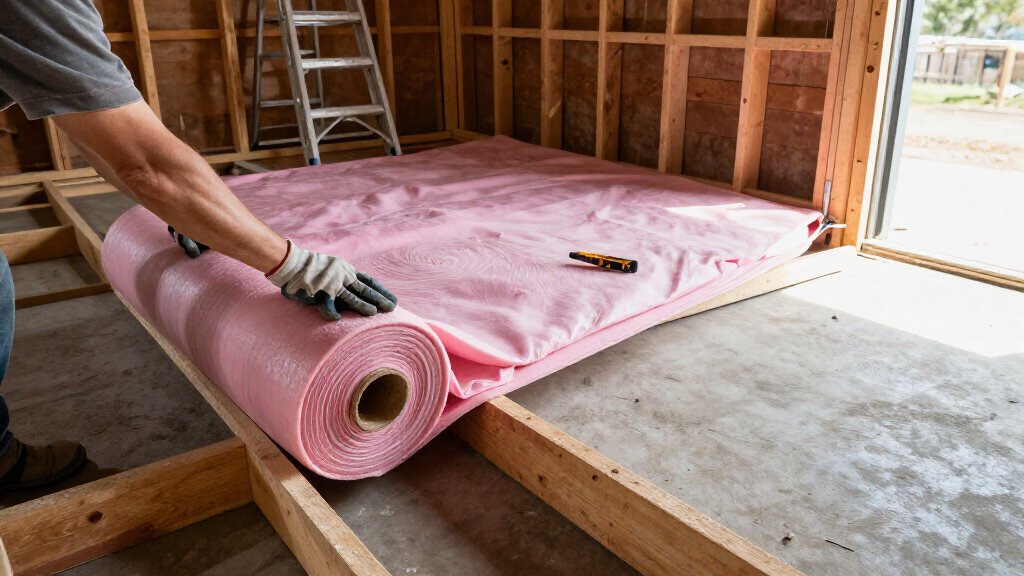

The best pole barn insulation depends on whether you need bulk thermal resistance, a radiant barrier, or help controlling condensation beneath metal panels. My best overall pick is the 2-inch PSK-faced fiberglass blanket, which is purpose-built for pole barns and pairs insulation with a facing suited to metal-building applications. For a reflective alternative, the SmartSHIELD 10mm foam-core roll stands out for its thicker construction, while the 6-inch R-19 PSK fiberglass is a stronger candidate when higher stated R-value matters. The main tradeoffs are thermal performance versus radiant-barrier function, fit and coverage versus ease of handling, and product claims versus the installation details your building needs. Read on for the full comparison and guidance on matching insulation to your climate, roof assembly, and budget.

Get business pricing on tools and workshop supplies
- Business-only prices and quantity discounts
- Tax-exempt purchasing
- Multiple users, one account, clear invoices
Complete the kit



Key Takeaways
- PSK-faced fiberglass fills a different role from reflective rolls: the two pole-barn-specific fiberglass options are better starting points when bulk insulation and a faced blanket are priorities; reflective barriers mainly address radiant heat and need the right assembly to perform as intended.
- The 2-inch PSK blanket is the most balanced pole-barn pick: it is explicitly positioned for metal buildings and condensation control, while the 6-inch R-19 version is aimed at buyers seeking a thicker insulation layer and can require more space and careful fitting.
- Reflective products vary by core, thickness, and facing: SmartSHIELD’s 10mm and 5mm foam-core rolls are not interchangeable with thin 1.5mm rolls or bubble products, so compare construction and installation requirements rather than relying on the reflective surface alone.
- Roll length changes the buying and handling tradeoff: the 1,000-foot US Energy Products roll may suit large, repeatable projects, while 100- to 125-foot rolls and 500-square-foot packs are easier to plan around for smaller barns or staged work.
- Fire and condensation claims need context: a listed fire classification or a condensation-blanket label does not replace checking local code, assembly instructions, ventilation, and whether the product is approved for the intended roof or wall application.


| pole barn insulation | Thickness | Dimensions | Material | Coverage |
|---|---|---|---|---|
| SmartSHIELD 10mm 48" x 50ft R2 | 0.4 inches | 600 inches long x 48 inches wide | Polyethylene (PE) | 200 square feet |
| SmartSHIELD 1.5mm 48" x 200ft | 1.5 millimeters | 2,400 inches long x 48 inches wide | Polyethylene (PE) | 800 square feet |
| USA Reflective Insulation Bubb | 0.19 inches | 48 inches x 125 feet | Polyethylene (PE) | — |
| Insulation Marketplace 48" x 5 | 3 millimeters | 600 inches long x 48 inches wide | Aluminum and polyethylene (PE) | — |
| EcoFoil Single Bubble Insulati | 3.175 millimeters | 48 inches x 125 feet | — | 500 square feet |
| SmartSHIELD 5mm 72" x 50ft R15 | 5 mm | 600 in L x 72 in W | Polyethylene foam with reflective foil | — |
| 2" PSK Faced Fiberglass Insula | 2 in | 48 in x 52.5 ft | — | — |
| US Energy Products 48" x 100′ | — | 48 in x 100 ft | Double-bubble foil with waterproof vinyl | 400 sq ft |
| SmartSHIELD 1.5mm 48" x 100ft | 1.5 mm | 1200 in L x 48 in W | Polyethylene foam core | 400 sq ft |
| US Energy Products White Doubl | 6.5 mm | 48 in x 1,000 ft | Reflective foil laminated with polyethylene film | 4,000 sq ft |
| 6-inch R-19 PSK Faced Fibergla | 6 inches | — | Fiberglass with polypropylene scrim kraft facing | 187.2 sq ft |
| White Reflective Foam Insulati | 0.13 inches | 3000 in L × 48 in W | — | 1000 sq ft |
| PRODEX AD5 4′ White Reflective | 0.25 inches | 4 ft × 250 ft | Aluminum and polyethylene | 1000 sq ft |
| EcoFoil Single Bubble Insulati | 3.175 mm (1/8 inch) | — | Foil/white/foil | 500 sq ft |
| US Energy Products Double Bubb | 0.25 inches | 1500 in × 576 in | Polyethylene with metalized aluminum film | 500 sq ft |
More Details on Our Top Picks
SmartSHIELD 10mm 48″ x 50ft R22 Reflective Insulation Roll, Foam Core Radiant Barrier, Thermal Insulation Shield – Foil / Foil
I’d shortlist this SmartSHIELD when a pole-barn project calls for a thicker foam-core radiant barrier rather than a long, thin roll. Its 10mm foam core and foil faces are designed to reflect radiant energy while also serving as a vapor barrier, a useful combination for metal buildings where condensation is a concern. Compared with the 1.5mm SmartSHIELD roll, this version offers more thickness but covers only 200 square feet, so large walls or roofs will require more rolls and more seam work. The product description cites 95% radiant-energy reflection, but that figure should not be treated as a standalone whole-wall R-value. I’d choose it for targeted areas where its extra thickness fits the assembly; for broad coverage, the thinner 800-square-foot roll is easier to scale.
Pros:- 10mm foam core is thicker than the 1.5mm SmartSHIELD alternative.
- Foil surfaces are described as reflecting 95% of radiant energy.
- Acts as a vapor barrier, which can help limit condensation when seams are properly sealed.
- Lightweight material can be cut and handled without bulky equipment.
Cons:- Coverage is limited to 200 square feet per roll, increasing roll count on larger barns.
- Seams and penetrations need careful sealing for vapor-barrier performance.
- Reflective performance does not establish the assembly’s total R-value or replace a complete insulation design.
Best for: Pole-barn owners who want a thicker, foil-faced foam-core layer for a limited roof or wall area and can seal the seams carefully.
Not ideal for: Owners insulating a large barn on a tight material budget or seeking a documented conventional R-value for the full wall assembly.
- Thickness:0.4 inches
- Dimensions:600 inches long x 48 inches wide
- Coverage:200 square feet
- Material:Polyethylene (PE)
- Facing:Foil / foil
- Core:Foam core
- Radiant-energy reflection:95% stated
Our verdict“Choose this thicker SmartSHIELD for smaller pole-barn sections where foam-core thickness matters more than coverage per roll.”
SmartSHIELD 1.5mm 48″ x 200ft Reflective Insulation Roll, 800 Sq. Ft., Foam Core Radiant Barrier, Thermal Insulation Shield – Foil / Foil
For pole-barn owners covering a broad surface with a lightweight reflective layer, this SmartSHIELD’s main advantage is its 800-square-foot roll. That makes it more practical to lay out across long wall or roof runs than the thicker 10mm SmartSHIELD, which covers 200 square feet. Its 1.5mm foam core, foil on both sides, and stated 95% radiant reflection suit projects focused on radiant-heat control and moisture separation. The listed R-value is 10.67, though buyers should check the installation conditions and assembly details behind that figure rather than assume the roll alone delivers that result in every application. The tradeoff is a thinner core and limited information about long-term durability. I’d favor it over the smaller roll for coverage, but not where a robust, independently specified insulation assembly is the priority.
Pros:- 800 square feet per roll reduces the number of rolls needed compared with the 10mm SmartSHIELD.
- Foil facings on both sides are described as reflecting 95% of radiant energy.
- Lightweight polyethylene material is easier to handle across large runs than bulky insulation.
- Listed R-value of 10.67 gives buyers a product specification to investigate for their assembly.
Cons:- At 1.5mm thick, its foam core is much thinner than the 10mm SmartSHIELD option.
- The supplied information gives limited detail on long-term durability.
- Seams and edges need proper sealing, and reflective performance depends on installation conditions.
Best for: Pole-barn builders covering large, relatively simple wall or roof areas who want a high-coverage reflective roll and can seal joints.
Not ideal for: Buyers who need a thick insulation layer, detailed long-term performance documentation, or a complete insulation system for cold-climate occupancy.
- Thickness:1.5 millimeters
- Dimensions:2,400 inches long x 48 inches wide
- Coverage:800 square feet
- Material:Polyethylene (PE)
- R-value:10.67
- Facing:Foil / foil
- Radiant-energy reflection:95% stated
Our verdict“Pick this roll for broad pole-barn coverage when low handling weight and area per roll matter more than a thicker core.”
USA Reflective Insulation Bubble Roll, 48″ x 125′
This USA Reflective roll is the straightforward pick for pole-barn owners who want a lightweight bubble layer that can be cut with ordinary tools. Its 3/16-inch bubble layer adds a physical layer between the foil surface and the building envelope, while the 48-inch width is familiar for wall and roof layouts. Compared with the Insulation Marketplace roll, it weighs less at a stated five pounds, which could make overhead handling simpler; however, the Marketplace product lists 3mm thickness and a broader set of durability claims. The listed R-value range of 4.9 to 14.1 is wide, so I would verify which installation conditions apply before using it to plan a whole-barn assembly. Its 125-foot length helps with continuous runs, but the supplied coverage figure is inconsistent with that length and width, so confirm actual coverage with the seller.
Pros:- Five-pound stated weight makes the roll comparatively easy to handle.
- 3/16-inch bubble layer adds a defined insulating layer beneath the reflective facing.
- Can be cut with scissors or a knife, using common job-site tools.
- Made in the USA, according to the product description.
Cons:- The listed R-value spans 4.9 to 14.1 without clarifying the applicable installation conditions.
- The stated coverage of 6,000 square inches does not match the listed 48-inch by 125-foot dimensions; verify coverage before ordering.
- Installation guidance is limited, and seams may need additional sealing.
Best for: DIY pole-barn owners who prioritize light handling, a 3/16-inch bubble layer, and easy cutting for smaller or staged projects.
Not ideal for: Buyers who need clearly documented coverage, a single verified R-value, or detailed installation guidance for a full barn envelope.
- Dimensions:48 inches x 125 feet
- Thickness:0.19 inches
- Bubble layer:3/16 inch
- Material:Polyethylene (PE)
- R-value:4.9 to 14.1
- Weight:5 pounds
- Stated coverage:6,000 square inches
Our verdict“Choose this roll for a lightweight, easy-to-cut bubble layer only after confirming its coverage and applicable R-value with the seller.”
Insulation Marketplace 48″ x 50ft Bubble Core Double Reflective Insulation Roll
The defining choice here is the foil-and-white polyethylene facing: compared with the foil/foil USA Reflective roll, this construction gives the barn-facing side a white finish while retaining a reflective layer on the other side. Its 3/16-inch bubble core and stated 3mm thickness make it a useful candidate for owners who want a radiant barrier with a vapor-barrier role, rather than a plain foil sheet. The seller also describes it as puncture- and tear-resistant, a practical claim for work areas where the insulation may face more handling. Coverage is only 200 square feet, though, so it is less efficient to deploy across a large pole barn than the 800-square-foot SmartSHIELD roll. The stated coverage figure should be checked against the 48-inch-by-50-foot dimensions before ordering.
Pros:- White polyethylene on one side offers a different interior finish from foil-faced rolls.
- 3/16-inch bubble layer provides a defined core beneath the reflective facing.
- Product description claims resistance to punctures and tears.
- Made in the USA, according to the supplied product data.
Cons:- Stated coverage is 2,400 square feet, which conflicts with the listed 48-inch-by-50-foot dimensions; confirm before purchase.
- The supplied roll dimensions imply limited coverage compared with the 800-square-foot SmartSHIELD roll.
- DIY installation instructions are limited, and reflective material needs careful handling.
Best for: Pole-barn owners who want a white interior-facing surface, a bubble core, and a reflective layer for a smaller area.
Not ideal for: Anyone covering long barn walls or roofs who wants a clearly reconciled coverage figure and fewer roll changes.
- Dimensions:600 inches long x 48 inches wide
- Thickness:3 millimeters
- Stated coverage:2,400 square feet
- Bubble layer:3/16 inch
- Material:Aluminum and polyethylene (PE)
- Facing:Engineered foil on one side; white polyethylene on the other
- Weight:7 pounds
- Radiant-energy reflection:95–97% stated
Our verdict“Consider this roll for a smaller pole-barn project where a white-facing surface matters, but verify the coverage specification first.”
EcoFoil Single Bubble Insulation Roll 48″ x 125′ (500 sq. ft.), 3.175mm Thick, Reflective Foil Insulation, Made in Canada
EcoFoil is best treated as a radiant-heat control layer for a pole barn in a warmer climate, not as a substitute for a full cold-weather insulation assembly. The product states that it reflects 96% of radiant heat and is 3.175mm thick, while its 48-inch-by-125-foot format is intended to cover 500 square feet. That makes it more clearly specified for coverage than the USA Reflective roll, whose supplied coverage figure conflicts with its dimensions. The key drawback is climate suitability: the product data itself says it is less effective in snowy or icy conditions and may need additional insulation in colder environments. Compared with the thicker SmartSHIELD foam-core roll, EcoFoil’s appeal is its straightforward bubble-roll format and stated coverage, not a claim of equivalent thickness or R-value.
Pros:- States 500 square feet of coverage for a 48-inch-by-125-foot roll.
- Product description states 96% radiant-heat reflection.
- Lightweight and flexible for cutting and fitting around barn framing.
- Made in Canada, according to the product data.
Cons:- Product data says it is less effective in snowy or icy climates.
- May require additional insulation in cold environments.
- No R-value is provided in the supplied specifications.
Best for: Owners of warm-climate pole barns who need a lightweight reflective layer and plan to pair it with other insulation where needed.
Not ideal for: Cold-climate barn owners seeking a standalone insulation solution or a product with a stated R-value for their complete assembly.
- Dimensions:48 inches x 125 feet
- Coverage:500 square feet
- Thickness:3.175 millimeters
- Type:Single-bubble reflective insulation
- Radiant-heat reflection:96% stated
- Facing:Reflective foil
- Country of manufacture:Canada
Our verdict“Choose EcoFoil for warm-climate radiant control when you already have a plan for added insulation in colder conditions.”
SmartSHIELD 5mm 72″ x 50ft R15 Reflective Foam Core Insulation Roll, Cold and Heat Shield, Radiant Barrier, Thermal Insulation – White / Foil
For a pole barn that doubles as a workshop or storage space, this roll combines a 5mm closed-cell foam core with reflective foil, giving it a broader role than a thin radiant barrier alone. The product states that it reflects 95% of radiant energy and provides R15 insulation, while its white face can leave a brighter-looking interior than foil-faced options such as the SmartSHIELD 1.5mm 48″ x 100ft. The stated vapor and sound-barrier functions add flexibility, though they do not make it a substitute for a properly designed wall or roof assembly. Its 72-inch width can cover broad areas efficiently, but accurate measuring matters, and the 50-foot roll may be less practical for a large barn than the 1,000-foot US Energy Products roll. I’d choose it for a moderate project where appearance and multiple barrier functions matter.
Pros:- 5mm closed-cell polyethylene foam core paired with reflective foil
- Product states R15 insulation and 95% radiant-energy reflection
- White face can provide a cleaner, brighter interior finish than foil on both sides
- Listed as a vapor and sound barrier as well as thermal insulation
Cons:- The 50-foot roll may require multiple rolls for a large pole barn
- Coverage depends on careful measuring and layout
- Product data gives limited detail about installation requirements and assembly performance
Best for: Pole-barn owners insulating a moderate-sized workshop who want a white interior face and a product combining reflective, vapor, and sound-barrier functions.
Not ideal for: Owners covering a very large barn who need long, continuous runs, or buyers seeking a conventional fiberglass blanket with clearly specified thickness-based performance.
- Thickness:5 mm
- Dimensions:600 in L x 72 in W
- Roll length:50 ft
- Material:Polyethylene foam with reflective foil
- Color:White / foil
- Stated R-value:R15
- Stated radiant-energy reflection:95%
- Fire classification:Class 1 / Class A
Our verdict“Choose this for a mid-sized pole-barn workshop where a white finish and combined barrier functions matter more than long-roll coverage.”
2″ PSK Faced Fiberglass Insulation 48″ x 52.5′, Condensation Blanket, Made for Pole Barns, Metal Buildings, Duct Wrap
This is the most directly pole-barn-focused choice in this group: its 2-inch fiberglass blanket has a PSK facing intended to limit warm, moist indoor air from reaching cold metal surfaces. That makes it a more targeted condensation-control option than the reflective rolls, including the US Energy Products Double Bubble 48″ x 1000′, which emphasizes radiant reflection and large-area coverage. The 48-inch width and 52.5-foot length suit straightforward runs across a modest building, but the listed coverage is only 24.5 square feet, so buyers should verify how the product’s stated dimensions translate to their installation before planning quantities. Unlike the reflective products, it is fiberglass rather than a thin foil-faced barrier; however, no R-value is supplied here, making thermal comparisons difficult. I’d favor it when moisture management is the priority, not when a documented thermal rating is essential.
Pros:- Designed and described specifically for pole barns and metal buildings
- PSK facing is intended to help control moisture and condensation
- Fiberglass blanket provides a different insulation approach from thin reflective rolls
- Suitable for walls, ceilings, and other building-envelope applications
Cons:- No R-value is provided in the supplied product data
- Listed coverage of 24.5 square feet warrants checking against the stated roll dimensions
- Fiberglass and facing require more attention during handling and installation than lightweight reflective film
Best for: Owners of metal pole barns, agricultural buildings, or workshops who want a faced fiberglass blanket specifically described for condensation control.
Not ideal for: Buyers who need a clearly stated R-value, broad radiant-reflection claims, or an easy way to estimate coverage without confirming the listed area.
- Thickness:2 in
- Dimensions:48 in x 52.5 ft
- Listed coverage:24.5 sq ft
- Insulation material:Fiberglass
- Facing:Polypropylene scrim kraft (PSK)
- Recommended applications:Pole barns, metal buildings, agricultural and commercial buildings
- Stated R-value:Not provided
Our verdict“Pick this when condensation control in a metal pole barn matters more than a published R-value or radiant-reflection specification.”
US Energy Products 48″ x 100′ Double Bubble Reflective Foil Insulation Thermal Barrier R8
The useful distinction here is the white waterproof vinyl face on one side and foil on the other: it can give a pole barn a lighter-looking interior while retaining a reflective surface. Its 48-inch-by-100-foot format covers 400 square feet, making it a more convenient fit for a medium-sized project than the 50-foot SmartSHIELD 5mm roll. The double-bubble construction is described as twice as thick as single bubble, and the product claims up to 97% thermal reflection, but its stated R8 is below the R15 claimed for that SmartSHIELD option. That difference matters if the buyer is comparing stated insulation ratings rather than just reflective surfaces. The roll is also more manageable than the 1,000-foot US Energy Products version, although installation still calls for suitable fasteners and careful seam planning. I’d choose it for a practical balance of coverage and a finished white face.
Pros:- White waterproof vinyl on one side can create a brighter-looking interior
- 400-square-foot roll offers more coverage than the 50-foot SmartSHIELD 5mm roll
- Double-bubble construction is described as thicker than single-bubble material
- Foil surface is stated to reflect up to 97% of thermal energy
Cons:- Stated R8 is lower than the R15 claimed for SmartSHIELD 5mm
- Fasteners and careful installation may be needed to secure the material and seams
- The roll can be bulky for small repairs or compact DIY projects
Best for: Pole-barn owners covering a medium-sized area who want a white interior-facing surface, reflective foil, and a 400-square-foot roll.
Not ideal for: Buyers prioritizing the higher stated R-value of the SmartSHIELD 5mm roll or needing a very large continuous roll for a large building.
- Dimensions:48 in x 100 ft
- Coverage:400 sq ft
- Construction:Double-bubble reflective insulation
- Thickness description:Twice as thick as single bubble
- Material:Double-bubble foil with waterproof vinyl
- Reflective surface:Foil on one side
- Other surface:White waterproof vinyl
- Stated R-value:R8
Our verdict“Choose this for medium-sized pole barns where a white-facing finish and broad coverage are more important than the higher stated R-value of SmartSHIELD 5mm.”
SmartSHIELD 1.5mm 48″ x 100ft Reflective Insulation Roll, 400 sq. ft., Foam Core Radiant Barrier, Commercial Grade Foil/Foil
This is the light-duty, easy-to-handle reflective option in the lineup: its 1.5mm polyethylene foam core sits between foil faces, and the 48-inch-by-100-foot roll covers 400 square feet. That makes it simpler to handle than the US Energy Products 48″ x 1000′ bulk roll, while its double-sided foil differs from the white-faced vinyl finish of the US Energy Products 100-foot option. The product states 95% radiant-energy reflection and an R-value of 10.67, plus vapor-barrier functionality. Those claims make it appealing for radiant control and moisture separation, but the thin core is not the same as a thick fiberglass blanket, and buyers should not treat reflective performance as a substitute for a complete insulation assembly. It may take several rolls to cover a large barn, and installation details are sparse. I’d use it when lightweight handling and a foil-on-both-sides format suit the project.
Pros:- Lightweight 1.5mm polyethylene foam core is easier to handle than bulky insulation
- Foil on both sides reflects radiant energy from either face
- 400-square-foot roll suits moderate coverage projects
- Product lists vapor-barrier functionality and an R-value of 10.67
Cons:- Thin core is not equivalent to a thick fiberglass blanket for every insulation need
- Large barns may require multiple rolls and additional seam work
- Detailed installation instructions are limited in the supplied data
Best for: DIY pole-barn owners covering moderate areas who want a lightweight, cuttable foil-faced radiant barrier with a stated R-value.
Not ideal for: Owners seeking a thick fiberglass blanket, detailed installation guidance, or a single roll sized for a large pole barn.
- Thickness:1.5 mm
- Dimensions:1200 in L x 48 in W
- Coverage:400 sq ft
- Material:Polyethylene foam core
- Facing:Reflective foil on both sides
- Stated R-value:10.67
- Stated radiant-energy reflection:95%
Our verdict“Choose this for a manageable radiant-barrier project where light handling and double-sided foil matter more than thick blanket insulation.”
US Energy Products White Double Bubble Reflective Thermal Insulation Radiant Barrier 48″ x 1000′ 6.5mm R8-24 Class 1 Class A ASTM Fire Rated USA Made
For a large pole barn with extensive wall or roof runs, the main advantage is scale: this 48-inch-by-1,000-foot roll is listed to cover 4,000 square feet, far beyond the 400-square-foot US Energy Products roll. Its 6.5mm double-bubble construction, white finish, and foil-based radiant barrier are aimed at broad building coverage, with vapor-barrier and fire-rating claims also listed. The product describes its R-value as a range of R8–24, so buyers should confirm what that range means for their assembly rather than compare it as one fixed rating. Unlike the PSK fiberglass blanket, this is a reflective barrier rather than a conventional fiberglass batt. The very long roll can reduce interruptions across a large project, but it is cumbersome to handle and excessive for small jobs. I’d reserve it for substantial metal-building work with a planned installation crew.
Pros:- Listed 4,000-square-foot coverage can suit large pole-barn projects
- 6.5mm double-bubble construction is thicker than thin reflective foam-core options
- White reflective design includes vapor-barrier functionality
- Product lists Class 1 / Class A and ASTM fire-rating claims
Cons:- The 1,000-foot roll is cumbersome and excessive for small projects
- R8–24 is a range rather than one clearly specified rating
- Thicker material calls for careful handling during installation
Best for: Owners or contractors insulating large pole barns, warehouses, or metal buildings who can manage a long roll and want extensive continuous coverage.
Not ideal for: Small-building owners or solo installers without room and help to handle a 1,000-foot roll, and buyers who need one clearly stated R-value.
- Thickness:6.5 mm
- Dimensions:48 in x 1,000 ft
- Coverage:4,000 sq ft
- Construction:Double-bubble reflective insulation
- Material:Reflective foil laminated with polyethylene film
- Stated R-value range:R8–24
- Made in:USA
Our verdict“Choose this for a large, planned pole-barn installation where high-volume coverage justifies handling an unusually long roll.”
6-inch R-19 PSK Faced Fiberglass Insulation, 48 inches wide, 39.3 feet long for pole barns and metal buildings
For a pole barn with metal framing, I’d put this 6-inch R-19 fiberglass blanket ahead of the thinner reflective rolls when the goal is substantial cavity insulation plus condensation control. Its PSK facing is designed to serve as a vapor barrier, a useful pairing with fiberglass where moisture from warm indoor air can be a concern. The 48-inch width and 39.3-foot length cover 187.2 square feet per package, so buyers can plan around a defined area rather than a very long warehouse roll.
The tradeoff is that this is a purpose-specific, faced fiberglass product, not a flexible radiant barrier for varied surfaces. Compared with PRODEX AD5, it provides a much thicker fiberglass layer, while PRODEX offers a thinner reflective barrier with listed radiant-heat and noise benefits. I’d choose this for framed barn bays, but skip it if you need a lightweight reflective wrap or have not planned a suitable installation for the facing.
Pros:- Six-inch fiberglass construction provides a substantial insulation layer for framed spaces.
- PSK facing is intended to provide vapor-barrier and moisture-control benefits.
- 48-inch width suits many metal-building applications.
- 187.2 square feet of stated coverage makes area planning straightforward.
Cons:- Faced fiberglass is less adaptable than thin reflective rolls for irregular surfaces.
- The stated coverage may not match a barn’s bay dimensions, creating cutting and offcut waste.
- The product data limits its intended uses mainly to pole barns, metal buildings, and duct wrap.
Best for: Pole-barn owners insulating framed wall or ceiling bays who want a substantial fiberglass layer with a facing intended to help manage moisture.
Not ideal for: Buyers seeking a thin, flexible radiant barrier for broad warehouse surfaces, or those who need insulation specifically sized for a different framing layout.
- Thickness:6 inches
- R-value:R-19
- Width:48 inches
- Length:39.3 feet
- Coverage:187.2 sq ft
- Material:Fiberglass with polypropylene scrim kraft facing
- Applications:Pole barns, metal buildings, and duct wrap
Our verdict“Choose this faced fiberglass when your pole barn has compatible framing and you want a thicker insulation layer than the reflective-barrier options provide.”
White Reflective Foam Insulation Vapor Barrier for Warehouse Building, 1000 sq ft (4×250)
This roll’s strongest case is 1000 square feet of coverage in a lightweight reflective vapor barrier, making it a practical candidate for covering broad, uncomplicated areas of a warehouse-style pole barn. The 48-inch width can be handled in manageable strips, while the reflective aluminum surface is intended to limit radiant heat transfer. Compared with the smaller EcoFoil Single Bubble roll, this product offers twice the stated coverage, which may reduce the number of rolls needed for a large project.
That scale comes with a clear limitation: the listed 0.13-inch thickness is not a substitute for a deep insulation layer such as the 6-inch R-19 fiberglass blanket in this roundup. The product data also gives no detailed installation instructions, so I’d only choose it if I already know how the assembly will be installed and sealed. It makes more sense as a reflective barrier for a suitable building setup than as a stand-alone cold-climate insulation solution.
Pros:- 1000 square feet of stated coverage suits large projects.
- Four-foot width allows the roll to be installed in narrower runs.
- Reflective aluminum surface is designed to reduce radiant heat transfer.
- Lightweight construction is easier to handle than thick insulation products.
Cons:- At 0.13 inches thick, it does not provide the depth of the R-19 fiberglass option.
- The product information lacks detailed installation instructions.
- Warehouse and building use is specified, but pole-barn assembly details are not provided.
Best for: Owners of large warehouse-style pole barns who need broad reflective-barrier coverage and already have an installation plan suited to a thin product.
Not ideal for: Buyers who need a thick insulation layer, detailed fitting guidance, or a product specified for demanding cold-weather performance.
- Material type:Aluminum
- Thickness:0.13 inches
- Dimensions:3000 in L × 48 in W
- Coverage:1000 sq ft
- Recommended uses:Insulation and vapor barrier for buildings or warehouses
- Surface:White reflective aluminum
Our verdict“Pick this for extensive, simple surfaces when reflective coverage matters more than a thick, independently specified insulation layer.”
PRODEX AD5 4′ White Reflective Foam Insulation Barrier – 1000 sqft
Among the reflective options here, PRODEX AD5 gives buyers the most listed performance details: an R-value of 22.67, UV resistance, a stated 19 dBA noise reduction, and a rippled surface intended to support airflow. Its 0.25-inch aluminum-and-polyethylene construction is thicker than the 0.13-inch warehouse barrier, while the 1000-square-foot roll keeps it suited to broad building coverage. Those details make it the more specified choice if you want more than a plain reflective surface.
I would not treat the listed R-value as a direct replacement for a deep fiberglass assembly without checking how it applies to the complete installation. Compared with the 6-inch R-19 PSK fiberglass, PRODEX is thinner and depends more on correct installation and the surrounding assembly; its advantage is the reflective format and added listed features. It is best for buyers prepared to follow an appropriate installation method, not for anyone seeking a simple, cavity-filling blanket.
Pros:- Lists an R-value of 22.67 along with a 0.25-inch thickness.
- UV resistance is specified in the product data.
- Rippled surface is intended to support airflow and maintain shape.
- Stated 19 dBA noise reduction adds a listed sound-related benefit.
Cons:- Performance depends on proper installation.
- Its thin reflective format is not equivalent to filling a framed cavity with thick fiberglass.
- The product is positioned for warehouse and building use, with limited pole-barn assembly guidance in the supplied details.
Best for: Pole-barn owners covering large surfaces who want a reflective barrier with stated UV resistance, noise reduction, and a product-listed R-value.
Not ideal for: Buyers who need thick cavity insulation or cannot verify that the installation method supports the product’s stated thermal performance.
- Material:Aluminum and polyethylene
- Thickness:0.25 inches
- Dimensions:4 ft × 250 ft
- Coverage:1000 sq ft
- R-value:22.67
- Color:White
- UV resistant:Yes
- Noise reduction:19 dBA
Our verdict“Choose PRODEX AD5 when you want a broadly covering reflective barrier with more specified features than the simpler warehouse roll, and can install it correctly.”
EcoFoil Single Bubble Insulation Roll 48″ x 125′ (500 sq. ft.), 3.175mm Thick, White/Foil, Made-in-USA
This single-bubble foil roll is a manageable option for pole-barn owners who want a lightweight radiant barrier rather than a thick blanket. At 21 pounds for 500 square feet, it is easier to handle across long runs than bulky insulation, and the listed 96% radiant-heat reflectivity makes its intended role clear. Its 48-inch width and 125-foot length suit linear installation, though buyers should account for seams and cuts when planning coverage.
Compared with the US Energy Products Double Bubble, EcoFoil is thinner at 1/8 inch and has less listed reflectivity, so I’d favor it where ease of handling matters more than a double-bubble build. It also needs carefully sealed seams for its vapor-barrier function. The description says it is better suited to warmer regions and less effective in colder climates, so it is not my pick for a pole barn that needs robust cold-weather insulation; the 6-inch R-19 fiberglass option is a better fit for that job.
Pros:- Reflects a stated 96% of radiant heat.
- Light 21-pound roll is easier to handle than bulkier insulation.
- Foil/white/foil construction is specified as a vapor barrier.
- Made in the USA, according to the product data.
Cons:- Its 1/8-inch thickness is limited for demanding insulation needs.
- The product description says it is less effective in colder climates.
- Seams require proper tape sealing for vapor-barrier performance.
Best for: DIY pole-barn owners in warmer climates who need a light, easy-to-handle radiant barrier for broad surfaces.
Not ideal for: Owners in cold climates or anyone seeking a thick insulation layer, high listed reflectivity, or a vapor barrier that does not depend on careful seam sealing.
- Width:48 inches
- Length:125 feet
- Coverage:500 sq ft
- Thickness:3.175 mm (1/8 inch)
- Reflectivity:96%
- Material:Foil/white/foil
- Weight:21 pounds
- Country of manufacture:USA
Our verdict“Choose this roll for lightweight radiant-barrier coverage in a warmer-climate barn, but use a thicker insulation approach for cold-weather needs.”
US Energy Products Double Bubble White/Foil Reflective Insulation (500 sqft)
With a double-bubble polyethylene core between metalized films, this is the more substantial reflective choice compared with EcoFoil’s single-bubble roll. Its listed 0.25-inch thickness and 99.97% reflectivity suit buyers prioritizing a reflective vapor-barrier layer for walls, basements, crawl spaces, or radiant-heating applications. The product data also describes it as moisture-resistant and fire-rated, giving it broader stated application notes than the warehouse-focused 1000-square-foot reflective barrier.
For a pole barn, the tradeoff is handling and limited performance detail: the roll covers 500 square feet, but its listed dimensions are large, and the supplied information does not specify an R-value or installation method. I would compare it with PRODEX AD5 before choosing: PRODEX lists UV resistance, an R-value, and noise reduction, while this product gives a higher reflectivity figure and a double-bubble construction. Neither should be mistaken for the 6-inch fiberglass blanket when deep cavity insulation is the priority.
Pros:- Double-bubble core is thicker than the single-bubble EcoFoil option.
- Lists 99.97% reflectivity.
- Product details describe moisture and humidity resistance.
- Fire-rated status is stated in the product description.
Cons:- The large roll dimensions may make handling and fitting difficult.
- No R-value is supplied in the product data.
- Proper installation is required for the stated barrier performance.
Best for: Pole-barn owners who want a double-bubble reflective barrier with stated moisture resistance and fire rating for a compatible wall or surface assembly.
Not ideal for: Buyers who need a lightweight, easy-to-position roll, a clearly stated R-value, or thick cavity insulation for cold conditions.
- Material:Polyethylene with metalized aluminum film
- Thickness:0.25 inches
- Dimensions:1500 in × 576 in
- Coverage:500 sq ft
- Reflective rate:99.97%
- Construction:Double bubble with metalized film
- Moisture resistance:Described as moisture- and humidity-resistant
Our verdict“Pick this when a double-bubble reflective barrier and its stated moisture and fire features suit your pole-barn assembly, but choose fiberglass for deep insulation.”
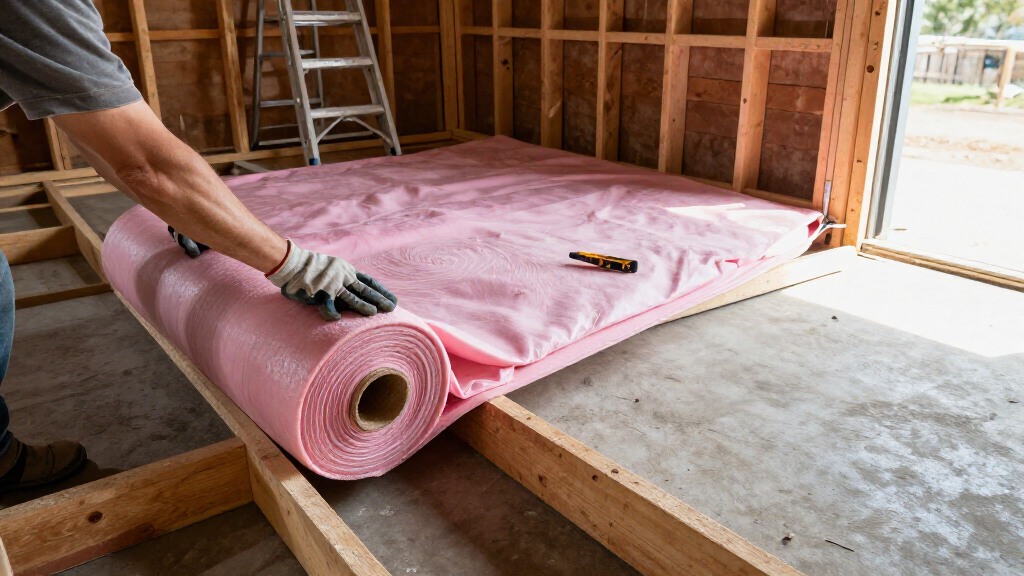
How We Picked
I compared the 15 listed products by the factors that most affect pole-barn buyers: insulation type and stated thermal information, suitability for metal buildings, facing and moisture-related purpose, roll dimensions and coverage, and how manageable the product appears for a barn-scale installation. I treated faced fiberglass, foam-core reflective rolls, bubble rolls, and large-format radiant barriers as different solutions rather than ranking them as if they performed the same job. I also looked for useful distinctions in product details, such as thicker versus thinner cores, white-facing options, stated fire classifications, and project-sized versus bulk rolls.
The ranking favors products with a clear fit for pole barns and a more complete answer to common building needs, rather than the longest roll or broadest performance claim. That puts the 2-inch PSK-faced fiberglass first for its stated metal-building and condensation-blanket use, with the 10mm SmartSHIELD next among reflective options because its thicker foam core distinguishes it from the thinner rolls. The 6-inch R-19 PSK option earns a place for buyers prioritizing stated R-value, while bubble and long-roll products rank lower when their descriptions provide fewer details about pole-barn-specific installation or when bulk coverage may be awkward for a smaller project. Product suitability still depends on the full wall or roof assembly, local requirements, and manufacturer instructions.
Factors to Consider When Choosing Best Pole Barn Insulation
Choosing insulation for a pole barn starts with the building assembly, not the roll label. I would first decide whether the main goal is slowing heat flow, reducing radiant heat, managing condensation, or combining those functions, then confirm the product can be installed correctly with the framing and metal panels you have.
Choose the insulation type for the job
Fiberglass blankets and reflective barriers address heat in different ways, so a shiny surface alone does not tell you how warm a barn will be. Fiberglass products provide bulk insulation, while reflective products are generally intended to reduce radiant heat transfer when installed as specified, often with an air space. A common mistake is treating an R-value claim on a reflective product as directly comparable to a conventional insulation value without checking its test conditions and assembly. If you need a conditioned workshop in a cold climate, start by establishing the required assembly performance rather than picking a radiant barrier first. For a storage barn where summer roof heat is the main concern, a radiant barrier may fit better, provided the installation preserves the conditions it needs to work.
Plan for condensation, not just temperature
Metal roofing and siding can cool quickly, which can lead to moisture forming on the interior surface when warm, humid air reaches it. A faced blanket marketed as a condensation blanket may help manage that risk, but the facing does not fix leaks, poor ventilation, or humid air entering the assembly. Before buying, identify where the vapor-control layer belongs for your climate and building design, since the wrong layer placement can trap moisture. Avoid compressing insulation or leaving gaps at framing, fasteners, and edges; both can undermine performance and create cold spots. If the barn will house animals, wet equipment, or a workshop with frequent moisture, ventilation and humidity control deserve as much attention as the insulation itself.
Match stated R-value to the whole assembly
R-value is useful for comparing bulk insulation, but it does not describe every part of a finished roof or wall. Framing, thermal bridges, air leakage, and installation quality all affect the result, and reflective product claims may rely on a particular air space or test setup. Compare the product’s technical documentation with local energy requirements and the assembly you plan to build. A thicker blanket such as the listed 6-inch R-19 option may offer more stated resistance than a thinner product, but it also needs enough depth and suitable support. Paying for a higher number makes sense only when the structure can accommodate it and the rest of the assembly will not bypass its benefit.
Calculate coverage, seams, and waste before ordering
Roll width and length affect more than the total area printed on a package: they determine how many seams you will have, how easily the material fits between framing, and how much offcut waste your layout creates. Measure roof slopes and walls separately, then add allowance for overlaps, cuts, openings, and damaged sections. A very long roll can be efficient on a large, uninterrupted building but cumbersome to move and handle on a small project. Smaller packs can make staged installation and storage easier, though several rolls may create more joins. Check whether the manufacturer specifies overlap, tape, or fastening details before calculating the quantity.
Check fire, code, and installation requirements
Fire classifications and material standards matter, but a label is not a blanket approval for every pole barn or occupancy. Confirm local code requirements for the building’s use, exposed interior surfaces, and any required thermal or ignition barrier. Review the installation guide for approved fasteners, seam treatment, clearances, and whether the product can remain exposed. A reflective product’s facing can be damaged by rough handling, while fiberglass needs careful fitting and appropriate protective equipment. If the barn will be heated, wired, or used as a workspace, ask the local building official or a qualified installer to review the proposed assembly before closing in the walls.
Spend more where the building will benefit
Extra insulation has the most value when the barn is regularly occupied, conditioned for long periods, or used to protect temperature-sensitive equipment. For occasional storage, a simpler assembly may be a better match than paying for a higher insulation level that the building’s air leakage or use pattern prevents you from benefiting from. Prioritize fit, sealed seams, and moisture control before upgrading a product based only on a larger roll or a broad performance claim. A bulk roll may lower material handling per square foot on a large project, but it can create storage and installation headaches for a small crew. I would direct extra budget toward better assembly detailing and appropriate ventilation when those are the weak points.
Frequently Asked Questions
Should I use reflective insulation or fiberglass in a pole barn?
I would choose based on the assembly and the building’s main heat problem, not on appearance. Fiberglass is a bulk insulation option with stated R-values, while reflective products are designed to reduce radiant heat under specified installation conditions. A reflective barrier may need an adjacent air space, and its performance claims may not compare directly with a fiberglass R-value. If the barn needs reliable winter comfort, investigate the full roof and wall assembly, including air sealing. For a metal building with condensation concerns, also check whether the product’s facing and installation instructions suit that moisture-control goal.
Is a product labeled as a condensation blanket enough to prevent moisture problems?
No single insulation layer can prevent every condensation problem. A faced blanket may help manage moisture at the metal surface, but leaks, humid indoor air, inadequate ventilation, and incorrect vapor-layer placement can still cause trouble. The risk changes with climate, heating patterns, and whether the barn contains animals or wet equipment. Check the manufacturer’s assembly details and plan ventilation and air control alongside the insulation. For a conditioned or moisture-heavy building, get advice on the complete roof and wall design rather than relying on the product name.
Can I compare a reflective barrier’s advertised R-value directly with fiberglass R-19?
Not without checking how each value was established. Fiberglass R-values generally describe resistance through the insulation material, while reflective-product claims can depend on an air space, surface orientation, and a particular assembly or test method. Ask for the technical data and installation conditions behind the stated number, then compare complete assemblies rather than labels alone. If local code sets a minimum insulation level, confirm that the proposed system meets it in the required way. A reflective layer may complement another insulation type, but it should not be treated as a direct substitute unless documentation supports that use.
How much extra material should I order for seams and cuts?
There is no single waste allowance that fits every barn because roof shape, framing spacing, openings, and roll width all change the layout. Measure each surface separately and sketch how the runs will cross framing before ordering. Add material for overlaps required by the manufacturer, cuts around doors and vents, and unusable offcuts; a complex roof needs more allowance than a simple rectangle. Long rolls can reduce joins on large spans but are harder to manage and may not align neatly with the framing. If the project has irregular sections, buying in stages or confirming quantities with an installer can reduce both shortages and excess material.
When is it worth choosing a higher-R-value or thicker product?
A higher-R-value or thicker option makes the most sense when the barn will be heated or cooled often, occupants spend long periods inside, or stored goods need more stable temperatures. It is less useful if gaps, air leakage, thermal bridging, or poor moisture control dominate the assembly’s performance. Check that the framing has room for the thicker product and that installation will not compress it. Consider the cost of conditioning the building over time alongside the initial material choice, but avoid paying for a specification the structure cannot support. A local code review can clarify the minimum performance required for your intended use.
Conclusion
For the broadest fit among these options, I recommend the 2-inch PSK-faced fiberglass blanket as best overall because its listing directly targets pole barns, metal buildings, and condensation-blanket use. The SmartSHIELD 1.5mm 48-inch by 200-foot roll is my best value-style choice for buyers who need a large area of reflective material and have confirmed that this type suits their assembly; its thin core makes it a different solution from bulk fiberglass. For a premium reflective option, I would look at the SmartSHIELD 10mm foam-core roll for its thicker construction, while the 2-inch PSK blanket is the simplest starting point for beginners seeking a product explicitly aimed at metal buildings. Choose the 6-inch R-19 PSK fiberglass when higher stated thermal resistance is the priority and the framing can accept the depth; choose a long-format roll such as the US Energy Products 1,000-foot option only when the project is large enough to make bulk handling practical. Before ordering, verify code, assembly, ventilation, and installation requirements so the product fits the barn you are actually building.
Halloween Picks
halloween
As an affiliate, we earn on qualifying purchases.