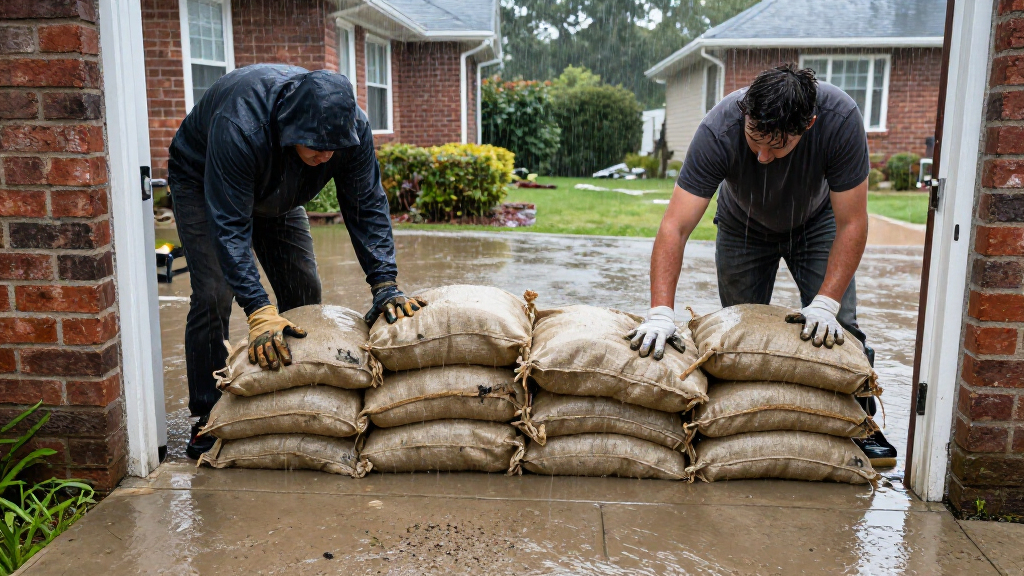

The best sandbags for flood protection depend on whether you need a fast-deploy barrier or empty sacks you can fill and stack. My best overall pick is the Quick Dam 10-foot water-activated barrier for covering a longer stretch with less filling and handling. For smaller areas, the Quick Dam 6-pack flood bags offer a more modular option, while the Sandbaggy 100-pack suits buyers who need many reusable sacks and can supply the fill. The main tradeoff is convenience versus control: water-activated products are easier to deploy, while empty sandbags let you choose the fill and build a more customized wall. Read on for the full breakdown, selection criteria, and guidance on matching a barrier to your site.

Get business pricing on tools and workshop supplies
- Business-only prices and quantity discounts
- Tax-exempt purchasing
- Multiple users, one account, clear invoices
Complete the kit



Key Takeaways
- Water-activated barriers lead on setup speed: Quick Dam’s 10-foot option covers a longer run, while its 5-foot two-pack offers more flexibility for shorter openings.
- Empty sacks make more sense for large, planned installations: Sandbaggy’s 100-pack provides substantial capacity, but buyers must source and move the filling material themselves.
- Pack size does not tell the whole story: A small set of larger barriers may suit a doorway or garage opening better than a high-count pack of individual sacks.
- Reusable canvas and polypropylene serve different priorities: Canvas options emphasize a traditional sack format, while polypropylene picks are available in bulk and varied pack sizes.
- Measure the full water-entry path before choosing: Length, corners, door thresholds, and uneven ground can matter more than the nominal barrier length.
| Quick Dam Water Activated 10ft Flood Barrier (Pack of 1) |  | Best for Fast Doorway Coverage | Length: 10 ft | Expanded height: 3.5 in | Water absorption: Up to 8 gallons per 10 ft | VIEW LATEST PRICE | See Our Full Breakdown |
| Quick Dam Water-Activated Flood Bags, 12 x 24 in, 6-Pack |  | Best for Flexible, Stackable Placement | Quantity: 6 bags | Expanded dimensions: 12 x 24 x 3.5 in | Activation time: About 10 minutes when enough water is present | VIEW LATEST PRICE | See Our Full Breakdown |
| Reusable Canvas Flood Barrier Sandbags, 4-Pack, 11 x 28 in |  | Best Reusable Sand-Filled Option | Quantity: 4 bags | Dimensions: 11 x 28 in | Material: High-density canvas | VIEW LATEST PRICE | See Our Full Breakdown |
| 4-Pack Thick Canvas Flood Sandbags with Handles |  | Best for Easier Handling of Filled Bags | Quantity: 4 sandbags | Material: Thick canvas | Dimensions: 28 x 11 x 1 in | VIEW LATEST PRICE | See Our Full Breakdown |
| Flood Hero Water-Activated Flood Bags, 6-Pack |  | Best for Deeper Water-Activated Coverage | Quantity: 6 bags | Expanded dimensions: 28 x 14.5 x up to 5 in each | Weight: Less than 1 lb each | VIEW LATEST PRICE | See Our Full Breakdown |
| Sandbaggy Reusable Woven Polypropylene Sandbags, 14 x 26 in, 100 Pack |  | Best for Stocking a Large Flood-Supply Cache | Material: Woven polypropylene | Dimensions: 14 x 26 inches | Quantity: 100 bags | VIEW LATEST PRICE | See Our Full Breakdown |
| Sandbaggy Heavy-Duty Empty Polypropylene Sandbags, 14 x 26 Inches, 50-Pack |  | Best Mid-Size Pack for Reusable Barriers | Material: Woven polypropylene | Dimensions: 14 x 26 inches | Quantity: 50 bags | VIEW LATEST PRICE | See Our Full Breakdown |
| Ikerall Reusable Flood Barrier Sandbags, 6 Pack | 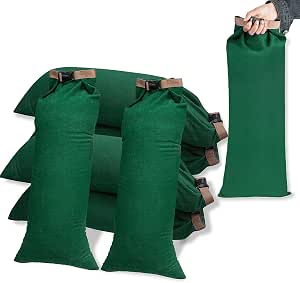 | Best for Carrying and Repositioning | Material: Canvas | Quantity: 6 bags | Capacity per bag: Up to 50 lb | VIEW LATEST PRICE | See Our Full Breakdown |
| DURASACK Heavy-Duty Empty Sandbags with Ties, 14 x 26 Inches, Green, Pack of 10 |  | Best Small Polypropylene Pack | Material: Woven polypropylene | Dimensions: 14 x 26 inches | Quantity: 10 empty bags | VIEW LATEST PRICE | See Our Full Breakdown |
| StormDrain Storm Stop Water-Activated Flood Bags, 6-Pack, 24 x 12 Inches |  | Best No-Fill Option for Fast Setup | Quantity: 6 bags | Bag dimensions: 24 x 12 inches | Expanded height: About 4 inches | VIEW LATEST PRICE | See Our Full Breakdown |
| Carrywell Heavy-Duty Empty Sandbags with Tie Strings, 20 Pack, Green |  | Best for a Compact Emergency Stockpile | Material: 850-denier woven polypropylene | Pack size: 20 bags | Dimensions: 14 x 26 inches | VIEW LATEST PRICE | See Our Full Breakdown |
| Biubee Reusable Canvas Flood Sandbags, 10 ft, 4-Pack |  | Best for Long, Reusable Barrier Runs | Material: Thickened canvas | Material thickness: About 0.48 mm | Length: 10 ft each | VIEW LATEST PRICE | See Our Full Breakdown |
| Quick Dam Water-Activated Flood Barriers, 5 ft, Pack of 2 |  | Best for Fast Deployment Without Sand | Material: 50% polypropylene, 50% cellulose | Pack quantity: 2 | Length: 5 ft each | VIEW LATEST PRICE | See Our Full Breakdown |
| White Sand Bags 16″ x 24″, 25-Pack – USA-Made Heavy-Duty Sandbags for Flood Protection, Construction & Erosion Control, 50 lb Capacity, Empty & Reusable Polypropylene Sacks (IDL Packaging) |  | Best for a Larger Fillable Supply | Material: Polypropylene (PP), woven | Pack size: 25 bags | Dimensions: 16 x 24 inches | VIEW LATEST PRICE | See Our Full Breakdown |
| Reusable Flood Sandbags, 3 ft, 4-Pack |  | Best for Short Runs and Tight Layouts | Brand: RunMoon | Pack quantity: 4 | Bag length: 3 ft | VIEW LATEST PRICE | See Our Full Breakdown |
| sandbags for flood protection | Material | Quantity | Closure | Dimensions |
|---|---|---|---|---|
| Quick Dam Water Activated 10ft | Needle-punched polypropylene | 1 barrier | — | — |
| Quick Dam Water-Activated Floo | — | 6 bags | — | — |
| Reusable Canvas Flood Barrier | High-density canvas | 4 bags | Double safety buckles | 11 x 28 in |
| 4-Pack Thick Canvas Flood Sand | Thick canvas | 4 sandbags | Buckle | 28 x 11 x 1 in |
| Flood Hero Water-Activated Flo | Puncture-resistant fabric | 6 bags | — | — |
| Sandbaggy Reusable Woven Polyp | Woven polypropylene | 100 bags | Attached tie strings | 14 x 26 inches |
| Sandbaggy Heavy-Duty Empty Pol | Woven polypropylene | 50 bags | Attached tie strings | 14 x 26 inches |
| Ikerall Reusable Flood Barrier | Canvas | 6 bags | — | 28.35 x 11.02 x 0.2 inches |
| DURASACK Heavy-Duty Empty Sand | Woven polypropylene | 10 empty bags | Built-in tie strings | 14 x 26 inches |
| StormDrain Storm Stop Water-Ac | — | 6 bags | — | — |
| Carrywell Heavy-Duty Empty San | 850-denier woven polypropylene | — | Built-in tie strings | 14 x 26 inches |
| Biubee Reusable Canvas Flood S | Thickened canvas | 4 tubes | Elastic band | — |
| Quick Dam Water-Activated Floo | 50% polypropylene, 50% cellulose | — | — | — |
| White Sand Bags 16" x 24" | Polypropylene (PP), woven | — | Drawstring | 16 x 24 inches |
| Reusable Flood Sandbags | Water-resistant canvas | — | Hook-and-loop fastener and drawstring | — |
More Details on Our Top Picks
Quick Dam Water Activated 10ft Flood Barrier (Pack of 1)
The 10-foot continuous barrier is a practical choice when I want to cover a doorway, garage threshold, or similar straight run without filling individual sacks. It activates in about 10 minutes and absorbs up to 8 gallons along its length, so deployment takes less labor than the Reusable Canvas Flood Barrier Sandbags, which must be filled before use. Its 3.5-inch height is the main limit: it can help with shallow, slow-moving water, but it is not a tall wall for deeper flooding. The lightweight polypropylene unit also stores compactly for emergency use. I would choose it over the Quick Dam Water-Activated Flood Bags when the opening is a long, straight stretch; the bags offer more flexibility around corners and irregular areas.
Pros:- Covers a continuous 10-foot run without arranging multiple separate bags.
- Activates without sand, shoveling, or filling labor.
- Absorbs up to 8 gallons per 10-foot length.
- Lightweight and compact to store before an emergency.
Cons:- Its 3.5-inch expanded height is limited against deeper water.
- Not suitable for salt water, which can cause deflation.
Best for: Homeowners who want a lightweight, ready-to-activate barrier for a long doorway, garage threshold, or similar straight opening.
Not ideal for: People facing deep floodwater, saltwater exposure, or a need for a reusable barrier; its height is limited, salt water can cause deflation, and the barrier is not described as reusable.
- Length:10 ft
- Expanded height:3.5 in
- Water absorption:Up to 8 gallons per 10 ft
- Activation time:About 10 minutes
- Material:Needle-punched polypropylene
- Quantity:1 barrier
- Item weight:1.4 lb
- Color:Black
Our verdict“Choose this for quick coverage across a long, straight opening when expected water is shallow and fresh.”
Quick Dam Water-Activated Flood Bags, 12 x 24 in, 6-Pack
These individual water-activated bags suit buyers who need to follow a corner, doorway, or irregular leak rather than lay one continuous barrier. Each expands to 12 x 24 x 3.5 inches in about 10 minutes when it has enough water, and the bags can be stacked to build a taller line. That flexibility sets them apart from the Quick Dam Water Activated 10ft Flood Barrier, which is easier to place along a straight run but less adaptable to tight layouts. The tradeoff is that six bags cover less continuous ground, and activation depends on adequate water reaching them. Salt water, lime, and calcium can cause deflation, while contact with porous or unfinished cement may leave stains. I would keep them for fresh-water leaks and shallow flooding, not as a dependable solution for every water condition.
Pros:- Flexible bags can curve around corners and wrap irregular areas.
- Stackable design allows a taller barrier than one layer provides.
- Activates without filling with sand.
- Compact and lightweight before use.
Cons:- Needs enough water to activate fully.
- Salt water, lime, and calcium can cause deflation.
- May stain porous or unfinished cement.
Best for: Homeowners who need to protect corners, irregular thresholds, or several small leak areas with a compact set of stackable barriers.
Not ideal for: Buyers needing a long uninterrupted barrier, reliable activation in low-moisture conditions, or protection from saltwater, lime, or calcium exposure.
- Quantity:6 bags
- Expanded dimensions:12 x 24 x 3.5 in
- Activation time:About 10 minutes when enough water is present
- Water absorption:4 gallons
- Use:Indoor or outdoor floodwater control
- Activation conditions:Requires sufficient water; avoid salt water, lime, and calcium
Our verdict“Pick this set for flexible placement around small or irregular areas where fresh water can reach the bags.”
Reusable Canvas Flood Barrier Sandbags, 4-Pack, 11 x 28 in
For buyers who prefer a reusable, sand-filled barrier over a disposable water-activated product, these canvas bags offer a straightforward setup: fill each to about 80% capacity, close the double safety buckles, and place them where needed. Each holds up to 50 pounds of sand or gravel, giving the bags substantial weight once prepared. The buckles also form carrying handles and let bags connect, a useful difference from the Quick Dam Water-Activated Flood Bags, which deploy faster but depend on fresh water and are much lighter before activation. The canvas set takes advance labor and filling material, so it is less suited to a sudden leak when no bags are prepared. Four bags may also be too few for a wide perimeter. I would choose it for repeat use and skip it when speed or coverage length is the priority.
Pros:- Reusable canvas construction folds for off-season storage.
- Holds up to 50 lb of sand or gravel per bag.
- Buckle closures form carrying handles and connect bags.
- Double-stitched bottoms add strength.
Cons:- Must be filled before use, requiring material and labor.
- Four bags may not cover a large opening or perimeter.
- Prepared bags can be heavy to move at full capacity.
Best for: Property owners who can prepare bags ahead of time and want a reusable, heavy barrier for recurring flood risks.
Not ideal for: Anyone needing immediate deployment without sand or gravel, or enough bags to protect a broad perimeter with a single four-pack.
- Quantity:4 bags
- Dimensions:11 x 28 in
- Material:High-density canvas
- Capacity:Up to 50 lb per bag
- Opening width:11 in
- Closure:Double safety buckles
- Recommended fill:Sand at 80% capacity
- Color:Green
Our verdict“Choose this set for planned, repeat flood protection when you can fill and position the bags before water arrives.”
4-Pack Thick Canvas Flood Sandbags with Handles
Reinforced double handles are the distinction here: they give buyers more grip options when carrying or positioning bags than the single buckle-handle setup on the Reusable Canvas Flood Barrier Sandbags. Each thick-canvas bag holds up to 50 pounds of sand or gravel, and buckles secure the folded opening to help limit leakage. That makes this set useful for planned flood protection as well as ballast tasks, though its four-bag quantity is a modest starting point rather than a full-property supply. Like the other canvas option, it must be filled before deployment; compared with the Flood Hero Water-Activated Flood Bags, it takes more preparation but does not rely on gel activation. I would favor these where handling filled bags matters, while buyers seeking quick, lightweight emergency placement should choose a water-activated alternative.
Pros:- Reinforced double handles offer one- or two-person carrying options.
- Double-stitched seams and reinforced handles support repeated outdoor use.
- Buckles secure the folded opening to help prevent sand leakage.
- Foldable canvas stores compactly and stays flexible in low temperatures.
Cons:- Requires sand or gravel and filling labor before deployment.
- Four bags may be insufficient for larger areas.
- Filled bags can be heavy to position.
Best for: Buyers who need a small set of reusable, sand-filled barriers and value sturdy handles for carrying and positioning them.
Not ideal for: People who cannot store or fill sandbags ahead of a flood, or who need enough units to protect a wide area without buying more bags.
- Quantity:4 sandbags
- Material:Thick canvas
- Dimensions:28 x 11 x 1 in
- Maximum capacity:50 lb per bag
- Closure:Buckle
- Construction:Double-stitched seams with reinforced handles
- Item weight:2.25 lb
- Brand:Ywkdnf
Our verdict“Choose this four-pack when you want reusable, fillable barriers with extra grip for handling, and can prepare them in advance.”
Flood Hero Water-Activated Flood Bags, 6-Pack
The Flood Hero set is a stronger fit than the Quick Dam Water-Activated Flood Bags when buyers want more expanded height: these bags reach up to 5 inches, compared with 3.5 inches for the Quick Dam bags. Each weighs less than a pound before deployment and uses sand gel inside puncture-resistant fabric, so the six-pack is easier to store than a set of filled canvas sandbags. Fresh water activates the bags in 5–10 minutes, and pre-soaking can speed setup. The tradeoff is water compatibility: chlorine or salt water can prevent activation or deactivate the gel. The product is intended for slow-moving water unless pre-soaked for faster deployment, so I would not treat it as a stand-in for a heavy, prepared sandbag wall against forceful flow. It makes most sense for compact emergency storage and shallow, fresh-water intrusion.
Pros:- Expands up to 5 inches high, taller than the Quick Dam water-activated bags listed here.
- Lightweight and flat-folding before use.
- Puncture-resistant fabric and gel filler are designed to resist leaks.
- Pre-soaking can shorten deployment time.
Cons:- Chlorine or salt water can prevent activation or deactivate the gel.
- Designed for slow-moving water unless pre-soaked.
- Requires fresh water for activation.
Best for: Households seeking compact, sandless barriers for slow-moving fresh-water leaks, with greater expanded height than standard 3.5-inch water-activated bags.
Not ideal for: Buyers facing fast-moving floods or water containing chlorine or salt, which may prevent activation or deactivate the gel.
- Quantity:6 bags
- Expanded dimensions:28 x 14.5 x up to 5 in each
- Weight:Less than 1 lb each
- Filler:Sand gel
- Activation:Fresh water
- Activation time:5–10 minutes
- Material:Puncture-resistant fabric
- Warranty:6 months from delivery
Our verdict“Choose Flood Hero for compact storage and a taller water-activated barrier against slow-moving fresh water, not forceful flooding.”
Sandbaggy Reusable Woven Polypropylene Sandbags, 14 x 26 in, 100 Pack
For homeowners or property managers preparing a substantial sandbag line, this 100-bag pack offers more coverage in one purchase than the 50-count Sandbaggy Heavy-Duty pack or DURASACK’s 10-pack. Its 14 x 26-inch woven polypropylene body, double-stitched seams, and attached ties are practical features for filling, closing, and positioning bags along entry points. The manufacturer lists support for up to 100 pounds, though that is a maximum rather than a recommended target fill; a manageable fill weight makes placement easier. UV protection rated for 2,000 hours supports outdoor staging, but it does not make the bags permanent barriers. The main tradeoff is the workload: all 100 arrive empty, so buyers need filling material, space, and time to prepare them. I’d choose this over smaller packs when quantity matters most.
Pros:- 100 bags provide more potential barrier coverage than the 50-count Sandbaggy pack or DURASACK 10-pack.
- Double-stitched seams are intended to resist tearing during filling and handling.
- Attached tie strings simplify closing each filled bag.
- UV protection is rated for 2,000 hours for outdoor exposure.
Cons:- Ships empty, so filling requires material, time, and labor before deployment.
- A 100-bag supply takes more storage space and is harder to manage than smaller packs.
- The listed 100-pound maximum can produce heavy bags that are difficult to place quickly.
Best for: Property owners preparing a long barrier or keeping a large reserve of empty bags for recurring flood threats.
Not ideal for: Buyers who need a ready-to-deploy barrier or cannot arrange sand, filling labor, and storage space for 100 empty bags.
- Material:Woven polypropylene
- Dimensions:14 x 26 inches
- Quantity:100 bags
- Maximum supported weight:Up to 100 lb
- Seams:Double stitched
- Closure:Attached tie strings
- UV protection:Rated for 2,000 hours
- Color:Beige
Our verdict“Choose this pack when you need a large supply of fill-it-yourself bags and can handle the preparation work.”
Sandbaggy Heavy-Duty Empty Polypropylene Sandbags, 14 x 26 Inches, 50-Pack
This 50-pack fills the gap between the 100-bag Sandbaggy option and the much smaller DURASACK 10-pack: enough bags for a meaningful household barrier without committing to the largest bundle. The woven polypropylene construction, double-stitched seams, and attached tie strings support repeated filling and closure, while UV protection is useful when bags may sit outdoors. Each bag is listed with a 50-pound capacity, alongside a maximum supported weight of up to 100 pounds; I’d treat the lower figure as the more practical filling target for easier placement. Unlike the Ikerall canvas bags, these arrive empty and lack carry handles, so filling and moving them takes more effort. Climate can also affect outdoor lifespan. This is a sensible choice for buyers who want a reusable supply but don’t need 100 bags at once.
Pros:- A 50-bag quantity provides more coverage than the DURASACK 10-pack without the 100-bag commitment.
- Woven polypropylene and double-stitched seams are suited to repeat filling and handling.
- Attached ties help close the bags after filling.
- UV protection supports outdoor use, though exposure conditions affect lifespan.
Cons:- Bags arrive empty and require filling before floodwater threatens.
- No handles are listed, making heavy filled bags less convenient to carry than Ikerall’s handled bags.
- Outdoor service life varies with climate and exposure.
Best for: Homeowners who want a reusable reserve of roughly 50 conventional sandbags for doorways, garage approaches, or short property edges.
Not ideal for: Buyers who need bags with built-in carrying handles, a prefilled barrier, or a small ready-to-store kit.
- Material:Woven polypropylene
- Dimensions:14 x 26 inches
- Quantity:50 bags
- Capacity:50 lb per bag
- Maximum supported weight:Up to 100 lb
- Seams:Double stitched
- Closure:Attached tie strings
- Color:Green
Our verdict“Pick this pack if you want a moderate-sized, reusable stock of traditional sandbags and are prepared to fill them yourself.”
Ikerall Reusable Flood Barrier Sandbags, 6 Pack
Ikerall’s six-bag set takes a different approach from the empty polypropylene Sandbaggy packs: it uses canvas bags with buckle handles, making loaded bags easier to carry and reposition around a home. Each holds up to 50 pounds, and the 11-inch opening gives room to add sand or gravel. Dual safety buckles help secure the contents, an advantage when bags are moved after filling. Compared with the Sandbaggy 50-pack, this is a small, handle-equipped set rather than a bulk barrier supply, so it makes more sense for a few entrances or targeted low spots than for a long perimeter. It still arrives empty, and the six-bag quantity limits how much frontage it can protect. For buyers prioritizing handling over volume, the added carrying features may justify choosing it over conventional tied sacks.
Pros:- Buckle handles make filled bags easier to lift and move than the handle-free Sandbaggy sacks.
- Dual safety buckles help secure sand or gravel inside.
- Can be filled with sand or gravel for different placement needs.
- Reusable canvas construction is intended for repeated use.
Cons:- The six-bag set provides much less potential coverage than the Sandbaggy 50- and 100-packs.
- Each bag is limited to a stated capacity of 50 pounds.
- Requires sand or gravel and must be filled before deployment.
Best for: Homeowners who need a small number of reusable bags that are easier to carry and reposition around doors, steps, or equipment.
Not ideal for: Buyers protecting a long property boundary or seeking the largest bag count; six bags will cover less area than either Sandbaggy pack.
- Material:Canvas
- Quantity:6 bags
- Capacity per bag:Up to 50 lb
- Opening width:11 inches
- Dimensions:28.35 x 11.02 x 0.2 inches
- Item weight:2.2 lb
- Model:IK-FLOOD-6P
Our verdict“Choose Ikerall when carrying convenience matters more than having enough bags for a long flood barrier.”
DURASACK Heavy-Duty Empty Sandbags with Ties, 14 x 26 Inches, Green, Pack of 10
DURASACK is the smallest traditional bag bundle here, making it a practical way to keep a limited reserve for a doorway or a few low spots rather than assemble a long barrier. Its 14 x 26-inch woven polypropylene bags have built-in ties and a 50-pound capacity, so they follow the familiar fill-and-close approach used by the larger Sandbaggy packs. The product title states 1,600 hours of UV protection, a useful detail for outdoor storage, though actual service life depends on exposure. The tradeoff is straightforward: ten bags cannot match the coverage potential of Sandbaggy’s 50- or 100-count packs. They also arrive empty, and filling materials are not included. I’d favor DURASACK when a compact quantity is more useful than bulk; for a larger planned barrier, the higher-count Sandbaggy options are better suited.
Pros:- Ten bags are easier to store and manage than the Sandbaggy 50- and 100-count packs.
- Woven polypropylene construction is suited to outdoor flood-control use.
- Built-in tie strings provide a simple way to close filled bags.
- The product title states 1,600 hours of UV protection.
Cons:- The small pack size limits coverage for longer barriers.
- Bags are empty, and sand or other filling material is not included.
- Filling and carrying the bags still require preparation and manual effort.
Best for: Homeowners who want a small reserve of conventional fillable bags for a few entrances or localized flood-prone spots.
Not ideal for: Buyers planning a long perimeter or broad property barrier, since ten bags offer far less coverage than either Sandbaggy pack.
- Material:Woven polypropylene
- Dimensions:14 x 26 inches
- Quantity:10 empty bags
- Capacity:50 lb per bag
- Color:Green
- Closure:Built-in tie strings
- UV protection:Product title states 1,600 hours
- Shape:Rectangular
Our verdict“Choose DURASACK for a compact supply of fillable bags, but select a larger Sandbaggy pack for a longer barrier.”
StormDrain Storm Stop Water-Activated Flood Bags, 6-Pack, 24 x 12 Inches
StormDrain Storm Stop suits buyers who would rather store a compact kit than source sand and fill sacks before a storm. These water-activated bags expand in fresh water and absorb roughly four gallons each, forming barriers about four inches tall; they can also be stacked to build a higher line. Compared with the Sandbaggy and DURASACK bags, there is no shoveling or tying, but the tradeoff is single-use construction instead of reusable empty sacks. The six-pack may work for localized seepage or a short threshold, not a wide property boundary. Activation is limited to fresh water, ruling them out for salt water and the listed lime or calcium conditions. Their three-pound dry pack and stated shelf life of over ten years make storage convenient, but buyers should choose reusable filled bags for repeated deployments.
Pros:- Activates with water without sand, shoveling, or tools.
- Absorbs roughly four gallons per bag and expands to about four inches tall.
- The six-bag dry pack weighs three pounds for convenient storage.
- Bags can be stacked to build a taller barrier.
Cons:- Single-use design is less suited to repeated flood events than the Sandbaggy or DURASACK bags.
- Activates in fresh water only and is not suitable for salt water, lime, or calcium.
- Six bags provide limited coverage compared with bulk packs of empty sandbags.
Best for: Households seeking a compact emergency kit for quick, localized fresh-water protection without filling traditional sandbags.
Not ideal for: Buyers needing reusable barriers, protection from salt water, or enough bags to cover a long perimeter.
- Quantity:6 bags
- Bag dimensions:24 x 12 inches
- Expanded height:About 4 inches
- Absorption capacity:Roughly 4 gallons per bag
- Activation:Fresh water only
- Pack weight:3 lb
- Shelf life:Over 10 years
- Core:Biodegradable
Our verdict“Choose StormDrain for quick, compact fresh-water protection when avoiding sand and filling work matters more than reuse.”
Carrywell Heavy-Duty Empty Sandbags with Tie Strings, 20 Pack, Green
I’d choose the Carrywell 20-pack when I want a manageable supply of conventional bags ready to fill for a localized flood risk. Its 850-denier woven polypropylene, double-stitched bottoms, and built-in tie strings give it a more specified construction than a basic empty sack, while the 14-by-26-inch size matches a familiar sandbag format. Compared with the IDL Packaging 25-pack, Carrywell offers five fewer bags and a narrower 14-inch opening, but its stated UV protection gives buyers a clearer guide for short-term outdoor staging. Each bag can hold up to 50 pounds, so filling and stacking still takes real effort; these are not ready-to-deploy barriers. I’d skip them for a long perimeter that needs many bags or for storage in direct sun beyond the stated exposure window.
Pros:- 850-denier woven polypropylene with double-stitched bottom seams
- Built-in tie strings help secure filled bags
- Up to 50-pound capacity per bag supports substantial individual units
- Useful for flood barriers, landscaping, and anchoring
Cons:- Bags arrive empty and require sand or other fill plus manual labor
- UV protection is stated for up to six months and varies with exposure
Best for: Homeowners preparing a modest supply of fillable bags for doorways, garages, or short barrier runs.
Not ideal for: Buyers covering a long property boundary or seeking a ready-filled barrier; these require manual filling and provide only 20 bags.
- Material:850-denier woven polypropylene
- Pack size:20 bags
- Dimensions:14 x 26 inches
- Opening width:14 inches
- Capacity:Up to 50 lb per bag
- Seam:Double-stitched bottom
- Closure:Built-in tie strings
- UV protection:Up to 6 months, depending on exposure
Our verdict“I’d pick Carrywell for a small, fill-it-yourself emergency stockpile, but not for extensive coverage or unattended long-term sun exposure.”
Biubee Reusable Canvas Flood Sandbags, 10 ft, 4-Pack
For buyers who need to cover a broad doorway or garage frontage with fewer separate pieces, I’d look at the Biubee 10-foot tubes. Four lengths provide 40 feet of total coverage, and the elastic openings are intended to help keep sand inside during placement and reuse. That continuous format differs from the smaller individual sacks in the Carrywell 20-pack: Biubee can reduce the number of units to position, but a long tube may be less convenient when a barrier needs tight turns or short, precisely placed sections. The canvas construction is reusable, yet the tubes still need to be filled before use, and the listed 10-foot length may mean connecting pieces to span wider areas. I’d choose this for repeated, relatively straight runs rather than quick protection with no filling labor.
Pros:- Four tubes provide 40 feet of total barrier length
- Reusable canvas construction
- Elastic openings help limit sand leakage
- Long tubes can reduce the number of separate pieces to arrange
Cons:- Must be filled with sand before deployment
- Ten-foot lengths may require connecting multiple tubes for wider coverage
- Long sections can be less convenient than individual bags around tight corners
Best for: Property owners who repeatedly protect long, mostly straight door, garage, or basement entry runs and can fill the tubes ahead of time.
Not ideal for: Buyers who need short, easily repositioned individual bags, sharp corner coverage, or a barrier that is ready without sand.
- Material:Thickened canvas
- Material thickness:About 0.48 mm
- Length:10 ft each
- Width:6 in
- Quantity:4 tubes
- Total length:40 ft
- Closure:Elastic band
Our verdict“I’d choose Biubee for repeat protection along long, fairly straight edges, but prefer individual bags for irregular layouts.”
Quick Dam Water-Activated Flood Barriers, 5 ft, Pack of 2
When filling and carrying sandbags is the main obstacle, I’d choose the Quick Dam 5-foot barriers over the empty sacks in this roundup. They activate on contact with water and expand to 3.5 inches high in about 10 minutes, so there’s no sand to source or shovel. Their flexible, dual-chamber design can follow a curve and is intended to resist rolling, unlike the longer, sand-filled Biubee tubes, which offer more total coverage but demand advance filling. The tradeoff is dependence on the conditions: Quick Dam is not suitable for salt water, lime, or calcium, and porous unfinished cement may allow excessive seepage. I’d also plan around freezing weather, since the barriers need full activation before temperatures drop below freezing. Two five-foot units suit focused entry points, not a long perimeter.
Pros:- Activates with water without sand or filling labor
- Expands to 3.5 inches high in about 10 minutes
- Flexible design can curve or wrap around an area
- Dual chambers help resist rolling out of position
Cons:- Salt water, lime, or calcium can cause deflation
- May seep excessively on porous surfaces such as unfinished cement
- Must be fully activated before freezing temperatures for winter use
Best for: Households needing a compact, low-labor barrier for a small doorway, garage edge, or other targeted area where compatible water is available.
Not ideal for: Buyers protecting long boundaries, dealing with salt water or lime, or placing barriers on porous unfinished cement or in freezing conditions before activation.
- Material:50% polypropylene, 50% cellulose
- Pack quantity:2
- Length:5 ft each
- Expanded height:3.5 in
- Activation time:About 10 minutes
- Design:Flexible, dual chamber
- Use:Indoor or outdoor
- Limitations:Not for use with salt water, lime, or calcium
Our verdict“I’d pick Quick Dam for a short, quick-to-deploy barrier when filling bags is impractical and the surface and water conditions suit it.”
White Sand Bags 16″ x 24″, 25-Pack – USA-Made Heavy-Duty Sandbags for Flood Protection, Construction & Erosion Control, 50 lb Capacity, Empty & Reusable Polypropylene Sacks (IDL Packaging)
I’d give the IDL Packaging 25-pack the edge when the job needs more conventional bags than a small emergency bundle can provide. Its 16-by-24-inch sacks have a stated 50-pound capacity, fold flat for storage, and use tear-resistant woven polypropylene with UV inhibitors. Compared with the Carrywell 20-pack, IDL supplies five more bags and a wider format, which can make staging a bigger barrier more practical; Carrywell, by contrast, specifies an 850-denier fabric and built-in tie strings. IDL lists a drawstring closure and reinforced seams, but its bags still arrive empty, so the pack does not remove the work of sourcing, shoveling, and arranging fill. This is a sensible stockpile option for flood response and other site tasks, though buyers should plan for labor and storage after use.
Pros:- Pack includes 25 bags for broader coverage than a small emergency bundle
- Tear-resistant woven polypropylene with UV inhibitors
- Reinforced seams and stated capacity of up to 50 lb per bag
- Foldable sacks store compactly and suit several site uses
Cons:- Bags are empty and must be filled manually
- A 25-bag supply still requires substantial filling and placement labor
Best for: Homeowners, contractors, or property managers who need a larger stock of foldable, fillable bags for flood control and related site work.
Not ideal for: Anyone who needs a ready-to-deploy water barrier or wants bags that arrive prefilled; these require separate fill and manual handling.
- Material:Polypropylene (PP), woven
- Pack size:25 bags
- Dimensions:16 x 24 inches
- Capacity:Up to 50 lb
- Color:White
- Closure:Drawstring
- Storage:Foldable
- Recommended uses:Flood protection, erosion control, construction support, landscaping, and camping ballast
Our verdict“I’d choose IDL for a larger, storable supply of versatile fillable bags, provided I have a plan for filling them before flooding threatens.”
Reusable Flood Sandbags, 3 ft, 4-Pack
For a doorway, narrow garage edge, or awkward corner, I’d favor these 3-foot reusable bags over Biubee’s 10-foot tubes. The shorter sections are easier to place in a compact layout, and their hook-and-loop fastening plus adjustable drawstring gives two ways to close each filled bag. Double-stitched seams and 0.65 mm water-resistant canvas are specified, while the included garden shovel adds a small convenience for preparing fill. The tradeoff is limited coverage: four bags measure 3 feet each, so they suit targeted protection rather than a long frontage. They also need sand or gravel, just like the Carrywell and IDL sacks, and the supplied 3-foot configuration may not fit buyers looking for longer continuous barriers. I’d choose them for repeated, small-scale deployment where flexible placement matters more than total length.
Pros:- Short 3-foot sections suit compact areas and flexible arrangements
- 0.65 mm water-resistant canvas with double-stitched seams
- Hook-and-loop fastening and adjustable drawstring provide a dual closure
- Reusable design and included garden shovel support repeat setup
Cons:- Requires sand or gravel and manual filling
- Four 3-foot bags provide limited coverage compared with 10-foot tubes
- Only the listed 3-foot, 4-pack configuration is specified
Best for: Homeowners protecting a few short entry points or corners who want reusable, flexible sections and have sand or gravel available.
Not ideal for: Buyers covering long doorways or property lines, or anyone who needs an activated barrier without filling it.
- Brand:RunMoon
- Pack quantity:4
- Bag length:3 ft
- Width:7 in
- Material:Water-resistant canvas
- Material thickness:0.65 mm
- Closure:Hook-and-loop fastener and drawstring
- Seams:Double-stitched
- Included accessory:Garden shovel
Our verdict“I’d pick these for small, irregular entry areas where reusable short sections are easier to position than long tubes.”

How We Picked
I compared the 15 options by how well their formats fit common flood-protection tasks: covering a long edge, blocking a doorway, building a stackable wall, or keeping spare bags on hand. I weighed deployment effort, coverage format, stated dimensions, pack quantity, filling needs, and reuse potential. Where a product is water-activated, setup convenience matters; for empty sacks, I gave more weight to quantity, closure details, and the practical effort of sourcing and placing fill.
The ranking reflects those differences rather than treating every bag as interchangeable. The Quick Dam 10-foot barrier ranks first for buyers prioritizing a straightforward long run, while modular water-activated packs and reusable sacks rank higher for smaller or more tailored jobs. Bulk empty-bag options can offer broader coverage for planned use, but they rank below ready-to-deploy choices for urgent setup because filling adds labor and logistics. Product names and listed specifications are the basis for these comparisons; buyers should confirm dimensions, intended use, and care instructions before ordering.
Factors to Consider When Choosing Best Sandbags For Flood Protection
Before choosing a sandbag, I would start with the route water is likely to take—not with the pack count. The right format depends on the length and shape of the opening, how quickly you need to deploy it, and whether you can store, fill, and handle bags before a storm.
Match barrier length to the opening
Measure the whole vulnerable edge, including the distance around corners or past door frames. A long barrier can reduce the number of separate pieces to place, but it may be awkward around narrow entries, steps, or irregular layouts. Shorter units are easier to position independently and can fit separate low points, though gaps between units need attention. Avoid buying based only on a headline length: check whether the listed dimension is the product length and allow for overlap or turns. For broad areas, plan the barrier route on paper before deciding between a single long piece and multiple smaller ones. The best fit is the one that can form a continuous line where water is expected to enter.
Choose water-activated or fill-it-yourself bags
Water-activated bags can simplify emergency deployment because they do not require you to prefill each unit with sand. That convenience can be useful when storage space, advance notice, or lifting capacity is limited. Empty sacks offer more control over the fill and may suit buyers who already have sand or need to build a larger stack. Their hidden cost is labor: filling, carrying, placing, and later clearing them all take time. Check the product instructions for activation conditions and handling, since a water-activated unit is not the same as an immediately rigid filled sack. If flooding is imminent, choose a format you can realistically put in place with the people and materials available.
Plan for the surface and water path
A barrier that fits a straight, smooth threshold may be harder to position on rough ground or around a drain, corner, or sloped driveway. Look for a design and size that can sit along the actual path water follows, not merely across the most visible opening. Uneven surfaces can leave channels beneath or between units, so site preparation and careful placement matter as much as the bag itself. Do not assume a stated length means the barrier will seal every opening along that span. If you have multiple entry points, account for each one rather than concentrating your entire supply at the front door. For persistent or severe flood risk, sandbags should be part of a broader property flood plan, not the only protective measure.
Compare pack count with usable coverage
A large count sounds reassuring, but it does not say how much continuous coverage a pack will provide after filling and placement. Compare individual dimensions, number of units, and the shape of the area you need to protect. Smaller packs of activated bags may be easier to store and distribute across a few openings, while bulk empty sacks are more suited to planned work or larger properties. Also account for the supply of fill material: a large pack of empty bags is useful only if you can source, transport, and handle enough fill. Make a rough layout and estimate the number of units needed before purchase. This prevents buying many sacks that cannot be filled in time or too few units to cover the vulnerable span.
Check handling, storage, and cleanup demands
Flood protection is not just the moment of placement; storage before an event and cleanup afterward affect whether a product is practical for your household. Empty sacks may store compactly, but filled bags are heavy and can be difficult to move without help. Reusable designs may reduce repeat purchases, yet they still need cleaning, drying, and a dry storage location after use. Water-activated units can cut preparation work, but buyers should review whether the product is intended for reuse and how it should be disposed of or stored. Consider who will carry and position the barrier, especially if stairs or a long walk from storage are involved. Choose a system your household can manage under pressure rather than one that only looks capable on paper.
Know when paying for convenience makes sense
Paying for a ready-to-deploy or water-activated format can make sense when you have little warning, limited help, or no practical way to fill bags on site. A basic empty sack is a better fit when you already have fill, need many units, and can prepare them ahead of time. The most expensive-looking feature is not automatically the most useful: extra capacity has little value if the barrier does not fit the opening or is too difficult to position. Compare the full setup, including fill, transport, storage, and labor, rather than the sack alone. For occasional household protection, a modest, well-matched supply may be more useful than bulk inventory. For a larger property or recurring flood exposure, prioritize a repeatable plan and enough units to cover all likely entry points.
Frequently Asked Questions
Should I choose water-activated flood bags or empty sandbags?
I would choose water-activated bags when quick placement and less preparation matter most, especially if you do not have sand ready. Empty sacks are a stronger fit when you already have a fill source, need many units, or want to control how each bag is filled and stacked. The tradeoff is that empty bags take time and physical effort to prepare, while activated products may offer less flexibility in how you build a wall. Compare the expected warning time with the amount of help and material available at your property. If you are unsure, prioritize the system you can deploy reliably before water reaches the opening.
How many sandbags do I need to protect a doorway or garage?
Start by measuring the full span you need to block, then account for corners, overlapping sections, and any nearby gaps where water could pass. The required quantity also depends on the size of each unit and whether you are making a single row or a taller stack. Product pack counts alone cannot answer this because the 15 options include long barriers, smaller activated bags, and empty sacks with different dimensions. Sketch the barrier route and estimate coverage using the listed measurements before ordering. If the opening has multiple low points, plan for those separately rather than using every bag across one straight line.
Can I reuse flood sandbags after a flood?
Reuse depends on the specific material, construction, exposure, and manufacturer care instructions. Several products in this roundup are described as reusable, but that label does not mean every unit can be safely used again after contact with floodwater. Floodwater may carry contaminants, and damp bags can deteriorate or develop mold if stored before they are fully dry. Check the product guidance for cleaning, drying, inspection, and disposal before planning on repeat use. If a bag is torn, contaminated, or has lost its shape, do not rely on it for another flood event.
Are longer barriers better than individual bags for flood protection?
Long barriers can cover a straight run with fewer separate pieces to position, which may simplify setup along a broad threshold or garage edge. Individual bags are easier to distribute around corners, separate openings, and uneven layouts, and empty sacks can be stacked to suit the site. The Quick Dam 10-foot barrier is the clearest long-run option here, while shorter units and multipacks offer more placement flexibility. Neither format automatically seals a surface; fit and placement determine whether water can get around or beneath the barrier. Measure the route and identify turns before deciding that longer is better.
What should I buy if I need flood protection with little advance warning?
With little warning, I would favor a format that avoids filling and can be placed quickly, such as a water-activated barrier or flood-bag pack. The Quick Dam 10-foot barrier is suited to a longer straight section, while the smaller packs can work better for a doorway or separate entry points. An empty-bag option may be a poor fit if sand, tools, and helpers are not already available. Check the instructions and stage the product where it can be reached without delay. No bag is a substitute for leaving an unsafe area or following local emergency guidance during a flood.
Conclusion
For most buyers who want a ready-to-deploy option for a longer stretch, my best overall pick is the Quick Dam 10-foot water-activated barrier. The best value for planned bulk coverage is Sandbaggy’s 100-pack of reusable polypropylene sacks, provided you can supply and handle the fill; I would choose its 50-pack when a smaller reserve is enough. For a more premium-style choice focused on convenience rather than sack quantity, look at a water-activated barrier format, while buyers new to flood preparation may find the Quick Dam 6-pack easier to stage for a smaller opening. For specific needs, choose the Quick Dam 5-foot two-pack for shorter sections, or compare the canvas and 3-foot reusable options when compact, segmented coverage suits the layout. My final recommendation is to measure each likely entry point first, then choose the product your household can store and deploy with the time and materials available.