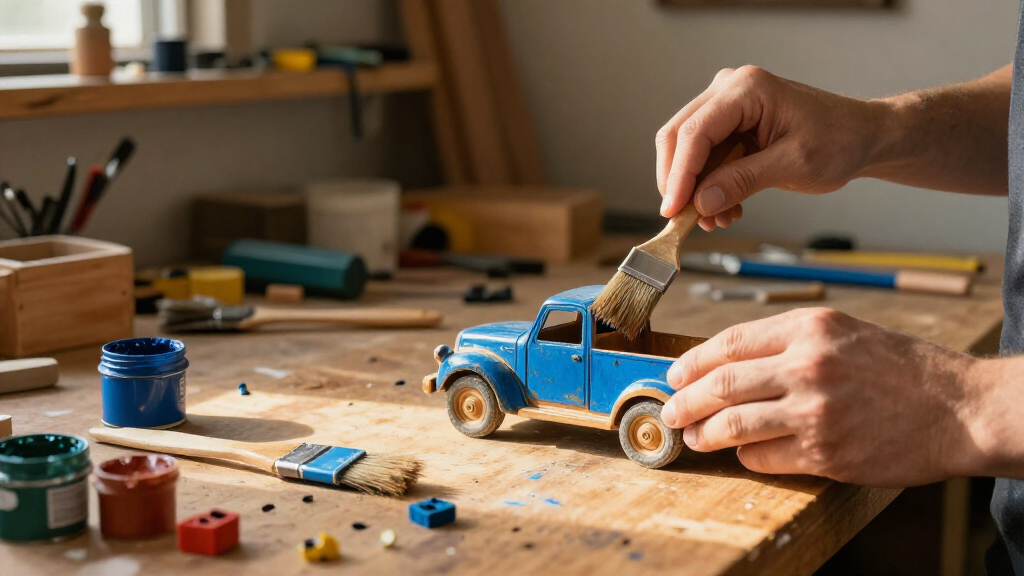

For repainting an old toy, the right choice depends less on the label than on the toy’s material, the area you need to cover, and how much handling the new finish must withstand. I rank Testors Enamel Paint Assorted Colors Set first for small restoration jobs where several hobby colors and a brush-ready formula are useful. Rust-Oleum Painter’s Touch Gloss Black is the practical pick for a larger black area on a compatible surface, while Testors Gloss White Enamel suits small, precise touch-ups where a glossy white finish matters.

Get business pricing on tools and workshop supplies
- Business-only prices and quantity discounts
- Tax-exempt purchasing
- Multiple users, one account, clear invoices
The tradeoff is between detail and coverage, and between enamel durability and easier-cleanup acrylic. Enamels are aimed at controlled model and craft work but come in very small containers; the acrylic sets supply more colors and easier wet cleanup, but their stated indoor-use or water-resistance limits matter. I would also check the toy’s material and existing finish before painting: a product listing that says it works on plastic does not prove compatibility with every toy plastic, and no paint choice makes a restored toy suitable for a child’s mouth or unsupervised play.
Complete the kit



Key Takeaways
- For small, multicolor restorations: Testors Enamel Paint Assorted Colors Set offers a brush-ready set of hobby colors, but its small format is not a sensible choice for repainting a large toy.
- For a broad black area: Rust-Oleum Painter’s Touch gives you an 8 fl oz water-based gloss acrylic; the listing names wood and metal, so check compatibility before using it on toy plastic.
- For many indoor color options: Apple Barrel’s 16-color acrylic set provides far more variety than the single-color paints, but it is specified for indoor use and is not water resistant.
- For a small white detail: Testors Gloss White Enamel is brush-applied and intended for detailed projects, though its 0.25 fl oz container is easy to outgrow.
- For a matte antique-white craft layer: Apple Barrel Antique White offers a simple single-color option, but its 2 fl oz size and indoor craft focus suit modest projects rather than wear-prone toys.
| Testors Enamel Paint Assorted Colors Set |  | Best Overall for Small, Multicolor Touch-Ups | Paint type: Enamel | Color: Assorted hobby colors | Application: Brush-ready | VIEW LATEST PRICE | See Our Full Breakdown |
| Rust-Oleum Painter’s Touch Brush-On Acrylic Paint, Gloss Black, 8 fl oz |  | Best for Larger Black Areas on Compatible Surfaces | Paint type: Water-based acrylic | Color and finish: Gloss black | Volume: 8 fl oz | VIEW LATEST PRICE | See Our Full Breakdown |
| Apple Barrel Acrylic Craft Paint Set, 16 Matte Colors, 2 fl oz Each |  | Best Value for Broad Indoor Color Variety | Paint type: Acrylic craft paint | Colors: 16 matte colors | Bottle size: 2 fl oz each | VIEW LATEST PRICE | See Our Full Breakdown |
| Apple Barrel Acrylic Paint, Antique White, 2 oz |  | Best for a Matte Antique-White Touch-Up | Paint type: Acrylic craft paint | Color: Antique White | Volume: 2 fl oz | VIEW LATEST PRICE | See Our Full Breakdown |
| Testors Gloss White Enamel Paint |  | Best for Small Gloss-White Details | Paint type: Enamel | Color and finish: Gloss white | Volume: 0.25 fl oz | VIEW LATEST PRICE | See Our Full Breakdown |
| paint for old toy | Paint type | Application | Listed surfaces | Volume |
|---|---|---|---|---|
| Testors Enamel Paint Assorted | Enamel | Brush-ready | — | — |
| Rust-Oleum Painter’s Touch Bru | Water-based acrylic | Brush-on | Wood, metal, plaster, masonry, and unglazed ceramic | 8 fl oz |
| Apple Barrel Acrylic Craft Pai | Acrylic craft paint | Brush, stamp, stencil, or sponge | Wood, Styrofoam, plaster, and terra cotta | — |
| Apple Barrel Acrylic Paint | Acrylic craft paint | Brush, stamp, stencil, or sponge | Canvas, paper, wood, Styrofoam, and paper mache | 2 fl oz |
| Testors Gloss White Enamel Pai | Enamel | Brush-on | Plastic, metal, wood, and other craft surfaces | 0.25 fl oz |
More Details on Our Top Picks
Testors Enamel Paint Assorted Colors Set
I put this set first because old-toy restoration often means matching several worn accents rather than coating an entire object in one color. The assorted hobby colors and brush-ready enamel formula give a restorer more flexibility than the single-color Rust-Oleum black or Testors white. Its stated fast-drying character and general-purpose craft and model positioning also fit small, controlled paint jobs where a broad brush and a large container would be clumsy.
That role has clear limits. The supplied details do not identify the individual colors, container count, or exact surface compatibility for this set, so I would not assume it matches a particular vintage toy or bonds to every plastic. Its listing gives a 2.25 fl oz item volume, while the product title’s set format does not make the amount of each color clear. Compared with Apple Barrel’s 16 separate 2 fl oz bottles, this is the more hobby-oriented option, not the better source of plentiful craft paint. I would choose it for small restoration accents, then test a hidden spot before proceeding.
Enamel handling also asks more care than the easy-cleanup acrylics. The listing calls the paint fast drying and water resistant, but does not say that it is waterproof; I would not read those statements as proof of a hard-wearing or child-safe finish. This is my most balanced pick for small jobs, not a universal coating for toys that will be bent, chewed, or repeatedly handled.
Pros:- Assorted hobby colors give more flexibility than the single-color picks.
- Brush-ready formula suits small areas and controlled detailing.
- Described as fast drying for craft and model projects.
- Water-resistant description may suit display pieces better than the non-water-resistant Apple Barrel set, though it does not establish waterproof performance.
Cons:- The supplied listing does not specify the individual colors or amount in each color.
- The stated 2.25 fl oz volume is modest for covering a whole toy.
- Exact compatibility with common toy plastics and child-safety suitability are not established.
Best for: Adult restorers touching up small toy details in more than one color who want a brush-ready hobby enamel set.
Not ideal for: Anyone repainting a large toy, needing a specific verified color or plastic compatibility, or preparing a toy for a young child’s regular play.
- Paint type:Enamel
- Color:Assorted hobby colors
- Application:Brush-ready
- Stated use:Arts, crafts, and model detailing
- Drying:Described as fast drying
- Water resistance:Water resistant; not described as waterproof
- Listed item volume:2.25 fl oz
- Made in:United States
Our verdict“I rank this first for small, multicolor adult restoration work, provided you verify the color and test the toy’s surface before painting.”
Rust-Oleum Painter’s Touch Brush-On Acrylic Paint, Gloss Black, 8 fl oz
Rust-Oleum earns a distinct place because it supplies much more paint than either Testors enamel and uses a water-based acrylic formula. If an old toy has a sizable black section and its material is among the listed surfaces, the 8 fl oz brush-on bottle is a more practical scale than a tiny hobby paint. The gloss finish can also fit toys whose original appearance was shiny, while the stated low odor and soap-and-water convenience of water-based paint make indoor adult work less demanding than an enamel process.
Its main weakness is the gap between a broad project label and the specific needs of toys. The stated surfaces include wood, metal, plaster, masonry, and unglazed ceramic, but plastic is not listed. That makes it a less direct match for many old toys than Testors’ multi-surface claim for metal, wood, and plastic, even though that Testors product is far smaller. I would not use this on plastic just because it is sold as a general-purpose paint; identify the material and test adhesion first.
Surface preparation adds work: the supplied information calls for sanding and degreasing, which may be unsuitable for delicate details or a toy with a thin original finish you hope to preserve. Coverage is also inconsistent in the listing, which gives both 20 and up to 30 square feet. Compared with Apple Barrel’s indoor craft acrylics, Painter’s Touch presents itself as suitable for interior and exterior projects and lists chip and fade resistance, but those claims do not guarantee performance on a flexible toy surface.
Pros:- An 8 fl oz bottle provides more volume than the small Testors hobby paints.
- Water-based acrylic is described as low odor and cleans up more easily while wet than enamel.
- Gloss black works for larger dark sections and shiny finishes.
- Listed as chip resistant, fade resistant, and suitable for interior and exterior projects.
Cons:- Plastic is not among the listed suitable surfaces, limiting confidence for many toys.
- The description calls for sanding and degreasing before application.
- Coverage figures conflict between 20 and up to 30 square feet.
Best for: Restorers covering a larger black area on a rigid toy or component whose material is confirmed compatible with the listed surfaces.
Not ideal for: Anyone seeking multiple colors, a miniature detail paint, or a product explicitly listing plastic as a suitable surface.
- Paint type:Water-based acrylic
- Color and finish:Gloss black
- Volume:8 fl oz
- Application:Brush-on
- Listed surfaces:Wood, metal, plaster, masonry, and unglazed ceramic
- Use:Interior and exterior
- Dry to touch:About 30 minutes
- Coverage:Listing varies between 20 and up to 30 sq ft
Our verdict“I recommend it for a larger black repaint on a confirmed compatible surface, not as a default paint for plastic toys.”
Apple Barrel Acrylic Craft Paint Set, 16 Matte Colors, 2 fl oz Each
When a restoration needs many possible colors rather than one dependable shade, this set offers the widest palette in the lineup: 16 matte acrylic colors in separate 2 fl oz bottles. That volume and variety can help with repainting decorative wooden toys, display pieces, or toy-room craft projects where the exact finish is less demanding. It is easier to adapt than either Testors enamel set if you need a bright accent, grey, or several colors in one project.
The catch is that this is craft paint, not a specified durable toy coating. The product is marked for indoor use and not water resistant, so it sits behind the enamel options for a piece likely to be handled, wiped, or exposed to moisture. Its listed recommended surfaces—wood, Styrofoam, plaster, and terra cotta—do not name plastic or metal. Compared with Rust-Oleum, it gives you more colors and easier wet cleanup, but less support for exterior use and no explicit chip-resistance claim.
The matte finish can be an advantage when trying to avoid an overly new, glossy look on a vintage piece. It may also make touch-ups more visible if the original toy has a polished coating. I would choose this for indoor display restoration on compatible craft surfaces, not a toy that flexes or sees frequent play. Allow the stated cure time before handling, and test a hidden area because the supplied details do not establish adhesion to all old finishes.
Pros:- Sixteen colors give more options than any single-color paint in this group.
- Each color comes in a 2 fl oz bottle, useful for more than tiny detail marks.
- Matte finish can suit a subdued or vintage-inspired appearance.
- Wet paint cleans up with soap and water.
Cons:- Not water resistant and specified for indoor use.
- The recommended surface list does not include plastic or metal.
- The stated two-hour drying and 24-hour cure schedule means it is not an instant-finish option.
Best for: A restorer who needs a range of indoor colors for a compatible craft surface or a display-only toy project.
Not ideal for: Toys that will be exposed to water, frequent handling, outdoor conditions, or surfaces not listed by the manufacturer.
- Paint type:Acrylic craft paint
- Colors:16 matte colors
- Bottle size:2 fl oz each
- Listed surfaces:Wood, Styrofoam, plaster, and terra cotta
- Application:Brush, stamp, stencil, or sponge
- Cleanup:Soap and water while wet
- Dry time:About 2 hours
- Full cure:About 24 hours
- Use and water resistance:Indoor use; not water resistant
Our verdict“I would pick this for colorful indoor display work on a compatible surface, but not for a frequently handled toy.”
Apple Barrel Acrylic Paint, Antique White, 2 oz
This single-color bottle is the straightforward choice when a toy needs a small area of warm, muted white rather than a bright gloss. Antique White and matte make it visually different from Testors Gloss White: Apple Barrel is better suited to a soft craft finish, while Testors is the more natural match for a small shiny white detail. The water-based acrylic also has wet cleanup with soap and water, a useful convenience when painting in a controlled indoor workspace.
Its supplied surface list includes wood, paper, canvas, Styrofoam, and paper mache, but not plastic or metal. That makes it a narrow recommendation for an old toy unless the toy’s material is confirmed compatible. Compared with the Apple Barrel 16-color set, this bottle is less flexible but gives you a specific antique-white color without buying a palette you may not need. Its stated 8-square-foot coverage is ample for craft work, yet the small 2 fl oz container is not a solution for a full repaint.
The listing identifies the paint as non-toxic, but I would not treat that alone as certification for children’s toys or for use on items that may be mouthed. The paint is described for indoor use, and cleanup is only specified while wet; the supplied details do not establish water resistance or durability under repeated handling. I would reserve it for a display piece or a compatible decorative component where a matte, aged-looking white is more important than a tough surface.
Pros:- Antique-white color and matte finish suit a softer, aged look.
- Works with brush, stamp, stencil, or sponge application.
- Wet paint cleans up with soap and water.
- Listed as non-toxic and provides a stated coverage figure of 8 square feet.
Cons:- Only 2 fl oz, limiting its usefulness for broad coverage.
- The recommended surfaces do not include common toy materials such as plastic or metal.
- Indoor use and wet-only cleanup details offer little assurance for frequently handled toys.
Best for: A restorer needing a small amount of matte antique white for an indoor toy or component made from a listed compatible surface.
Not ideal for: Anyone painting plastic or metal without verified compatibility, seeking glossy white, or needing a durable finish for regular play.
- Paint type:Acrylic craft paint
- Color:Antique White
- Volume:2 fl oz
- Finish:Matte
- Listed surfaces:Canvas, paper, wood, Styrofoam, and paper mache
- Application:Brush, stamp, stencil, or sponge
- Cleanup:Soap and water while wet
- Coverage:8 sq ft
- Use:Indoor; listed as non-toxic
Our verdict“I recommend it for a modest matte antique-white accent on a compatible indoor display piece, rather than for a full toy repaint.”
Testors Gloss White Enamel Paint
Testors Gloss White is the most focused pick here: a brush-applied glossy enamel intended for detailed projects. Its listing names plastic, metal, and wood among suitable materials, giving it a more direct stated fit for many toy restoration jobs than either Apple Barrel acrylic. If you are repainting a tiny trim piece, a painted eye detail, or a small white accent, that material claim and the glossy finish make more sense than buying Rust-Oleum’s large black bottle or opening a 16-color matte set.
Scale is the serious drawback. At 0.25 fl oz, this is a detail paint, not a practical way to coat a whole toy. It dries in about an hour according to the description, but the supplied details do not provide a full-cure schedule or explain preparation for different plastics. I would test the surface first, especially on an old toy with a worn, soft, or previously painted finish. Compared with the assorted Testors set, this gives a specific white and gloss but not the flexibility of several colors.
The listing describes the paint as water resistant, not waterproof, and says nothing that would make it appropriate for a child’s mouth or routine rough play. I would favor it for adult restoration of small, compatible areas, with careful ventilation and handling appropriate to enamel paint. Its rank reflects how well it solves a narrow but common job—not how much ground the tiny bottle can cover.
Pros:- Gloss white suits small details on toys with a shiny finish.
- The listing names plastic, wood, and metal as suitable materials.
- Brush application is intended for intricate work.
- Description states a drying time of about one hour.
Cons:- The 0.25 fl oz container is very small for broad coverage.
- Only one color and finish are supplied.
- Full cure time and child-use safety are not established by the supplied information.
Best for: An adult restorer adding a small glossy white detail to a toy whose plastic, wood, or metal surface is compatible.
Not ideal for: Anyone painting a whole toy, wanting a matte or antique-white look, or needing a larger supply and multiple colors.
- Paint type:Enamel
- Color and finish:Gloss white
- Volume:0.25 fl oz
- Application:Brush-on
- Listed surfaces:Plastic, metal, wood, and other craft surfaces
- Stated uses:Art projects, models, and crafts
- Drying time:About 1 hour
- Water resistance:Water resistant; not described as waterproof
Our verdict“I would choose this for a small, glossy white touch-up on a compatible toy, not for an all-over repaint.”
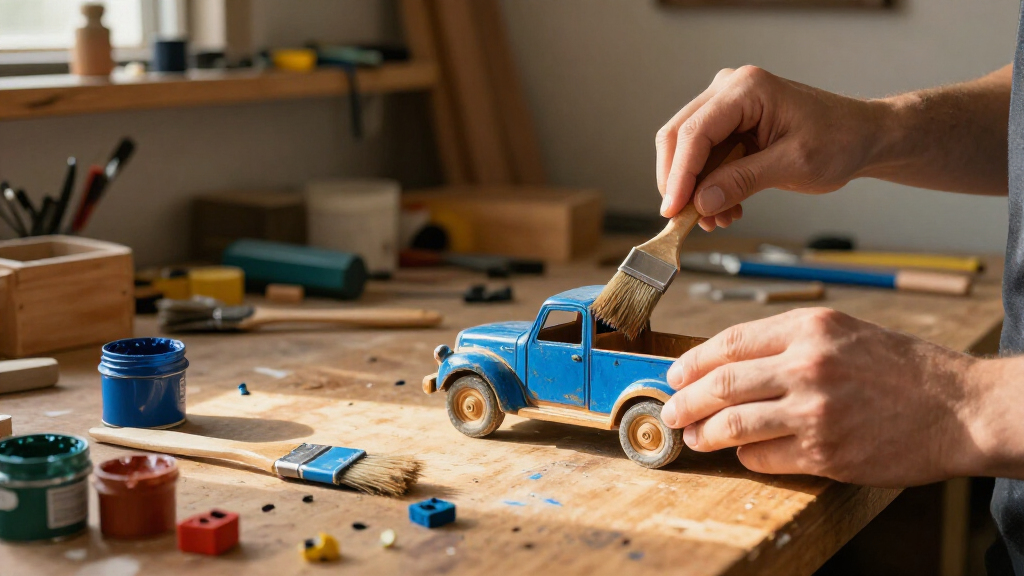
How We Picked
I ranked these five paints by how well their stated features answer the practical problems involved in painting old toys: controlling a small brush on worn details, choosing a finish that suits the original look, getting enough paint for the area, and confirming that the product is intended for the toy’s material and use. The strongest listing for toy restoration is not automatically the one with the broadest surface claims. An old toy may have unknown plastic, a slick or aged coating, and parts that flex or rub together, so I treat unverified material compatibility as a real limitation rather than assume a paint will bond.
Application and scale shaped the order. The Testors set and Testors Gloss White are aimed at brush-on hobby and detail projects, making them more naturally suited to small pieces than the larger Rust-Oleum bottle. Rust-Oleum stands out for the volume and broad stated surface range, but its color is limited to gloss black, and the listing’s named surfaces do not include plastic. Apple Barrel’s 16-color set is useful for varied indoor work, though its stated water resistance and use limits make it less suited to toys that will be handled frequently.
I also weighed finish, cleanup, and safety context. Matte acrylic can suit a vintage-looking surface better than a shiny enamel, while gloss may be a closer visual match for a toy that originally had a polished finish. Water-based acrylic is easier to clean from tools while wet, but that convenience does not establish wear resistance. Product descriptions do not provide enough information to certify any paint as suitable for toys used by young children, mouthed, or exposed to repeated rough play. My picks are therefore for adult-led restoration and display unless the product and toy maker’s guidance supports another use.
| paint for old toy | Paint type | Application | Listed surfaces |
|---|---|---|---|
| Testors Enamel Paint Assorted | Enamel | Brush-ready | — |
| Rust-Oleum Painter’s Touch Bru | Water-based acrylic | Brush-on | Wood, metal, plaster, masonry, and unglazed ceramic |
| Apple Barrel Acrylic Craft Pai | Acrylic craft paint | Brush, stamp, stencil, or sponge | Wood, Styrofoam, plaster, and terra cotta |
| Apple Barrel Acrylic Paint | Acrylic craft paint | Brush, stamp, stencil, or sponge | Canvas, paper, wood, Styrofoam, and paper mache |
| Testors Gloss White Enamel Pai | Enamel | Brush-on | Plastic, metal, wood, and other craft surfaces |
Factors to Consider When Choosing Best Paint For Old Toys
Before choosing a paint, I would match the product to the toy’s material and the job’s scale. These listings cover different surfaces, finishes, and uses; none supports a blanket claim that the paint will bond to every old toy.Start with the toy material, not the paint color
Old toys can be made from wood, metal, hard plastic, soft plastic, or a mix of materials. Read the named surface list closely: Testors Gloss White names plastic, while Rust-Oleum lists wood, metal, plaster, masonry, and unglazed ceramic, but not plastic. Apple Barrel’s listed surfaces are craft materials such as wood, Styrofoam, plaster, paper, and terra cotta. Those differences matter more than a broad phrase such as “multi-surface.”
If the toy’s material is unknown, identify it before painting where possible and test a small hidden patch. A successful patch should adhere without obvious beading, lifting, or damage to the old finish after drying and curing according to the paint’s instructions. I would not sand a collectible, fragile, or historically significant toy without weighing whether that removes original material. If a toy has soft or flexible plastic, none of the supplied descriptions confirms a suitable flexible coating.
Choose enamel or acrylic for the job you have
The two Testors options are enamel, and their small brush-ready formats are directed toward models and detail work. That makes them a reasonable starting point for a controlled touch-up, especially when matching a glossy area or applying several small colors. Their small volumes make them poor choices for broad coverage, and the listings do not establish child-safe use or performance under rough handling.
Rust-Oleum and Apple Barrel are acrylics. Rust-Oleum offers a larger bottle and names chip and fade resistance, but it does not list plastic and calls for surface preparation. Apple Barrel offers easy soap-and-water cleanup while wet; its 16-color set is marked indoor and not water resistant. Easy cleanup is not the same as durable adhesion, so I would not pick craft acrylic solely because it is easier to use.
Match gloss or matte to the original look
Gloss can restore the polished appearance of many toy finishes, while matte can look more subdued or closer to a worn, vintage surface. Testors Gloss White is the clear choice among these five for a small shiny white detail. Rust-Oleum supplies gloss black for larger areas on compatible surfaces. Apple Barrel’s antique white and 16-color set dry matte, giving them a different visual role rather than making them interchangeable with enamel.
Before committing to a full area, compare the paint with an intact section of the toy under the light where it will be displayed. A color match can still look wrong if the sheen differs. If the original coating has aged or yellowed, a fresh bright white or uniform matte finish may make the repair stand out rather than blend in.
Estimate how much paint the restoration needs
For an eye, trim line, or small patch, the Testors 0.25 fl oz white enamel may be enough. The assorted Testors set offers more color flexibility, though the supplied listing does not clearly state the amount per color. For larger work, Rust-Oleum’s 8 fl oz bottle gives much more volume, but only in gloss black. Apple Barrel’s 16 bottles provide 2 fl oz per color, while its single antique-white bottle is 2 fl oz.
Do not rely on a coverage number without checking the package and surface. Rust-Oleum’s supplied listing gives conflicting coverage figures, and actual coverage can change with the toy’s texture, preparation, color underneath, and number of coats. For a small restoration, buying a large container can leave you with more paint than needed; for a broad repaint, tiny hobby bottles can require repeated purchases and make color consistency harder.
Prepare carefully and allow the paint to cure
Remove loose dust and grime before painting, and follow the manufacturer’s preparation directions. Rust-Oleum specifically calls for sanding and degreasing, but sanding can damage delicate surfaces or erase original details. Wet-cleanup acrylic should be cleaned from brushes before it dries. Enamel should be handled according to its label, including any directions for ventilation, cleanup, and drying.
Dry to touch does not mean fully cured. Apple Barrel’s 16-color set lists about two hours to dry and 24 hours to cure; the other supplied descriptions do not give a complete cure schedule. Keep painted pieces aside until the product instructions allow handling, and do not assemble parts while the finish is tacky. Painted joints can rub, and flexible areas can crack or wear even when the paint looks dry.
Keep child safety separate from paint performance
A product description saying non-toxic, water resistant, or chip resistant does not establish that a finish is appropriate for a child’s toy. None of these supplied listings confirms that the paint is certified for toys that may be mouthed or used by young children. I would use these recommendations for adult-led restoration and display unless the toy maker’s guidance and the paint’s labeling clearly support the intended use.
For a toy intended for regular play, check the toy and paint manufacturer’s safety guidance, avoid painting areas that contact the mouth or skin, and consider whether repainting is appropriate at all. A repaired finish can flake or wear, especially on moving or flexible parts. When safety suitability is unclear, do not treat a paint choice as a substitute for a toy-safe restoration method.
Frequently Asked Questions
What paint is best for old plastic toys?
Of these five, Testors Gloss White is the clearest match to its stated surface list because the description names plastic, along with wood and metal. Testors Enamel Paint Assorted Colors may be useful for small hobby details, but the supplied listing does not spell out plastic compatibility for the set. Rust-Oleum and the Apple Barrel products do not list plastic among their stated suitable surfaces. I would identify the toy plastic and test a hidden area before painting; the descriptions do not confirm compatibility with every plastic type.
Is acrylic or enamel better for repainting a vintage toy?
Neither is automatically better for every toy. The Testors enamels suit small brush-on hobby details and include a gloss-white option, while acrylics offer easier wet cleanup and, in the Apple Barrel set, more colors. Rust-Oleum provides a larger volume but does not list plastic as a suitable surface. I would choose based on confirmed material compatibility, finish, project size, and intended handling—not the paint category alone.
Can I use the Apple Barrel paints on a toy?
The Apple Barrel products are described for indoor craft use on surfaces such as wood, Styrofoam, plaster, paper, canvas, and paper mache, depending on the item. Their listings do not name plastic or metal, and the 16-color set is specifically described as not water resistant. They may suit a compatible indoor display piece, but the supplied details do not establish durability for frequent play or child-safety suitability. Check the label and test a small area first.
Do I need to sand an old toy before painting?
Follow the directions for the paint and the toy’s material rather than sanding automatically. Rust-Oleum’s supplied information calls for sanding and degreasing, but sanding can remove original paint, damage fine details, or harm a fragile collectible. The other listings do not provide enough preparation detail to recommend sanding every toy. Clean the surface appropriately, preserve original material where possible, and test a hidden spot before applying paint across the toy.
Are these paints safe for toys used by young children?
The supplied descriptions do not establish that any of these paints is certified for toys that young children may mouth or handle roughly. Apple Barrel Antique White is listed as non-toxic, but that statement alone is not the same as toy-use certification. Water resistance or chip resistance also does not prove that a finish is safe if it wears or flakes. I would check the paint and toy manufacturers’ safety instructions and avoid repainting parts that may contact a child’s mouth.
Conclusion
My first choice is Testors Enamel Paint Assorted Colors Set for adult restorers working on small, multicolor details. Choose Rust-Oleum Painter’s Touch instead when you need a larger quantity of gloss black for a confirmed compatible, rigid surface; skip it if the toy is plastic and compatibility cannot be verified. For an indoor display project needing many colors, the Apple Barrel 16-color set offers the widest palette, while Apple Barrel Antique White is the more focused choice for a small matte, aged-looking accent. If you need a tiny glossy white repair, Testors Gloss White Enamel is the specialized pick.
Before buying, match the paint to the toy material, finish, and area, then test a hidden spot and follow the label’s preparation and cure directions. These products serve different restoration tasks, and none of the supplied listings establishes that its paint is suitable for every plastic toy or for a young child’s regular play.
Evergreen bestsellers Picks

Ninja CM371 Hot & Iced XL Coffee Maker with Rapid Cold Brew

Bose QuietComfort Ultra Earbuds (2nd Gen), Wireless Noise-Cancelling Earbuds, Black

Dyson V8 Cyclone Cordless Vacuum
As an affiliate, we earn on qualifying purchases.