The best attic insulation materials depend on whether you need to slow heat transfer through the ceiling or reflect radiant heat from the roof. I name Owens Corning R-19 fiberglass batts my best overall pick for conventional attic-floor insulation, while Houseables Radiant Barrier stands out for broad roof-deck coverage and Reflectix BP24025 for smaller reflective projects. These options serve different purposes: fiberglass provides stated R-value, while reflective products rely on an air space and installation conditions to perform as intended. Roll size, fit, handling, and the type of heat you want to address all affect the decision. Read on for the full breakdown and guidance on matching a material to your attic.

Get business pricing on tools and workshop supplies
- Business-only prices and quantity discounts
- Tax-exempt purchasing
- Multiple users, one account, clear invoices
Complete the kit



Key Takeaways
- Owens Corning R-19 batts are the clearest choice for adding stated thermal resistance to compatible attic-floor cavities; the reflective rolls are not direct substitutes for fiberglass.
- Houseables and US Energy Products offer large-format radiant-barrier coverage, which suits broader projects better than short rolls, but installation layout and air space matter.
- Reflectix BP24025 favors smaller, controlled jobs: its narrower, shorter roll can be easier to handle, though it covers less area than the full-size barriers.
- UBmove’s 48-inch-by-125-foot roll balances width and reach for larger reflective installations, while AGHITG’s 10-foot roll is better suited to limited repairs or test areas.
- Frost King cotton denim is a different kind of pick for buyers seeking a fiber-based, multi-purpose material; its short pieces and stated dimensions limit its fit for insulating a whole attic.
| Houseables Radiant Barrier Insulation Roll, 250 ft x 4 ft, 1,000 sq ft |  | Best for Large Attic Coverage | Brand: Houseables | Material: Reflective aluminum foil | Roll dimensions: 250 ft x 4 ft | VIEW LATEST PRICE | See Our Full Breakdown |
| UBmove Reflective Bubble Insulation Roll, 48 in x 125 ft |  | Best Long-Run Bubble Roll | Brand: UBMOVE | Material: Polyethylene | Dimensions: 48 in wide x 125 ft long | VIEW LATEST PRICE | See Our Full Breakdown |
| Reflectix BP24025 Reflective Bubble Pack Insulation, 24 in. x 25 ft. |  | Best for Small Attic Sections | Brand: Reflectix | Model: BP24025 | Dimensions: 300 in L x 24 in W | VIEW LATEST PRICE | See Our Full Breakdown |
| US Energy Products Radiant Barrier Insulation, 1,000 sq. ft., 4 ft. Wide |  | Best Perforated Radiant Barrier | Manufacturer: AES | Coverage: 1,000 sq ft | Roll dimensions: 4 ft wide x 250 ft long | VIEW LATEST PRICE | See Our Full Breakdown |
| Owens Corning R-19 Unfaced Fiberglass Insulation Batts, 15 x 93 in, 77.5 sq ft |  | Best Conventional Attic Insulation | Brand: Owens Corning | Material: Fiberglass | R-value: R-19 | VIEW LATEST PRICE | See Our Full Breakdown |
| AGHITG Reflective Bubble Insulation Roll, 48 in x 10 ft |  | Best for Small, Targeted Reflective Projects | Brand: AGHITG | Dimensions: 120 in L x 48 in W | Coverage: 5,760 square inches | VIEW LATEST PRICE | See Our Full Breakdown |
| Frost King CF1 Natural Cotton Denim Multi-Purpose Insulation, 16 x 1 x 48 Inches |  | Best for Small, Low-Irritation Insulation and Sound-Dampening Tasks | Brand: Frost King | Model: CF1 | Material: 100% recycled denim | VIEW LATEST PRICE | See Our Full Breakdown |
| attic insulation material | Brand | Material | Coverage | Dimensions |
|---|---|---|---|---|
| Houseables Radiant Barrier Ins | Houseables | Reflective aluminum foil | 1,000 sq ft | — |
| UBmove Reflective Bubble Insul | UBMOVE | Polyethylene | — | 48 in wide x 125 ft long |
| Reflectix BP24025 Reflective B | Reflectix | — | 7,200 sq in | 300 in L x 24 in W |
| US Energy Products Radiant Bar | — | — | 1,000 sq ft | — |
| Owens Corning R-19 Unfaced Fib | Owens Corning | Fiberglass | 77.5 sq ft | — |
| AGHITG Reflective Bubble Insul | AGHITG | Aluminum foil and air bubble layer | 5,760 square inches | 120 in L x 48 in W |
| Frost King CF1 Natural Cotton | Frost King | 100% recycled denim | — | 48 x 16 x 1 inches |
More Details on Our Top Picks
Houseables Radiant Barrier Insulation Roll, 250 ft x 4 ft, 1,000 sq ft
For an attic with broad roof areas, the Houseables Radiant Barrier offers 1,000 square feet on a single roll, reducing the need to join multiple short sections. Its double-sided reflective aluminum is designed to reflect radiant heat, and the lightweight material can be cut to fit around framing. Compared with the smaller Reflectix BP24025, Houseables is the more practical choice for covering a large area, while Reflectix adds a bubble layer intended to resist conductive heat flow. This roll is a radiant barrier, not a substitute for conventional bulk insulation; results depend on climate, installation, and the building assembly. Its long format also takes planning to handle and position, and the product information does not establish a specific installed R-value.
Pros:- 1,000-square-foot coverage per roll suits large attic areas
- Double-sided reflective aluminum is designed to reflect radiant heat
- Lightweight material is easy to cut and handle
- Described as tear-resistant and resistant to humidity and biological growth
Cons:- Does not provide a specified installed R-value as conventional insulation does
- Cooling benefits depend on climate and installation conditions
- The 250-foot roll can be cumbersome to position in confined attic spaces
Best for: Homeowners covering a large attic roof area who want a lightweight, cut-to-fit reflective barrier roll.
Not ideal for: Buyers seeking a stated R-value or a stand-alone solution for conductive heat loss; choose a conventional insulation product such as the Owens Corning R-19 batts instead.
- Brand:Houseables
- Material:Reflective aluminum foil
- Roll dimensions:250 ft x 4 ft
- Coverage:1,000 sq ft
- Reflective value:>97%
- Sides:Double-sided
- Model number:RaBa
Our verdict“Choose Houseables for extensive attic coverage with a reflective barrier, but pair it with appropriate bulk insulation when you need stated thermal resistance.”
UBmove Reflective Bubble Insulation Roll, 48 in x 125 ft
The UBmove Reflective Bubble Insulation Roll combines a foil exterior with a 3/16-inch polyethylene bubble layer, making it a flexible option for buyers who want a cut-to-size material for attic projects and other uses. Its 48-inch width and 125-foot length provide a longer continuous run than the compact Reflectix BP24025, which is easier to manage for smaller repairs but covers less area. UBmove’s listed R-value range of 4.9 to 14.1 needs careful interpretation: the product data does not say which value applies to a given attic installation, so I would not use that range alone to plan a project. The foil is one-sided, unlike the double-sided Houseables barrier, and this product’s multi-use positioning means buyers should check that its installation details fit their attic assembly.
Pros:- Long 125-foot roll supports extended runs
- 48-inch width can be cut to suit different project dimensions
- 3/16-inch polyethylene bubble layer adds a barrier to conductive heat flow
- Designed for multiple uses, including attics, garages, and greenhouses
Cons:- Listed R-value range does not identify the value for a specific attic installation
- Foil layer is one-sided
- The multi-use description gives less attic-specific guidance than dedicated insulation products
Best for: DIY renovators who need a long, cut-to-length bubble roll for an attic project and can verify the correct installation method and R-value.
Not ideal for: Homeowners who need a clearly specified attic R-value or a double-sided reflective surface; the product information leaves the R-value conditions unclear and identifies only one foil side.
- Brand:UBMOVE
- Material:Polyethylene
- Dimensions:48 in wide x 125 ft long
- Bubble layer thickness:3/16 in
- Item thickness:0.19 in
- Listed R-value:4.9 to 14.1
- Weight:5 lb
Our verdict“Pick UBmove for long, adaptable bubble-insulation runs only if you can confirm the appropriate R-value and installation details for your attic.”
Reflectix BP24025 Reflective Bubble Pack Insulation, 24 in. x 25 ft.
For targeted work around a small attic section, the Reflectix BP24025 is easier to handle than the 125-foot UBmove roll and far less extensive than the 1,000-square-foot Houseables barrier. Its 24-inch width and 25-foot length suit limited runs, while the seven-layer construction pairs reflective foil with insulating bubbles intended to resist radiant and conductive heat transfer. At 16 ounces, it is also lightweight and fiber-free, which can make cutting and placement simpler than handling fiberglass batts such as Owens Corning R-19. The tradeoff is modest coverage: the roll supplies 7,200 square inches, so a larger attic could require multiple rolls and more seams. Its stated 97% radiant heat reflectance is not a substitute for a clearly specified whole-assembly R-value.
Pros:- Seven-layer build combines reflective foil and insulating bubbles
- 97% radiant heat reflectance is specified
- Lightweight, fiber-free material is easy to cut and handle
- Suitable for attics and other construction applications
Cons:- 7,200 square inches of coverage is limited for a full attic
- Reflective performance does not provide a stated whole-assembly R-value
- Warranty support is directed through customer service
Best for: DIYers addressing a small attic area, narrow run, or localized project who want lightweight, fiber-free reflective material.
Not ideal for: Homeowners covering a large attic or seeking conventional batt insulation with a stated R-value; the small roll has limited coverage and a different role from Owens Corning R-19.
- Brand:Reflectix
- Model:BP24025
- Dimensions:300 in L x 24 in W
- Thickness:0.31 in (5/16 in)
- Coverage:7,200 sq in
- Construction:Seven layers
- Radiant heat reflectance:97%
- Weight:16 oz
Our verdict“Choose Reflectix for manageable, small-scale attic sections, not as the main insulation purchase for a large attic.”
US Energy Products Radiant Barrier Insulation, 1,000 sq. ft., 4 ft. Wide
The US Energy Products Radiant Barrier is the closest match here for buyers who want broad attic coverage with a perforated, breathable construction. Its five-layer build combines metalized aluminum, Mylar, and nylon scrim, and the 4-by-250-foot roll covers 1,000 square feet, matching the coverage of Houseables. The difference is the perforation: the product is described as allowing airflow, which may suit applications where that construction is specified. Its item details list 99.7% reflectivity, while the description says 97% radiant heat blocking, so the figures are not presented consistently. Like Houseables, it is a radiant barrier rather than a conventional batt with a stated R-value. Installation needs to match the attic assembly and local requirements; the perforated format does not remove that planning step.
Pros:- 1,000-square-foot roll covers a large area
- Perforations are designed to allow airflow
- Five-layer construction includes metalized aluminum, Mylar, and nylon scrim
- Double-sided and described as tear-resistant and easy to cut
Cons:- Reflectivity information differs between item details and product description
- No conventional installed R-value is specified
- Installation requirements and energy savings depend on the building and local requirements
Best for: Homeowners or contractors covering a large attic area who specifically need a perforated, double-sided radiant barrier and can follow project requirements.
Not ideal for: Buyers who want a conventional insulation product with an unambiguous R-value or those unable to confirm whether a perforated barrier suits their attic assembly.
- Manufacturer:AES
- Coverage:1,000 sq ft
- Roll dimensions:4 ft wide x 250 ft long
- Construction:Five-layer metalized aluminum, Mylar, and nylon scrim
- Reflective value:99.7% in item details; description states 97% radiant heat blocking
- Design:Perforated and breathable
- Sides:Double-sided
Our verdict“Choose this roll over Houseables when a perforated radiant barrier is a fit for your attic design, but verify the stated performance and installation requirements first.”
Owens Corning R-19 Unfaced Fiberglass Insulation Batts, 15 x 93 in, 77.5 sq ft
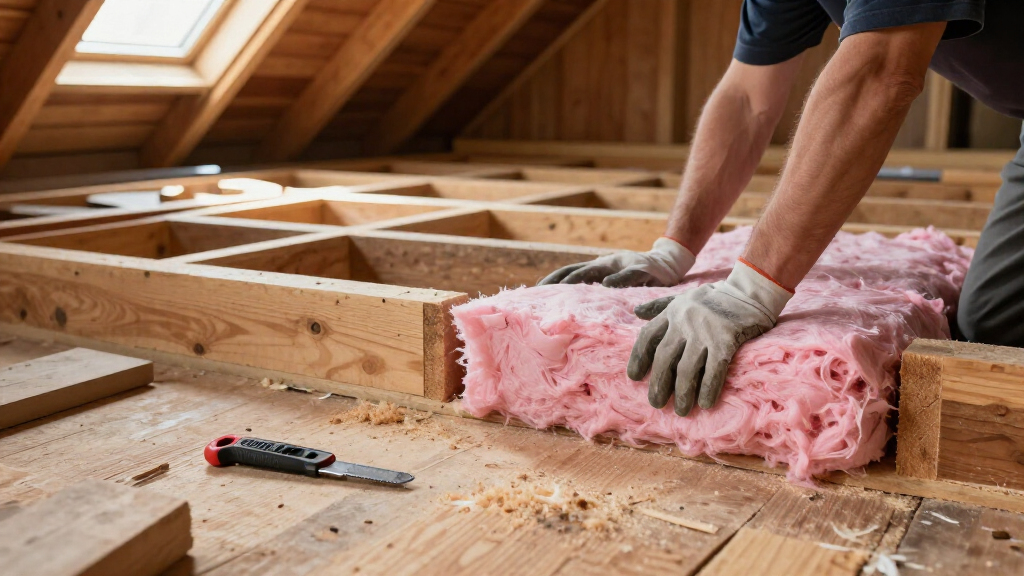
Unlike the reflective rolls in this list, Owens Corning R-19 unfaced batts provide a stated thermal resistance, making them the clearest choice here for buyers who need conventional bulk insulation rather than a radiant barrier. Each 6.5-inch-thick batt is cut to 15 by 93 inches, and eight batts cover 77.5 square feet. That smaller package coverage is far below the 1,000 square feet offered by Houseables or US Energy Products, but the comparison is not one-to-one: batts fill framed cavities, while reflective barriers address radiant heat. Because the batts are unfaced, they have no vapor barrier; the product is intended for areas with separate moisture control. Buyers must plan that layer and confirm the batts fit the attic framing and assembly.
Pros:- Provides a specified R-19 thermal resistance
- Eight batts cover 77.5 square feet
- Unfaced format suits assemblies where moisture control is handled separately
- Recommended for attics, floors, and walls
Cons:- No vapor barrier is included
- Coverage per bag is much smaller than the 1,000-square-foot reflective rolls
- Fiberglass batts require a suitable framed application rather than broad surface placement
Best for: Homeowners insulating framed attic spaces who want a specified R-19 batt and already have a suitable plan for moisture control.
Not ideal for: Buyers seeking a radiant barrier, a vapor-faced batt, or broad coverage in a single package; this bag covers 77.5 square feet and has no facing.
- Brand:Owens Corning
- Material:Fiberglass
- R-value:R-19
- Batt dimensions:15 in x 93 in
- Thickness:6.5 in
- Coverage:77.5 sq ft
- Quantity:8 batts
- Facing:Unfaced
Our verdict“Choose Owens Corning R-19 when you need conventional cavity insulation with a stated R-value and can provide separate moisture control.”
AGHITG Reflective Bubble Insulation Roll, 48 in x 10 ft
The AGHITG Reflective Bubble Insulation Roll suits small, irregular areas where a full-size radiant barrier roll would leave a lot of unused material. Its 48-by-10-foot format can be cut to size for an attic window or a limited section, while the foil-and-bubble construction is lightweight and easier to handle than Owens Corning’s fiberglass batts. That flexibility comes with a key limitation: the listing gives no R-value or other performance measurements, so I would not treat it as a measured substitute for conventional attic insulation. Attachment details are also absent, which means buyers must work out how to secure it for their specific installation. Compared with the much longer UBmove Reflective Bubble Insulation Roll, this is a more manageable choice for spot applications, but a poor fit for covering a large attic.
Pros:- Cut-to-fit roll can be shaped for different window sizes and small spaces.
- Lightweight construction is easier to handle than fiberglass batts.
- Foil and air-bubble layers provide a reflective format for targeted applications.
- Can be used in several areas, including windows, RVs, garages, and attics.
Cons:- No R-value or other insulation performance measurements are provided.
- The product details do not specify an attachment method.
- The 10-foot length is limited for whole-attic coverage compared with the UBmove roll.
Best for: Homeowners covering a small attic window or patch who want a cut-to-fit reflective material in a manageable roll.
Not ideal for: Buyers insulating a large attic or comparing materials by documented thermal performance; the roll covers only 5,760 square inches and lists no performance measurements.
- Brand:AGHITG
- Dimensions:120 in L x 48 in W
- Coverage:5,760 square inches
- Thickness:0.12 inches
- Material:Aluminum foil and air bubble layer
- Package quantity:1 roll
Our verdict“Choose this roll for small, cut-to-fit reflective projects, not as a performance-documented replacement for full attic insulation.”
Frost King CF1 Natural Cotton Denim Multi-Purpose Insulation, 16 x 1 x 48 Inches
The Frost King CF1 is a compact piece of recycled-denim insulation for buyers who value easy handling and want a material that can also cushion or dampen noise. Its nonirritating cotton denim can be cut or torn to fit around pipes, ducts, and small spaces without the protective gear associated with fiberglass. That makes it more comfortable to handle than Owens Corning’s R-19 fiberglass batts, but this single piece is only 1 inch thick and has no stated R-value, so I would not choose it as the main insulation layer for an attic. Unlike the AGHITG reflective roll, it is a flexible solid material rather than foil-faced bubble insulation; the better fit depends on whether a project calls for snug cushioning and noise control or a reflective surface. Its limited dimensions also restrict coverage.
Pros:- Made from 100% recycled denim.
- Nonirritating material can be handled without gloves, goggles, or a mask.
- Can be cut or torn to fit pipes, ducts, walls, and other small spaces.
- Useful for cushioning and noise dampening as well as insulation.
Cons:- At 1 inch thick, it is too thin to serve as substantial attic insulation on its own.
- One piece measuring 48 x 16 inches provides limited coverage.
- No R-value or other thermal performance measurement is listed.
Best for: DIYers making small insulation, cushioning, or noise-dampening repairs who prefer recycled fiber that can be handled without protective gear.
Not ideal for: Homeowners insulating an entire attic or seeking a thick, performance-rated insulation layer; this package is one 1-inch-thick piece with no stated R-value.
- Brand:Frost King
- Model:CF1
- Material:100% recycled denim
- Dimensions:48 x 16 x 1 inches
- Weight:9.6 ounces
- Uses:Insulation, cushioning, and noise dampening
- Package quantity:1
Our verdict“Pick the Frost King CF1 for small, easy-to-handle repairs and sound-dampening tasks, not for insulating an attic by itself.”
How We Picked
I ranked these materials by how clearly their format and stated specifications match common attic jobs, rather than treating every product as interchangeable. For attic-floor insulation, stated R-value, dimensions, and the ability to fit the intended cavities matter most. For reflective barriers, I weighed coverage, roll width, and practical handling, while recognizing that radiant barriers work differently from bulk insulation and depend on installation details such as an air space.
That distinction drives the order: Owens Corning R-19 batts rank first as the most straightforward match for a conventional thermal-insulation upgrade. Houseables follows for its large coverage area, with US Energy Products and UBmove offering other broad reflective-roll formats. Reflectix BP24025, AGHITG, and Frost King serve narrower or more specialized jobs, so they rank lower for whole-attic coverage. I also considered whether the product’s supplied quantity appears proportionate to a small project or a broad installation; I did not treat reflective material as having a comparable R-value when none is specified here.
| attic insulation material | Brand |
|---|---|
| Houseables Radiant Barrier Ins | Houseables |
| UBmove Reflective Bubble Insul | UBMOVE |
| Reflectix BP24025 Reflective B | Reflectix |
| US Energy Products Radiant Bar | — |
| Owens Corning R-19 Unfaced Fib | Owens Corning |
| AGHITG Reflective Bubble Insul | AGHITG |
| Frost King CF1 Natural Cotton | Frost King |
Factors to Consider When Choosing Best Attic Insulation Materials
Before choosing by roll size or material name, decide what part of the attic you are insulating and what problem you want to solve. The right material for a ventilated roof deck may not be the right choice for an attic floor, and product labels alone cannot replace a plan for air leaks, moisture, and installation conditions.
Match the Material to the Surface You Are Insulating
Start by identifying whether the work is at the attic floor, roof deck, or a small exposed area. Fiberglass batts are made for cavities and flat or framed surfaces where their stated R-value can be applied as intended. Reflective barriers are typically installed to face an air space, so stapling one directly against another surface may not deliver the intended radiant-heat benefit. A roof-deck project also has different ventilation and moisture implications from adding insulation above a ceiling. Measure the framing and check access before buying, since a roll that is easy to unroll may still be awkward to secure overhead. If the attic has unusual framing or an enclosed roof assembly, get advice suited to that assembly before covering it.
Treat R-Value and Radiant Reflection as Different Measures
R-value describes resistance to conductive heat flow, while a radiant barrier reflects radiant energy under suitable installation conditions. Do not compare a reflective roll and a fiberglass batt as though their labels describe the same performance. A reflective product without a stated R-value should not be assumed to replace a specified amount of bulk insulation. In colder climates, reducing heat loss through the ceiling may call for a properly designed layer with a known R-value. In hot, sunny conditions, a radiant barrier may be an additional strategy, not a substitute for air sealing or adequate attic-floor insulation. Decide which heat-flow issue is most relevant before choosing a product category.
Calculate Coverage After Allowing for Cuts and Obstacles
Nominal square footage is a starting point, not a promise that every inch of a complicated attic will be covered. Rafters, joists, vents, hatches, wiring, and irregular corners all create cuts and offcuts. Measure each area separately, then add a modest allowance for fitting losses rather than buying based on the attic’s floor area alone. Large rolls such as Houseables or US Energy Products can suit broad, open projects, while a short roll may make sense for a repair without leaving a large unused remainder. Compare both the roll’s width and length: a wide format can reduce seams but may be harder to position in a narrow access space. Keep required clearances around heat-producing equipment and ventilation openings.
Plan for Air Sealing, Ventilation, and Moisture
Insulation performs better as part of a sound attic assembly, but it does not stop air leaks by itself. Seal appropriate ceiling penetrations before adding material, since warm indoor air reaching a cold attic can carry moisture and contribute to condensation. Do not block soffit vents or other designed airflow paths with batts or reflective material. Check for roof leaks and existing dampness before covering surfaces; insulation can hide signs of trouble and may retain moisture depending on the material and assembly. Where the attic has recessed lights, flues, or other heat sources, follow clearance and fire-safety requirements rather than fitting material tightly around them. For uncertain ventilation or moisture conditions, resolve the cause before insulating.
Choose for Installation Conditions, Not Just Material Preference
Attic access and working position affect which product is realistic to install. Batts need accurate fitting around framing, while long reflective rolls can require two people or temporary support when handled overhead. Wear suitable protective equipment, keep the work area lit, and avoid compressing insulation where its performance depends on loft or thickness. Buyers who want a fiber-based alternative may prefer cotton denim, but its multi-purpose pieces are not equivalent to a full roll sized for broad coverage. A beginner may find a small-format product easier to manage, yet small dimensions can multiply seams and labor on a large job. If the installation requires specialized detailing or access near wiring and heat sources, hiring a qualified installer may be the safer route.
Spend More on Fit and Scope Before Adding Layers
For a larger project, the useful comparison is total installed coverage and suitability—not simply the amount printed on one package. A broad roll can reduce joins, but it is a poor choice if its width cannot be positioned cleanly or if the assembly lacks the air space its reflective surface needs. A higher stated R-value is only useful when the material fits the cavity without gaps or compression and is appropriate for the climate and assembly. Avoid stacking products at random: extra layers can alter ventilation, trap moisture, or cover electrical and fire-safety issues. First correct air leakage and moisture problems, then choose insulation to meet the project’s target. For whole-attic upgrades, local energy guidance or a qualified professional can help set that target.
Frequently Asked Questions
Can a radiant barrier replace fiberglass insulation in my attic?
Usually, no. A radiant barrier and fiberglass address heat transfer in different ways, and the reflective products listed here do not provide a stated R-value for a direct comparison with Owens Corning R-19 batts. A radiant barrier may reduce radiant heat gain when installed in a suitable arrangement with an air space, but it is not a straightforward substitute for insulation that slows heat flow through the attic floor. If your goal is to improve ceiling insulation, choose a material with a specified R-value suited to your assembly. Treat a radiant barrier as a separate measure only when the installation conditions and climate make sense.
Should I insulate the attic floor or the underside of the roof?
The answer depends on how the attic is used and ventilated. In a conventional vented attic that is outside the conditioned living space, insulation is commonly placed at the attic floor to separate the home from the attic. Insulating the roof deck changes the thermal and moisture behavior of the assembly and can call for different ventilation or air-sealing details. Do not cover the roof underside just because a reflective roll fits there. Check the home’s existing design and local guidance before changing the insulation boundary. If the attic is finished, used for mechanical equipment, or has a complex roof assembly, get project-specific advice.
Is a 1,000-square-foot roll enough for my attic?
Not necessarily: the product’s coverage figure is nominal, and the usable amount depends on the surfaces and layout. Joists, rafters, vents, access openings, and irregular corners create cuts and waste, while some reflective installations cover a roof surface rather than the attic floor. Measure the area you plan to treat and account for the roll’s width, how it will be attached, and any required air gap. Also confirm that the material is suitable for that surface; square footage alone does not establish thermal performance. For a whole-attic project, calculate each section separately before ordering.
Can I install attic insulation over existing insulation?
Sometimes, but inspect the attic first. Existing insulation should be dry and free of signs of pests, roof leaks, or other damage, and the additional layer must not block ventilation or violate clearances around heat sources. Adding new material over damp or contaminated insulation can hide a problem rather than fix it. Check whether the added product is compatible with the existing assembly and whether it will be compressed or leave gaps. Air-seal suitable ceiling penetrations before covering them, while keeping access to electrical and safety components. If the existing material’s condition or type is unclear, ask a qualified insulation professional to inspect it.
Which option makes sense for a small attic repair rather than a full upgrade?
A smaller-format product can limit leftover material when the job is confined to a hatch, short section, or test area. Reflectix BP24025 provides a shorter reflective roll than the large Houseables or US Energy Products options, while AGHITG’s 10-foot roll is sized for a limited area. Frost King’s cotton denim pieces may suit a small, multi-purpose task, but their dimensions are not a practical match for covering a large attic. Choose based on the surface and insulation function needed, not only package size. For a repair, also check why the original insulation is missing or damaged so the underlying issue is addressed.
Conclusion
For a conventional attic-floor upgrade, I recommend Owens Corning R-19 batts as the best overall because they have a stated R-value and a familiar cavity-insulation format. Houseables is my best value for broad reflective coverage when a radiant barrier fits the project and its installation requirements can be met; US Energy Products is another large-area alternative. Buyers who want a more manageable reflective roll for a modest job can start with Reflectix BP24025, while UBmove suits a larger reflective installation that benefits from its long, wide roll. For beginners, I would favor choosing a small, clearly defined area and a material suited to that surface rather than attempting a full-attic retrofit with reflective material. Frost King cotton denim is the specific-use pick for buyers seeking a fiber-based multi-purpose material, not a whole-attic solution. Match the material to the attic assembly and address leaks, ventilation, and moisture before installation.
Fall yard work Picks
leaf blowers
As an affiliate, we earn on qualifying purchases.