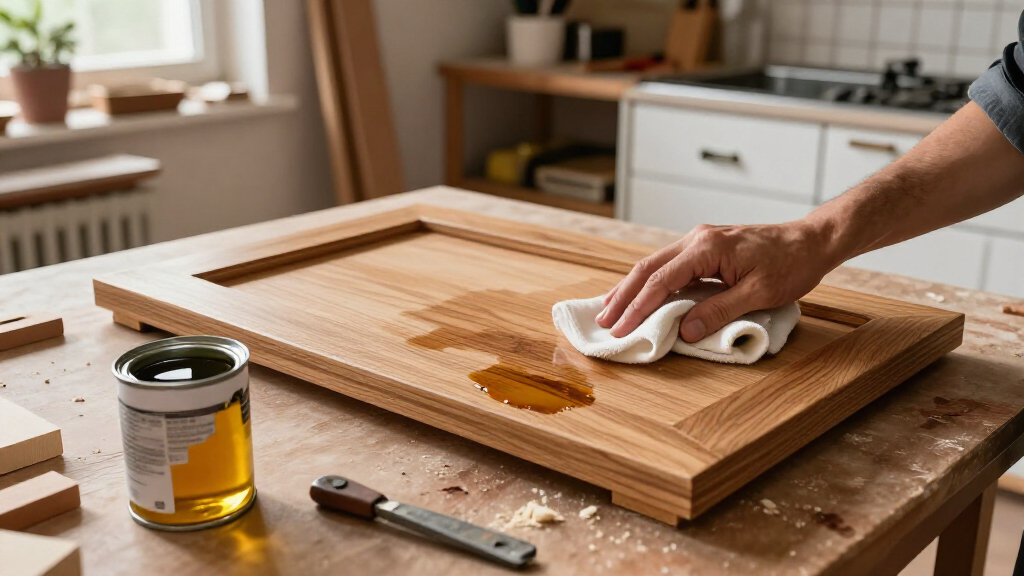

The best cabinet refinishing oils depend on whether you want routine cleaning, added conditioning, or help masking a worn finish. My best overall pick is Howard Feed-N-Wax for a conditioning-and-polishing approach, while Old English Lemon Oil is a straightforward option for routine surface care and Howard Restor-A-Finish suits cabinets with a finish that needs refreshing. These products are not interchangeable: some polish wood, some condition it, and restorers are intended to affect the appearance of an existing finish. Choosing the wrong type can leave an unwanted sheen or fail to address the damage you see. Read on for the full comparison and guidance on matching a product to your cabinet’s finish and condition.

Get business pricing on tools and workshop supplies
- Business-only prices and quantity discounts
- Tax-exempt purchasing
- Multiple users, one account, clear invoices
Complete the kit



Key Takeaways
- Howard Feed-N-Wax is the most balanced choice in this group because it combines polishing with conditioning; it is not a substitute for repairing deep damage.
- Old English Lemon Oil and Parker & Bailey Lemon Oil Polish are better matched to surface cleaning and polish than to restoring a worn-through finish.
- Howard Restor-A-Finish appears in three shades and sizes, making color match a bigger decision than package size when choosing among those options.
- Verdana Natural Wood Conditioner stands apart for shoppers prioritizing a plant-based, odorless conditioner, but conditioning alone will not restore missing color or finish.
- Furniture Clinic Boiled Linseed Oil has a different role from the furniture polishes: its application and finish compatibility call for extra care before using it on cabinetry.


| cabinet refinishing oil | Volume | Application |
|---|---|---|
| Old English Lemon Oil Wood Fur | 16 fl oz | — |
| Verdana Natural Wood Condition | 8 fl oz | Apply with a soft cloth |
| Howard Products Feed-N-Wax Woo | 8 oz | — |
| Parker & Bailey Lemon Oil Poli | — | Cloth or buffer |
| Howard Restor-A-Finish Wood Fi | — | Wipe on and wipe off |
| Furniture Clinic Boiled Linsee | 250 ml (8.5 fl oz) | — |
| Howard Restor-A-Finish | 16 fl oz | Wipe on, wipe off |
| Howard Restor-A-Finish Wood Fi | 16 fl oz | Wipe on, wipe off |
More Details on Our Top Picks
Old English Lemon Oil Wood Furniture Cleaner and Polish, 16 fl oz
For cabinets that need a straightforward clean, conditioning, and shine rather than a finish repair, Old English Lemon Oil is my most balanced pick. Its light mineral oil formula is made for both light and dark wood, giving it broader color flexibility than Howard Restor-A-Finish Golden Oak, which targets a specific tone and minor blemishes. The 16 fl oz bottle also offers more product than the 8 oz conditioners here, a practical advantage when treating a full run of cabinets. It can help protect against everyday stains while refreshing the wood’s appearance, but this is maintenance polish, not a refinishing coating: it will not fill scratches or correct substantial finish damage. Choose it for regular surface care; skip it if your cabinets need repair or a color-matched restoration.
Pros:- Cleans, conditions, and shines wood in one product
- Suitable for both light and dark wood
- Light mineral oil helps protect against everyday stains
- 16 fl oz volume suits care across multiple cabinets
Cons:- Does not repair scratches or restore damaged finish
- Provides a refreshed sheen rather than a new protective finish
Best for: Homeowners maintaining light or dark wood cabinets that are basically sound but look dull or need routine cleaning and conditioning.
Not ideal for: Anyone trying to conceal scratches, water marks, or major finish wear; this polish is not a finish-restoration product.
- Volume:16 fl oz
- Product type:Wood furniture cleaner and polish
- Formulation:Light mineral oil
- Suitable surfaces:Light and dark wood
- Functions:Cleans, conditions, and shines
- Protection:Helps protect against everyday stains
Our verdict“Choose Old English for regular cleaning and conditioning across mixed light or dark wood cabinets, but choose a restorer when the finish itself needs correction.”
Verdana Natural Wood Conditioner Oil – 8 fl oz – Plant-Based, Odorless, Non-Toxic Furniture Conditioner
Verdana Natural Wood Conditioner Oil is the clearest fit for indoor cabinet care when scent and formula are priorities. Its plant-based, odorless formulation is a contrast to the lemon- and orange-scented options from Old English and Howard Feed-N-Wax, making it appealing in kitchens or occupied rooms where fragrance lingers. It conditions dry or dull wood, adds a subtle sheen, and is specified for finished, sealed, or varnished surfaces. That makes it a more targeted choice for intact cabinet finishes than products intended for unfinished wood too. The tradeoff is the 8 fl oz bottle and the stated possibility of needing multiple thin coats on heavily dried wood. I’d pick it for light maintenance, not as a fast fix for badly neglected cabinets or visible finish damage.
Pros:- Plant-based, odorless formulation for indoor use
- Conditions dry or dull finished wood and adds subtle sheen
- Suitable for varnished, sealed, and finished surfaces
- Designed for application with a soft cloth
Cons:- 8 fl oz volume may be limiting for many cabinets
- Heavily dried wood may need multiple thin coats
- Does not claim to repair scratches or damaged finish
Best for: Households with odor-sensitive occupants seeking a plant-based conditioner for finished, sealed, or varnished cabinets.
Not ideal for: Buyers treating a large kitchen in one session or expecting one application to revive heavily dried wood.
- Volume:8 fl oz
- Formulation:Plant-based, odorless, non-toxic
- Suitable surfaces:Varnished, sealed, and finished wood
- Primary use:Wood conditioning
- Finish effect:Subtle sheen
- Application:Apply with a soft cloth
- Protection:Moisture protection
Our verdict“Choose Verdana for low-odor conditioning of intact indoor cabinets, but pick a larger-volume polish for broader routine coverage.”
Howard Products Feed-N-Wax Wood Polish & Conditioner, 8 oz, Orange Oil
Where Old English Lemon Oil focuses on cleaning and a natural glow, Howard Feed-N-Wax adds carnauba and beeswax to leave a protective wax coating. That makes it the more suitable choice when cabinet owners want a richer, grain-enhancing finish as part of periodic maintenance. Its stated use on both finished and unfinished wood also gives it wider surface scope than Verdana Natural Wood Conditioner, which is specified for finished, sealed, or varnished wood. The wax is also the tradeoff: this is not the simplest pick for someone seeking a light, low-residue conditioning step, and its orange-oil scent may not suit every kitchen. At 8 oz, it is better suited to targeted care than coating a large cabinet installation frequently. It helps maintain a restored finish; it does not replace finish repair.
Pros:- Carnauba and beeswax leave a protective coating
- Orange oil helps enhance the appearance of wood grain
- Suitable for finished and unfinished wood
- Intended for periodic care and maintaining restored finishes
Cons:- Orange-oil scent may be unwelcome in kitchens or fragrance-sensitive homes
- Wax coating is less suited to buyers seeking a light, residue-minimizing conditioner
- 8 oz volume may require frequent replenishment for extensive cabinetry
Best for: Cabinet owners who want grain-enhancing periodic care and a wax coating on finished or unfinished wood.
Not ideal for: Anyone who wants an odorless, lightweight conditioner or needs to treat a large cabinet set with a small bottle.
- Volume:8 oz
- Product type:Wood polish and conditioner
- Scent:Orange oil
- Key ingredients:Carnauba wax, beeswax, and orange oil
- Suitable surfaces:Finished and unfinished wood
- Recommended use:Periodic wood care and maintenance of restored finishes
- Finish effect:Enhances wood grain and leaves a protective wax coating
Our verdict“Choose Feed-N-Wax when a wax-coated, grain-enhancing maintenance finish matters more than an odorless or lightweight oil treatment.”
Parker & Bailey Lemon Oil Polish, Natural Lemon Scented Furniture Cleaner & Wood Table Cleaner, 16 oz
If the main goal is a visibly lustrous surface, Parker & Bailey Lemon Oil Polish is the shine-focused alternative to Verdana’s subtler sheen. Its concentrated liquid can be applied with a cloth or buffer, giving buyers a choice between hands-on spot care and a tool-assisted application across more cabinet fronts. The formula is described as helping guard wood against drying, cracking, and sun damage, while the lemon scent sets it apart from Verdana Natural Wood Conditioner, which is odorless. That fragrance may be welcome during cleaning but is a poor match for scent-sensitive households. Although it can also be used on some sinks and shower fixtures, the product is primarily designed for wood, so I would not treat it as a general-purpose cabinet cleaner. Its emphasis is polish and surface care, not blending scratches or matching a damaged finish.
Pros:- Leaves a shiny finish on wood surfaces
- Concentrated liquid can be applied with a cloth or buffer
- Helps protect against drying, cracking, and sun damage
- 16 fl oz volume is suited to routine furniture care
Cons:- Lemon scent may not suit fragrance-sensitive users
- Primarily designed for wood, limiting use on mixed-material cabinets
- Polishing does not repair scratches or restore a worn finish
Best for: Homeowners who prefer a noticeable polished luster and want to apply wood care by cloth or buffer.
Not ideal for: Fragrance-sensitive households or buyers seeking a scratch concealer, finish restorer, or multipurpose cleaner for mixed cabinet materials.
- Item volume:16 fluid ounces
- Item form:Liquid
- Scent:Lemon
- Special feature:Concentrated
- Recommended surface:Wood
- Application:Cloth or buffer
- Model number:510664
- Item weight:450 g
Our verdict“Pick Parker & Bailey for a lemon-scented, high-luster polish, but choose Verdana for odorless conditioning or a restorer for visible finish damage.”
Howard Restor-A-Finish Wood Finish Restorer, Golden Oak, 8 oz
Howard Restor-A-Finish Golden Oak serves a different purpose from the oils and polishes in this group: it is meant to blend minor blemishes into an existing finished surface, rather than simply condition or shine it. The wipe-on, wipe-off format targets issues such as water marks, heat rings, sun fade, oxidation, and smoke damage, so it is the more relevant choice than Old English Lemon Oil when routine polish cannot disguise visible wear. The limitation is its color: Golden Oak may not suit every cabinet tone, and the product is specified for finished wood. Unlike Feed-N-Wax, it is not a general conditioning treatment for finished and unfinished surfaces. I’d reserve it for localized cosmetic repair on a reasonably intact finish, not use it as a substitute for stripping, repainting, or a full cabinet refinish.
Pros:- Wipe-on, wipe-off application
- Helps blend minor scratches, blemishes, and abrasions
- Targets heat rings, water marks, sun fade, oxidation, and smoke damage
- Preserves the existing finish rather than removing it
Cons:- Golden Oak color may not match the cabinet finish
- Designed for finished wood surfaces
- Addresses appearance of minor damage, not extensive finish failure
Best for: DIYers with Golden Oak or closely matching finished cabinets who need to reduce the appearance of minor water marks, heat rings, or scratches.
Not ideal for: Owners of unfinished cabinets, substantially damaged finishes, or wood tones that do not match Golden Oak.
- Manufacturer:Howard Products
- Part number:RF3008
- Size:8 oz
- Color:Golden Oak
- Product dimensions:1.5 x 2.9 x 5.5 inches
- Package quantity:1
- Usage:Indoor; amateur and professional
- Application:Wipe on and wipe off
Our verdict“Choose Golden Oak Restor-A-Finish for localized blemishes on a compatible finished cabinet, not for routine oil conditioning or a full refinishing job.”
Furniture Clinic Boiled Linseed Oil for Wood, Stone, and Terracotta
For bare, porous cabinets, this boiled linseed oil offers a different approach from Howard Restor-A-Finish Walnut, which is made to refresh an existing finish rather than penetrate unfinished material. Its heat-treated formula dries faster than untreated linseed oil and leaves a slightly glossy, semi-transparent finish that brings out the wood grain while sealing the surface. The same formula can be used on terracotta and porous stone, making it a flexible choice for projects beyond cabinetry. The tradeoff is that the finish can darken the original color, so it may not suit pale woods or cabinets where color matching matters. It is also not recommended for exterior oak. I would choose it for unfinished cabinets that need a penetrating treatment, not for repairing scratches in a finished coating.
Pros:- Penetrates and seals porous wood while enhancing visible grain
- Heat-treated formula dries faster than untreated linseed oil
- Works on wood, terracotta, porous stone, and concrete
- Suitable for indoor and outdoor use on compatible surfaces
Cons:- May darken the original surface
- Not recommended for exterior oak
Best for: DIYers treating bare or porous wood cabinets who want a penetrating oil that can also serve on terracotta or porous stone.
Not ideal for: Owners of finished cabinets seeking to blend scratches, or anyone treating exterior oak or trying to preserve a very light wood color.
- Brand:Furniture Clinic
- Volume:250 ml (8.5 fl oz)
- Material:Boiled linseed oil
- Finish:Slightly glossy
- Opacity:Semi-transparent
- Compatible surfaces:Wood, terracotta tiles, porous stone, concrete
- Coverage:50 square feet
- Use:Indoor and outdoor
Our verdict“Choose this for bare, porous cabinets where grain-enhancing penetration matters more than preserving the exact original color.”
Howard Restor-A-Finish, Walnut, 16 fl oz
For finished cabinets with minor wear, Howard Restor-A-Finish in Walnut is a better fit than Furniture Clinic Boiled Linseed Oil: it is designed to blend blemishes on an existing finish rather than penetrate bare wood. The wipe-on, wipe-off application can refresh color and luster while helping reduce the appearance of scratches, water marks, heat rings, oxidation, smoke damage, and sun fade, without stripping the finish. That makes it a targeted touch-up option when a full refinish would be excessive. The main limitation is its Walnut color; results depend on the cabinet’s existing tone and condition, so it is a poor match for unrelated shades. Unlike the Neutral Howard Restor-A-Finish, this version supplies a specific color, which can help on walnut-toned surfaces but narrows its usefulness.
Pros:- Refreshes luster and blends minor blemishes on finished wood
- Helps reduce the appearance of water marks and heat rings
- Can address oxidation, smoke damage, and sun fade
- Wipe-on, wipe-off application avoids stripping the existing finish
Cons:- Designed for finished wood, not bare cabinet surfaces
- Walnut color may not match other wood tones
- Results vary with the finish’s tone and condition
Best for: Cabinet owners with a walnut-toned existing finish who want to refresh faded areas and blend minor surface blemishes without stripping.
Not ideal for: People refinishing bare cabinets, those seeking a penetrating oil, or owners whose finish does not closely suit the Walnut color.
- Volume:16 fl oz
- Color:Walnut
- Application:Wipe on, wipe off
- Intended use:Restore and blend blemishes on finished wood
- Available colors:Nine
Our verdict“Pick the Walnut version for minor wear on walnut-toned finished cabinets, but choose the Neutral version when a specific color match is uncertain.”
Howard Restor-A-Finish Wood Finish Restorer, Neutral, 16 fl oz
When color matching is the main concern, Howard Restor-A-Finish Neutral is the less shade-specific alternative to the Walnut version. It is intended to refresh faded color and luster and blend minor scratches while preserving the existing finish, rather than stripping cabinets down for a full refinishing job. Its wipe-on, wipe-off method also makes it a practical choice for localized upkeep, and it can reduce the appearance of heat rings, water marks, oxidation, smoke damage, and sun fade. Compared with Furniture Clinic Boiled Linseed Oil, this is for already-finished wood, not bare surfaces that need a penetrating seal. Neutral is intended for light wood finishes, however, so it is not a universal colorless treatment; buyers with darker cabinets should look at the Walnut option instead.
Pros:- Refreshes faded color and luster on existing finishes
- Blends minor scratches and blemishes
- Helps reduce the appearance of heat rings and water marks
- Preserves the existing finish without stripping
Cons:- Intended for light wood finishes, limiting its use on darker cabinets
- Made for finished surfaces rather than bare wood
Best for: Owners of light-finish cabinets who want to refresh faded areas or blend small blemishes while keeping the existing finish.
Not ideal for: People treating bare wood, owners of dark-finish cabinets, or anyone seeking a penetrating oil treatment rather than a finish restorer.
- Brand:Howard
- Model:RF1016
- Color:Neutral
- Volume:16 fl oz
- Unit count:1
- Application:Wipe on, wipe off
Our verdict“Choose Neutral for touch-ups on light-finish cabinets when preserving the existing coating matters more than treating bare wood.”

How We Picked
I compared these eight products by the job each is designed to do: clean and polish, condition wood, or refresh the appearance of an existing finish. For cabinet use, that distinction matters more than a broad claim to restore wood; a polish cannot repair a finish worn away to bare wood, and a restorer is not the same as a routine cleaner. I also weighed finish and color considerations, stated material and use range, application demands, and how clearly a product fits a particular buyer.
The ranking favors options with a clear, practical role for common cabinet-care needs and gives extra weight to versatility without treating every product as interchangeable. That puts Feed-N-Wax first for its combined conditioning and polishing purpose, while the lemon-oil products rank as maintenance choices and the Restor-A-Finish shades rank as finish-refresh options whose success depends on matching the existing color and finish. Specialty conditioners and boiled linseed oil have narrower roles, so they make more sense for buyers whose priorities match those tradeoffs.
| cabinet refinishing oil | Application |
|---|---|
| Old English Lemon Oil Wood Fur | — |
| Verdana Natural Wood Condition | Apply with a soft cloth |
| Howard Products Feed-N-Wax Woo | — |
| Parker & Bailey Lemon Oil Poli | Cloth or buffer |
| Howard Restor-A-Finish Wood Fi | Wipe on and wipe off |
| Furniture Clinic Boiled Linsee | — |
| Howard Restor-A-Finish | Wipe on, wipe off |
| Howard Restor-A-Finish Wood Fi | Wipe on, wipe off |
Factors to Consider When Choosing Best Cabinet Refinishing Oils
Before choosing a cabinet oil, identify whether the problem is dirt, dryness, fading, or actual finish damage. The product label may describe several benefits, but your cabinet’s material and current coating determine what is appropriate. These broader checks can help prevent a maintenance product from being used as a repair treatment—or a finish treatment from being applied where a simple clean would do.
Identify the cabinet finish before applying anything
Cabinet doors may have a clear coat, paint, laminate, veneer, or bare wood, and an oil intended for wood may not suit every surface. Start with the manufacturer’s care instructions if you have them, then test the product on a concealed spot. Look for changes in color, sheen, tackiness, or surface feel after the test area has had time to dry. Do not assume that a wood-grain appearance means the surface is unfinished wood; a clear protective coating may sit above the grain. If the cabinet is painted or laminated, use a product whose label specifically allows that surface rather than relying on a general furniture-care claim.
Match the treatment to the problem you can see
Dust and light grime call for cleaning, while dullness may call for polish or conditioning if the finish permits it. A faded but intact finish is a different problem from peeling coating, deep scratches, or exposed raw wood. Conditioning products can support the appearance and feel of suitable wood, but they cannot replace missing finish. Finish restorers may help blend some surface wear, though color variation and damage depth affect the result. Choosing by the visible problem helps avoid buying a product that sounds restorative but only adds surface polish.
Treat color matching as a separate decision
Color-specific restorers need a closer match than clear or neutral care products. Compare the shade with the cabinet itself in natural light, and test a hidden area before treating a broad panel. Wood species, aging, prior stain, and existing topcoat can all change how a product looks after application. A neutral formula may avoid adding an obvious tint, but it may not disguise color loss as well as a matching shade. If adjacent doors already vary, test each affected area rather than assuming one shade will look uniform across the kitchen.
Check whether the product is maintenance care or a finish treatment
Oil polishes and conditioners are generally selected for surface care, while finish restorers target the appearance of an existing finish. Those categories have different purposes and should not be treated as steps in a universal refinishing routine. Layering products can change sheen or leave residue, particularly if one treatment is applied before another has been removed or dried. Read the label for surface compatibility, application directions, and any required cleanup. If you need to strip, sand, stain, or reseal cabinets, a polish or conditioner alone is unlikely to complete that project.
Weigh scent, ingredients, and indoor use
Cabinet care often happens in enclosed kitchens, so scent and ventilation can affect how comfortable an application is. Buyers sensitive to fragrance may prefer a product described as odorless, while lemon- or orange-scented formulas may suit people who welcome a noticeable scent. Plant-based or non-toxic wording can help narrow choices, but it does not remove the need to follow the product label and keep treated surfaces away from food until ready for use. Review any warnings, ventilation directions, and storage guidance before opening the container. A pleasant scent is not a substitute for checking finish compatibility.
Choose a treatment you can apply evenly and maintain
Cabinet doors, edges, and recessed panels make even application harder than treating a flat tabletop. A product that needs careful rubbing or color blending may take more time across a full kitchen than its container suggests. Work in small sections, use a clean applicator, and remove excess as directed so residue does not collect around handles or panel edges. For routine care, a simple polish may be easier to repeat; for targeted finish refresh, slower and more controlled application can be worthwhile. If a test patch looks uneven, stop rather than spreading the result across every door.
Frequently Asked Questions
Can I use cabinet refinishing oil on painted or laminate cabinets?
Do not assume that a product suitable for wood is also suitable for paint or laminate. Check the label for explicit surface compatibility and test a hidden area first. Oil or polish can leave an unwanted film or alter the sheen on a coated surface. If the cabinets are painted, laminated, or have a high-gloss coating, a compatible cleaner may be a safer starting point than a wood conditioner. Stop if the test area changes color, feels tacky, or looks uneven.
Will a cabinet oil repair scratches or peeling finish?
A polish or conditioner may improve the appearance of light surface dullness, but it will not replace missing coating or repair structural damage. A finish restorer may help with some worn or faded areas, though results depend on the existing finish, color, and depth of the damage. Peeling, deep gouges, or exposed wood may call for sanding and refinishing rather than another oil treatment. Test any restorer on a concealed patch before applying it to a prominent door. If the cabinet has a valuable or unusual finish, consult a refinishing professional before altering it.
How do I choose between lemon oil, a conditioner, and a finish restorer?
Choose a lemon-oil polish when your goal is routine surface cleaning and polish, provided the label matches the cabinet surface. A conditioner is a better fit when you want a conditioning treatment and the cabinet material can accept it. Choose a finish restorer only when the issue is the appearance of an existing finish and the product’s shade and compatibility match your cabinets. These uses overlap in marketing language, but they do not solve the same problem. Start with the cabinet’s condition, not the product name.
Should I apply oil to the whole kitchen or only the worn spots?
That depends on the product instructions and how consistent the existing cabinet finish is. A polish used for routine care may be intended for broader surface application, while a tinted restorer can create visible variation if used only on one panel. Test a concealed area and compare the treated result with nearby doors before scaling up. Apply in manageable sections and follow directions for removing excess. For a kitchen with uneven fading, a uniform result may require treating complete panels rather than isolated marks.
What should I do if I am unsure whether my cabinets are sealed wood or bare wood?
Check for a visible coating, consistent sheen, or a manufacturer’s care guide, but do not rely on appearance alone. A hidden-spot test can reveal whether a product changes the surface, though it cannot identify every finish type. Avoid applying a penetrating oil broadly until you know the material and product directions support that use. If the cabinets are valuable, custom-finished, or show uncertain layers of old coating, ask a cabinet refinisher to identify the surface. This precaution is especially relevant before using a finish treatment rather than a mild cleaner.
Conclusion
For most buyers seeking one versatile cabinet-care option, Howard Feed-N-Wax is my best overall pick because it combines polishing and conditioning in one product, with the caveat that it is not a deep repair. For a simpler maintenance routine, Old English Lemon Oil is my best value-style choice among these options; buyers who favor a plant-based, odorless conditioner can look to Verdana instead. Beginners should start with a clearly compatible surface-care product and a hidden-area test rather than a tinted restorer. For cabinets with a worn existing finish, Howard Restor-A-Finish is the more specific choice, but shade matching matters. Choose Furniture Clinic Boiled Linseed Oil only when its broader wood-and-material use and application requirements fit your project; it is not the default pick for routine cabinet polishing.
Columbus Day / Indigenous Peoples' Day Picks
long weekend sales
As an affiliate, we earn on qualifying purchases.