
To build around dust collection from the start, plan your workshop layout with integrated systems in mind. Connect tools like saws and sanders to a central collection unit, positioning vents and ducts strategically for ideal airflow. Make certain your space allows easy installation of air filtration units and future upgrades. Prioritize safety, efficiency, and good airflow design to keep dust minimized. Keep these principles in mind, and you’ll set a solid foundation for a cleaner workspace—there’s more to explore ahead.

Get business pricing on tools and workshop supplies
- Business-only prices and quantity discounts
- Tax-exempt purchasing
- Multiple users, one account, clear invoices
Key Takeaways
- Plan and install ductwork, vents, and dust collection points during initial workshop layout to ensure seamless integration.
- Position tools and equipment to optimize airflow toward central dust collection units from the start.
- Incorporate dedicated air filtration units and proper ventilation in the early design phase.
- Design the layout to allow easy future expansion without major renovations.
- Prioritize safety, airflow efficiency, and health considerations in the initial system planning.
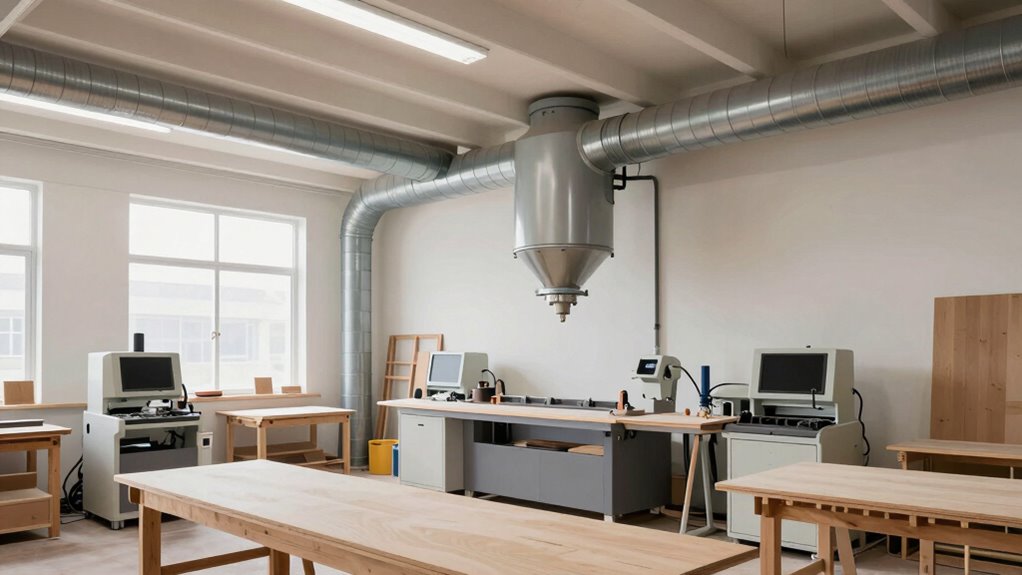
Have you ever considered how much cleaner and safer your workshop could be if dust collection was built into your setup from the start? When planning your workspace, integrating dust collection early ensures you won’t have to retrofit later, which can be costly and disruptive. Starting with a solid foundation for air filtration is essential. If you ignore this step, dust particles linger in the air, posing health risks and reducing visibility on your work surfaces. Incorporate a centralized dust collection system designed specifically for your tools and workflow. This way, you minimize airborne dust right at the source, greatly improving air quality and maintaining a safer environment.
Integrate dust collection early to enhance safety, air quality, and workflow efficiency in your workshop.
Thinking ahead also involves considering safety protocols. Properly built-in dust collection helps you stay compliant with health and safety standards, reducing the risk of respiratory issues and fire hazards. When dust is effectively captured, you protect yourself and others from inhaling harmful particles. Integrate dust collection accessories into your workshop layout — for example, connecting your saws, routers, and sanders to a common collection system ensures consistent removal of debris. This not only makes cleanup easier but also keeps dust from settling on surfaces where it could be later disturbed, becoming airborne again.
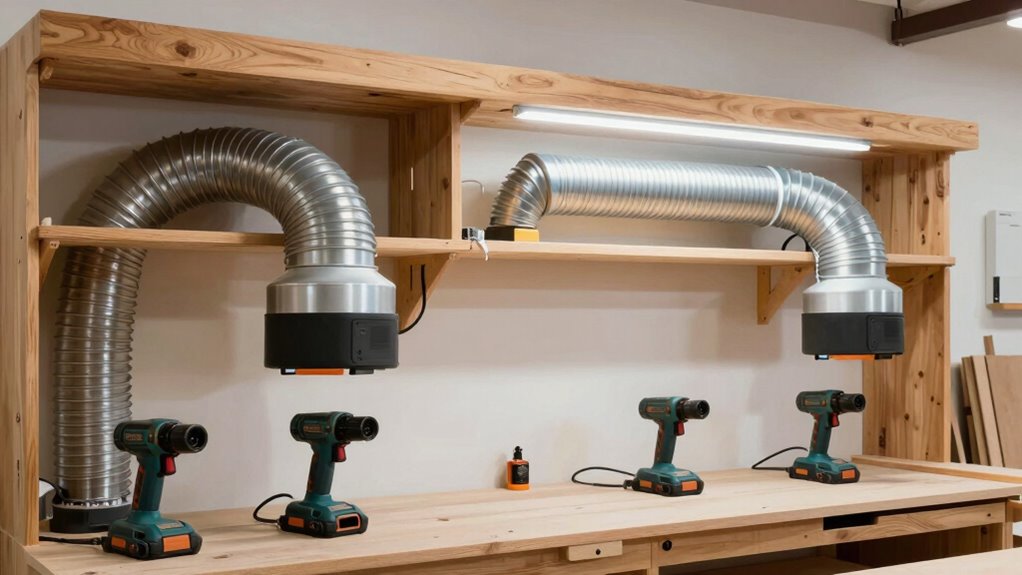
Designing around dust collection from the beginning also influences your choice of materials and equipment placement. You’ll want to position your dust collection units in a way that maximizes airflow efficiency and minimizes noise. Placing vents and ducts strategically makes a big difference in performance. Keep in mind that good airflow design supports effective air filtration, which is essential for maintaining a healthy workshop environment. When dust collection is part of your initial plan, you can also install air filtration units that complement the system, pulling residual airborne particles out of the air before they settle or are inhaled. Additionally, air quality considerations should be a key factor in your overall workshop design to promote a healthier workspace. Planning for proper ventilation ensures that dust and fumes are effectively removed, further enhancing safety. Incorporating an understanding of air filtration techniques can significantly improve overall air quality and reduce long-term health risks. Thinking about future upgrades now allows you to expand your system seamlessly as your needs grow, avoiding costly modifications later.
dust collection system for workshop
As an affiliate, we earn on qualifying purchases.
As an affiliate, we earn on qualifying purchases.
Frequently Asked Questions
What Are the Initial Costs of Integrating Dust Collection Systems?
The initial costs of integrating dust collection systems typically range from a few hundred to several thousand dollars, depending on your shop size and system complexity. You’ll need to invest in dust containment equipment, such as ducts and hoods, and air filtration units to maintain a healthy environment. While upfront expenses can seem high, investing early saves you money long-term by improving air quality and reducing cleanup time.
How Does Dust Collection Impact Overall Workshop Airflow?
Dust collection considerably improves your workshop airflow efficiency by removing airborne dust particles, which enhances visibility and reduces respiratory risks. Properly integrated systems create a streamlined airflow, preventing dust buildup in corners and on surfaces. This not only mitigates dust particles effectively but also maintains a cleaner workspace. As a result, you experience better air quality, safer working conditions, and more efficient tool operation, making your workshop safer and more productive overall.
Can Existing Workshops Be Upgraded for Better Dust Control?
Yes, you can upgrade your existing workshop for better dust control by installing an efficient dust collection system. Focus on improving workplace cleanliness and air quality enhancement by sealing leaks, adding flexible hoses, and ensuring proper ducting. Regular maintenance also keeps your system running at its best. These upgrades will greatly reduce airborne dust, making your workspace safer and healthier while maintaining a cleaner environment.
What Safety Precautions Should Be Taken When Installing Dust Collection?
Installing dust collection is like assembling a puzzle—you need the right pieces and safety measures. Always wear personal protection like masks and goggles, and guarantee proper air filtration to prevent dust inhalation. Turn off power before installation, secure all connections tightly, and follow manufacturer instructions. Keep the workspace clear of obstructions, and double-check for leaks to prevent dust escape. Your safety is paramount during this process.
How Do I Choose the Right Dust Collection System for My Tools?
You should prioritize selecting a dust collection system that matches your tools’ air quality requirements and guarantees equipment compatibility. Start by evaluating the types of tools you use and their dust output. Opt for a system with sufficient CFM (cubic feet per minute) to handle your workload. Make sure it fits your workshop space and connects seamlessly with your tools to maintain efficient airflow and improve overall air quality.
central dust extractor for woodworking
As an affiliate, we earn on qualifying purchases.
As an affiliate, we earn on qualifying purchases.
Conclusion
Remember, a penny saved is a penny earned, so investing in a well-designed dust collection system from the start pays off in the long run. By building around it, you create a cleaner, safer workspace and avoid costly retrofits. Plan ahead, stay flexible, and don’t wait until dust becomes a problem. When you build smart from the beginning, you set yourself up for success—because a job done right the first time is worth its weight in gold.
air filtration units for workshops
As an affiliate, we earn on qualifying purchases.
As an affiliate, we earn on qualifying purchases.
workshop ductwork and venting kits
As an affiliate, we earn on qualifying purchases.
As an affiliate, we earn on qualifying purchases.
Fall yard work Picks
leaf blowers
As an affiliate, we earn on qualifying purchases.