
You might think a welding area is just about having the right tools, but better planning boosts safety, efficiency, and quality work. When you organize safety gear, tools, and workspace zones properly, you reduce hazards and avoid delays. Good ventilation and layout prevent accidents and improve comfort. Many DIYers overlook these details, but if you keep going, you’ll discover how strategic planning makes your projects safer and easier.

Get business pricing on tools and workshop supplies
- Business-only prices and quantity discounts
- Tax-exempt purchasing
- Multiple users, one account, clear invoices
Key Takeaways
- Proper planning ensures safety by organizing gear and reducing hazards like clutter and trip risks.
- Effective layout improves workflow, minimizes delays, and increases overall welding productivity.
- Adequate ventilation setup protects workers from hazardous fumes and maintains air quality standards.
- Strategic workspace design prevents injuries and fatigue through ergonomic placement of tools and equipment.
- Thoughtful planning fosters a safety-first mindset, encouraging consistent use of protective gear and safe practices.
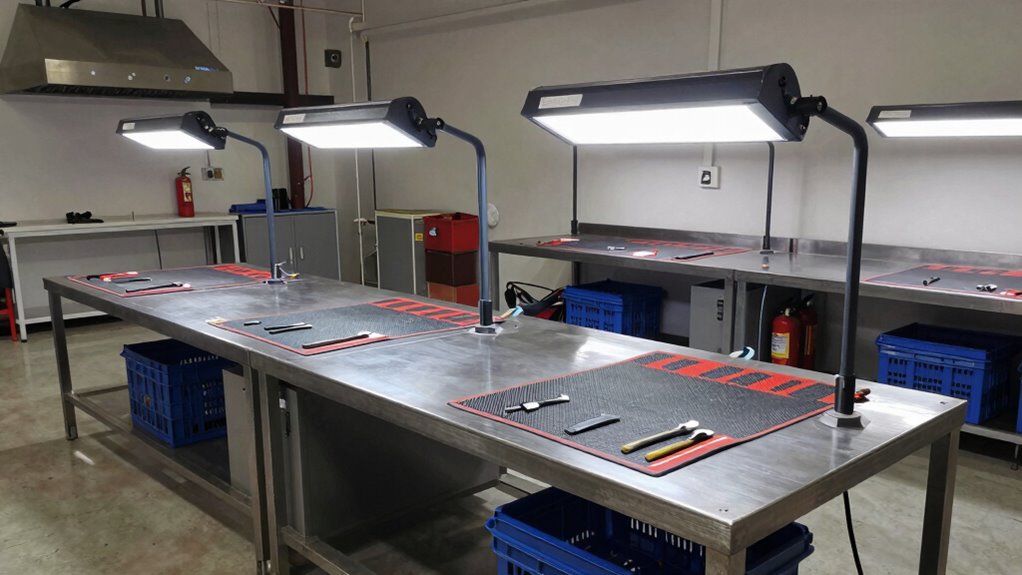
Have you ever wondered how a well-organized welding area can boost efficiency and safety on your job site? When your workspace is arranged thoughtfully, you avoid unnecessary delays and reduce the risk of accidents. Proper planning isn’t just about making things look tidy; it’s about creating an environment where safety gear is easily accessible, and ventilation systems keep fumes and smoke away from your breathing zone. Many DIYers overlook these details, but they’re critical for maintaining a safe, productive workspace.
A well-organized welding area boosts safety, efficiency, and productivity by ensuring quick access to gear and proper fume ventilation.
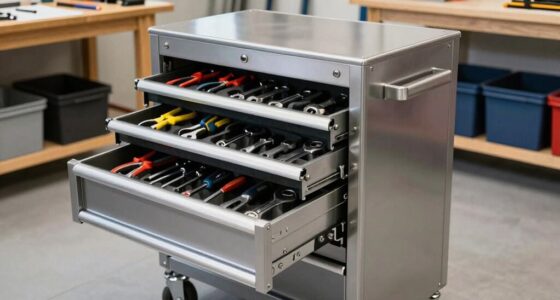
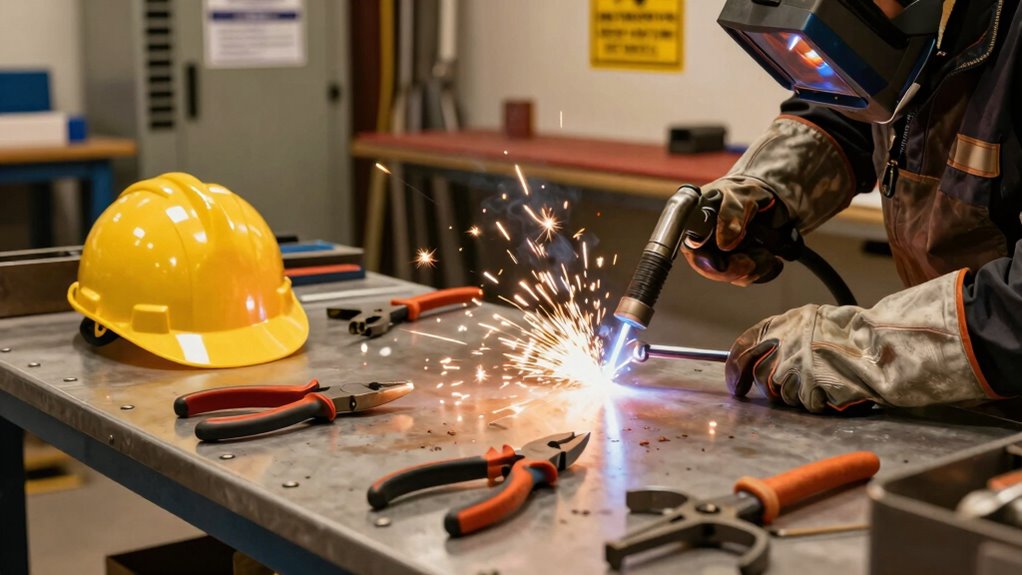
Safety gear should be within arm’s reach, not tucked away in a cluttered corner. Helmets, gloves, protective clothing, and eye protection need designated storage spots so you don’t waste time hunting for them. When safety gear is organized, you’re more likely to wear it consistently, which is essential for protecting yourself from sparks, UV radiation, and harmful fumes. Planning your welding area means setting up a dedicated zone for safety equipment, ensuring it’s visible and accessible at all times. This simple step can prevent injuries and promote a safety-first mindset. Additionally, workspace organization plays a vital role in streamlining workflow and reducing hazards. Proper workspace layout helps you keep everything in order and reduces the chance of accidents caused by clutter.
Ventilation systems are another crucial aspect often overlooked by amateur welders. Welding produces hazardous fumes and smoke, which can cause serious health issues if inhaled over time. Proper ventilation isn’t just about opening a window; it’s about installing effective exhaust systems that actively remove dangerous airborne particles. When you plan your welding area, consider the placement of exhaust fans or local exhaust hoods, making sure they’re positioned to capture fumes right at the source. Good ventilation improves air quality, keeps your workspace comfortable, and reduces the risk of inhaling toxic substances. Incorporating proper airflow management can dramatically enhance safety and health in your workspace. Moreover, understanding air quality standards helps ensure your workspace remains compliant with safety regulations.
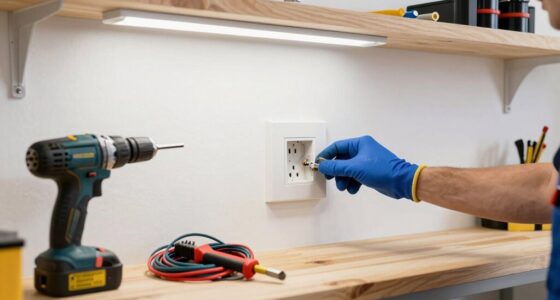
A well-thought-out layout also helps you organize your tools and materials efficiently. Keep your welding machines, rods, and accessories in designated zones, reducing clutter and making it easier to find what you need quickly. This reduces downtime and keeps your focus on the task at hand, rather than searching through a mess. Good planning also means creating clear pathways and safe zones, minimizing trip hazards and ensuring you can move freely without risking injury. Additionally, considering ergonomic setup can help prevent fatigue and repetitive strain injuries during prolonged work hours. When your workspace is ergonomically designed, it can make your work more comfortable and reduce physical stress.
In the end, most DIYers underestimate how much planning goes into a safe, efficient welding area. It’s not just about the welding itself but about creating an environment that promotes safety, reduces hazards, and maximizes productivity. Incorporate accessible safety gear, invest in proper ventilation systems, and organize your workspace thoughtfully. Doing so makes a big difference in your safety, comfort, and overall welding performance.
As an affiliate, we earn on qualifying purchases.
Frequently Asked Questions
What Are the Most Common Safety Hazards in Welding Areas?
The most common safety hazards in welding areas include exposure to welding fumes and electrical hazards. Welding fumes can cause respiratory issues, so you need proper ventilation. Electrical hazards pose a risk of shocks or electrocution if equipment isn’t grounded correctly or if safety protocols aren’t followed. Always wear appropriate protective gear, guarantee good ventilation, and inspect your equipment regularly to stay safe while welding.
How Can I Prevent Fire Risks in My Welding Workspace?
To prevent fire risks, you should install fire-resistant barriers around your welding workspace and use spark containment measures. Keep flammable materials away from the welding area, and guarantee proper ventilation to disperse sparks and fumes. Regularly inspect your equipment for leaks or damage. By maintaining a clean, organized workspace and using safety barriers, you considerably decrease the chances of accidental fires during welding.
What Ventilation Requirements Are Necessary for Welding Areas?
You need proper ventilation systems and air filtration to guarantee safety while welding. Adequate airflow clears harmful fumes, preventing health risks. While strong ventilation pulls in fresh air, air filtration traps airborne contaminants, creating a cleaner environment. Together, these systems balance each other, maintaining air quality and reducing fire hazards. Prioritize effective ventilation planning to protect yourself, especially in confined or poorly ventilated spaces, and keep your workspace safe and compliant.
How Should I Store Welding Gases and Materials Safely?
You should store welding gases and materials with proper storage practices to guarantee safety. Keep gas cylinders upright and secure them to prevent tipping. Store welding gases in well-ventilated, cool, dry areas away from heat sources or open flames. Use appropriate safety equipment and labels. Proper storage minimizes risks like leaks or explosions, guaranteeing gas cylinder safety. Regularly inspect cylinders and storage areas for damage or leaks to maintain a safe workspace.
What Personal Protective Equipment Is Essential for Welding Safety?
You need to wear essential protective gear like a welding helmet, gloves, and flame-resistant clothing to stay safe. Safety protocols also call for ear protection, safety glasses, and a proper respiratory mask if fumes are present. These items work together to shield you from sparks, intense light, and harmful fumes. Always follow safety protocols, check your gear regularly, and never skip protective equipment to guarantee a safe welding experience.
As an affiliate, we earn on qualifying purchases.
Conclusion
Thinking you can wing your welding setup is like sailing without a compass—you’re bound to hit rough waters. Proper planning transforms chaos into craftsmanship, making your project safer, neater, and more efficient. Don’t underestimate the power of a well-thought-out welding area; it’s the anchor that keeps your work steady and your progress smooth. So, chart your course carefully—your future self will thank you for steering clear of avoidable mishaps.
As an affiliate, we earn on qualifying purchases.
As an affiliate, we earn on qualifying purchases.
Halloween Picks
halloween
As an affiliate, we earn on qualifying purchases.