When choosing the right glue, consider your project’s needs for strength, speed, and material compatibility. Glue guns are great for quick fixes and light materials, setting almost instantly but not for heavy-duty tasks. Epoxy offers strong, durable bonds suitable for complex tasks, though it takes longer to cure. Wood glue balances strength and drying time, perfect for woodworking. To make certain a successful outcome, matching the adhesive to your project specifics is key—learn more to make the best choice.

Get business pricing on tools and workshop supplies
- Business-only prices and quantity discounts
- Tax-exempt purchasing
- Multiple users, one account, clear invoices
Key Takeaways
- Match glue type to project needs: hot glue for quick, lightweight tasks; epoxy for strong, durable bonds; wood glue for woodworking.
- Consider drying time: quick-setting adhesives suit fast projects; longer drying allows precise adjustments.
- Assess material compatibility: hot glue works best with fabric and plastic; epoxy bonds complex materials; wood glue is ideal for wood.
- Evaluate bond strength requirements: epoxy offers the highest strength; wood glue provides a reliable, wood-penetrating bond; hot glue is moderate.
- Balance project speed and durability to select the most suitable adhesive for optimal results.
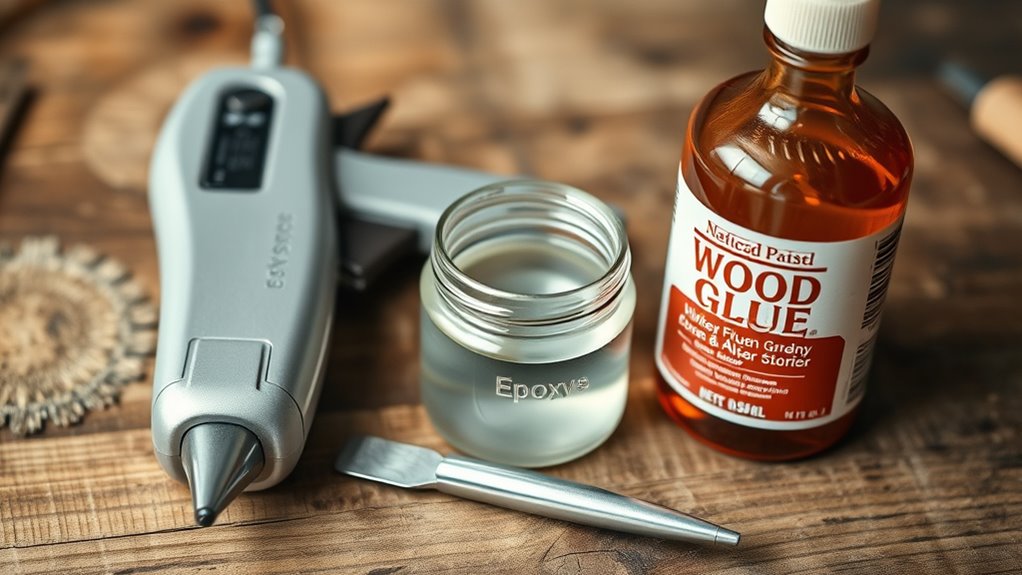
Have you ever wondered how to pick the best glue for your project? Choosing the right adhesive depends on understanding how different glues perform regarding adhesive strength and drying time. These factors directly influence how well your project holds together and how quickly you can move on to the next step. For instance, if you’re working on a craft that needs to be finished swiftly, a glue with a short drying time is essential. Conversely, if your project requires precise alignment or adjustments, a longer drying time allows you to reposition parts without compromising the bond.
Selecting the right glue depends on balancing strength and drying time for your project needs.
When considering glue guns, you’re generally looking at hot melt adhesives. These are valued for their quick drying time and decent adhesive strength, making them perfect for small crafts, quick repairs, or projects where speed is key. Hot glue sets almost instantly as it cools, which means you can handle your project shortly after applying. However, keep in mind that hot glue might not provide the strongest bond for heavy-duty or load-bearing applications. Its adhesive strength is sufficient for lightweight materials like fabric, paper, or plastic, but it might not hold up under stress or exposure to moisture. If your project demands a more robust bond, you’ll want to explore epoxy or wood glue options.
Epoxy adhesives offer exceptional adhesive strength and durability. They typically come in two parts that you mix just before application, resulting in a chemical reaction that creates a very strong, often waterproof bond. The drying time for epoxy varies depending on the formulation; some set in minutes, while others might take hours to fully cure. This longer drying time can be advantageous if you’re working on complex assemblies or need to ensure everything is perfectly aligned before the glue hardens. Although epoxy provides superior strength, its longer drying time means you need to plan accordingly and work carefully to avoid excess squeeze-out or misalignment.
Wood glue, specifically formulated for woodworking, strikes a good balance between adhesive strength and drying time. It generally takes a few hours to dry to handle, but full curing can take up to 24 hours for maximum strength. During this period, the glue penetrates into the wood fibers, creating a bond that’s often stronger than the wood itself. Wood glue is ideal for furniture, cabinetry, or any project where strength and a clean appearance matter. Its drying time isn’t as quick as hot glue, but it offers a reliable bond with excellent adhesive strength once fully cured.
Ultimately, choosing the right glue comes down to understanding what your project demands regarding strength and speed. By matching these factors to the specific properties of hot glue, epoxy, or wood glue, you can ensure your project turns out just as you envision—strong, durable, and well-assembled.
As an affiliate, we earn on qualifying purchases.
Frequently Asked Questions
Can Glue Guns Be Used for Metal or Plastic Repairs?
Yes, you can use glue guns for metal repair and plastic bonding, but it depends on the glue type. High-temperature glue guns work well with certain plastics, offering quick adhesion, but may not be suitable for all metals or plastics. For stronger metal repair or plastic bonding, consider epoxy or specialized adhesives. Always check the glue’s specifications to verify it’s compatible with the materials you’re working with.
How Long Does Epoxy Take to Fully Cure?
Epoxy typically takes about 24 hours to fully cure, but the epoxy curing time can vary depending on the formulation and environmental conditions. You should allow at least this full cure duration before handling or stressing the bonded surfaces. During the curing process, avoid disturbing the joint to ensure maximum strength. For faster results, some epoxies cure in as little as 4-6 hours, but always check the manufacturer’s instructions for specific full cure times.
Is Wood Glue Waterproof for Outdoor Projects?
Yes, wood glue can be waterproof, making it suitable for outdoor projects. You might worry about its durability in harsh weather, but high-quality waterproof wood glues are formulated for outdoor durability. They resist moisture and maintain strong bonds even when exposed to rain or humidity. Just guarantee you select a glue specifically labeled as waterproof or weatherproof, and follow the manufacturer’s instructions for the best outdoor results.
What Safety Precautions Should I Follow When Using Glue Guns?
When using glue guns, always wear safety gear like gloves and safety glasses to protect your skin and eyes from hot glue. Make certain proper ventilation to avoid inhaling fumes, especially in enclosed spaces. Keep the glue gun away from children and never touch the nozzle during operation. Turn it off and unplug once you’re done, and let it cool completely before storing. These precautions keep you safe during use.
Can Different Glues Be Combined for Stronger Bonds?
You might think combining different glues always boosts strength, but it often hinders chemical bonding and adhesive compatibility. For a stronger bond, stick to one type of glue suited for your materials. Mixing epoxy with wood glue, for example, can weaken the bond or cause uneven curing. To guarantee maximum strength, use each adhesive as intended, and don’t compromise by combining incompatible glues.
epoxy adhesive for heavy-duty projects
As an affiliate, we earn on qualifying purchases.
As an affiliate, we earn on qualifying purchases.
Conclusion
When you choose the right glue, you create strength, guarantee durability, and support your project’s success. Whether you rely on the quick bond of a glue gun, the powerful hold of epoxy, or the natural grip of wood glue, you’re setting yourself up for victory. Trust your choice, embrace the right adhesive, and watch your craftsmanship come to life. With the right glue, you build with confidence, create with precision, and finish with pride.
As an affiliate, we earn on qualifying purchases.
multi-purpose glue for DIY projects
As an affiliate, we earn on qualifying purchases.
As an affiliate, we earn on qualifying purchases.
Fall yard work Picks
leaf blowers
As an affiliate, we earn on qualifying purchases.