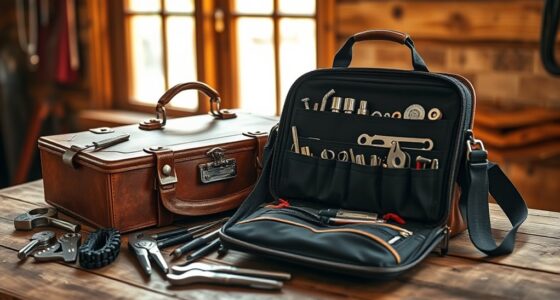
You can get creative with your hand tools to boost your DIY projects and fix things more efficiently. Use pliers to twist stubborn nails or bend wires, and employ needle-nose pliers for delicate tasks or holding small parts. Wrenches work well as temporary clamps, and wrapping a rubber band around the jaw improves grip. Screwdrivers can pry open cans or scrape surfaces, making your work easier. Keep exploring these clever hacks to get even more from your tools.

Get business pricing on tools and workshop supplies
- Business-only prices and quantity discounts
- Tax-exempt purchasing
- Multiple users, one account, clear invoices
Key Takeaways
- Use needle-nose pliers to thread wires and hold small objects securely.
- Wrap a rubber band around wrench jaws for better grip on slippery nuts.
- Pry open paint cans or scrape labels efficiently with flathead screwdrivers.
- Employ adjustable wrenches as temporary clamps for quick fixing tasks.
- Remove stubborn nails or staples by gripping and twisting with side cutters.
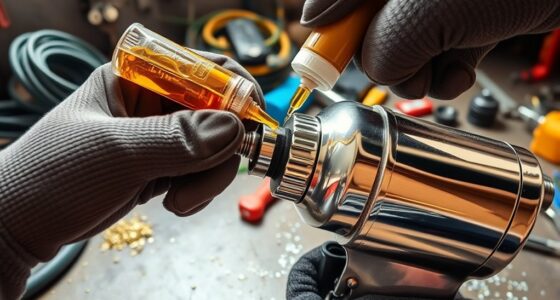
Have you ever wondered how to make your hand tools more efficient and easier to use? The key lies in understanding simple hacks that optimize their performance while guaranteeing safety. Before diving into clever uses, it’s vital to prioritize safety precautions. Always wear protective gear, like gloves and safety glasses, when handling tools. Keep your workspace clean and free of clutter to prevent accidents. Regular tool maintenance is also essential; clean your tools after each use, tighten loose parts, and lubricate moving joints to keep them in top condition. Well-maintained tools not only last longer but also perform more reliably, reducing the risk of slips or mishaps during use. Free floating is an important concept in backyard design, which can influence how you organize your workspace for safety and efficiency.
Prioritize safety, keep tools maintained, and work clean for more efficient and safer hand tool use.
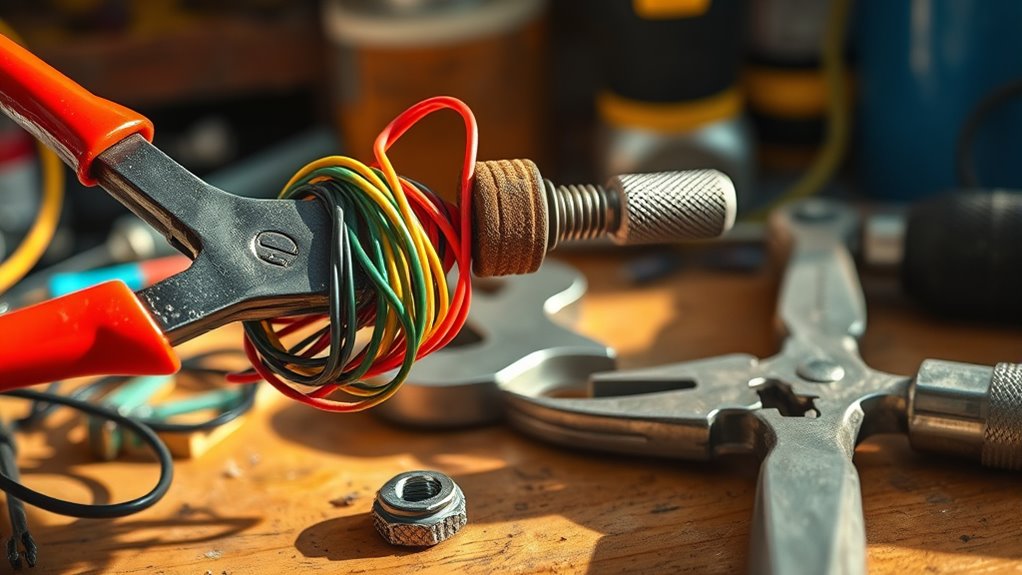
When it comes to pliers, one hack is to use them for more than gripping and bending. For example, if you need to remove a stubborn nail or staple, use the side cutters to grip and twist it out. You can also use needle-nose pliers for intricate tasks like threading wires through tight spaces or holding small objects steadily. To extend their lifespan, regularly oil the pivot points, and avoid using pliers on hardened materials that could damage the jaws. Proper tool maintenance ensures your pliers stay sharp and effective, making your tasks safer and easier.
Wrenches are versatile, and their clever uses can save you time and effort. For instance, adjustable wrenches can be used as makeshift clamps by tightening around objects temporarily, freeing your hands for other tasks. When working with nuts and bolts, always choose the right size to prevent stripping threads. A handy hack is to wrap a rubber band around the wrench’s jaw to improve grip on rounded nuts or slippery surfaces. Remember, maintaining your wrenches by cleaning off dirt and corrosion and occasionally applying lubricant keeps them functioning smoothly. This not only prolongs their lifespan but also ensures they provide a secure grip, reducing slips that could cause injury.
Screwdrivers are often underestimated, but with a few hacks, they can become even more useful. Use the flathead screwdriver to pry open paint cans or scrape off labels. Crosshead screwdrivers work well for unscrewing stubborn or rusted screws—just apply steady pressure and avoid stripping the screw head. To prevent wear and tear, keep your screwdriver bits sharp and clean, and replace worn-out or damaged bits promptly. Storing screwdrivers in a dry place and periodically checking for rust or corrosion also enhances safety and tool longevity. A well-maintained screwdriver makes fast work of assembly or disassembly tasks, minimizing hand fatigue and reducing the risk of slips.
Incorporating these hacks, along with diligent safety precautions and regular tool maintenance, transforms your basic hand tools into efficient, reliable helpers. The more you care for and understand your tools, the safer and more productive your projects become.
adjustable wrench with rubber grip
As an affiliate, we earn on qualifying purchases.
As an affiliate, we earn on qualifying purchases.
Frequently Asked Questions
Can Pliers Be Used as Makeshift Hammers?
Yes, you can use pliers as an improvised hammer in a pinch, but it’s not recommended for regular tool substitution. You might tap small nails or adjust objects, but applying force with pliers can damage the tool or cause injury. Always prioritize proper tools for hammering tasks to ensure safety and effectiveness. Use pliers only when no hammer is available, and be cautious during improvised hammering.
Are Wrenches Effective for Opening Stubborn Jar Lids?
Yes, a wrench can be effective for opening stubborn jar lids. If you struggle with a tight jar lid, slipping a wrench around it provides extra leverage, making it easier to twist open. Just make certain the wrench fits snugly to avoid slipping or damaging the lid. With this simple trick, you’ll save time and effort, especially when your hands are sweaty or the lid’s grip is extra stubborn.
How Can Screwdrivers Be Used to Fix a Zipper?
You can use a screwdriver for zipper repair by carefully prying open the zipper slider if it’s stuck or misaligned. This technique allows you to adjust or tighten the zipper teeth, improving its function. It’s also handy for tool customization—removing or replacing the slider if needed. Just make certain you handle the screwdriver gently to avoid damaging the fabric or the zipper itself, and follow proper zipper repair techniques for best results.
Can Hand Tools Be Safely Used for Electrical Work?
You shouldn’t use hand tools for electrical work unless they’re specifically designed for it. According to safety guidelines, 70% of electrical accidents involve improper tool use. Always check insulation safety and use tools rated for electrical work. Before touching live wires, perform voltage testing with a proper tester. This guarantees safety and prevents shocks or fires. Stick to specialized insulated tools to protect yourself during electrical repairs.
Are There Creative Storage Ideas for Hand Tools?
You can streamline your workspace by using magnetic tool holders, which keep your hand tools easily accessible and organized. Wall-mounted racks are also a great idea—they save space and let you see all your tools at a glance. Combine these options for maximum efficiency, ensuring your tools stay secure and ready when you need them. This way, you’ll maintain a tidy, functional area perfect for any project.
needle nose pliers for small parts
As an affiliate, we earn on qualifying purchases.
As an affiliate, we earn on qualifying purchases.
Conclusion
So, next time you reach for your hand tools, remember these clever hacks. Using pliers, wrenches, and screwdrivers creatively can save you time and effort, proving that even simple tools hold surprising versatility. Some say these hacks are just tricks, but studies show that thinking outside the box with familiar tools boosts efficiency and problem-solving skills. Give these tips a try—you might just discover a new favorite way to get the job done.
multi-purpose flathead screwdriver
As an affiliate, we earn on qualifying purchases.
As an affiliate, we earn on qualifying purchases.
As an affiliate, we earn on qualifying purchases.
Fall yard work Picks
leaf blowers
As an affiliate, we earn on qualifying purchases.