
To check if an outlet or wire is live, first make certain your hands are dry and you’re standing on a dry surface. Turn off the circuit breaker before working on wiring, then turn the tester on. Carefully touch the tester tip to the hot slot or wire; if it lights up or beeps, it’s live. Always follow safety procedures, and if you want to master proper testing methods, keep exploring for detailed steps.

Get business pricing on tools and workshop supplies
- Business-only prices and quantity discounts
- Tax-exempt purchasing
- Multiple users, one account, clear invoices
Key Takeaways
- Turn off the breaker and verify the circuit is de-energized before testing for safety.
- Set or select the appropriate voltage tester for the type of outlet or wire.
- Carefully touch the tester probe to the hot wire or slot to check for voltage presence.
- Observe the tester’s indicator or reading to determine if the outlet or wire is live.
- Always follow safety protocols and manufacturer instructions for accurate, safe testing.
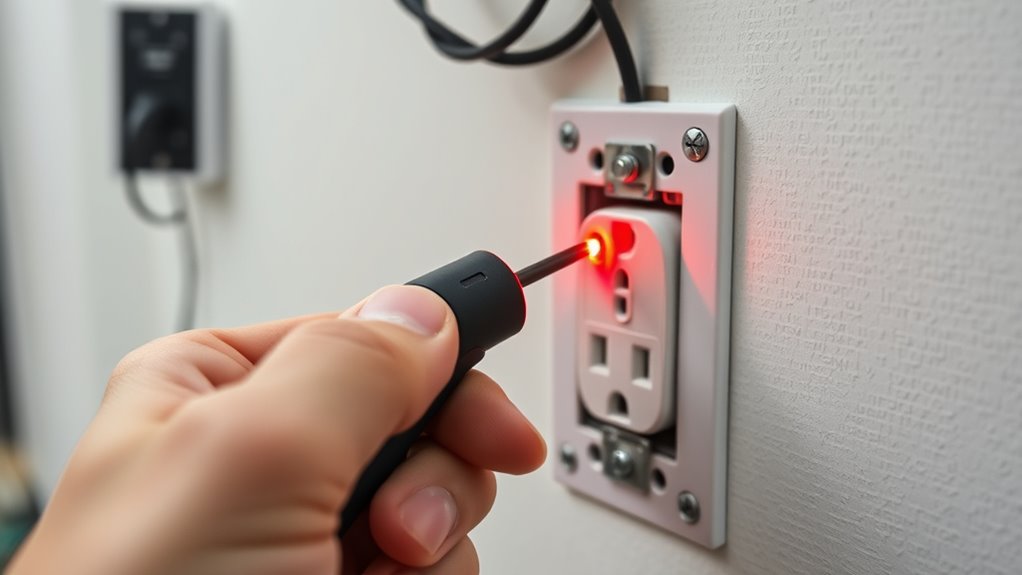
Testing electrical outlets with a voltage tester is an essential step to guarantee safety before plugging in devices. Before you even touch the tester, it’s vital to follow proper safety precautions to prevent electrical shock or damage. Make sure your hands are dry, and you’re standing on a dry surface. Turn off the power at the circuit breaker if you’re performing any work beyond simple testing, especially if you suspect an outlet or wiring issue. Always wear insulated gloves if you’re unsure about the wiring or if the outlet shows any signs of damage. These precautions help you stay safe and avoid potential hazards.
When you begin testing, first verify your voltage tester is in good working condition. Check the device for any visible damage or worn parts. If it’s a non-contact tester, turn it on and hold it by the insulated handle. For contact testers, insert the probes into the outlet slots carefully, following the manufacturer’s instructions. Conducting proper testing procedures involves identifying the live, neutral, and ground connections within the outlet. Typically, the smaller slot is the hot wire, the larger is neutral, and the round hole is ground. Use the tester to confirm the presence of voltage on the hot wire by gently touching the probe to the corresponding slot. If the tester indicates voltage, you know the outlet is live. If not, it might be disconnected, or there’s an issue with the wiring.
It’s important to remember that not all outlets are wired correctly, so testing procedures should include checking all connections. For example, if your outlet has a ground fault or reversed wiring, the tester will help you identify these issues before you proceed. Always test the outlet in multiple spots if possible, and verify the readings with your tester’s instructions. If the tester shows no voltage when you expect it, turn off the breaker and double-check your connections or call an electrician. Never assume an outlet is safe just because it looks fine; testing provides the concrete confirmation you need. Additionally, understanding credit card security measures can help you stay informed about protecting personal information online.
As an affiliate, we earn on qualifying purchases.
Frequently Asked Questions
Can a Voltage Tester Detect a Short Circuit?
A voltage tester can’t directly detect a short circuit, but it helps with electrical safety and testing accuracy by showing if power is present. When testing outlets or wires, a voltage tester indicates live voltage, which can hint at potential shorts if unexpected readings occur. Always use it properly to avoid accidents and confirm circuit conditions, ensuring safety during electrical work.
How Often Should I Test My Outlets?
You should test your outlets at least once every three to six months to catch grounding issues or circuit trip problems early. Regular testing helps identify potential hazards, ensuring safety and proper functioning. If you notice flickering lights or frequent trips, test more often. Using a voltage tester, you can quickly check outlets for proper voltage levels, grounding issues, and circuit trips, preventing potential electrical hazards before they become serious.
Is a Non-Contact Tester Safer Than a Contact Tester?
You might think a non-contact tester is safer, but both tools require proper safety precautions. Non-contact testers are handy for quick checks and reduce the risk of accidental shocks, making them seem safer. However, contact testers give you a more definitive reading, so your testing techniques matter more than the tool itself. Always follow safety precautions, wear insulated gloves, and double-check your tester’s instructions to stay safe.
What Should I Do if the Tester Shows No Voltage?
If your tester shows no voltage, first verify you’re using it correctly with proper safety precautions. Double-check the tester’s batteries and calibration. Test it on a known live source to confirm it’s working. If it still shows no voltage, troubleshoot by inspecting the outlet or wire connections for damage or loose wiring. Always turn off power before handling wires to prevent shocks, and consider consulting a professional if you’re unsure.
Can I Use a Voltage Tester on GFCI Outlets?
Ever wondered if you can safely test GFCI outlets with a voltage tester? Yes, you can, but be cautious. GFCI outlets might trip during testing, indicating grounding issues or circuit problems. Use your tester to identify live wiring and ensure the outlet functions properly. Just remember, if the tester shows no voltage after pressing the buttons, the outlet may be grounded or off, helping you troubleshoot circuit identification and grounding issues securely.
digital voltage tester for outlets
As an affiliate, we earn on qualifying purchases.
As an affiliate, we earn on qualifying purchases.
Conclusion
Now that you’ve learned how to use a voltage tester, you’re like a guardian watching over your home’s electrical currents. With each confident test, you’re illuminating hidden dangers, turning darkness into awareness. Think of the tester as your guiding light in the shadows of wires and outlets, ensuring safety flows seamlessly through your hands. Trust your skills, stay vigilant, and keep your space powered safely—because knowledge is the brightest spark in any home.
electrical outlet tester with indicator
As an affiliate, we earn on qualifying purchases.
As an affiliate, we earn on qualifying purchases.
As an affiliate, we earn on qualifying purchases.
Fall yard work Picks
leaf blowers
As an affiliate, we earn on qualifying purchases.