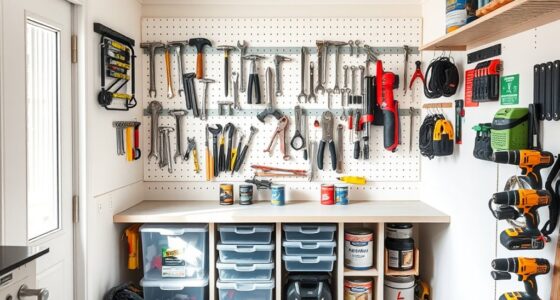

To keep your pneumatic tools working smoothly, regularly oil them with high-quality pneumatic oil, applying a few drops before each use and during operation if needed. Hold the tool upright for better coverage and avoid over-lubricating. Store tools in a dry, clean space and check hoses and fittings for damage. Consistent maintenance prevents rust and internal wear, ensuring your tools last longer and perform better. Continuing with proper techniques helps you master effective air tool care.
Key Takeaways
- Regularly apply high-quality pneumatic oil to lubricate internal parts, ideally before each use or after extended operation.
- Use oil ports or tilt the tool upright to ensure oil reaches internal mechanisms effectively.
- Maintain proper storage by keeping tools clean, dry, and in protective cases to prevent corrosion and damage.
- Inspect hoses, fittings, and tools regularly for leaks, wear, or damage, and replace parts as needed.
- Follow manufacturer guidelines for lubrication schedules, cleaning routines, and maintenance to prolong tool lifespan.

Have you ever wondered why your air tools lose power or break down unexpectedly? The answer often comes down to proper maintenance, especially lubrication and storage. When you neglect these essential steps, your tools can experience increased wear, internal corrosion, or even complete failure. Understanding the right lubrication techniques and storage best practices can considerably extend the lifespan of your pneumatic tools and keep them performing at peak levels.
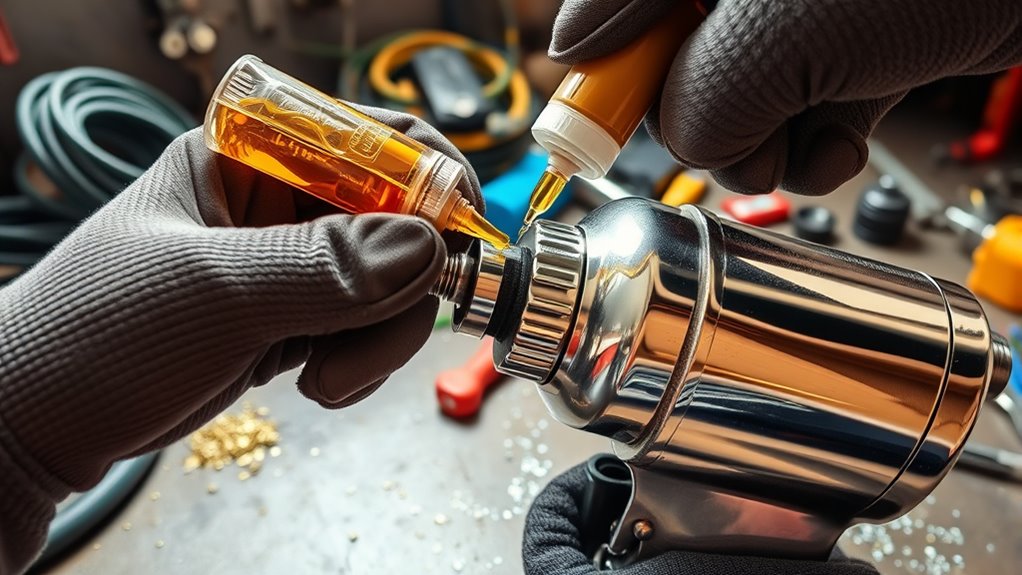
Lubrication techniques are essential because they ensure that moving parts stay smooth and reduce friction. Most air tools require a few drops of air tool oil before use, but the method matters. Always use high-quality pneumatic oil designed for air tools, and avoid over-lubricating, which can cause oil buildup and damage internal components. When applying oil, tilt the tool or hold it upright to allow the oil to reach the internal mechanisms effectively. Some tools have oil ports for easy filling; if yours do, make it a habit to oil them regularly, especially after prolonged use or at the end of a workday. During operation, a small amount of oil mixed with compressed air lubricates internal parts continuously, reducing wear and preventing rust. Remember, thorough lubrication isn’t just about applying oil; it’s about doing it correctly and consistently based on the manufacturer’s recommendations. Proper air tool maintenance also includes inspecting hoses and fittings regularly to prevent leaks and ensure optimal performance.

Freeman PTTO Air Tool Oil, 8 oz.
- Designed for daily air tool lubrication: Lubricates air compressor tools daily
- Extends tool lifespan and performance: Reduces friction and cleans interior parts
- Contains anti-gumming and rust inhibitors: Breaks down deposits and prevents rust
As an affiliate, we earn on qualifying purchases.
As an affiliate, we earn on qualifying purchases.
Frequently Asked Questions
How Often Should I Replace Air Filters in Pneumatic Tools?
You should replace air filters in pneumatic tools every 3 to 6 months, depending on usage and air quality. The air filter lifespan varies based on environmental conditions; if you notice dust or debris bypassing the filter, it’s time for a replacement. Regularly checking and maintaining the filter ensures peak performance and prevents damage, so establish a routine replacement frequency based on your tool’s operating conditions to keep everything running smoothly.
Can Improper Oiling Damage My Pneumatic Tools?
Think of improper oiling as a silent saboteur for your tools. Yes, it can damage your pneumatic tools. If you neglect the proper lubrication frequency or choose the wrong oil, parts can corrode or wear prematurely. Always follow manufacturer guidelines, use the recommended oil, and lubricate regularly. This keeps your tools running smoothly and extends their lifespan, preventing costly repairs or replacements down the line.
What Type of Oil Is Best for Air Tools?
You should use a lightweight, pneumatic-specific oil for your air tools. Lubricant selection is vital; avoid thick or automotive oils that can clog the system. When applying oil, use proper techniques like adding a few drops into the air inlet before use or during breaks. This guarantees smooth operation and prevents damage. Regular oiling with the correct lubricant keeps your tools running efficiently and extends their lifespan.
How Do I Troubleshoot Air Leaks in My Tools?
To troubleshoot air leaks in your tools, start with air leak detection by listening for hissing sounds or feeling for escaping air. Use soapy water on connections and seals; bubbles indicate leaks. Apply effective sealing techniques by tightening fittings or replacing worn seals. Check the air hose and connections regularly, ensuring they’re secure. By systematically inspecting these areas, you can quickly identify and fix leaks, restoring peak tool performance.
Is It Necessary to Disassemble Tools for Maintenance?
You don’t always need to disassemble your tools for maintenance. For example, a user noticed reduced performance and performed tool cleaning, then replaced worn seals. This simple approach can often resolve issues without full disassembly. Regular maintenance like seal replacement and cleaning keeps tools in top shape, extending their lifespan. If problems persist, disassembly might be necessary, but start with cleaning and inspecting seals to avoid unnecessary hassle.
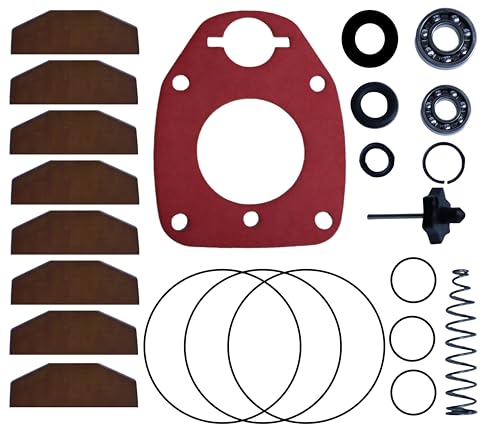
MG725 Air Tool Maintenance Kit Compatible With O-Ring Seal Bearing MG725A Tune Up Kit for 1/2" Drive Impact Wrench Repair Parts
- Compatibility: Fits MG725 and MG725A impact wrenches
- Replacement Parts: Includes gaskets, vanes, bearings, springs, valves, and O-rings
- Durable Materials: Made from high-quality, wear-resistant materials
As an affiliate, we earn on qualifying purchases.
As an affiliate, we earn on qualifying purchases.
Conclusion
Properly maintaining your pneumatic tools, like regular oiling, guarantees they last longer and perform better. Did you know that neglecting maintenance can reduce a tool’s lifespan by up to 50%? By taking a few minutes to oil and care for your air tools, you’re not just saving money—you’re also avoiding costly repairs and downtime. Keep your tools in top shape, and they’ll serve you reliably for years to come.

3-IN-ONE Professional Grade Pneumatic Tool Oil, 4 OZ
- Gum and sludge removal: Dissolves gum and sludge quickly
- Rust prevention: Protects all pneumatic tools from rust
- Calcium and moisture removal: Eliminates calcium build-up and moisture
As an affiliate, we earn on qualifying purchases.
As an affiliate, we earn on qualifying purchases.
Freeman PTTO Air Tool Oil, 8 oz.
- Designed for daily air tool lubrication: Lubricates air compressor tools daily
- Extends tool lifespan and performance: Reduces friction and cleans interior parts
- Contains anti-gumming and rust inhibitors: Breaks down deposits and prevents rust
As an affiliate, we earn on qualifying purchases.
As an affiliate, we earn on qualifying purchases.