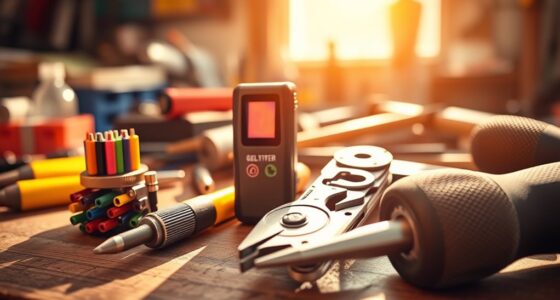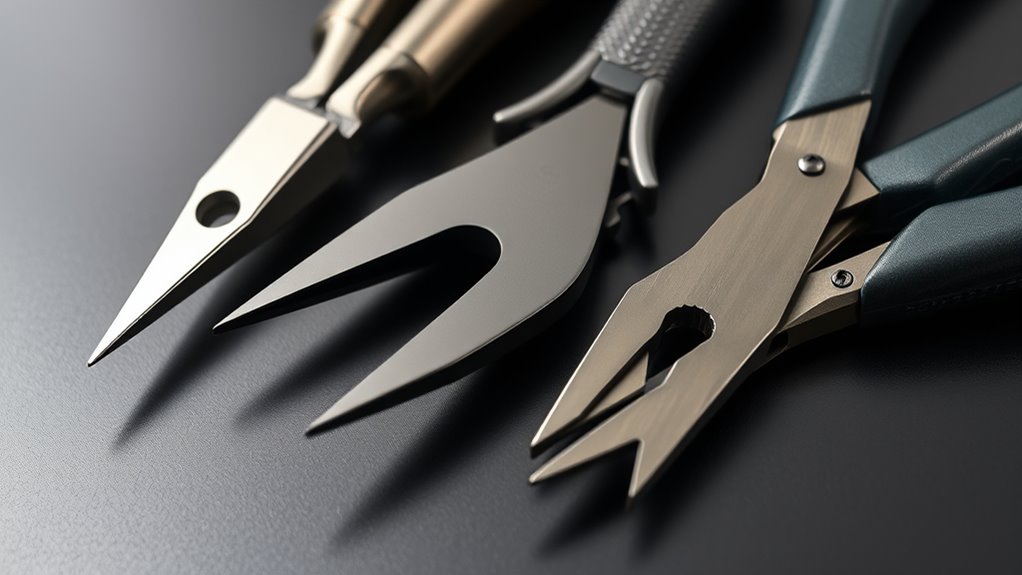

When choosing between needle-nose, lineman’s, and cutting pliers, consider your task needs. Needle-nose pliers are ideal for working in tight spaces and detailed tasks, thanks to their slim, elongated nose. Lineman’s pliers excel at gripping, twisting, and bending wires with their broader handles and sturdy build. Cutting pliers focus on applying maximum force for clean cuts, often featuring spring-loaded handles. To find the perfect tool for your projects, explore more about their features and uses.

Get business pricing on tools and workshop supplies
- Business-only prices and quantity discounts
- Tax-exempt purchasing
- Multiple users, one account, clear invoices
Key Takeaways
- Needle-nose pliers are ideal for precision work in tight spaces, unlike lineman’s and cutting pliers which are suited for gripping and cutting tasks.
- Lineman’s pliers feature broad handles for heavy-duty gripping, whereas needle-nose have slim handles for detailed control.
- Cutting pliers are optimized for applying maximum force for cutting wires, often with spring-loaded handles to reduce fatigue.
- Ergonomic handle design varies among the types to enhance comfort and reduce fatigue during extended use.
- Choosing the right plier depends on the specific task: detailed work, gripping/bending, or cutting wires.

Pliers are essential tools for many tasks, but not all pliers are created equal. When choosing the right type, it’s important to consider their design, functionality, and build quality. Needle-nose pliers, lineman’s pliers, and cutting pliers each serve different purposes, and understanding their features helps you make an informed decision. One key aspect to look at is the ergonomic design. Good ergonomic design ensures comfort during prolonged use, reducing fatigue and improving precision. For example, needle-nose pliers often have slim, elongated handles that help you reach tight spaces, but some models feature cushioned grips and contoured handles that make extended use more comfortable. Lineman’s pliers typically have a broader, more robust handle that provides a secure grip for gripping and twisting wires, with ergonomic considerations that minimize hand strain during heavy-duty tasks. Cutting pliers, or wire cutters, usually come with a design focused on applying maximum cutting force with minimal effort, often featuring spring-loaded handles that reduce hand fatigue. Additionally, selecting tools with ergonomic design can significantly improve comfort and efficiency during use.
needle nose pliers for electrical work
As an affiliate, we earn on qualifying purchases.
As an affiliate, we earn on qualifying purchases.
Frequently Asked Questions
Which Plier Type Is Best for Electrical Work?
For electrical work, lineman’s pliers are your best choice because they offer insulation protection and a strong grip for twisting and gripping wires. Their handle ergonomics ensure comfort during extended use, reducing fatigue. Needle-nose pliers are great for reaching tight spaces, while cutting pliers excel at snipping wires. However, for overall versatility and safety, lineman’s pliers provide the ideal combination of insulation, grip, and ergonomic design.
Are There Specific Safety Features to Look For?
You should look for safety features like ergonomic handles, which provide a secure grip and reduce fatigue, and insulated tips, offering protection against electrical shocks. These features help guarantee your safety during use, especially when working with live wires. Always check that the pliers meet safety standards and are properly insulated. Prioritizing these features makes your work safer and more comfortable, reducing the risk of accidents or injuries.
How Do I Maintain and Clean Pliers Properly?
Think of your pliers like a trusted garden tool; regular care keeps them sharp and effective. To maintain them, wipe off dirt after use, and for cleaning, use a damp cloth with mild soap. Store your pliers in a dry place, preferably in a toolbox or on a pegboard, to prevent rust. Proper storage tips and routine cleaning methods guarantee your pliers stay in top shape for every job.
Can I Use Lineman’s Pliers for Precision Tasks?
You can use lineman’s pliers for precision tasks, but their versatility is limited. They have a strong, robust grip ideal for gripping, twisting, and cutting, but lack the fine control of needle-nose pliers. For delicate, detailed work, a precision grip from needle-nose pliers is better. Use lineman’s pliers for heavier tasks, but switch to tools designed for precision when needed to guarantee accuracy and avoid damage.
What Materials Are Most Durable for Heavy-Duty Use?
For heavy-duty use, you want pliers made from materials with high durability, like forged steel or chromium-vanadium alloy. These materials withstand tough conditions, resist corrosion, and maintain strength over time. When selecting tools for heavy-duty tasks, prioritize those with reinforced jaws and sturdy construction. This guarantees your pliers perform reliably, last longer, and handle demanding jobs without bending or breaking, making your work safer and more efficient.
lineman's pliers with insulated handles
As an affiliate, we earn on qualifying purchases.
As an affiliate, we earn on qualifying purchases.
Conclusion
Ultimately, choosing the right pliers depends on your specific needs. Needle-nose are perfect for precision work, lineman for heavy-duty gripping, and cutting pliers for slicing wires. While some might think you only need one type, having all three can save you time and frustration. Don’t underestimate the value of versatility—investing in a set guarantees you’re prepared for any task, even if it seems like overkill at first.
spring-loaded cutting pliers for wires
As an affiliate, we earn on qualifying purchases.
As an affiliate, we earn on qualifying purchases.
ergonomic pliers for heavy-duty tasks
As an affiliate, we earn on qualifying purchases.
As an affiliate, we earn on qualifying purchases.
Fall yard work Picks
leaf blowers
As an affiliate, we earn on qualifying purchases.