Clamps and vises are essential tools to hold your workpiece securely during projects, helping you work accurately and safely. With the right clamp type—like C-clamps for tight spots or bar clamps for larger pieces—you can apply the perfect amount of pressure and keep everything in place. Properly maintained vises also ensure steady grip and smooth operation for precision tasks. Continuing will reveal how choosing and caring for these tools can enhance your craftsmanship.

Get business pricing on tools and workshop supplies
- Business-only prices and quantity discounts
- Tax-exempt purchasing
- Multiple users, one account, clear invoices
Key Takeaways
- Clamps and vises securely hold workpieces to ensure safety and precision during cutting, drilling, or assembly tasks.
- Selecting the appropriate clamp type, like C-clamps or bar clamps, depends on project size and material.
- Proper maintenance of vises, including lubrication and jaw inspection, guarantees consistent clamping force and longevity.
- Using the right clamp or vise reduces workpiece movement, minimizing errors and enhancing project accuracy.
- Regularly checking and adjusting clamps and vises ensures safe operation and improves overall work efficiency.
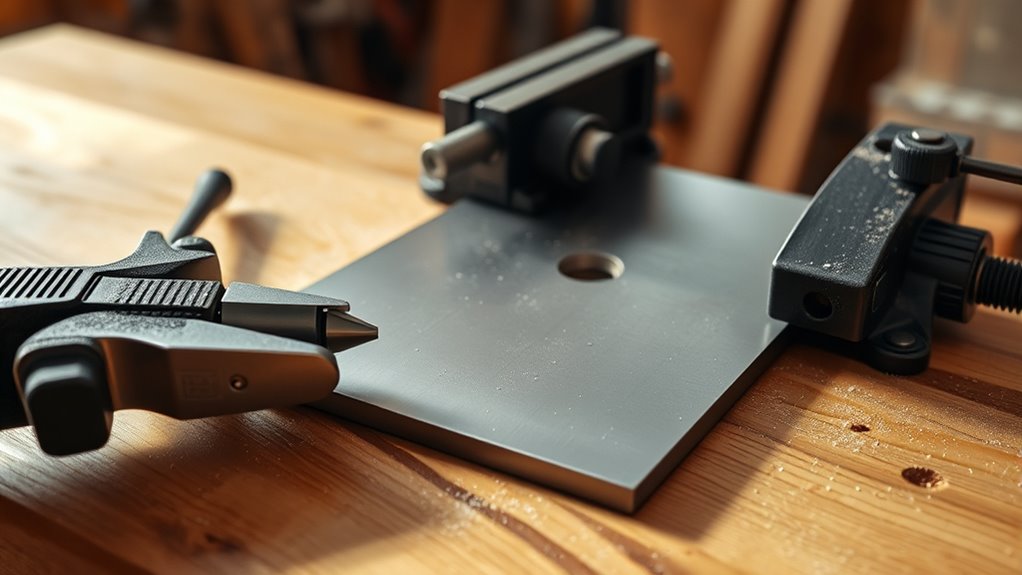
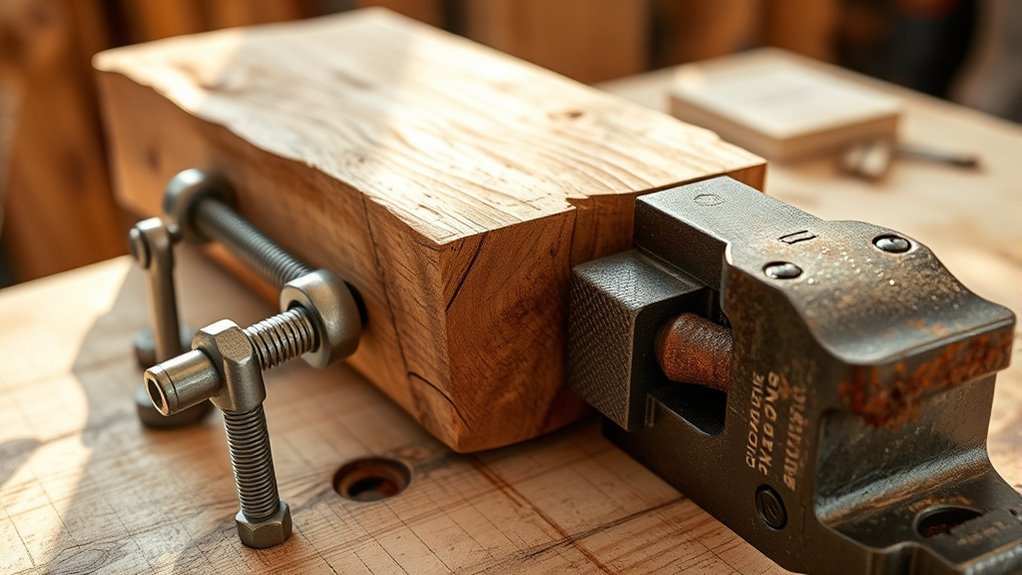
Clamps and vises are essential tools that help you securely hold materials in place during woodworking, metalworking, or other crafts. Without them, tasks like sawing, drilling, gluing, or welding become much more difficult and risky. When choosing clamps, you’ll find various clamp types designed for specific applications, such as C-clamps, bar clamps, spring clamps, and pipe clamps. Each type offers different strengths and convenience. For example, C-clamps are sturdy and versatile for tight, fixed positions, while bar clamps provide longer reach for larger projects. Spring clamps are quick to attach and remove, making them perfect for lightweight tasks or holding parts temporarily. Knowing the right clamp types to use guarantees your work stays secure and precise, especially when applying pressure or aligning pieces.
Vise maintenance is equally important to keep your equipment functioning smoothly. A well-maintained vise guarantees consistent clamping force, smooth operation, and a longer lifespan. Regularly check the screw and jaw alignment to prevent misalignment or wobbling, which could compromise your work. Keep the screw clean and lubricated with light machine oil to prevent rust and ensure smooth opening and closing. If your vise has a quick-release mechanism, make sure it operates properly; clean and lubricate it periodically for ease of use. Inspect the jaw surfaces for wear or damage, and replace or resurface them if necessary. Proper vise maintenance also involves tightening any loose bolts or screws, ensuring the base is secure, and storing your vise in a dry environment to avoid rust formation. When you take these steps, your vise will perform reliably, providing you with the steady grip needed for accurate, safe work.
Using the right clamp types and maintaining your vise properly helps you work more efficiently and produce higher-quality results. Clamps and vises are tools that, when used correctly, become extensions of your hands, offering stability and control. The variety of clamp types allows you to adapt to different projects, whether you’re holding small parts or securing large panels. Meanwhile, regular vise maintenance ensures your tools operate smoothly and last for years. By paying attention to these elements, you avoid frustration and potential damage to your workpiece or equipment. Ultimately, investing time in understanding clamp types and maintaining your vises pays off by making your projects safer, faster, and more precise. Remember, a well-chosen clamp and a properly maintained vise are your best allies in any craft that requires securing materials firmly.
As an affiliate, we earn on qualifying purchases.
Frequently Asked Questions
How Do I Choose the Right Clamp for Delicate Materials?
To select the appropriate clamp for delicate materials, focus on material compatibility and clamp strength. Opt for soft, padded clamps that won’t scratch or damage fragile surfaces. Look for adjustable clamps to ensure gentle, even pressure without over-tightening. Avoid heavy-duty clamps that might exert too much force. By balancing clamp strength with the material’s fragility, you’ll secure your workpiece safely without risking damage or deformation.
What Safety Precautions Should I Take When Using Vises?
Ever find yourself caught off guard by a loose vise? Always wear safety goggles to protect your eyes and keep your hands clear of moving parts. Check that your clamp safety is in place and your vise handling is steady before tightening. Never over-tighten, as it could damage your workpiece or cause slips. Stay alert, and always follow the manufacturer’s instructions to keep your workspace safe.
Can Clamps Be Used for Both Woodworking and Metalworking?
Yes, clamps can be used for both woodworking and metalworking. Different clamp materials, like wood, plastic, or metal, suit each task, ensuring safety and effectiveness. You should select from various vise types, such as bench vises for woodworking or metalworking vises, to match your project needs. Always choose the right clamp material and vise type to securely hold your workpiece and prevent accidents during your work.
How Do I Prevent Damage to My Workpiece When Clamping?
To prevent damage to your workpiece when clamping, always use clamp padding or soft jaw covers to protect its surface. Apply gentle, even pressure, avoiding over-tightening, which can cause dents or cracks. Position clamps carefully, ensuring they don’t squeeze too tightly in one spot. Regularly check your workpiece during clamping to maintain workpiece protection and prevent any unintended damage.
What Maintenance Is Required to Keep Clamps and Vises in Good Condition?
Like a trusty steed in a vintage saddle shop, your clamps and vises need regular care. You should perform lubrication routines to keep moving parts smooth and prevent rust. Additionally, wear inspection is essential—check for cracks, deformation, or loose components. Proper maintenance guarantees your tools stay reliable and extend their lifespan, so you can work efficiently without worrying about sudden failures or damage to your workpieces.
As an affiliate, we earn on qualifying purchases.
Conclusion
Using clamps and vises keeps your workpiece steady, making your projects safer and more precise. Some might think they’re bulky or hard to handle, but once you get the hang of them, you’ll wonder how you ever worked without them. They’re invaluable tools that save you time and frustration. So don’t hesitate—grab the right clamp or vise, and enjoy the confidence of working securely every time. Your projects will thank you!
As an affiliate, we earn on qualifying purchases.
As an affiliate, we earn on qualifying purchases.
Fall yard work Picks
leaf blowers
As an affiliate, we earn on qualifying purchases.