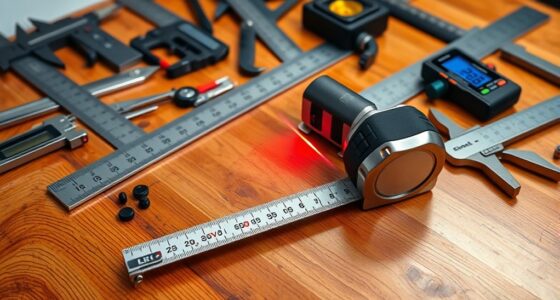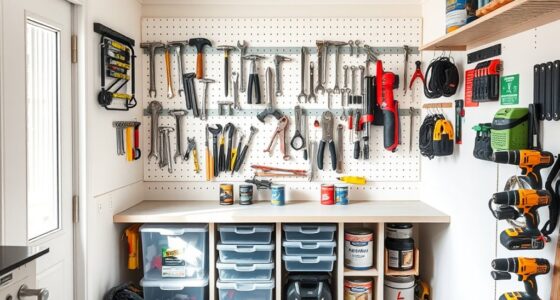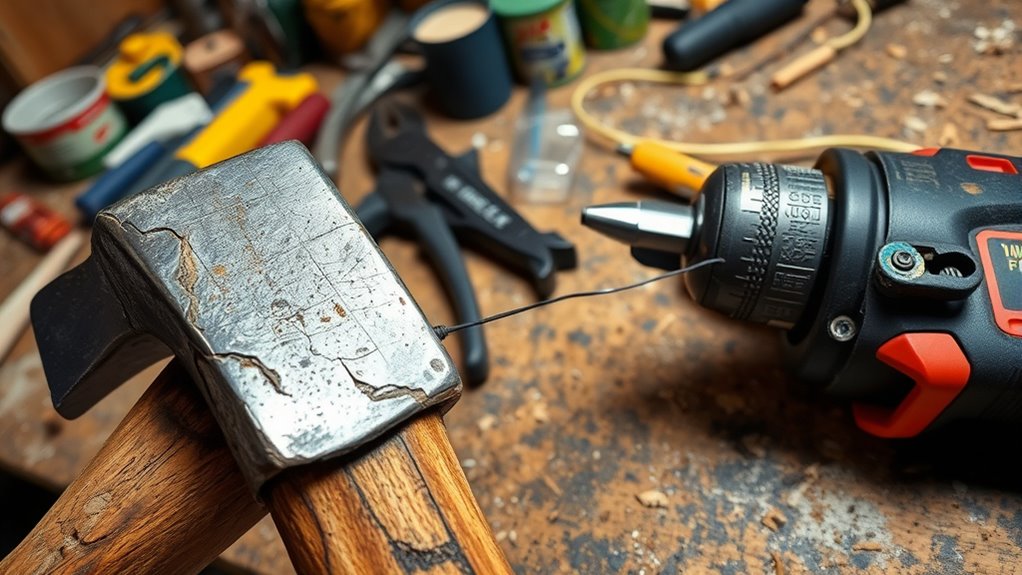

When your tools break, start by inspecting for visible damage like cracks, wear, or looseness. For power tools, check cords, plugs, and circuit breakers, and tighten loose parts or replace worn brushes. Hand tools may need sharpening or handle repairs. Regular cleaning, lubrication, and tightness checks can prevent many failures. Remember, understanding your tool’s mechanics helps spot issues early. Keep going to discover more tips on fixing common tool problems quickly and effectively.
Open a free Amazon Business account
Business pricing, bulk buying and tax-exempt orders.
As an affiliate, we earn on qualifying purchases.
Key Takeaways
- Check power connections and circuit breakers to resolve power tool startup issues quickly.
- Clean vents, blades, and moving parts to prevent overheating and mechanical failures.
- Inspect and replace worn brushes or dull blades to restore tool efficiency.
- Tighten loose screws, handles, or parts to fix wobbly or unstable tools.
- Perform routine cleaning and lubrication to prevent common failures and extend tool lifespan.
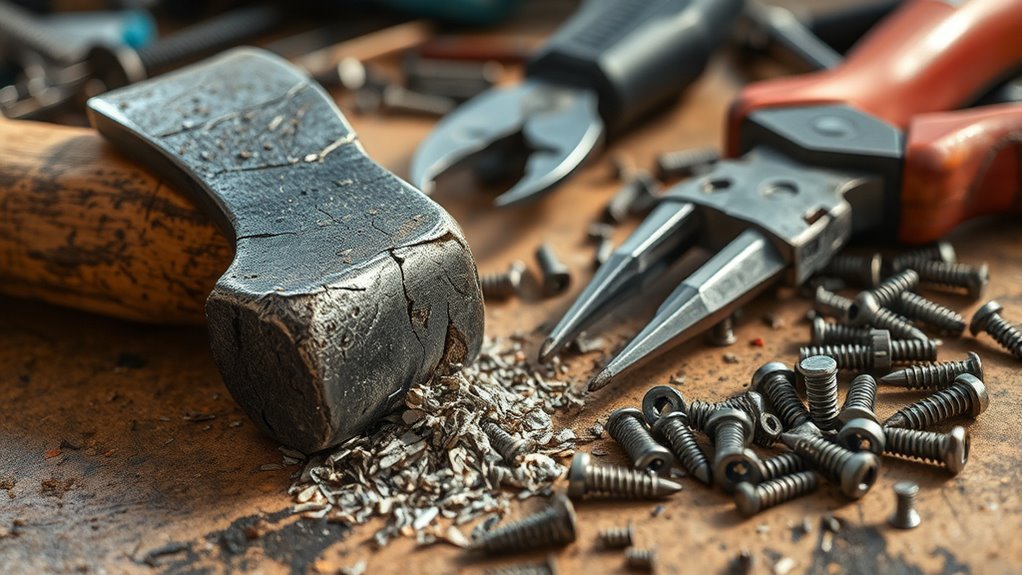
When your tools malfunction unexpectedly, it can disrupt your workflow and cause frustration. Whether you’re in the middle of a project or just starting, a sudden failure can throw you off schedule. That’s why knowing some quick fixes for common tool failures is essential. It helps you get back on track without waiting for professional repairs or rushing out to buy new equipment. Power tool maintenance and hand tool troubleshooting are skills that save you time and money, and they empower you to handle minor issues on your own.
First, consider your power tools. Often, a simple problem like a tool not turning on is due to a loose plug or a blown fuse. Check the power cord for damage or frays, and ensure it’s securely plugged into the outlet. If your tool still won’t start, inspect the circuit breaker or fuse box to make sure the power supply is active. Sometimes, the issue lies within the tool itself—like a jammed motor or worn brushes. Clearing debris from vents and blades can prevent overheating and improve performance. Replacing worn brushes isn’t complicated and can restore your power tool’s efficiency. Regular power tool maintenance, including cleaning and lubricating moving parts, can prevent many issues before they happen. Additionally, understanding the mechanics of your tools can help you identify and address problems more effectively.
Check power cords and circuit breakers before inspecting the tool itself.
When it comes to hand tool troubleshooting, start by examining the tool for obvious damage or wear. For example, if your screwdriver isn’t turning smoothly, check the handle and blade for cracks or bending. Sharpen dull blades with a file or replace them if they’re too worn down. Loose screws or handles are easy fixes—simply tighten them with the appropriate screwdriver or wrench. If a hand tool like a hammer feels loose or wobbly, inspect the head and handle connection. Sometimes, a quick re-glue or tightening can make it safe and functional again. Keep your tools clean and dry, as rust or debris can cause grip issues and reduce effectiveness.
As an affiliate, we earn on qualifying purchases.
Frequently Asked Questions
How Can I Prevent My Tools From Breaking Unexpectedly?
To prevent your tools from breaking unexpectedly, practice preventive maintenance regularly, like cleaning and lubricating them after use. Always store your tools properly in a dry, organized space to avoid damage and corrosion. Handle them with care, avoiding overexertion or misuse, and inspect them before each use. These habits extend their lifespan, reduce failures, and ensure you’re always ready for your next project.
What Safety Precautions Should I Take During Quick Fixes?
Ever wonder if you’re safe during quick fixes? Always wear personal protective equipment like gloves and safety glasses to shield yourself from sparks or debris. Use proper tool handling techniques to avoid slips or injuries. Keep your workspace organized and free of clutter to prevent accidents. Are you attentive to your surroundings? Staying alert and cautious guarantees you minimize risks while performing quick repairs, keeping you safe every step of the way.
Are There Specific Brands More Prone to Tool Failures?
Some brands are more prone to tool failures due to lower brand reliability, especially when their products lack solid warranty coverage. You should research customer reviews and warranty policies before purchasing. Brands with a reputation for durability and good warranty support tend to have fewer failures. Investing in reliable brands can save you time and money, as they’re less likely to break and often offer better quick fix solutions if they do.
How Often Should I Perform Maintenance on My Tools?
You should perform maintenance on your tools regularly, ideally following a consistent maintenance schedule. Start with routine tool inspections before each use to identify signs of wear or damage. For more thorough upkeep, set aside time weekly or monthly depending on usage. Proper maintenance helps prevent failures, extends the lifespan of your tools, and guarantees safety. Stick to your maintenance schedule and inspect your tools often for peak performance.
Can DIY Repairs Void My Tool Warranty?
Imagine your tool lying silent, waiting for your touch. DIY repairs can sometimes void your warranty, especially if they alter or damage key components. Check warranty implications before you fix anything yourself—many manufacturers specify repair eligibility and may refuse service if unauthorized repairs occur. To protect your investment, consider professional repairs or consult your warranty terms first, ensuring you don’t unintentionally lose coverage when fixing your tools.
As an affiliate, we earn on qualifying purchases.
Conclusion
Just like a seasoned craftsman who knows how to repair his tools, you can overcome common failures with quick fixes. Remember, even the greatest inventors faced setbacks, but they persisted. So, don’t let a broken tool slow you down—think of it as a moment to innovate and adapt. With a little know-how, you’ll be back to building, creating, and fixing in no time. Keep your tools ready, and your confidence will never break.
As an affiliate, we earn on qualifying purchases.
As an affiliate, we earn on qualifying purchases.
Flea & tick season Picks
flea and tick prevention
As an affiliate, we earn on qualifying purchases.