When choosing between a heat gun and chemical strippers for safe paint removal, consider safety and environmental risks. A heat gun is fast but produces fumes, fire hazards, and requires protective gear. Chemical strippers are less immediate but can release VOCs and need careful handling and disposal. Both methods need proper ventilation and safety precautions. To make the best choice for your project’s safety and environmental concerns, explore each option’s details below.
Open a free Amazon Business account
Business pricing, bulk buying and tax-exempt orders.
As an affiliate, we earn on qualifying purchases.
Key Takeaways
- Both methods require proper ventilation and protective gear to minimize inhalation exposure to fumes and fumes-related hazards.
- Heat guns pose fire risks and can damage surfaces if not used carefully; chemical strippers may contain VOCs impacting air quality.
- Chemical strippers generally involve less physical effort but need cautious handling and correct disposal to avoid environmental harm.
- Heat guns are faster but generate toxic fumes; chemical strippers work more slowly but are safer regarding fire hazards.
- Selecting the safest method depends on surface type, environmental impact, and adherence to safety and disposal regulations.
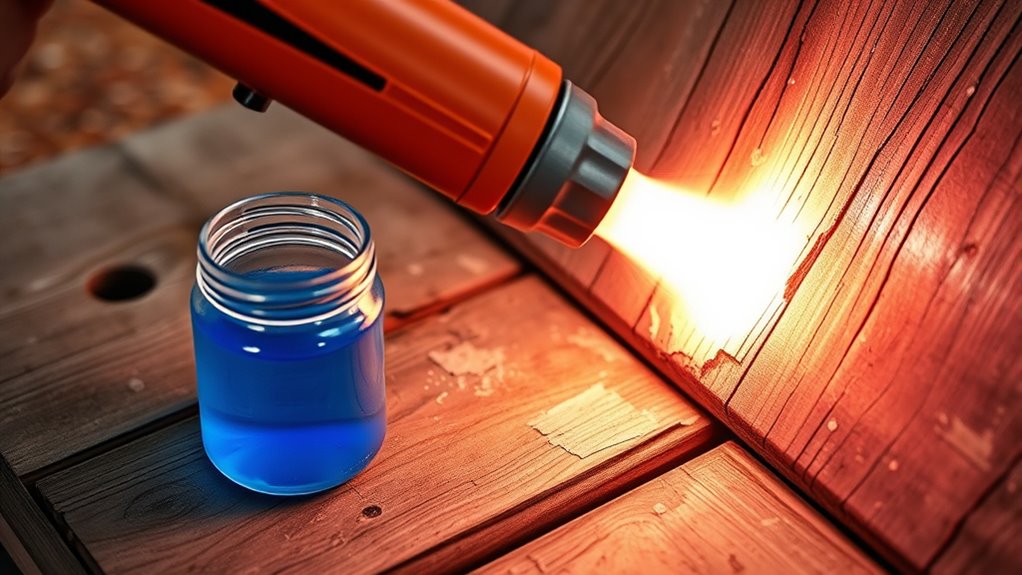
When it comes to removing paint or varnish, choosing the right method can make all the difference. Two popular options are heat guns and chemical strippers, each with its own set of advantages and risks. To do this safely, you need to consider safety precautions and the environmental impact of your chosen method. Your primary goal should be to protect yourself and the environment from harm while effectively removing the coating. Using a heat gun requires you to pay close attention to safety precautions. Keep the heat gun moving to prevent scorching or burning the surface, and always wear heat-resistant gloves and eye protection. Be cautious about the heat intensity; too much heat can cause fires or damage to the material underneath. You should also work in well-ventilated areas because heating paint releases fumes, some of which could be toxic. To reduce health risks, consider using a respirator or mask designed for fumes. Properly disposing of the softened or blistered paint is essential, as it may contain lead or other hazardous substances, especially on older surfaces. Always check local disposal regulations to minimize environmental impact. Additionally, using a suitable safety equipment can further reduce risks during the process. Chemical strippers, on the other hand, involve applying a chemical solution that dissolves paint or varnish. Safety precautions are just as important here. Always work in a well-ventilated space and wear gloves, goggles, and a respirator to avoid skin contact and inhalation of fumes. Some chemical strippers contain volatile organic compounds (VOCs), which can contribute to air pollution and pose health risks. Be mindful of the environmental impact—look for eco-friendly or biodegradable options that reduce harmful emissions. When using chemical strippers, you should also follow the manufacturer’s instructions precisely to minimize waste and avoid overuse. Proper disposal of chemical residues and paint waste is essential; never pour chemicals down the drain or onto the ground. Instead, follow local hazardous waste disposal guidelines to protect the environment. Both methods have their pros and cons, but safety should always come first. Heat guns are fast and effective, but they generate fumes and pose fire hazards if not used carefully. Chemical strippers can be less labor-intensive but may have a higher environmental impact if not selected and disposed of responsibly. Ultimately, your choice depends on your project, surface type, safety considerations, and environmental concerns. By understanding the safety precautions and environmental implications of each method, you can make an informed decision that ensures a safer, cleaner, and more efficient removal process.
As an affiliate, we earn on qualifying purchases.
Frequently Asked Questions
Can Heat Guns Cause Fire Hazards During Paint Removal?
Yes, heat guns can cause fire hazards during paint removal if you’re not careful. You need to follow fire safety guidelines closely and stay alert for heat hazards. Always keep a fire extinguisher nearby, work in a well-ventilated area, and avoid overheating the surface. Never leave a heat gun unattended, and ensure the area is free of flammable materials to prevent potential fires.
Are Chemical Strippers Safe for Indoor Use?
It’s a coincidence that chemical strippers are often considered unsafe for indoor use because of chemical fumes, but they can be safe if you follow proper precautions. Make certain good ventilation and wear protective gear to maximize indoor safety. Always read the label instructions carefully, use the product in well-ventilated areas, and consider using less toxic options. When used correctly, chemical strippers can be a safe choice indoors.
How Long Does Each Method Typically Take?
The time it takes for each method varies based on paint preparation and surface compatibility. A heat gun typically takes 30 minutes to an hour, depending on the area and paint layers. Chemical strippers can take 15 minutes to several hours, depending on the product and paint thickness. Always follow manufacturer instructions for ideal results and safety, and consider your surface type to choose the most effective method.
Do Heat Guns Damage Underlying Surfaces?
Think of your surface as a delicate masterpiece; a heat gun can sometimes harm it if used improperly. Yes, heat guns can cause surface damage, especially on soft or thin materials, by warping or scorching. To preserve your surface, keep the heat gun moving, use the lowest effective temperature, and maintain a safe distance. Proper technique ensures surface preservation while effectively removing paint.
Are There Environmentally Friendly Chemical Stripper Options?
Yes, there are environmentally friendly chemical stripper options available. You can look for biodegradable solutions and eco-friendly formulations that effectively remove paint while minimizing environmental impact. These products often contain less harmful chemicals and are safer for you and the planet. When choosing a chemical stripper, always check labels for eco certifications or ingredients that emphasize biodegradability and sustainability to ensure you’re making an environmentally conscious choice.
As an affiliate, we earn on qualifying purchases.
Conclusion
Both heat guns and chemical strippers can effectively remove paint, but safety should be your top priority. While a heat gun might seem risky, using it carefully with proper protection can be safer and less messy than chemicals. Don’t let the fear of fumes hold you back—taking precautions makes all the difference. Ultimately, choose the method you’re comfortable with, knowing that with the right safety measures, you can achieve a smooth, paint-free finish safely and efficiently.
As an affiliate, we earn on qualifying purchases.
eco-friendly chemical paint remover
As an affiliate, we earn on qualifying purchases.
As an affiliate, we earn on qualifying purchases.
Evergreen bestsellers Picks
bestsellers
As an affiliate, we earn on qualifying purchases.