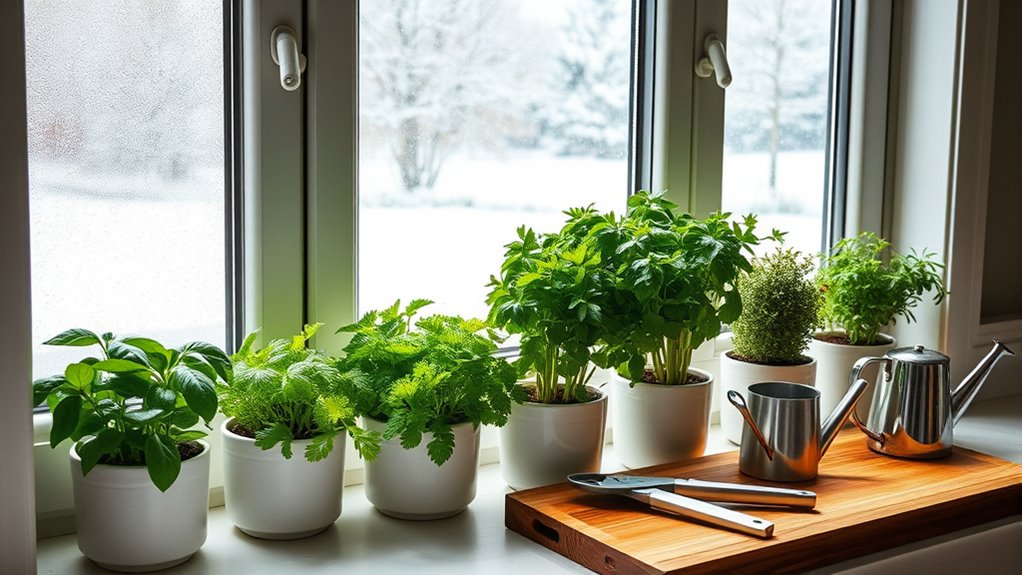

To successfully grow herbs indoors in winter, guarantee you have quality LED grow lights that mimic sunlight and position them 12-24 inches above your plants, running them 12-16 hours daily. Keep your space clean, use reflective surfaces to improve light coverage, and prevent pests with natural remedies like neem oil. Good airflow, proper watering, and monitoring humidity are also key. For more detailed tips, continue exploring ways to create the perfect indoor herb garden during colder months.
Key Takeaways
- Use full spectrum LED grow lights placed 12-24 inches above herbs, running 12-16 hours daily, to mimic natural sunlight indoors.
- Incorporate reflective surfaces like white walls or aluminum foil to maximize light distribution and coverage.
- Regularly inspect plants for pests and maintain cleanliness to prevent infestations during winter.
- Ensure proper airflow with small fans and control humidity to reduce mold and pest risks.
- Rotate lighting setups and monitor environmental conditions to promote healthy, vigorous herb growth indoors.
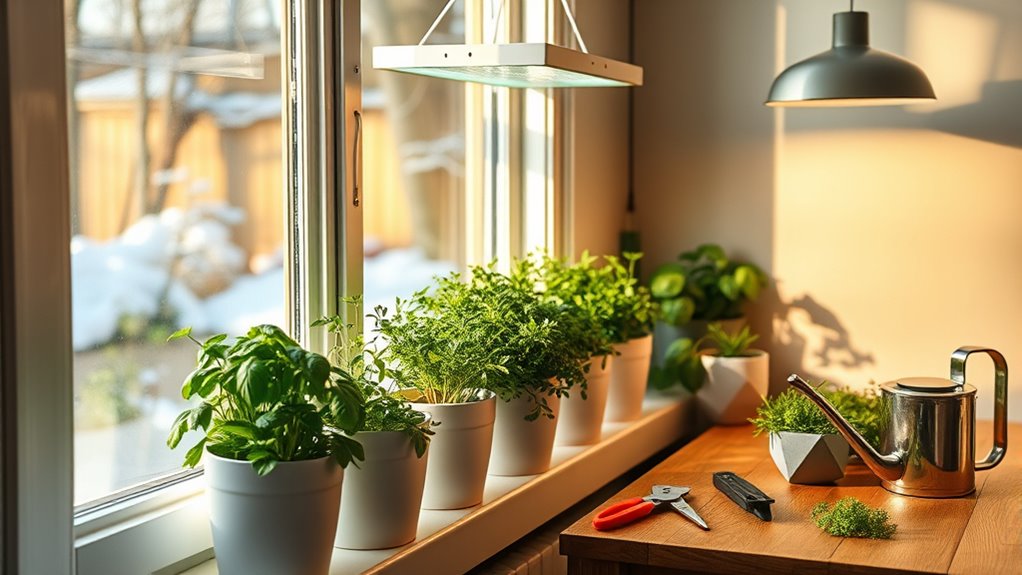
As winter sets in and outdoor gardening slows down, indoor gardening becomes a rewarding way to keep green and stay connected to nature. When growing herbs inside, your success largely depends on providing the right environment. Lighting solutions are vital because winter days are shorter, and natural sunlight may not be enough to sustain healthy plant growth. You should consider using grow lights that mimic the sun’s spectrum, such as LED grow lights, which are energy-efficient and adjustable. Position these lights about 12 to 24 inches above your herbs, and run them for 12 to 16 hours daily to make certain your plants receive adequate light. Proper lighting not only promotes lush, vibrant foliage but also helps prevent leggy, weak plants that stretch toward insufficient light sources.
Along with effective lighting, pest prevention is an essential part of indoor gardening during the winter months. Unlike outdoor gardens, where natural predators help control pests, indoor herbs can be vulnerable to pests like aphids, spider mites, and whiteflies. To prevent infestations, inspect new plants before introducing them into your space, and keep your growing area clean. Avoid overwatering, as excess moisture can attract pests and lead to mold issues. You can also use natural pest deterrents such as neem oil or insecticidal soap, which are safe for edible herbs and help keep pests at bay without chemicals. Making certain good air circulation is another key step—use a small fan to prevent stagnant air, which can encourage pest growth.
In addition, managing lighting and pest prevention together creates a healthier environment for your herbs. Insufficient light can weaken plants, making them more susceptible to pests, while pests can further stress your herbs, stunting growth and reducing flavor. Regularly check your plants for early signs of pests or disease, and rotate your lighting setup to avoid creating dark corners where pests might hide. Also, monitor humidity levels; too high humidity can foster mold and pests, so maintaining a balanced environment is essential. Using reflective surfaces like white walls or aluminum foil can maximize light distribution, reducing shadows and ensuring every part of your herbs gets enough illumination. Additionally, investing in high-quality grow lights with full spectrum capabilities can significantly improve plant health during the darker winter months.

Aokrean Grow Lights for Indoor Plants, Full Spectrum Plant Light with Base
- Stable Stand Design: Requires pot to press for stability
- Two Installation Methods: Insert in soil or use stand
- Multiple Lighting Modes: White, warm white, red, and mix
As an affiliate, we earn on qualifying purchases.
As an affiliate, we earn on qualifying purchases.
Frequently Asked Questions
How Do I Prevent Pests Indoors During Winter Gardening?
To prevent pests indoors during winter gardening, you should regularly check your plants for signs of pests and remove any affected leaves. Maintain good air circulation and avoid overwatering to promote indoor plant health. Use natural pest prevention methods like neem oil or insecticidal soap, and keep your growing area clean. These steps help keep pests at bay and ensure your herbs stay healthy all winter long.
What Are the Best Herbs for Low Light Conditions?
Did you know that basil can survive low light if supplemented with LED grow lights? For herbs in dim spaces, opt for hardy choices like mint, chives, and parsley. These thrive with minimal sunlight and are great for succulent propagation indoors. Use herb drying techniques to preserve their flavor and enjoy fresh herbs year-round. With the right setup, you can successfully grow herbs even in low-light winter conditions.
How Often Should I Fertilize Indoor Herbs in Winter?
You should fertilize your indoor herbs every 4 to 6 weeks during winter, adjusting based on their growth and nutrient requirements. Use a balanced, water-soluble fertilizer diluted to half strength to avoid overfeeding. Keep a consistent fertilizer schedule to guarantee your herbs receive essential nutrients while preventing buildup. Regular feeding helps maintain healthy growth despite the lower light and slower metabolic rate typical of winter.
Can I Grow Herbs in Water Instead of Soil?
Yes, you can grow herbs in water instead of soil by using hydroponic gardening or water propagation methods. You place the herb cuttings in clean water, making sure the roots are submerged. Change the water regularly to prevent stagnation and nutrient deficiencies. This method allows you to enjoy fresh herbs indoors, especially during winter, without soil mess, and it’s a simple way to keep herbs healthy and thriving year-round.
How Do I Extend the Lifespan of Indoor Herbs?
You can extend the lifespan of your indoor herbs by adjusting watering frequency—avoid overwatering, and let the soil dry slightly between waterings. Use proper harvesting tips, like trimming herbs regularly to encourage new growth. Keep herbs in bright, indirect light, maintain consistent temperatures, and guarantee good airflow. These practices help herbs stay healthy longer, maximizing your indoor gardening efforts and keeping your herbs fresh and flavorful.

Plant Growth Mylar Films High Reflective Mylar Film Garden Greenhouse Covering Foil Sheets for First Aid Blanket Growth Room Camping Simple Tent,82.6 x 51.2 Inch(2 Pieces)
- Reflective Grow Room Material: High-quality PETP for effective light reflection
- Double-Sided Reflection: Reflects 95% of light evenly onto plants
- Plant Protective Film: Metallized polyester for optimal plant illumination
As an affiliate, we earn on qualifying purchases.
As an affiliate, we earn on qualifying purchases.
Conclusion
With the right tools and tips, indoor gardening in winter becomes your personal oasis of freshness and energy. Embrace the challenge, and you’ll find your herbs thriving like a rainforest in the middle of a snowstorm. Remember, your space is a sanctuary where green thrives despite the cold outside, turning your home into a lush, vibrant paradise. So, stay dedicated, adapt your methods, and watch your winter garden flourish beyond your wildest dreams.

MAYDAY Pest Control Spray, Natural, Non-Toxic, Peppermint & Rosemary, 16oz
- Fragrant Botanical Blend: Peppermint and rosemary scent
- Home Freshening Solution: Suitable for kitchens and entryways
- Indoor & Outdoor Use: Versatile for all household areas
As an affiliate, we earn on qualifying purchases.
As an affiliate, we earn on qualifying purchases.

VIVOSUN AeroWave D4 Grow Tent Clip Fan with Detachable Hook, 4" Fan, 1-Pack
- Three-Speed Settings: Up to 3500 RPM with memory function
- Adjustable Airflow: Rotate front cover for wide or focused airflow
- Detachable Adjustable Hook: Securely attach and direct airflow easily
As an affiliate, we earn on qualifying purchases.
As an affiliate, we earn on qualifying purchases.