TL;DR

Get business pricing on tools and workshop supplies
- Business-only prices and quantity discounts
- Tax-exempt purchasing
- Multiple users, one account, clear invoices
A Hunker home-storage report describes using a curtain rod and S-hooks to hang utensils, mugs and other items, freeing countertop space. The report advises checking the rod’s load limit, choosing a reachable location and avoiding placement above the stove; how much space the setup frees depends on each kitchen.
Hunker has outlined a kitchen-storage idea that uses a curtain rod and S-shaped hooks to hang utensils and other everyday items, moving them off crowded countertops. The approach may give cooks more room for meal preparation, but the report advises checking the rod’s weight limit and keeping the storage away from the stove.
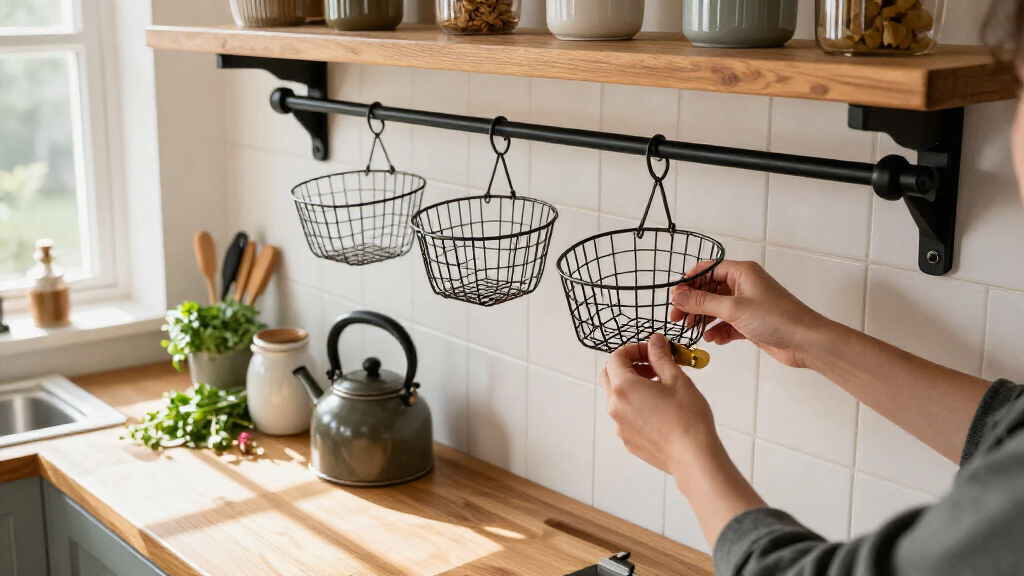
The suggested setup uses a rod mounted in an open stretch of kitchen wall, such as between or beneath cabinets or along a backsplash. S-hooks attach to the rod and can be moved along it, allowing the user to arrange items according to available space. The report says utensils are one option; mugs, measuring cups and cutting boards may also be hung if their shape and weight suit the hardware.
Hunker says curtain rods typically have a stated capacity of 20 to 50 pounds, depending on the rod. That is a broad range, not a guarantee for every product or installation: readers would need to check the specifications for the rod and its mounting hardware, and account for the combined weight of everything hung from it. The report also mentions a small basket, suspended from two hooks, as a way to hold smaller items such as spice jars.
For installation, the report recommends measuring the chosen area before selecting a rod and considering both its appearance and how easily users can reach the hanging items. A conventional rod may require screw-mounted brackets; a tension rod between cabinets is presented as an alternative that may avoid drilling. Cabinet knobs can also serve as anchors, according to the report, though the suitability of any option depends on the kitchen’s surfaces and the load.
More Room for Kitchen Work
Moving frequently used tools off a work surface can make a small kitchen easier to use, particularly when countertop area is shared by appliances, groceries and meal-preparation tasks. The proposed arrangement makes use of vertical wall space rather than adding another countertop organizer, which itself would occupy some of the surface it is meant to clear.
The trade-off is that hanging storage leaves items visible and exposed. Users may need to keep the display orderly and clean items more often if they collect dust or cooking residue. The report’s warning about avoiding the stove also matters: grease can soil hanging objects, and heat or flame near combustible materials can create a safety risk. This is a storage suggestion, not a measured study; the amount of usable counter space gained will depend on what is moved and the layout of the kitchen.
Products Worth Considering

Dyson Car+Boat Cordless Handheld Vacuum

Samsung 85-Inch QN70H Neo QLED 4K Smart TV (2026)

Ring Alarm 5-Piece Wireless Security System
As an affiliate, we earn on qualifying purchases.
A Simple Use for Wall Space
The Hunker report presents the rod as a repurposed household item rather than a purpose-built kitchen rail. Its main point is practical: a rod, hooks and possibly a basket can create a flexible hanging area without placing another container on the counter. Because the hooks move, users can change their positions as the mix of utensils or other items changes.
The source describes the project as a straightforward DIY task and says a contractor is not necessarily needed. That does not establish that every mounting method will work in every home. Wall construction, cabinet spacing, rod design and installation instructions all affect whether a particular setup can safely support its contents. Renters considering a tension rod should confirm that it fits securely and does not damage cabinet surfaces; anyone using screws should choose appropriate hardware for the mounting surface.
““Ample counter space is a luxury in any kitchen.””
— Hunker report
Capacity Depends on the Setup
The source does not identify a specific rod, model, mounting surface or tested load. Its 20-to-50-pound range should not be treated as the rating for any particular product, and the report does not explain how capacity changes with different brackets, wall materials or installation methods. The safe load for a finished installation therefore remains specific to the hardware and its instructions.
It is also unclear how much counter space a household would recover: the report gives no measurements, before-and-after examples or independent testing. Whether a tension rod or screw-mounted brackets are appropriate depends on the location and the items being stored. The suggestion to hang mugs, boards or a basket should be assessed item by item rather than taken as evidence that every rod can support them.
Check the Wall Before Hanging
Anyone considering the setup can start by measuring the available space and deciding which items would genuinely benefit from being hung. Before installation, check the manufacturer’s load rating and mounting instructions, confirm that the hardware suits the surface, and keep the rod clear of the stove and other heat sources. Place the rod at a height that allows regular access without awkward reaching.
After mounting, add items gradually and keep the total weight within the product’s stated limit. A tension rod should be checked for a stable fit, while a screw-mounted rod should be secured with hardware appropriate to its mounting surface. The supplied report does not announce a product launch or further testing; it offers a household storage idea, and the results will depend on each kitchen and installation.
Key Questions
What can be hung from a curtain rod in a kitchen?
The Hunker report suggests utensils, mugs, measuring cups and cutting boards, using S-hooks where suitable. A small basket hung from two hooks may hold items such as spice jars. Check each item’s weight and the rod’s specifications before hanging it.
How much weight can a curtain rod hold?
The report gives a typical range of 20 to 50 pounds, but that is not a rating for every rod. Check the capacity specified by the manufacturer and follow the installation instructions; the hardware and mounting surface matter.
Where should the rod go?
Possible locations include open wall space between or beneath cabinets or along a backsplash, provided the rod is reachable and securely supported. The report advises against placing it above the stove because of grease and fire risks.
Can this work in a rental kitchen?
The report suggests a tension rod between cabinets as an option that may avoid drilling. It still needs to fit securely and support only an appropriate load; check the product instructions and avoid damaging cabinet surfaces.
Source: hunker.com