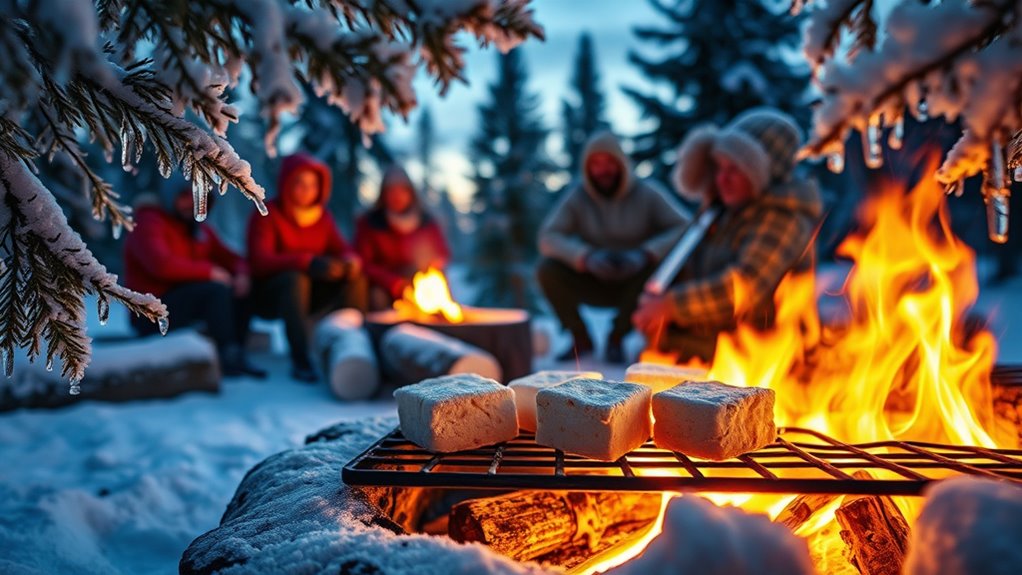

When enjoying a winter campfire and making s’mores, you should set up your fire pit on a non-combustible, stable surface away from overhanging branches and dry leaves. Always keep fire starters, water, and a fire extinguisher close by, and never leave the fire unattended. Manage flames carefully, and use long-handled tools for safety. To stay safe in cold weather, verify the fire is fully extinguished before leaving, and discover more essential safety tips for a worry-free experience.
Key Takeaways
- Choose a stable, non-combustible surface and keep the fire away from overhanging branches and dry leaves.
- Use fire rings or screens to contain sparks, especially on damp or icy ground, and maintain a clear surrounding area.
- Keep flames manageable and never leave the fire unattended, monitoring it continuously during winter conditions.
- Thoroughly extinguish the fire with water, stir ashes, and ensure everything is cool before leaving the site.
- Exercise caution when moving around icy or damp ground to prevent slips and falls during fire pit setup and tending.

There’s something magical about gathering around a winter campfire, even when the air is crisp and the ground is frosty. The glow of the flames against the cold night creates a cozy atmosphere you won’t forget. But as inviting as it is, keeping fire safety in mind is essential to guarantee everyone stays safe while enjoying the outdoors. Before you light up your fire pit, double-check that you have all the outdoor essentials—fire starters, a bucket of water or a fire extinguisher, and a clear, flat area free of overhanging branches or dry leaves. These items help you manage the fire responsibly and react swiftly if needed.
Gather your outdoor essentials—fire starters, water, and a clear area—for a safe winter campfire experience.
When setting up your campfire, choose a safe location away from tents, trees, or any flammable objects. Make sure the ground beneath the fire pit is stable and non-combustible, like gravel or dirt, to prevent sparks from spreading. Keep a close eye on the fire at all times, never leaving it unattended, especially since winter conditions can cause unpredictable flare-ups. If you’re roasting marshmallows or making s’mores, remember that the fire should be manageable—avoid huge flames that can get out of control. Use long-handled tools to tend the fire and keep a safe distance from the flames, so you don’t accidentally burn yourself.
Once you’ve enjoyed the warmth and the delicious s’mores, extinguishing the fire properly is just as important as lighting it. Douse the flames with water, stir the ashes, and ensure everything is cool to the touch before leaving the site. This prevents any lingering sparks from igniting something later. During winter, the ground can be damp or icy, so be cautious when moving around the fire area to prevent slips and falls. Proper outdoor essentials, like a sturdy fire ring or screen, are invaluable in containing sparks, especially when frost makes the ground slippery or uneven. Additionally, understanding fire pit safety guidelines can help you minimize risks and enjoy your outdoor gathering responsibly.
Taking these precautions isn’t just about following rules; it’s about making sure everyone stays safe and the experience remains enjoyable. Fire safety isn’t complicated—it’s about being attentive, prepared, and respectful of nature. With the right outdoor essentials and a mindful approach, you can revel in the warmth of your winter campfire, creating memories that will warm your heart long after the flames die down.

Stanbroil Low Pressure Propane Gas Flame Failure Safety Control Valve Kit Fits for Fireplace, Fire Pit, Heater
Specification: Low Working Pressure Max 1/2 PSI (65mbar), Main Control Valve In & Out with 3/8″ Male Flare…
As an affiliate, we earn on qualifying purchases.
As an affiliate, we earn on qualifying purchases.
Frequently Asked Questions
How Do I Prevent Frostbite When Handling Fire Pit Equipment?
To prevent frostbite when handling fire pit equipment, always wear fire-resistant gloves and insulated tools. Keep your hands warm and dry, avoiding direct contact with cold metal. Limit exposure time and take breaks in a warm area if needed. Stay vigilant for signs of frostbite, such as numbness or skin discoloration. Proper gear and cautious handling help you enjoy your fire safely without risking frostbite.
Can Snow or Ice Affect Fire Pit Safety and Operation?
You might find it surprising, but snow accumulation and ice hazards can substantially impact your fire pit safety and operation. Snow can insulate and cool the fire, making it harder to ignite or maintain, while ice hazards increase the risk of slips and falls when handling equipment. Always clear snow and ice from around your fire pit, guarantee proper footing, and check for slippery surfaces before lighting up, keeping safety your top priority.
What Are the Best Clothing Materials for Winter Campfires?
You should choose moisture-wicking fabrics like wool or synthetic materials for winter campfires, as they keep sweat away from your skin, preventing chills. Use layering techniques, starting with a moisture-wicking base layer, followed by an insulating middle layer, and a waterproof outer layer. This combination guarantees you stay warm, dry, and comfortable while enjoying your campfire, even in cold and snowy conditions.
How Do I Keep Pets Safe During Winter Campfire Outings?
Think of your pets as winter’s brave explorers. To keep them safe, guarantee their pet health stays strong by providing warm blankets and shelter from the cold. Keep outdoor safety in mind by never leaving them unattended near the fire, and always supervise during campfire activities. Bring a leash, and have water and emergency supplies handy. Your attentiveness turns winter adventures into safe, memorable moments for your furry friends.
Are There Specific Fire Pit Models Recommended for Cold Weather Use?
For cold weather use, you should look for winter fire pits designed with good fire pit insulation, which helps retain heat and prevent cold air from affecting your fire. These winter fire pits often feature insulated walls or double-walled construction, making them more efficient in chilly conditions. Choose models with durable materials like steel or cast iron, and verify they’re rated for outdoor winter use to enjoy safe, cozy fires even in freezing temperatures.

Fire Pit Spark Screen, Fire Pit Screen 36 Inch Round with Handle & Poker, Collapsible Heavy Duty Mesh Fire Pit Cover Fire Pit Lid for Outdoor/Patio/Backyard/RV Camping/Beach
Upgraded Material is More Sturdy: The round fire pit screen cover is made of stainless steel and equipped…
As an affiliate, we earn on qualifying purchases.
As an affiliate, we earn on qualifying purchases.
Conclusion
As you sit by the crackling fire, wrapped in your cozy blanket, it’s easy to forget the importance of safety. Just like the unexpected warmth from a well-tended fire, safe practices keep your winter campfire enjoyable and secure. When you carefully watch the flames, you create a perfect scene—smoke drifting into the cold air, s’mores melting, and memories warming your heart. With vigilance, every cozy moment becomes a safe, unforgettable winter adventure.

Heavy Duty 32” Long Fireplace Fire Pit Campfire Poker Stick and 26” Fireplace Tongs Tool Sets, Log Grabber, Rust Resistant Black Finish Camping Fireplace Tools for Indoor/Outdoor
【Sturdy & Durable】The fireplace tool sets is made of high stronger wrought Iron Steel materials, so that it's…
As an affiliate, we earn on qualifying purchases.
As an affiliate, we earn on qualifying purchases.

Kidde Multi Purpose Fire Extinguisher for Home, Office, Dorm, Residential, 1A10BC, 2 Pack, manual
Reliable Fire Protection: Stop basic home fires involving trash, wood, paper, liquids, gases, and electrical equipment
As an affiliate, we earn on qualifying purchases.
As an affiliate, we earn on qualifying purchases.