To pick the right extension cord for power-hungry tools, focus on selecting a thicker gauge that matches your tool’s wattage and amperage needs to prevent overheating and voltage drops. Keep the cord as short as possible to maintain efficiency and safety. Opt for grounded, weather-resistant cords if you’ll use them outdoors. Pay attention to eco-friendly options to reduce environmental impact. Should you want to guarantee peak performance and safety, there’s more to take into account below.

Get business pricing on tools and workshop supplies
- Business-only prices and quantity discounts
- Tax-exempt purchasing
- Multiple users, one account, clear invoices
Key Takeaways
- Match the cord’s gauge to your tool’s wattage and amperage requirements to prevent voltage drops and overheating.
- Use thicker, lower gauge cords (such as 10 or 12 AWG) for high-power tools to ensure safe and efficient operation.
- Keep cord length as short as possible to minimize voltage loss and maintain optimal power delivery.
- Choose grounded, heavy-duty, weather-resistant cords for outdoor or demanding environments.
- Prioritize eco-friendly cords made from recyclable or biodegradable materials to support sustainability.
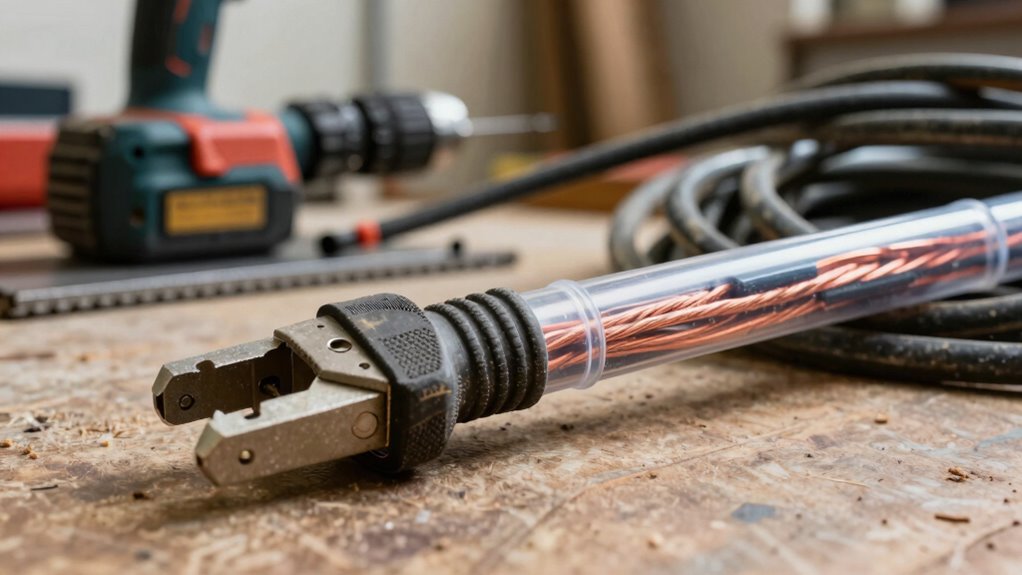
Have you ever struggled to find the right extension cord for your needs? It’s a common dilemma, especially when you’re working with power-hungry tools that demand a reliable and safe connection. The key is understanding how to choose an extension cord that not only powers your tools effectively but also prioritizes cord safety and minimizes environmental impact. First, consider the power requirements of your tools. Heavy-duty equipment needs thicker, higher-gauge cords that can handle increased current without overheating. Using a cord with a lower gauge number means better capacity and safety, reducing the risk of electrical fires or shorts. Always check the tool’s wattage or amperage ratings and match or exceed these specifications with the right extension cord.
Next, think about cord safety. An extension cord that’s too thin or too long can cause voltage drops, leading to inefficient operation or damage to your tools. To avoid that, opt for a cord with the appropriate gauge and length—shorter cords are generally safer and more efficient. Also, look for cords with grounded plugs and heavy-duty insulation. A grounded extension cord adds an extra layer of protection against electrical faults that could cause shocks or fires. Proper insulation and weather-resistant materials are essential if you’re working outdoors or in damp environments. Never overload an extension cord or connect multiple cords end-to-end unless they’re rated for such use, as this increases the risk of overheating and fire hazards. Additionally, selecting cords made with recyclable materials can help lessen environmental impact and promote sustainability. Using cords with environmentally friendly features can further reduce your ecological footprint and support sustainable practices. Moreover, opting for cords with energy-efficient designs can contribute to reducing overall energy consumption during operation.
When selecting a cord, don’t overlook environmental impact. Many traditional extension cords are made with plastics and materials that can harm the environment if disposed of improperly. Look for eco-friendly options that use recyclable materials or have energy-efficient designs. Some manufacturers now produce cords with biodegradable plastics or sustainable manufacturing practices, helping you reduce your ecological footprint. Proper usage and maintenance extend the life of your extension cords, reducing waste. Store cords properly, avoid damaging the insulation, and replace worn or frayed cords immediately to prevent environmental hazards and safety risks. Being aware of the environmental impact of your tools and accessories encourages more responsible choices. Additionally, understanding the power capacity of your cords ensures that you select the most suitable option for your work, preventing overloads and safety issues.
heavy-duty extension cords for power tools
As an affiliate, we earn on qualifying purchases.
As an affiliate, we earn on qualifying purchases.
Frequently Asked Questions
Can I Use a Longer Extension Cord Without Power Loss?
Yes, you can use a longer extension cord, but be aware of voltage drop that occurs with increased cord length. As the cord lengthens, resistance rises, which reduces voltage at the tool’s plug. To mitigate this, choose a heavy-duty cord with thicker gauge wire. Always check the recommended maximum length and gauge for your power-hungry tools to ensure they receive adequate power without risking damage or performance issues.
What Safety Features Should I Look for in Heavy-Duty Cords?
You absolutely need heavy-duty cords with top safety features like voltage stability and insulation quality. Imagine a cord that can withstand a lightning strike—well, almost! Look for cords with reinforced insulation to prevent shocks and overheating, and guarantee they have built-in surge protection. These safety features keep your tools powered safely and reliably, preventing dangerous electrical mishaps and ensuring your project stays on track without risking your safety.
Are There Extension Cords Designed Specifically for Outdoor Use?
Yes, there are extension cords specifically designed for outdoor use. These cords feature durable insulation and weather-resistant jackets to withstand outdoor conditions, ensuring safety and longevity. When using outdoor extension cords, keep indoor safety in mind by avoiding damage and proper cord storage when not in use. Choose cords with heavy-duty features, like reinforced connectors and grounded plugs, to handle power-hungry tools safely outdoors.
How Do I Determine the Correct Gauge for My Tools?
You determine the correct gauge for your tools by considering the gauge importance and wire thickness. Thicker wire (lower gauge number) handles higher power loads without overheating. For power-hungry tools, opt for a lower gauge, like 12 or 14. Check your tool’s power requirements and match them with the gauge that can safely support that load. This guarantees safe, efficient operation and minimizes the risk of voltage drops or damage.
Can Multiple Extension Cords Be Safely Connected?
You can connect multiple extension cords, but you need to prioritize indoor safety and proper cord storage. Always guarantee the combined length doesn’t overload the cords or cause voltage drops. Use heavy-duty cords designed for multiple connections, and avoid daisy-chaining thin, low-gauge cords. Keep connections off the floor to prevent tripping hazards, and store cords properly when not in use to maintain safety and longevity.
outdoor weather-resistant extension cords
As an affiliate, we earn on qualifying purchases.
As an affiliate, we earn on qualifying purchases.
Conclusion
Choosing the right extension cord is like picking the perfect key for a lock—you need the right fit to release your tools’ full potential. By considering wattage, gauge, and length, you guarantee your power-hungry tools operate smoothly without hiccups. Don’t settle for a flimsy connection; instead, select an extension cord that acts as a sturdy bridge, delivering reliable energy and keeping your projects on course. With the right cord, you’re ready to conquer any task ahead.
eco-friendly recyclable extension cords
As an affiliate, we earn on qualifying purchases.
As an affiliate, we earn on qualifying purchases.
10 gauge extension cords for high power tools
As an affiliate, we earn on qualifying purchases.
As an affiliate, we earn on qualifying purchases.
Fall yard work Picks
leaf blowers
As an affiliate, we earn on qualifying purchases.