To cut metal brackets and hardware cleanly, select the right tools like hacksaws, angle grinders, or snips suited for the material’s thickness and hardness. Secure the item firmly with clamps or a vice on a stable surface, and wear safety glasses and gloves to protect yourself. Use steady, controlled movements, cutting slowly for precise edges and minimal burrs. Proper technique and safety precautions guarantee a clean cut—keep exploring to master the details involved.

Get business pricing on tools and workshop supplies
- Business-only prices and quantity discounts
- Tax-exempt purchasing
- Multiple users, one account, clear invoices
Key Takeaways
- Select the appropriate cutting tool, such as a hacksaw or angle grinder, based on the metal’s thickness and hardness.
- Secure the bracket firmly with clamps or a vice on a stable surface to prevent slipping during cutting.
- Use steady, controlled movements to make precise cuts, avoiding excessive force that could cause jagged edges.
- Wear safety glasses and gloves to protect against shards and sharp edges during and after cutting.
- Smooth cut edges with a file or deburring tool for a clean, professional finish.
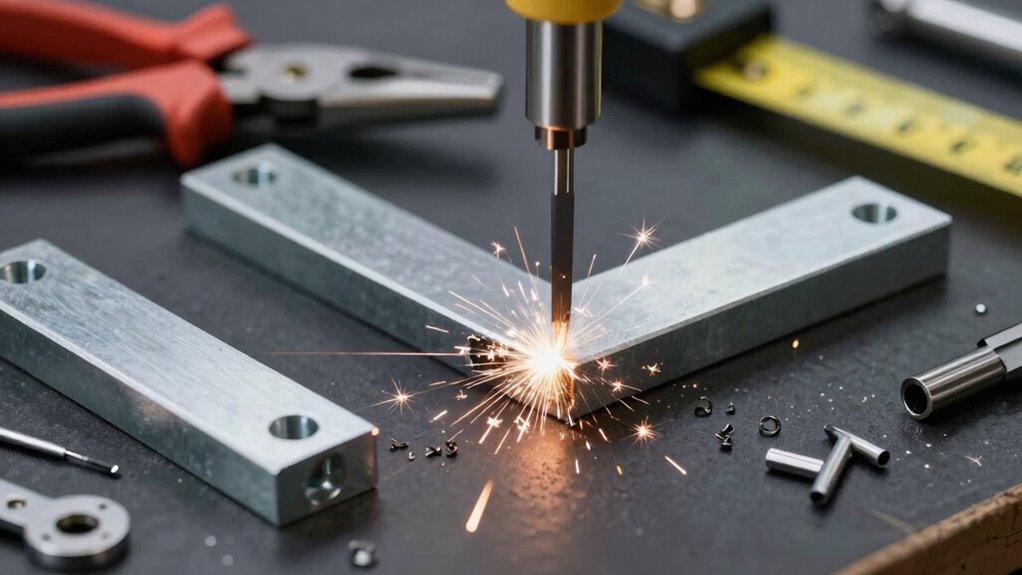
Cutting metal brackets and hardware can be straightforward if you use the right tools and techniques. The key to a clean cut lies in choosing the proper equipment and paying attention to safety. Before you start, confirm you’re familiar with tool safety guidelines to prevent accidents. Always wear safety glasses to protect your eyes from metal shards and gloves to guard your hands. Keep your workspace clear of clutter, and work on a stable surface to maintain control during cutting.
Use proper tools, prioritize safety, and work on a stable surface for clean, precise metal cuts.
The material’s flexibility plays a significant role in how you approach cutting. Thinner, more pliable metals are easier to cut and require less force, but thicker or hardened metals demand more powerful tools. Understanding the material’s properties allows you to select the appropriate cutting device, whether it’s a hacksaw, angle grinder, or snips. For softer metals like aluminum or thin steel, hand tools such as aviation snips or a fine-tooth hacksaw can produce precise, clean edges. When working with tougher materials, power tools with appropriate blades become necessary, but be cautious about the tool safety measures associated with these devices.
Choosing the right blade or cutting disc is essential for a clean, accurate cut. For example, a high-speed steel blade or a diamond-tipped blade can handle harder metals without dulling quickly. Make sure the blade’s size and type match your tool and the material you’re cutting. Secure the metal firmly in place using clamps or a vice to prevent slipping, which could lead to uneven cuts or injury. Take your time and use steady, controlled movements rather than rushing through the cut. This approach minimizes the risk of jagged edges and ensures a cleaner finish. Additionally, understanding the material’s properties helps in selecting the most suitable cutting method and tool. Proper technique also involves being aware of the metal’s hardness, which influences the type of blade or tool you should use for an optimal cut. Furthermore, knowing how the material’s flexibility affects the cutting process can help you choose the best approach for different metals. It’s also beneficial to consider the cutting technique to achieve the most precise results.
When using power tools, always follow the manufacturer’s instructions, especially regarding safety precautions. Keep your hands clear of the cutting path, and avoid applying excessive force, which can cause the tool to bind or kick back. If you’re working with material that tends to produce sparks or debris, consider wearing a dust mask or respirator. Additionally, it’s advisable to use proper ventilation to prevent inhalation of dust or fumes generated during cutting. After you finish, smooth any rough edges with a file or deburring tool to achieve a professional, clean look. Proper technique, combined with attention to tool safety and understanding material flexibility, will help you cut metal brackets and hardware efficiently and accurately every time.
As an affiliate, we earn on qualifying purchases.
Frequently Asked Questions
What Safety Gear Is Recommended When Cutting Metal Brackets?
When cutting metal brackets, you should wear personal protective equipment like safety goggles to protect your eyes from sparks and metal shards, and gloves to prevent cuts. A dust mask or respirator is essential to safeguard your lungs from fumes and dust. Also, make certain proper ventilation in your workspace to avoid inhaling harmful particles. These safety measures keep you protected and make your work safer and more efficient.
Can I Cut Metal Brackets With a Regular Household Saw?
You might think a regular household saw can handle metal brackets, but it’s a risky move. Metal saws, like hacksaws or reciprocating saws with the right blades, are designed for this task. Cutting techniques matter—apply steady pressure and use proper safety gear. Without the right tool and technique, you’ll struggle, risk damaging your saw, or worse, injure yourself. For clean, safe cuts, stick to tools meant for metal.
How Do I Prevent Metal Splinters During Cutting?
To prevent metal splinters during cutting, you should wear protective gloves to shield your hands. Use proper cutting techniques, like applying steady pressure and avoiding rough movements, to reduce splintering. Keep your blades sharp, and cut slowly along marked lines for cleaner results. Additionally, support the metal firmly to prevent vibrations that cause splinters, ensuring a safer, cleaner cut every time.
What Is the Best Way to Measure and Mark Metal for Cutting?
You’ll find that precise measuring accuracy and marking techniques make all the difference when cutting metal. Start by using a reliable ruler or a tape measure, and double-check your measurements before marking. Lightly scribe your lines with a metal marker or a punch to guarantee clarity. Align your measuring tools carefully, and use a straight edge for clean, straight marks. This way, your cuts will be accurate and neat every time.
How Do I Smooth Edges After Cutting Metal Brackets?
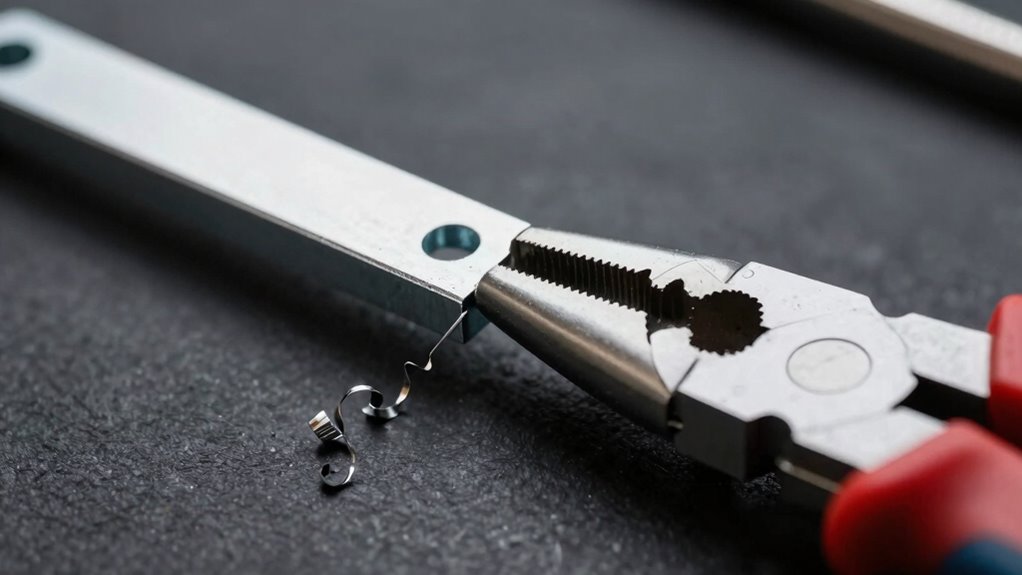
To smooth edges after cutting metal brackets, you should start with edge finishing by using a metal file or a deburring tool to remove sharp burrs. For finer results, switch to sandpaper or a grinding wheel. Make sure to work carefully along the edges, applying even pressure. This process will help you achieve clean, smooth edges, reducing the risk of injury and ensuring your brackets fit perfectly.
angle grinder with metal cutting disc
As an affiliate, we earn on qualifying purchases.
As an affiliate, we earn on qualifying purchases.
Conclusion
By mastering meticulous methods and maintaining a mindful mindset, you’ll make clean cuts on metal brackets and hardware with confidence. Careful calibration and consistent caution create a cutting culture characterized by accuracy and artistry. With patience, precision, and proper tools, you’ll conquer corrosion and chaos, crafting clean, crisp results every time. Remember, a calm, committed approach transforms tedious tasks into triumphant triumphs, turning metal mayhem into mastery—making your project polished, professional, and perfectly precise.
As an affiliate, we earn on qualifying purchases.
As an affiliate, we earn on qualifying purchases.
Fall yard work Picks
leaf blowers
As an affiliate, we earn on qualifying purchases.