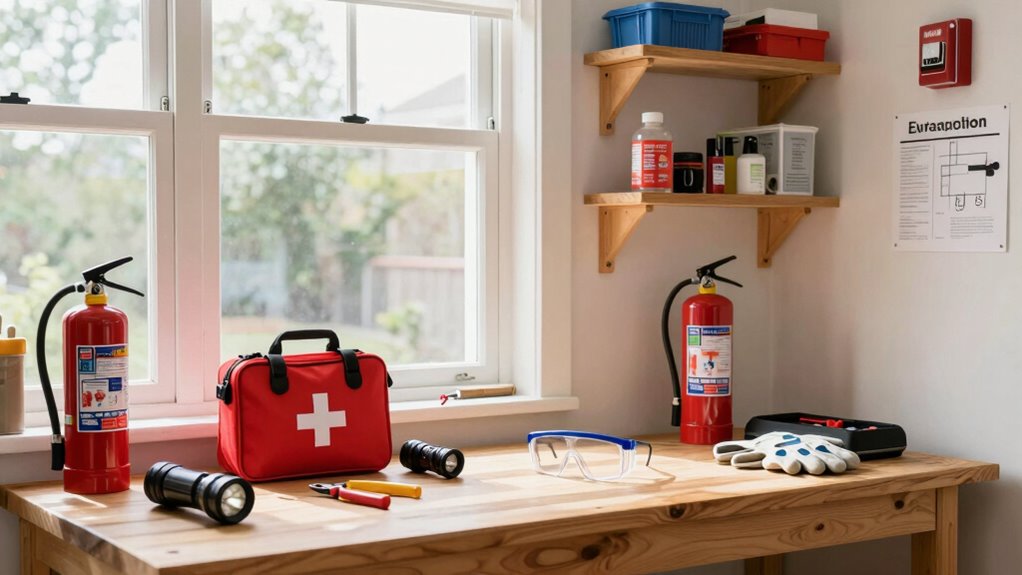

To keep your home workshop safe, you need proper safety equipment like fire extinguishers, first aid kits, and protective gear. Create a clear emergency action plan that covers different scenarios like fires or injuries, and practice it regularly. Install alarms and designate safe zones for quick access during emergencies. Make sure your emergency contacts are current and easily accessible. Staying prepared enhances your safety and confidence—keep going to discover how to build an all-encompassing plan.

Get tools and workshop supplies delivered free — and shop member deals
- Fast, free delivery on millions of items
- Access to Prime Big Deal Days deals on October 6–7
- Prime Video, Amazon Music and more included
Key Takeaways
- Clearly define emergency procedures for fires, injuries, and electrical shocks, including evacuation and first aid steps.
- Ensure safety equipment like extinguishers, first aid kits, and alarms are accessible, functional, and regularly maintained.
- Maintain an updated list of emergency contacts and ensure all household members know how to access it.
- Designate and mark safe zones with unobstructed access, and install warning devices like smoke and CO detectors.
- Regularly review, practice drills, and update the emergency plan to adapt to workshop changes and hazards.
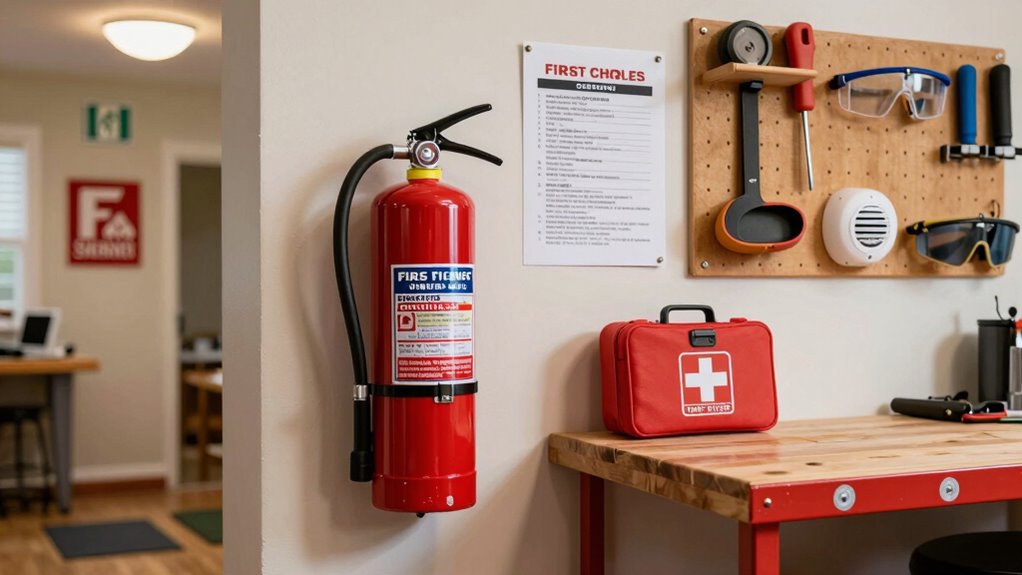
Having a emergency plan for your home workshop is vital to guarantee safety and quick response during unexpected incidents. When accidents happen, you need to act swiftly and confidently, which is why preparing in advance makes all the difference. One of the first steps is making certain you have the right safety equipment readily accessible. This includes items like fire extinguishers suitable for different types of fires, first aid kits stocked with essentials, safety goggles, ear protection, and gloves. These tools are your first line of defense, helping to minimize injuries and prevent minor mishaps from escalating.
You should also establish clear emergency contacts and keep them in an easy-to-reach place. This list should include local emergency services like fire, police, and medical assistance, as well as any relevant contacts for neighbors, family members, or friends who can help if you’re unable to respond. Make sure everyone in your household knows where to find this list and understands how to use it. Having a quick way to get help can save valuable minutes during a crisis, whether it’s a fire, chemical spill, or injury.
In addition to safety equipment and emergency contacts, you need to develop a straightforward action plan. This plan should detail what to do in different scenarios, such as a fire, electrical shock, or injury. For example, you might include steps like shutting off power sources, evacuating the workspace, or administering first aid. Practice this plan regularly with everyone involved so that responses become second nature. Being familiar with your emergency procedures reduces panic and confusion when it matters most. Regular training and simulation of emergency procedures can greatly improve your response time and effectiveness. Incorporating proper safety measures based on your workshop’s specific hazards can further enhance your preparedness. Additionally, understanding biodiversity and how to prevent environmental hazards can be an important part of comprehensive safety planning.
Another vital aspect is identifying safe zones within your workshop. These are areas where you can retreat in case of a fire or chemical spill, away from immediate danger. Make sure these zones are clearly marked and free of obstructions. Also, consider installing smoke detectors and carbon monoxide alarms, testing them regularly to ensure they work properly. These devices provide early warnings, giving you more time to react appropriately.
Additionally, understanding the importance of safety equipment and how to use it properly can make a significant difference during a crisis. Regularly inspecting and maintaining your safety tools ensures they are ready when needed. Finally, review and update your emergency plan periodically. As your workshop evolves or your equipment changes, so should your safety procedures. Regular checks ensure your safety equipment remains functional and your contacts are current. By taking these steps—assembling the right safety equipment, maintaining accessible emergency contacts, creating clear action plans, and practicing them—you build a complete safety system that protects you and anyone else in your home workshop during unexpected incidents.
As an affiliate, we earn on qualifying purchases.
Frequently Asked Questions
How Often Should I Review My Emergency Plan?
You should review your emergency plan at least once a year, especially after significant changes or incidents. Regularly practicing fire drills helps identify gaps, and updating your plan guarantees everyone knows what to do. Incorporate first aid refreshers during these reviews, so you’re prepared for injuries or accidents. Frequent reviews keep your plan current, effective, and ready to protect you and your workshop in any emergency situation.
What Specific Hazards Should I Prioritize in My Workshop?
You should prioritize fire safety and chemical hazards in your workshop. Make certain fire extinguishers are accessible and regularly maintained, and keep a clear escape route. For chemical hazards, store chemicals properly, label them clearly, and use protective gear when handling dangerous substances. Recognizing these hazards helps you prevent accidents and respond quickly if an emergency occurs, keeping your workshop safe for everyone.
How Do I Train Family Members on Emergency Procedures?
You should organize regular family drills to practice emergency procedures, ensuring everyone knows what to do. Use clear safety communication, like discussing escape routes and safety signals, so family members feel confident during an emergency. Encourage questions and feedback after drills to address concerns. Consistent training helps reinforce safety habits, making sure everyone reacts quickly and calmly, minimizing risks and ensuring your workshop’s safety plan is effective and understood by all.
What Emergency Supplies Are Essential for a Home Workshop?
Imagine your workshop as a fortress—what essentials keep it safe? You need safety gear like goggles, gloves, and ear protection, ready for any mishap. Fire extinguishers are crucial for quick response to fires, preventing disasters from spiraling out of control. Keep a first aid kit nearby, and guarantee all supplies are easily accessible. These essentials create a safety net, helping you respond swiftly and confidently during emergencies.
How Can I Ensure My Plan Complies With Local Regulations?
You can guarantee your plan complies with local regulations by consulting your local safety codes and building authorities. Incorporate safety signage to clearly mark hazards and emergency exits, and follow fire prevention guidelines to reduce risks. Regularly review updates to regulations and adjust your plan accordingly. Document your compliance measures, and consider consulting safety professionals or local agencies to verify your plan aligns with all legal requirements.
As an affiliate, we earn on qualifying purchases.
Conclusion
Having an emergency plan for your home workshop is like having a safety net woven with care and foresight. It guarantees you’re prepared for unexpected incidents, turning chaos into calm. By knowing what to do and where to go, you can protect yourself and your loved ones when it matters most. Don’t wait for a storm to hit—build your safety net now, so you’re ready to catch any surprises that come your way.
As an affiliate, we earn on qualifying purchases.
carbon monoxide detector for workshop
As an affiliate, we earn on qualifying purchases.
As an affiliate, we earn on qualifying purchases.
Fall yard work Picks
leaf blowers
As an affiliate, we earn on qualifying purchases.