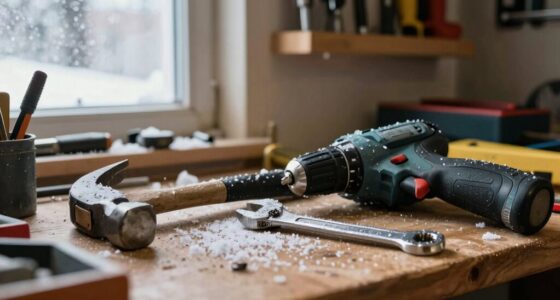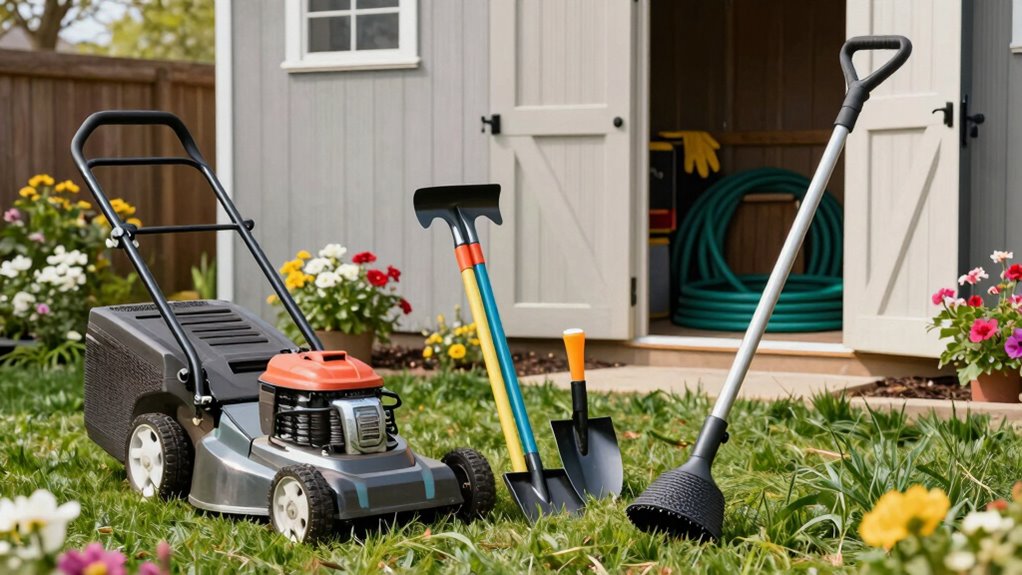
To get your yard equipment ready for spring, start by inspecting all tools and machines for rust, dull blades, or damage. Sharpen blades, replace worn parts, and clean off dirt and debris. Check oil and fuel levels, and service larger equipment like mowers and hoses. Store everything properly after cleaning to prevent damage. Following these steps will help your tools perform smoothly all season. For detailed tips on each step, keep exploring for more helpful advice.

Get business pricing on tools and workshop supplies
- Business-only prices and quantity discounts
- Tax-exempt purchasing
- Multiple users, one account, clear invoices
Key Takeaways
- Inspect and clean all tools and equipment, sharpening blades and replacing damaged parts for optimal performance.
- Change mower oil, sharpen blades, and clean the underside of mower decks to ensure efficient operation.
- Check and refill fuel tanks with fresh fuel to prevent engine issues during spring use.
- Inspect hoses, sprinklers, and watering cans for leaks or blockages, replacing worn parts for effective watering.
- Organize and store equipment properly after maintenance to prevent damage and ensure safety for spring yard work.
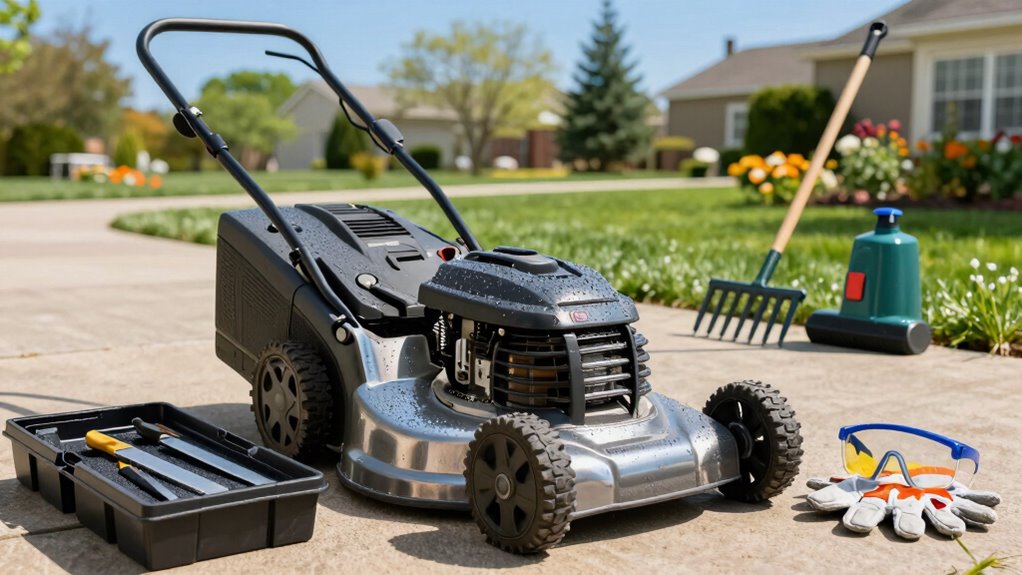
Spring is the perfect time to get your yard equipment ready for the busy season ahead. As the weather warms up, you’ll want to guarantee your garden tools are in top shape so you can tackle your yard work efficiently. Proper equipment maintenance now will save you time and effort once you’re out in the yard. Start by inspecting your garden tools—shovels, rakes, pruners, and hoes—and look for signs of rust, dull blades, or broken handles. Sharpen blades and replace any damaged parts to keep your tools working smoothly. Clean off dirt and debris with a wire brush or a damp cloth, then dry them thoroughly to prevent rust. Applying a light coat of oil to metal parts will help protect your tools from corrosion and extend their lifespan. Regular maintenance not only improves their performance but also ensures a safer working environment.
Next, move on to your larger equipment like lawnmowers, trimmers, and blowers. Equipment maintenance is key to keeping these machines running reliably throughout the season. Check the oil levels, change the oil if necessary, and replace air filters to guarantee top performance. If your mower has a dull blade, sharpen it or replace it altogether. Clean the underside of the deck to remove grass clippings and prevent buildup that can hinder cutting efficiency. For string trimmers and blowers, inspect cords, blades, and nozzles for any damage and replace or repair them as needed. Be sure to check fuel tanks and add fresh fuel, especially if stored for a while, to prevent engine problems. Additionally, understanding equipment maintenance can help prolong the lifespan of your yard tools and machinery. Regularly performing preventive maintenance can also help you catch potential issues early before they turn into costly repairs. Incorporating routine inspections into your spring chores will ensure your equipment stays in optimal condition all season long. Taking steps to properly store your equipment at the end of the season further safeguards your tools and machinery from damage during the off months.
Don’t forget to inspect and clean your garden hoses, sprinklers, and watering cans. Clear out any blockages or leaks so your watering system works efficiently when you need it. This is also a good time to replace worn-out hoses or sprinkler heads. If you have a shed or storage area, organize your tools and equipment so you can easily access what you need and avoid unnecessary damage. Properly storing your gear, especially after cleaning and maintenance, ensures it stays in good condition for years to come. Taking a few moments to safety precautions during storage can prevent accidents and extend the life of your equipment.
As an affiliate, we earn on qualifying purchases.
Frequently Asked Questions
How Often Should I Perform Maintenance on My Yard Equipment?
You should perform maintenance on your yard equipment every 20-25 hours of use or at least once a season. Regular upkeep improves fuel efficiency and extends equipment durability. Check and change the oil, clean or replace filters, sharpen blades, and inspect for wear and tear. Proper maintenance guarantees your equipment runs smoothly, saving you time and money, and keeps your yard work efficient and hassle-free throughout the season.
What Safety Precautions Should I Take Before Starting Yard Equipment?
Before starting your yard equipment, you should prioritize safety. Imagine a homeowner rushing to mow their lawn without proper precautions—risking injury. Always wear protective gear like gloves, goggles, and hearing protection. Conduct safety checks to guarantee blades are sharp, guards are in place, and there are no fuel leaks. Taking these steps minimizes accidents, keeps you safe, and ensures your equipment operates smoothly for spring yard work.
Can I Use Household Tools to Repair My Yard Equipment?
Yes, you can often use household tools for DIY repairs on your yard equipment, but you need to check tool compatibility first. Make certain the tools you’re using fit the fasteners and parts of your equipment to avoid damage. Using the right household tools can save you money and time, but always follow safety precautions, and if you’re unsure, consult the equipment manual or a professional to prevent mishaps.
How Do I Store Yard Equipment Properly During the Off-Season?
During the off-season, you should use seasonal storage to keep your yard equipment safe. Clean and dry tools thoroughly, then store them in a sheltered, dry place to guarantee equipment protection. Use covers or cases for added protection from dust and moisture. Store fuel safely or drain it to prevent leaks or damage. Proper storage helps maintain your equipment’s performance and extends its lifespan, so your yard tools are ready for spring.
What Are Signs That My Equipment Needs Professional Servicing?
You’ll know your equipment needs professional servicing if you notice difficulty starting, unusual noises, or inconsistent performance. Check for signs like dull blades that require sharpening or equipment that runs rough despite proper lubrication. If lubrication doesn’t improve operation or blades remain dull after sharpening, it’s time to call in a professional. Regular servicing guarantees your equipment stays in top shape, making your spring yard work smoother and more efficient.
As an affiliate, we earn on qualifying purchases.
Conclusion
Getting your yard equipment ready for spring guarantees a smooth start to your outdoor projects. Regular maintenance and a little preparation go a long way in extending the life of your tools and making your yard work easier. Remember, “A stitch in time saves nine”—taking the time now to prep your equipment prevents bigger problems later. With everything in top shape, you’ll enjoy a lush, vibrant yard all season long.
As an affiliate, we earn on qualifying purchases.
string trimmer replacement parts
As an affiliate, we earn on qualifying purchases.
As an affiliate, we earn on qualifying purchases.
Halloween Picks
halloween
As an affiliate, we earn on qualifying purchases.