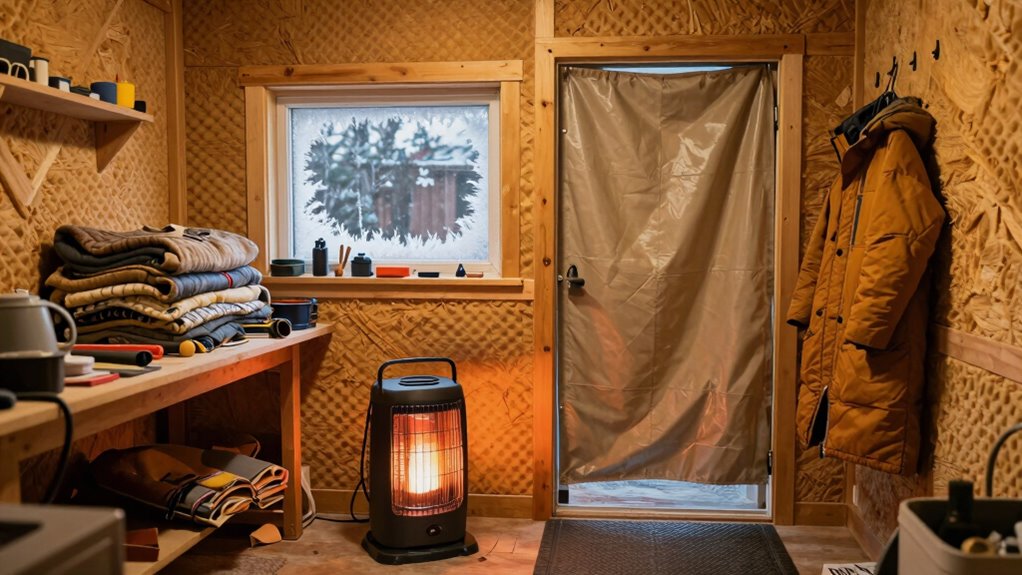

To winter-proof your workshop without a full remodel, start by sealing gaps around windows and doors with weatherstripping and caulk to block drafts. Add insulation like foam boards or fiberglass batts to walls and insulate floors with rugs or mats. Use portable heaters with thermostats for quick warmth, and guarantee good ventilation to reduce moisture. Keep tools stored away from exterior walls and monitor humidity levels. For more tips, keep exploring how these small changes can make a big difference.

Get business pricing on tools and workshop supplies
- Business-only prices and quantity discounts
- Tax-exempt purchasing
- Multiple users, one account, clear invoices
Key Takeaways
- Seal gaps around windows, doors, and exterior walls with weatherstripping and caulk to prevent cold air infiltration.
- Insulate walls, floors, and storage areas using foam boards, fiberglass batts, or rugs for added warmth.
- Use portable electric or space heaters with thermostats to maintain consistent indoor temperatures.
- Ensure proper ventilation and moisture control to prevent condensation and mold buildup.
- Store tools indoors or away from exterior walls to protect them from cold and moisture damage.
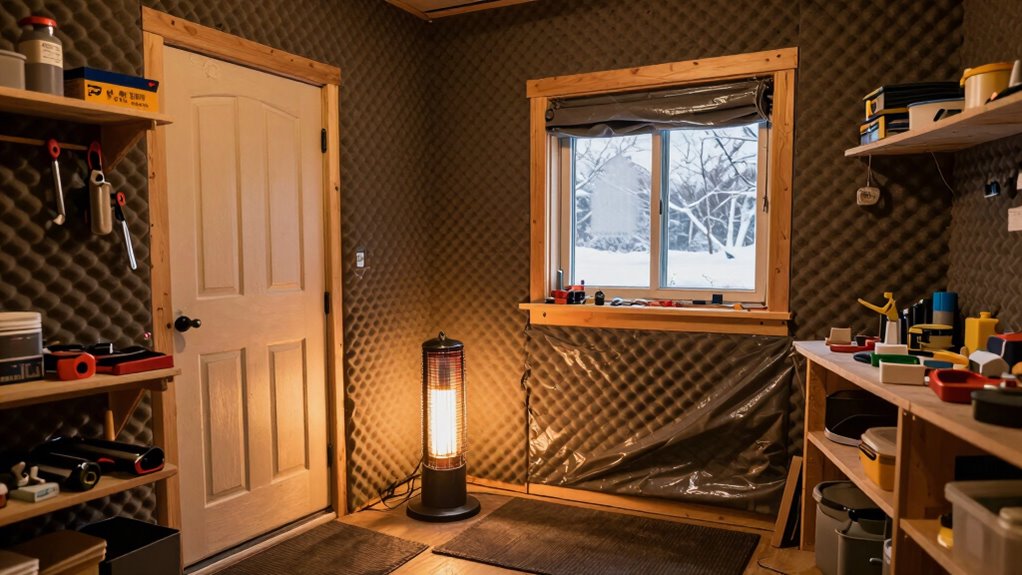
Winter can bring harsh temperatures and moisture that threaten to damage your workshop and its tools. Cold air can cause metal parts to become brittle, and dampness invites rust and mold. To keep your workspace safe and functional, you need to take proactive steps. One of the most effective ways to do this is through insulation techniques. Adding insulation to your walls, especially in areas where heat escapes, can make a significant difference. You might consider installing foam board or fiberglass batts in the walls, or sealing gaps around windows and doors with weatherstripping. These measures help retain heat and prevent cold drafts from sneaking in, creating a warmer environment that’s less susceptible to moisture buildup.
Alongside insulation techniques, choosing the right heating solutions is vital. Portable electric heaters are convenient and easy to operate, providing immediate warmth without extensive installation. Space heaters with thermostats give you control over the temperature, so you can maintain a stable environment for your tools and materials. If your workshop is larger, consider investing in a small propane or kerosene heater—just make sure it’s properly ventilated to avoid dangerous fumes. For a more permanent solution, installing a small electric baseboard heater or a wall-mounted unit can keep the space consistently warm throughout the winter months. Proper ventilation is also essential to prevent the buildup of fumes and excess moisture, which can compromise both safety and comfort. Ensuring good air circulation can help to evenly distribute heat and reduce condensation.
Sealing your workshop is equally important. Use weatherstripping around windows and doors, and consider applying caulk to any cracks or gaps that let cold air in. This not only keeps your workshop warmer but also reduces energy costs by preventing heat loss. Additionally, laying down rubber mats or rugs on the floor can add an extra layer of insulation, helping to keep the cold out and the warmth in. You should also protect your tools by storing them in cabinets or on shelves that are away from exterior walls, where temperature fluctuations can be more severe. Proper insulation techniques can further enhance your workshop’s resistance to winter weather and improve energy efficiency. Incorporating insulation materials into your setup can also contribute to a more consistent temperature, making your workspace more comfortable.
Furthermore, maintaining proper humidity control can help prevent moisture-related issues like rust and mold, which are common during winter. Regularly check your workshop for drafts, leaks, and moisture issues, addressing them promptly. Using a dehumidifier or moisture absorber can be a simple yet effective way to manage indoor humidity levels. With these insulation techniques and heating solutions, you’ll create a more stable environment that shields your workshop from winter’s worst effects, allowing you to work comfortably and keep your tools in top condition all season long.
Products Worth Considering

Dyson W1 PencilWash Wet and Dry Cleaner with Dok Cordless Wet Floor Cleaner

Philips Hue Secure Starter Kit with Contact Sensors, Motion Sensor, Bridge, and Color Smart Bulbs

Philips Hue White and Color Ambiance Smart Light Starter Kit, 2 A19 Bulbs with Hub
As an affiliate, we earn on qualifying purchases.
Frequently Asked Questions
Can Insulation Alone Prevent All Winter Damage in My Workshop?
Insulation alone can’t prevent all winter damage in your workshop, but it offers significant benefits. It helps retain heat, reducing your energy bills and keeping the space warmer. Proper insulation also aids in draft prevention, which is vital for maintaining a consistent temperature. However, to fully winter-proof, consider sealing gaps, insulating windows, and adding heating solutions. Combining these steps maximizes protection against cold weather and prevents potential damage.
What’s the Best Way to Prevent Pipes From Freezing?
To prevent pipes from freezing, you should insulate your pipes, keep them warm, and maintain consistent heat. Use pipe insulation to wrap vulnerable sections, let faucets drip slightly to prevent pressure buildup, and open cabinet doors to let warmer air reach pipes. Regularly check for drafts, seal gaps, and consider adding a space heater. These frozen prevention methods guarantee your pipes stay unfrozen during harsh winter conditions.
How Often Should I Check for Drafts During Winter?
You should check for drafts regularly throughout winter, ideally once a month, especially during seasonal weatherproofing. Keep an eye on ventilation maintenance to guarantee no gaps are letting in cold air. Use weatherstripping or caulking to seal any leaks you find. Regular checks help maintain a warm, energy-efficient workshop, preventing drafts from causing issues like frozen pipes or uncomfortable working conditions during the cold months.
Are There Affordable Heating Options Suitable for Small Workshops?
Are affordable heating options suitable for your small workshop? Absolutely. Portable heaters offer a quick, budget-friendly solution to keep your space warm. Pair them with budget insulation like foam boards or weatherstripping to maximize efficiency. But beware—some heaters can be energy hogs or pose safety risks. Choose models with safety features and energy-efficient ratings to stay warm without breaking the bank or risking safety.
How Do I Protect Delicate Tools From Cold Damage?
To safeguard delicate tools from cold damage, start by organizing your tools properly, keeping them off the floor and in dry, insulated cabinets. Use humidity control methods like silica gel packs or a dehumidifier to prevent moisture buildup, which can cause rust and warping. Regularly check and maintain your tools, applying protective coatings if necessary. Proper storage and humidity management guarantee your tools stay in good condition despite the cold.
Conclusion
By taking these simple steps, you can keep your workshop warm and functional all winter long without a costly remodel. Remember, according to the Department of Energy, proper insulation can save you up to 20% on heating costs. So, sealing drafts, insulating pipes, and adding weatherstripping isn’t just about comfort—it’s about saving money too. Stay proactive, and your workshop will be ready to work, no matter how cold it gets outside.