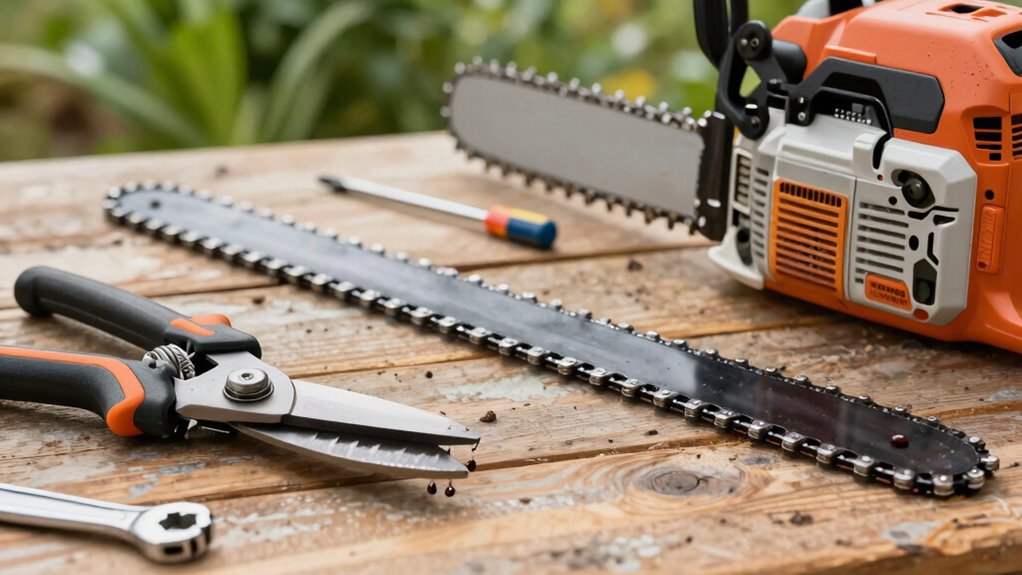

To tune up your cutting equipment before the landscaping season, start by sharpening the blades for clean, precise cuts. Check and change the oil, clean or replace air filters, and inspect spark plugs for wear. Tighten any loose bolts and replace worn belts or damaged hoses. Clean your equipment thoroughly and lubricate moving parts. Taking these steps now helps prevent breakdowns and guarantees peak performance. Keep going to discover more useful tips for ideal equipment care.

Get business pricing on tools and workshop supplies
- Business-only prices and quantity discounts
- Tax-exempt purchasing
- Multiple users, one account, clear invoices
Key Takeaways
- Sharpen blades using a quality file or dedicated sharpening tool for clean, precise cuts.
- Perform engine checks: change oil, replace air filters, and inspect spark plugs.
- Tighten loose bolts, replace worn belts, and inspect hoses for damage.
- Clean equipment thoroughly, removing dust and debris to prevent buildup.
- Lubricate moving parts and verify safety features for optimal performance and safety.
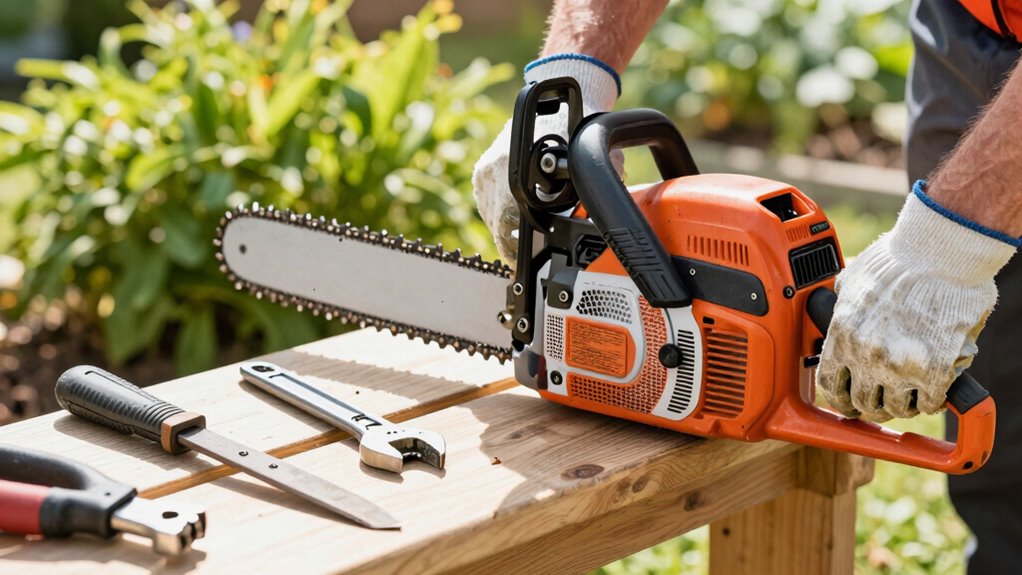
Have you ever wondered how to guarantee your cutting equipment performs at its best? The key lies in proper tuning before the busy landscaping season kicks off. This process starts with blade sharpening, which is essential for clean, precise cuts and efficient operation. Dull blades not only make your work harder but can also damage your equipment and your plants. Take the time to remove blades and sharpen them with a quality file or a sharpening tool designed for your specific equipment. Ensure the edges are crisp and free of nicks or dull spots. This improves cutting performance and extends the lifespan of your blades. Remember, sharp blades also minimize strain on the engine, making your overall maintenance easier.
Speaking of engine maintenance, it’s just as critical as blade sharpening. Before the season begins, check the oil levels and change the oil if needed. Old or low oil can cause overheating and reduce engine efficiency. Clean or replace the air filters to ensure your engine breathes properly, preventing dust and debris from clogging vital components. Inspect the spark plug; a worn or dirty spark plug can cause misfires, power loss, and difficulty starting. Replace it if necessary, and check the spark plug gap according to the manufacturer’s specifications. Also, examine the fuel system—drain old fuel, clean the carburetor if it’s dirty, and make sure the fuel lines are intact. Proper engine maintenance ensures your equipment runs smoothly, starts easily, and consumes fuel efficiently. Regular preventative maintenance is key to avoiding costly repairs down the line. Incorporating routine checks can help you identify potential issues early and keep your equipment in peak condition.
Additionally, check for loose bolts, worn belts, and damaged hoses. Tighten or replace parts as needed to prevent breakdowns during busy workdays. Lubricate moving parts like wheel bearings and gear mechanisms to reduce friction and wear. Don’t forget to inspect safety features such as guards and switches to guarantee safe operation. Conducting these routine checks and maintenance tasks saves you time and money in the long run by avoiding emergency repairs and prolonging equipment life. Including proper lubrication in your maintenance routine can further reduce wear and ensure smoother operation. Regular maintenance practices, including cleaning and inspecting, can significantly improve your equipment’s performance and longevity.
Preparing your cutting equipment thoroughly before the season starts is simple but essential. Focus on blade sharpening to maintain cutting quality and prevent unnecessary engine strain. Pair that with thorough engine maintenance, including oil changes, filter replacements, and system checks. When you keep your equipment in top shape, you’ll find your work more efficient, less frustrating, and safer. A little time now ensures your tools are ready to handle the demands of landscaping season without unexpected hiccups, helping you deliver professional results every time.
lawn mower blade sharpening tool
As an affiliate, we earn on qualifying purchases.
As an affiliate, we earn on qualifying purchases.
Frequently Asked Questions
How Often Should I Perform Maintenance on My Cutting Equipment?
You should perform maintenance on your cutting equipment every 20-25 hours of use or at least once a month, whichever comes first. Following a consistent maintenance schedule helps prevent breakdowns and extends your equipment’s lifespan. Regular checks and timely tune-ups ensure the blades stay sharp, parts remain lubricated, and any issues are caught early. Staying on top of maintenance keeps your equipment running smoothly and saves you money in the long run.
What Safety Precautions Should I Take Before Tuning Up?
Before tuning up your equipment, wear proper safety gear like gloves, eye protection, and sturdy clothing to prevent injuries. Make sure the equipment is turned off and unplugged or the spark plug is disconnected to avoid accidental starting. Watch for warning signs of damage or loose parts during inspection. Taking these precautions helps you stay safe, preventing accidents and ensuring a smooth, effective maintenance process.
Can I Tune up My Equipment Myself or Should I Hire a Professional?
You can definitely tune up your equipment yourself with some DIY tips, but if you’re unsure or uncomfortable, hiring professional services is a smart choice. Doing it yourself saves money and gives you hands-on experience, but a professional ensures everything’s done correctly and safely. Consider your skill level, the complexity of the equipment, and your comfort zone before deciding. When in doubt, consulting a professional guarantees maximum performance and safety.
What Signs Indicate My Equipment Needs Tuning or Repairs?
Ever wondered if your equipment’s struggling? If you notice decreased cutting power, uneven blade sharpening, or increased fuel consumption, it’s time for a tune-up. Lingering engine trouble might also signal poor fuel quality or the need for a professional inspection. Pay attention to strange vibrations or excessive noise—these signs indicate repairs are needed. Regular maintenance guarantees smooth operation and prolongs your equipment’s lifespan.
Are There Specific Brands or Models Easier to Tune Up?
Some brands, like Stihl and Husqvarna, are generally easier to tune up because of their straightforward design and accessible components. When comparing brands, check for user-friendly features and readily available parts. Use proper tuning techniques, such as cleaning air filters, adjusting carburetors, and checking spark plugs regularly. By choosing brands known for easier maintenance and following effective tuning techniques, you’ll keep your equipment running smoothly all season long.
outdoor equipment oil change kit
As an affiliate, we earn on qualifying purchases.
As an affiliate, we earn on qualifying purchases.
Conclusion
Regularly tuning your cutting equipment can boost performance and extend its lifespan, saving you money in the long run. Did you know that well-maintained tools can cut your landscaping time by up to 30%? Don’t wait until the season’s in full swing—get your equipment serviced now. A few simple tune-ups can make a huge difference in achieving professional-looking results and keeping your tools running smoothly all season long.
string trimmer spark plug replacement
As an affiliate, we earn on qualifying purchases.
As an affiliate, we earn on qualifying purchases.
garden equipment belt replacement
As an affiliate, we earn on qualifying purchases.
As an affiliate, we earn on qualifying purchases.
Fall yard work Picks
leaf blowers
As an affiliate, we earn on qualifying purchases.