
To decide between cordless convenience and corded power, consider your project’s mobility needs and duration. If you need to move freely or work in tight spaces, cordless tools offer flexibility, but watch out for limited battery life and power fluctuations. For heavy, continuous tasks, corded tools provide steady, reliable power. Balance these factors with your work environment and project scope to make the best choice. Keep exploring to find out which option suits your specific tasks best.

Get business pricing on tools and workshop supplies
- Business-only prices and quantity discounts
- Tax-exempt purchasing
- Multiple users, one account, clear invoices
Key Takeaways
- Assess the project’s duration and intensity to determine if steady power or portability is more important.
- Consider mobility needs; cordless tools excel in tight or confined spaces.
- Evaluate if continuous power is critical, favoring corded tools for extended tasks.
- Check battery life and quick-charging features for cordless convenience during quick projects.
- Match tool choice to work environment, balancing stability of corded with flexibility of cordless.
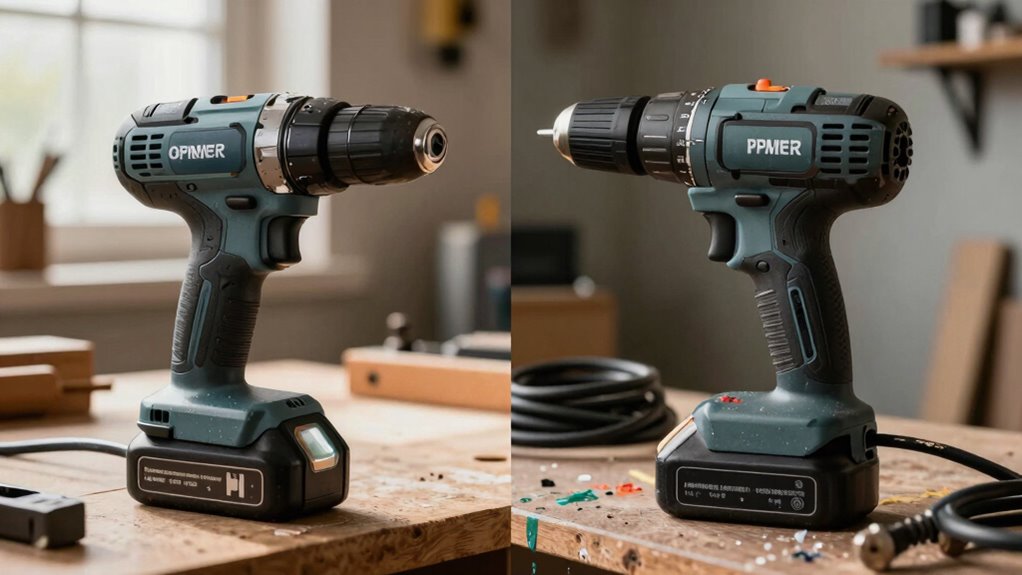
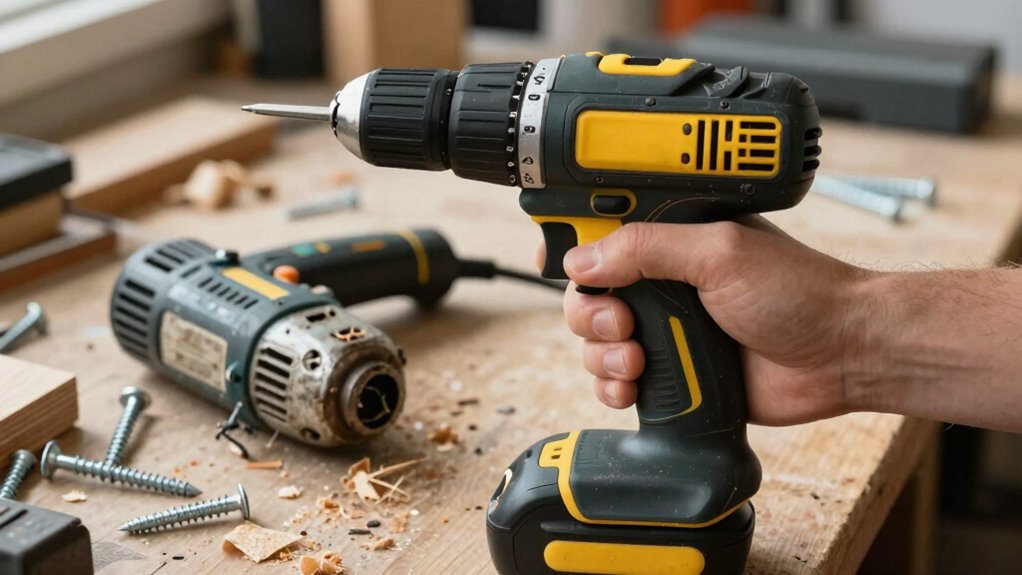
Are you struggling to choose between the convenience of cordless tools and the reliable power of corded options? It’s a common dilemma, and your decision hinges on understanding how each type performs in real-world scenarios. One key factor to contemplate is battery life. Cordless tools operate on rechargeable batteries, which means their runtime is limited. If you’re tackling a quick, small project, a cordless tool can be incredibly convenient—you grab it, use it, and recharge it later. But if you’re working on a larger job that requires extended use, battery life becomes a critical concern. Some batteries last longer than others, and many tools now feature quick-charging options to minimize downtime. Still, you need to assess whether the cordless option can handle your workload without frequent interruptions. Additionally, considering battery technology can help you select tools with longer-lasting power. Power consistency is another essential aspect. Corded tools are known for delivering steady, uninterrupted power because they draw directly from an electrical outlet. This makes them ideal for tasks that demand high and consistent power, such as cutting through tough materials or performing precision work that requires steady torque. Cordless tools, on the other hand, can sometimes experience fluctuations in power, especially as the battery drains. While modern lithium-ion batteries have improved considerably, they might not always match the power consistency of corded models, particularly under heavy loads. If your work involves continuous, demanding tasks, you might find corded tools more dependable because they provide constant, reliable performance. Another point to weigh is mobility versus stability. Cordless tools offer unmatched freedom of movement, allowing you to work in tight spaces or areas without easy access to power outlets. This flexibility can boost productivity and make your work more comfortable. Conversely, corded tools require you to stay near an outlet and manage the cord, which can sometimes get in your way or limit your range. If your projects often involve long hours or extensive, repetitive tasks, the comfort and dependability of a corded tool might outweigh the convenience of cordless models. Ultimately, your choice depends on the nature of your projects. If you prioritize portability, quick setup, and working in confined spaces, cordless tools are likely your best bet—just keep an eye on battery life and be prepared for potential power fluctuations. If consistent power and extended use are more critical, especially for demanding tasks, corded tools will serve you better. Weighing these factors carefully will help you decide which type aligns best with your needs, ensuring you get the right tool for each job.
Products Worth Considering

Levoit Eleva 300X Air Purifier with Fully Sealed HEPA Filtration and Smart Control

Dyson V15 Detect Cordless Vacuum

Google Nest Smart Thermostat, Snow
As an affiliate, we earn on qualifying purchases.
Frequently Asked Questions
What Is the Typical Battery Lifespan for Cordless Tools?
The typical battery lifespan for cordless tools usually ranges from 2 to 3 years, depending on usage and care. Battery longevity depends on factors like charging cycles, with most batteries handling around 300 to 500 cycles before losing significant capacity. To extend your battery’s life, avoid overcharging and let it fully discharge occasionally. Proper maintenance and mindful charging habits help you get the most out of your cordless tool’s battery.
Are There Any Safety Concerns Unique to Corded Devices?
They say “better safe than sorry,” and when dealing with corded devices, safety is key. You face unique risks like electrical shock and fire hazards if cords are frayed or damaged. Always inspect cords before use, keep them away from water, and avoid overloading circuits. Taking these precautions helps prevent accidents, ensuring your work remains safe and productive. Stay vigilant and respect the power cord’s potential dangers.
Can Cordless Tools Handle Heavy-Duty Tasks Effectively?
Cordless tools can handle heavy-duty tasks effectively if they have high battery capacity and deliver consistent power. Modern lithium-ion batteries provide longer runtimes, allowing you to work on demanding projects without frequent recharges. However, for continuous, intense use, corded devices still offer more reliable power without interruption. Consider your task’s duration and power needs to choose the right tool, balancing convenience with performance.
How Much Maintenance Do Corded Versus Cordless Tools Require?
Corded tools require consistent cleaning and careful cord storage, while cordless tools demand regular battery replacements. You’ll find cordless tools need more maintenance to keep batteries charged and functioning, whereas corded ones need less fuss but more focus on cord safety. Both need occasional inspections for wear and tear, but cordless tools generally involve more ongoing upkeep with batteries, while corded tools emphasize proper cord care to prevent damage.
Are There Weight Differences That Impact User Fatigue?
Yes, weight differences considerably impact user fatigue. Cordless tools tend to be lighter due to battery size, but their ergonomic design and weight distribution can vary, affecting comfort during extended use. A well-balanced, lightweight tool reduces strain on your arms and shoulders, making your work easier. Conversely, corded tools may be heavier but often have better weight distribution, which can lessen fatigue if ergonomics are prioritized.
Conclusion
Choosing between cordless convenience and corded power is like picking between a quick sprint and a steady marathon—you need to weigh your specific needs. If you value mobility and ease, go cordless; if you require constant, reliable power, a corded tool is your best bet. Think about your projects and environment, and you’ll find the perfect match. Ultimately, making the right choice will feel as natural as slipping into a favorite pair of shoes.