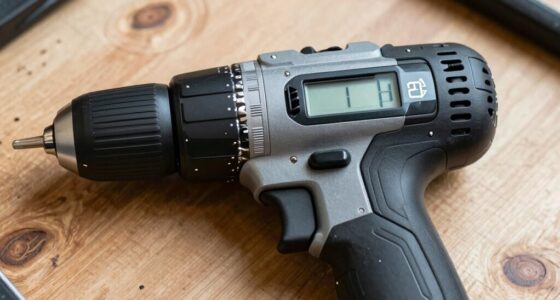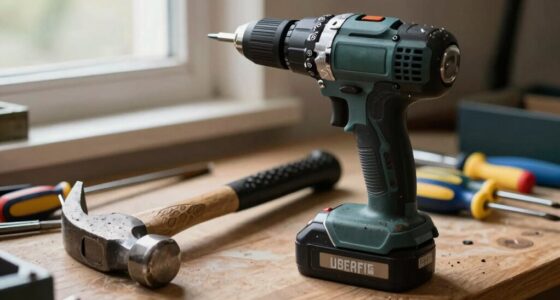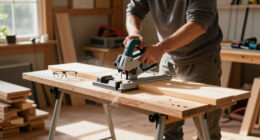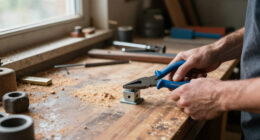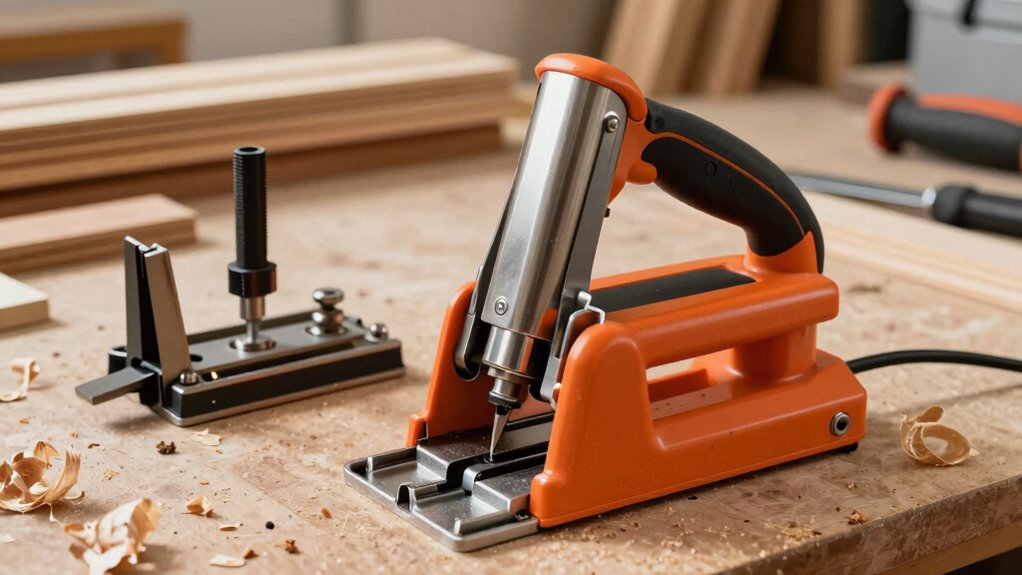

If you want quick, easy assembly, a pocket hole jig is a great choice because it’s simple for beginners and speeds up your projects. A biscuit joiner offers a more seamless and aligned look, making it ideal for face frames and panels where appearance matters. Both tools are valuable, but your decision depends on whether you prioritize speed or aesthetics. To discover which method fits your shop best, keep exploring the details.

Get tools and workshop supplies delivered free — and shop member deals
- Fast, free delivery on millions of items
- Access to Prime Big Deal Days deals on October 6–7
- Prime Video, Amazon Music and more included
Key Takeaways
- Biscuit joiners provide seamless, aligned joints ideal for face frames and panel alignment, enhancing aesthetics.
- Pocket hole jigs are faster and easier for quick assembly, making them suitable for framing and furniture projects.
- Biscuit joints require more setup and skill but offer stronger, more discreet connections.
- Pocket hole joints are less visually seamless but excel in speed and simplicity for beginners.
- Safety, tool maintenance, and proper technique are essential for both methods to ensure durable, professional results.

When choosing the right woodworking joinery method for your shop projects, understanding the differences between a biscuit joiner and a pocket hole jig is essential. Both tools serve to connect wood pieces securely, but they differ in technique, application, and the level of skill required. As you work with these tools, always prioritize woodworking safety—wear eye and ear protection, and keep your workspace clean to prevent accidents. Proper tool maintenance is equally important; regularly clean your joiner and jig, check for damaged parts, and lubricate moving components to ensure safe and efficient operation.
A biscuit joiner uses a rotating blade to cut precise, curved slots into the wood. You then insert a biscuit—usually made of compressed wood or plywood—dipped in glue, which swells when it absorbs the glue, creating a tight joint. This method is excellent for aligning panels and face frames, especially when you want a seamless look. It offers a good balance of strength and ease of use, but it requires some setup to ensure accurate slot placement. Proper tool maintenance, like keeping the blade sharp and clean, ensures safety and precision, reducing the risk of kickback or misaligned cuts. Additionally, understanding the types of joints and their applications can help you choose the right method for each project.
In contrast, a pocket hole jig creates angled holes into one piece of wood, allowing you to screw into an adjoining piece. This technique is often favored for quick, sturdy frames or furniture assemblies. Its simplicity makes it accessible for beginners, and it’s faster than traditional joinery methods. However, it’s crucial to pay attention to woodworking safety—using clamps to hold the jig securely and ensuring your drill bits are sharp to prevent slip and injury. Regular tool maintenance, such as cleaning dust and inspecting the drill guide, keeps your pocket hole jig functioning smoothly, maintaining the quality of your joints.
While both methods are valuable, your choice depends on your project’s needs and your skill level. Biscuit joints tend to be more aligned and aesthetically pleasing, but they require precise setup and patience. Pocket hole joints are quicker and easier, especially for frame construction, but they may be less invisible and sometimes less strong under certain stresses. Additionally, understanding the differences in joinery can help you select the best method for your specific project. Developing good woodworking safety habits, maintaining your tools properly, and considering the strength of joints will ensure your projects are durable and professional-looking. Regardless of which method you select, developing good woodworking safety habits and maintaining your tools properly will enhance your projects’ success, durability, and safety. With consistent care and attention, you’ll produce strong, professional-looking joints that stand the test of time.
As an affiliate, we earn on qualifying purchases.
Frequently Asked Questions
Which Tool Is Safer for Beginners?
You’ll find the pocket hole jig is generally safer for beginners because it offers better tool precision and easier control. Safety considerations are easier to manage with a pocket hole jig, as it guides the drill and minimizes slip-ups. Biscuit joiners require more skill to align accurately, and the tool’s high-speed blade can pose a greater risk for novices. So, for safety, a pocket hole jig is the smarter choice.
Can Both Tools Be Used Outdoors?
Yes, both tools can be used outdoors, but you should consider their weather resistance and tool durability. Biscuit joiners and pocket hole jigs are generally made from durable materials, but exposure to moisture can affect their longevity. To guarantee safety and performance, store them in a dry place when not in use, and clean them after outdoor projects. Proper maintenance helps maintain their weather resistance and overall durability.
What’s the Maintenance Required for Each Tool?
You need to regularly maintain both tools to keep them in top shape. For a biscuit joiner, replace the blade when it gets dull and clean dust collection ports to prevent clogging. For a pocket hole jig, check the drill bit and replace it if dull, and keep dust out of the jig’s moving parts. Both tools benefit from regular cleaning and lubrication to guarantee smooth operation and longevity.
Are There Specific Wood Types Better Suited for Each Method?
You’ll find that hardwoods like oak and maple excel with biscuit joiners, offering unmatched joinery strength, while softwoods like pine or cedar suit pocket hole jigs, making assembly quick and easy. Wood compatibility is essential, as some woods might split or not hold screws well. For the strongest joints, choose your tools based on the wood type—biscuit joiners handle dense woods better, while pocket hole jigs work wonders with softer varieties.
How Do Costs Compare Between the Two Tools?
In a cost analysis, pocket hole jigs are generally more affordable upfront, making them a great choice for budget-conscious projects. A basic pocket hole jig can cost under $50, while a quality biscuit joiner often exceeds $150. The price comparison shows that pocket hole jigs offer a cheaper entry point, but if you’re aiming for stronger joints and more versatility, investing in a biscuit joiner might be worthwhile despite the higher cost.
As an affiliate, we earn on qualifying purchases.
Conclusion
Choosing between a biscuit joiner and a pocket hole jig is like picking a path through a forest—each offers a different journey. The biscuit joiner, like a steady river, provides seamless, strong connections, while the pocket hole jig, akin to a guiding star, offers quick, versatile assembly. Your project’s heart beats in your choice, shaping the story you craft. Trust your instinct; let your tools lead you down the right trail to success.
As an affiliate, we earn on qualifying purchases.
As an affiliate, we earn on qualifying purchases.
Fall yard work Picks
leaf blowers
As an affiliate, we earn on qualifying purchases.