
Choosing the best miter saw blade depends on your specific woodworking needs, from fine finishing to rough cuts. The Dewalt 12-inch 100-Tooth Fine Finish Blade stands out as the overall top pick for its exceptional cut quality and durability. For those prioritizing clean, precise cuts, the Diablo 10-Inch Fine Finish Saw Blade offers impressive performance at a reasonable price. However, tradeoffs like cost, compatibility, and intended use matter—what works for fine finish work might not suit rougher cuts. Continue reading to explore the top blades and find the one that matches your projects best.
Listen free for 30 days with Audible
Thousands of audiobooks and originals — cancel anytime.
Start your free trialAs an affiliate, we earn on qualifying purchases.
Key Takeaways
- High tooth count blades generally produce cleaner, finer cuts but may cut more slowly and cost more.
- Thin kerf blades are ideal for reducing material waste and requiring less power, but they might be less durable for heavy-duty tasks.
- Premium blades with carbide tips offer longer life and better performance but come at a higher price point.
- Compatibility with your saw’s size and arbor is crucial; not all blades fit all saws.
- Combination packs can save money but may sacrifice some performance for versatility.




More Details on Our Top Picks
Dewalt 12-inch 100-Tooth Fine Finish Miter Saw Blade, Ultra Sharp Carbide
This Dewalt 12-inch blade stands out for its 100 teeth and ultra-sharp carbide tips, delivering exceptional accuracy and smoothness that surpass many standard blades. Its optimized tooth geometry and vibration-reducing features ensure cleaner cuts, making it ideal for fine woodworking. Compared with the Diablo 80-Tooth blade, this model offers a higher tooth count for even finer finishes, though it comes at a higher price and is less suited for rough cuts. Its longer lifespan and superior finish quality make it a top choice for professionals or serious hobbyists focused on detail-oriented tasks.
Pros:- Exceptional precision with 100 teeth for fine detail
- Longer lifespan due to carbide durability
- Vibration reduction for smoother operation
- Optimized tooth design for accuracy
Cons:- Higher cost compared to standard blades
- Less effective for rough or demolition cuts
Best for: Professional woodworkers or hobbyists who prioritize the highest finish quality and are willing to invest in durability.
Not ideal for: Users needing a versatile blade for rough cuts or those on a strict budget, as it’s more expensive and optimized for fine work.
- Product Type:SAW_BLADE
- Diameter:12 inches
- Number of Teeth:100
- Material:Carbide
- Compatible Material:Metal, Wood
- Item Dimensions:15.7″ L x 13.7″ W
Bottom line: This blade is perfect for those demanding the finest finish, especially in detailed woodworking projects.
Diablo 10-Inch Fine Finish Saw Blade for Wood, 60 Hi-ATB Teeth
This Diablo 10-inch blade offers 60 Hi-ATB teeth, making it ideal for ultra-smooth, clean cuts in woodworking. Its TiCo Hi-Density carbide teeth ensure durability, while the Perma-SHIELD coating improves heat and corrosion resistance, extending its lifespan. Compared with the WEN BL1080’s 80 teeth, this blade provides a slightly coarser finish but is often more affordable and versatile for general fine woodworking. Its thin kerf allows for fast cuts with minimal waste, making it a favorite among finish carpenters and hobbyists focused on clean, precise results.
Pros:- Delivers consistently smooth, precise cuts
- Durable carbide teeth for long-lasting performance
- Heat and corrosion resistant coating
- Thin kerf for efficient, fast cuts
Cons:- Higher price than basic blades
- Limited to wood, not suitable for other materials
Best for: Fine woodworking enthusiasts and finish carpenters working primarily with wood who value smooth cuts and durability.
Not ideal for: Projects involving materials other than wood or rough cutting tasks, as it’s specifically designed for fine finishes in wood only.
- Diameter:10 inches
- Teeth:60 Hi-ATB
- Kerf:.098 inches
- Arbor:5/8 inches
- Application:Wood
Bottom line: This blade excels for those needing smooth, detailed cuts in woodworking, with the tradeoff of a higher cost than standard options.
CMT 255.096.12 ITK Industrial Fine Finish Saw Blade, 12-Inch x 96 Teeth, 40° ATB Grind, 1-Inch Bore
The CMT ITK 12-inch blade is designed for professional-grade finish work, featuring 96 teeth and a 40° ATB grind that delivers extremely clean, accurate crosscuts. Its micrograin carbide teeth provide long-lasting sharpness, and the laser-cut vibration-reducing plate ensures minimal waste and a smooth cut. While it outperforms many blades when working with laminates, plywood, and solid wood, its price and primary focus on fine finishing mean it’s less suited for rough or demolition cuts. Compared to the Diablo blade, it offers a more specialized cut quality for demanding finish carpentry.
Pros:- Delivers extremely clean, smooth crosscuts
- Long-lasting micrograin carbide teeth
- Vibration-reducing laser-cut plate
- Ideal for laminates and plywood
Cons:- Higher price point
- Less effective for rough cuts or framing
Best for: Finish carpenters or cabinetmakers seeking precise, flawless cuts in multiple wood substrates.
Not ideal for: Heavy-duty construction or demolition work, as its design prioritizes smoothness over toughness.
- Diameter:12 inches
- Teeth:96
- Teeth Grind:40° ATB
- Bore:1 inch
- Hook Angle:5°
- Material:Micrograin carbide
Bottom line: This blade is tailored for professionals needing the highest quality crosscuts in fine woodworking and laminates.
WEN BL1080 10-Inch 80-Tooth Carbide-Tipped Ultra-Fine Finish Saw Blade
The WEN BL1080 provides 80 carbide-tipped teeth for ultra-fine woodworking cuts, balancing performance with affordability. Its ultra-thin kerf reduces material waste and allows for smooth, precise cuts across hard and softwoods. Compared with the Diablo 60-ATB blade, the WEN offers more teeth for a finer finish, making it suitable for finish carpenters on a budget. However, it requires high RPM saws for best results and is limited to 10-inch saws, which could restrict versatility for some users seeking a larger blade or different cuts.
Pros:- Provides ultra-fine, clean cuts
- Compatible with most 10-inch saws
- Efficient with ultra-thin kerf for less waste
- Cost-effective for its performance level
Cons:- Limited to 10-inch saws only
- Requires high RPM saws for optimal results
Best for: Budget-conscious hobbyists or pros needing reliable, fine woodworking performance without a premium price tag.
Not ideal for: Heavy-duty or rough construction projects, where durability and toughness are more critical than fine finishes.
- Diameter:10 inches
- Arbor Size:5/8 inch
- RPM Rating:up to 6000 RPM
- Kerf:1/10 inch (2.4 mm)
- Teeth:80
Bottom line: This blade offers a solid balance of quality and price for finish woodworking with 10-inch saws on a budget.
WEN BL1280 12-Inch 80-Tooth Fine-Finish Woodworking Saw Blade
The WEN BL1280 is designed for precise, clean cuts in hard and softwoods, featuring 80 carbide-tipped teeth and an ultra-thin kerf. Its 12-inch diameter makes it compatible with most professional or hobbyist miter and table saws, providing an excellent choice for detailed finish work. Compared to the Dewalt 100-Tooth blade, it offers a slightly lower tooth count but is often more affordable, making it accessible for those who need reliable results without the highest cost. Its compatibility with most 12-inch saws makes it flexible, but it’s limited to finish work, so not suitable for heavy or rough cuts.
Pros:- Provides clean, precise cuts
- Compatible with a wide range of 12-inch saws
- Ultra-thin kerf for efficient cuts
- Affordable for high-quality finish work
Cons:- Limited to fine finish applications
- May be more costly than standard blades
Best for: Woodworkers seeking high-quality finish cuts on 12-inch saws at an accessible price point.
Not ideal for: Rough framing or demolition tasks, as its design emphasizes precision over toughness.
- Diameter:12 inches
- Arbor Size:1 inch
- RPM Rating:up to 6000 RPM
- Kerf:0.1 inch (2.6 mm)
- Teeth:80
Bottom line: This blade is well-suited for detailed woodworking on 12-inch saws, balancing cost and performance effectively.
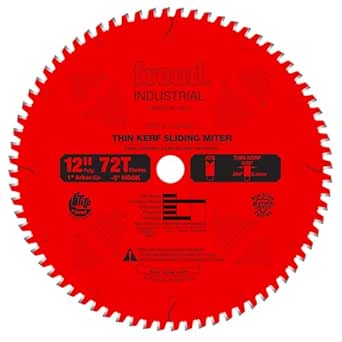
Freud 12-Inch Thin Kerf Sliding Compound Miter Saw Blade, 72 Teeth, ATB Grind, LU91R012
This Freud blade stands out for its thin kerf design, which minimizes material waste and reduces power consumption, making it ideal for precise finish work. Compared to the Diablo D1280X, it offers a slightly narrower cut, which can help in finer detail projects but may struggle with very dense woods. Its TiCo Hi-Density Carbide ensures durability, but the thinner kerf may make it less robust against impact or heavy-duty cuts. The Perma-Shield coating further prolongs blade life by reducing buildup and friction. This pick is perfect for professionals or hobbyists who prioritize clean, accurate crosscuts on sliding saws and are willing to invest in a premium tool that balances precision and longevity. However, it’s less suited for cutting very hard or dense woods, where a more aggressive blade might be needed.
Pros:- Provides exceptionally clean, precise crosscuts with minimal tear-out
- Thin kerf design reduces material waste and cut resistance
- Durable TiCo Hi-Density Carbide for long-lasting sharpness
- Perma-Shield coating extends blade life and reduces buildup
Cons:- Less aggressive on very dense or hard woods
- Designed specifically for sliding miter saws, limiting versatility
- Higher price point compared to standard blades
Best for: Woodworkers needing high-precision crosscuts on sliding miter saws, especially for finish carpentry.
Not ideal for: Users working primarily with dense hardwoods or performing rough cuts, as the thin kerf may reduce durability and cutting power.
- Diameter:12 inches
- Teeth:72
- Grind:ATB (Alternate Top Bevel)
- Hook Angle:5° negative
- Material:TiCo Hi-Density Carbide
- Design:Thin kerf
- Coating:Perma-Shield
- Application:Crosscutting, finish work
Bottom line: This blade makes the most sense for finish carpenters and detailed woodworkers using sliding miter saws who value clean cuts over brute-force cutting power.
DEWALT Miter Saw Blade Combo Pack, 12” Blades, 40 Tooth & 60 Tooth, Fine Finish, Ultra Sharp Carbide
This DEWALT combo pack offers great value for those needing both general precision and detailed finish cuts. The inclusion of 40 and 60-tooth blades provides flexibility—40 teeth for faster cuts and 60 for finer finishes—making it a versatile choice compared to the Diablo D1280X, which is optimized for high-quality woodworking but lacks a dual-tooth option. Its patented body slot design and optimized tooth geometry deliver up to three times the lifespan and lower vibration, translating into more consistent results over time. However, the higher price may deter casual users or hobbyists who do not need such durability. This set is ideal for professional carpenters or serious DIYers who want a comprehensive solution for various fine woodworking projects without sacrificing precision or blade longevity. It’s less suitable for rough cuts or applications outside woodworking, where durability and precision are less critical.
Pros:- Includes both 40 and 60-tooth blades for versatility
- Up to three times longer lifespan compared to standard blades
- Low vibration for more accurate cuts
- Optimized tooth geometry for precision finishing
Cons:- Higher cost than single-blade options
- Requires compatible saws to realize full benefits
- Less effective for rough or demolition cuts
Best for: Professional woodworkers or serious DIYers who need reliable, long-lasting blades for a variety of fine finish tasks.
Not ideal for: Occasional users or those on a tight budget, since the premium price may outweigh the need for multiple blades in simple projects.
- Blade Diameter:12 inches
- Tooth Count:40 and 60 teeth
- Material:Carbide
- Design Features:Patented body slot, optimized tooth geometry
- Performance:Up to 3X lifespan, low vibration
Bottom line: This combo pack suits experienced woodworkers seeking durability and precision across multiple fine finish applications, offering excellent value for heavy use.
Diablo D1280X 12-Inch 80-Tooth Fine Finish Saw Blade for Wood
The Diablo D1280X excels at producing smooth, clean cuts in woodworking projects, thanks to its 80 teeth and TiCo Hi-Density Carbide. Compared with the DEWALT combo pack, this blade offers a higher tooth count for finer finishes, making it ideal for detailed cabinetry or furniture work. Its laser-cut stabilizer vents significantly improve stability, reducing vibration and noise, which enhances cut quality and prolongs blade life. The Perma-Shield coating helps resist build-up, but the higher cost and focus on woodworking mean it’s less versatile for other materials or rough cuts. This blade is best suited for professionals or dedicated hobbyists who prioritize the finest finish in their work and are willing to invest in a premium blade. For rougher tasks or harder woods, a more aggressive blade might be more appropriate.
Pros:- Produces exceptionally smooth, precise cuts with minimal tear-out
- Durable TiCo Hi-Density Carbide and impact-resistant brazing
- Reduces heat, vibration, and warp for longer blade life
- Laser-cut stabilizer vents improve stability and reduce noise
Cons:- Higher price compared to standard blades
- Designed primarily for fine woodworking, less versatile for other materials
- Less effective for rough or demolition cuts
Best for: Woodworkers and furniture makers needing ultra-smooth, detailed cuts in finished wood surfaces.
Not ideal for: Heavy-duty or rough-cut tasks involving dense hardwoods, where a more aggressive blade would be necessary.
- Diameter:12 inches
- Teeth:80
- Application:Woodcutting
- Hook Angle:7 degrees
- Arbor Size:1 inch
Bottom line: This blade is perfect for professionals or hobbyists who demand the highest quality finish and are working on detailed woodworking projects.
How We Picked
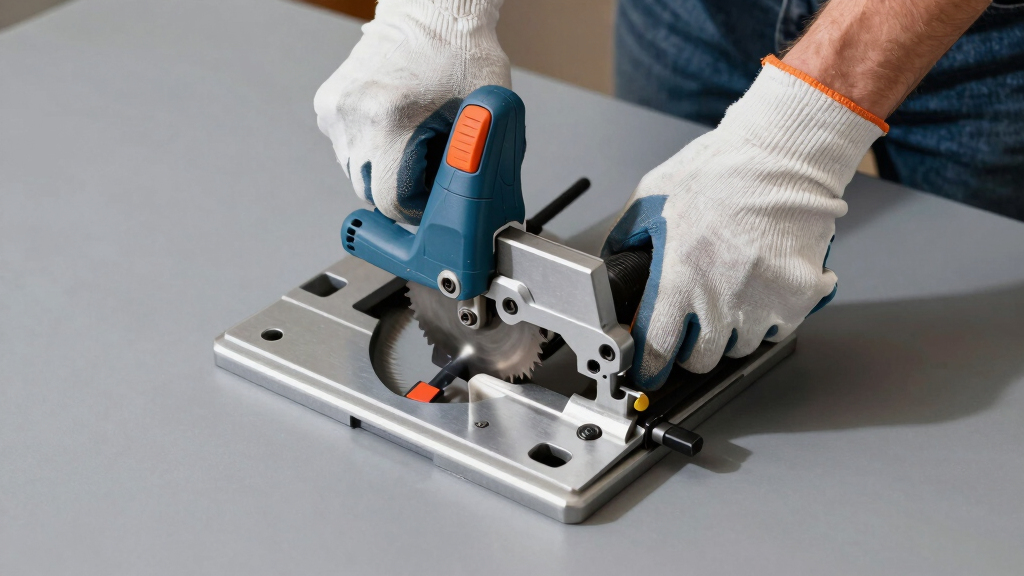
To determine the best miter saw blades, I evaluated each product based on cut quality, durability, compatibility, and value. Performance in real-world woodworking scenarios was prioritized over brand reputation, focusing on how well each blade handled different materials and cut types. Ease of installation, maintenance, and customer feedback also influenced the rankings. By comparing these factors, I aimed to identify blades that balance performance and cost for various user needs, from hobbyists to professionals.Factors to Consider When Choosing Best Miter Saw Blade
When selecting a miter saw blade, understanding key factors beyond basic specifications can help you make a smarter choice. The right blade depends on your project types, saw compatibility, and budget. Failing to match blade features with your needs can lead to poor results or unnecessary expenses. Here are some important considerations to keep in mind:Blade Size and Compatibility
Ensuring the blade fits your saw’s arbor and size is fundamental. Common sizes are 10-inch and 12-inch blades, with 12-inch offering larger cut capacity. Check your saw’s specifications to avoid purchasing a blade that won’t fit or operate correctly. Using an incompatible blade can reduce cut quality and pose safety risks. Always verify compatibility before buying to ensure smooth operation and optimal results.
Tooth Count and Grind Type
The number of teeth on a blade influences cut quality and speed. Higher tooth counts, like 60 or more, produce finer, cleaner cuts suitable for finish work. Lower tooth counts cut faster but leave rougher edges. The grind type, such as ATB (alternating top bevel), also affects cut smoothness and chip removal. Balancing tooth count and grind with your typical projects helps avoid choosing a blade that’s either too aggressive or too delicate.
Kerf Width and Material
Thin kerf blades remove less material, making them ideal for reducing waste and requiring less power—perfect for portable saws or delicate work. Thicker kerf blades tend to be more durable and better suited for heavy-duty cuts, such as framing or hardwoods. Picking the right kerf depends on your saw’s horsepower and project demands, as mismatched options can hinder performance or increase wear.
Blade Material and Durability
Carbide-tipped blades dominate this category for their longevity and ability to cut through tough materials without dulling quickly. Cheaper steel blades may be tempting but tend to wear out faster, leading to uneven cuts and increased replacement costs. Investing in quality carbide blades can pay off over time, especially for frequent use. However, the initial cost is higher, so consider your workload before opting for premium options.
Cost and Value Balance
While premium blades deliver superior performance and longevity, they come at a higher price. Budget-friendly options, like WEN or Diablo, provide good performance for hobbyists or occasional use but may require more frequent replacement. Look for blades that strike a balance between upfront cost and expected lifespan. Buying a versatile, durable blade suited for multiple tasks often saves money in the long run.
Frequently Asked Questions
How do I choose between a 10-inch and a 12-inch blade?
The decision depends on your saw’s size and the type of cuts you need. A 12-inch blade offers a larger cutting capacity, allowing you to make deeper and wider cuts, which is beneficial for larger projects. Conversely, a 10-inch blade is more common and generally lighter, making it suitable for smaller saws and more precise work. Consider your typical project dimensions and saw compatibility before purchasing.
Are more teeth always better for finish work?
In most cases, yes—higher tooth counts, such as 60 or more, tend to produce cleaner, smoother cuts ideal for finish carpentry. However, they can slow down cut speed and increase cost. For rapid, rough cuts, blades with fewer teeth (like 40 or 50) are more efficient. Choosing the right tooth count depends on balancing cut quality and productivity for your specific tasks.
Can I use a general-purpose blade for all projects?
While a versatile, general-purpose blade may seem convenient, it often sacrifices optimal performance for specific tasks. Fine finish blades excel at producing smooth edges but may struggle with rough cuts or hardwoods. Conversely, blades designed for heavy-duty work might leave rougher edges on delicate materials. Matching the blade to your typical projects yields better results and longer blade life.
How often should I replace my miter saw blade?
The lifespan of a blade depends on usage, material, and maintenance. Signs that it needs replacing include visible dullness, burning marks, or uneven cuts. Regular cleaning and proper use extend blade life, but no blade lasts forever. For frequent use, inspecting the blade regularly and replacing it when performance declines ensures safety and quality in your work.
Is a combo pack worth buying?
Combo packs, which include blades with different tooth counts, are appealing for their versatility and cost savings. They are ideal for users tackling a variety of projects without buying multiple blades separately. However, these packs may include blades with slightly lower performance compared to dedicated, specialized blades. Evaluate your specific needs to determine if a combo pack offers enough performance for your projects or if investing in specialized blades makes more sense.
Conclusion
For most hobbyists or DIYers, the Dewalt 12-inch 100-Tooth Fine Finish Blade offers excellent overall performance and durability. Those focused on achieving the best finish should lean toward high-tooth blades like the Diablo 10-Inch Fine Finish Saw Blade. Professionals needing maximum blade longevity and versatility might prefer the Freud 12-Inch Thin Kerf Blade or the DEWALT Miter Saw Blade Combo Pack. Beginners or casual users benefit from budget-friendly options, while experienced woodworkers should consider investing in premium, carbide-tipped blades for consistent results over time.Flea & tick season Picks
flea and tick prevention
As an affiliate, we earn on qualifying purchases.