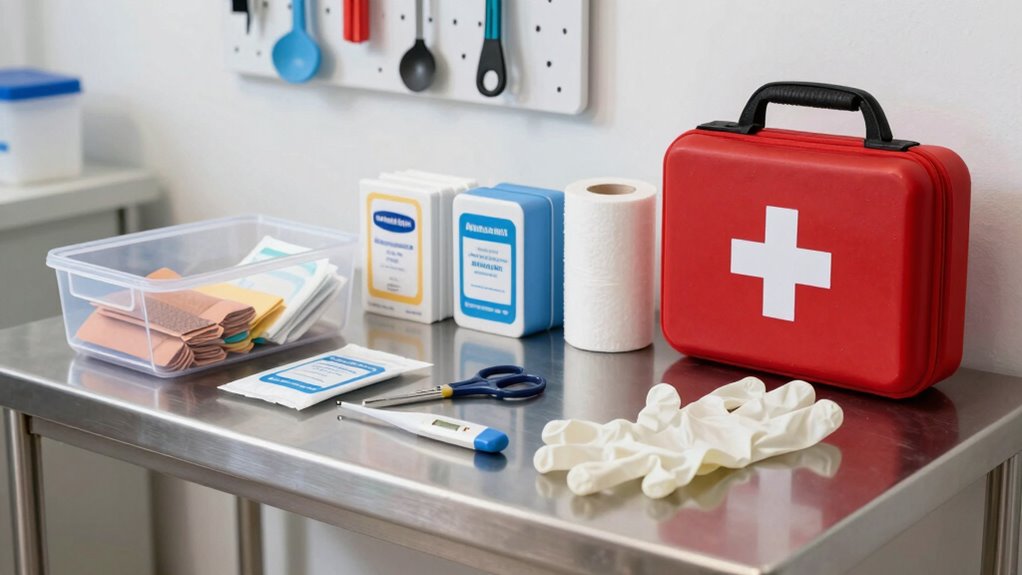

To set up your workshop first aid station, keep essential supplies like bandages in various sizes, antiseptic wipes, antibiotic ointments, gauze, adhesive tape, scissors, tweezers, gloves, and sterile dressings. Include burn creams, cold packs, emergency blankets, and CPR masks. Make sure to store everything properly, regularly check for expired items, and have clear emergency contact info nearby. Staying organized and prepared can make a big difference—if you want to learn more, keep exploring carefully.
Open a free Amazon Business account
Business pricing, bulk buying and tax-exempt orders.
As an affiliate, we earn on qualifying purchases.
Key Takeaways
- A well-stocked variety of basic first aid supplies, including bandages, antiseptics, gauze, and burn creams.
- Clear emergency contact information and instructions for quick access during incidents.
- Personal protective equipment (PPE) such as gloves, masks, and goggles to ensure safety during first aid.
- Proper storage in a clean, organized, and moisture-free environment with regular inventory checks.
- Protocols and signage to guide responders on safety procedures and appropriate first aid steps.

Have you ever considered what would happen if someone gets injured in your workshop? Accidents can happen suddenly, and being prepared can make all the difference. Having a well-stocked first aid station is crucial for quick, effective responses to injuries. When setting up your station, focus on including items that can handle common workshop mishaps, such as cuts, burns, or sprains. But beyond just supplies, it’s essential to verify that safety protocols are in place, including the use of personal protective equipment and clear access to emergency contact information. These elements can markedly reduce the severity of injuries and help guide immediate actions until professional help arrives.
Preparedness in your workshop can make all the difference during emergencies and help reduce injury severity.
Start by stocking basic first aid supplies, including bandages of various sizes, antiseptic wipes, antibiotic ointments, gauze pads, adhesive tape, scissors, tweezers, and disposable gloves. For burns, keep burn creams and cold packs on hand. If someone sustains a deep cut or bleeding doesn’t stop, having sterile dressings and a tourniquet can be lifesaving. It’s also wise to include an emergency blanket to prevent shock and a CPR mask to assist with resuscitation if needed. These supplies allow you to respond swiftly and effectively, minimizing injury complications. Proper storage practices are vital to prevent contamination and ensure the longevity of your supplies, especially in environments prone to dust or moisture. Additionally, maintaining a well-organized kit helps ensure that necessary items are always easy to find during emergencies. Regular checks of the kit can also help identify expired or damaged supplies that need replacement, ensuring readiness at all times.
Personal protective equipment (PPE) should be a core part of your first aid station. Items like gloves, safety goggles, and masks not only protect the injured person but also safeguard the responder from infections. Encourage everyone in the workshop to use PPE when administering first aid, and keep a variety of sizes readily accessible. PPE is crucial for maintaining hygiene and reducing the risk of cross-contamination during first aid procedures. Additionally, understanding the importance of biodiversity in maintaining a healthy environment highlights the need for safety measures that protect both people and the surrounding ecosystem from hazards. Incorporating proper storage practices for the supplies can also help prevent contamination and spoilage, ensuring your first aid kit remains effective when needed. Regularly reviewing and replenishing supplies is also a good practice to keep the kit ready for use, especially after drills or actual emergencies, to maintain a high level of preparedness.
Another critical element is having accessible emergency contact information. Post clear, visible signs with emergency numbers, including local ambulance, fire department, and poison control. Keep a list of emergency contacts for all employees in a waterproof container within the first aid station. This ensures that in the chaos of an emergency, you can quickly summon help or contact a medical professional without wasting time searching for details. Including a printed list of allergies, medications, or pre-existing health conditions for each worker can further streamline emergency response, especially if someone is unable to communicate effectively. Proper documentation also plays a key role in ensuring accurate and swift medical assistance, reinforcing the importance of keeping this information current.
Ultimately, a well-organized first aid station in your workshop isn’t just about having supplies but also about being prepared. With the right items, PPE, and clear emergency contact information, you create a safer environment where injuries can be managed swiftly and confidently, reducing the impact of accidents and promoting peace of mind for everyone involved.
As an affiliate, we earn on qualifying purchases.
Frequently Asked Questions
How Often Should the First Aid Station Be Restocked?
You should restock your workshop first aid station at least monthly to guarantee emergency supplies are always ready. Regular stock rotation helps identify and replace expired items, keeping supplies effective. Keep a checklist to monitor what’s used and what needs replenishing, especially after any incident or routine usage. Consistent restocking guarantees quick access to necessary first aid items, reducing injury severity and promoting a safe work environment.
Are There Specific Regulations for Workshop First Aid Stations?
Yes, there are specific regulations for workshop first aid stations. You must follow local and OSHA standards, which require clear emergency protocols and regular risk assessments. These regulations guarantee your station is well-equipped and accessible during emergencies. You should also keep documentation of compliance and updates. Regularly reviewing emergency protocols and conducting risk assessments help maintain a safe environment, ensuring you’re prepared for any incidents.
Can Portable First Aid Kits Replace a Dedicated Station?
Can a portable first aid kit replace a dedicated station? Think of it like a Swiss Army knife—versatile but not always enough. While portable kits are great for emergency preparedness and quick first aid procedures, they can’t fully replace a dedicated station. A fixed station offers extensive supplies and organization, ensuring you’re ready for more serious injuries. For maximum safety, combine both to cover all bases in your workshop.
What Training Is Required for Workshop First Aid Responders?
You need to guarantee your workshop first aid responders complete proper staff training, including emergency kit usage and basic first aid skills. This training typically covers CPR, wound care, and how to handle various injuries safely. Regular refreshers keep their skills sharp. By investing in extensive staff training, you ensure responders are confident and prepared to act quickly, making your workshop safer for everyone.
How Should the First Aid Station Be Labeled and Identified?
You should clearly label your first aid station with prominent emergency signage and guarantee it has strong visual identification. Use universally recognized symbols, such as a white cross on a green background, and place signs at eye level near the station. This makes it easy for anyone in the workshop to quickly locate first aid supplies during an emergency, reducing response time and enhancing safety for everyone.
industrial first aid kit with burn creams
As an affiliate, we earn on qualifying purchases.
As an affiliate, we earn on qualifying purchases.
Conclusion
Think of your workshop’s first aid station as a sturdy lighthouse guiding you safely through stormy seas. When you keep essential supplies handy—like a beacon—it’s easier to navigate emergencies swiftly and confidently. Just as a lighthouse stands tall against the dark, your prepared station guarantees safety and reassurance for everyone. With the right tools at your fingertips, you can steer through accidents and come out safely on the other side, keeping your workshop’s voyage smooth and secure.
personal protective equipment PPE set
As an affiliate, we earn on qualifying purchases.
As an affiliate, we earn on qualifying purchases.
workshop emergency first aid supplies
As an affiliate, we earn on qualifying purchases.
As an affiliate, we earn on qualifying purchases.
Flea & tick season Picks
flea and tick prevention
As an affiliate, we earn on qualifying purchases.