
TL;DR
A generator wattage calculator estimates your total power needs, helping you pick a generator that won’t overload or underperform. It factors in starting vs. running wattage and safety margins for reliable backup power.
Always list each appliance’s wattage or calculate it from amperage and voltage before using the calculator.
Include surge wattage for motors and compressors to prevent overloads at startup.
Add a safety margin of 10-25% to your total wattage to cover surges and future needs.
Match your total calculated wattage with a generator slightly above that number for reliable power.
Use comparison tables to choose between 2000, 3500, or 5000-watt generators based on your needs.
What Exactly Is a Generator Wattage Calculator?
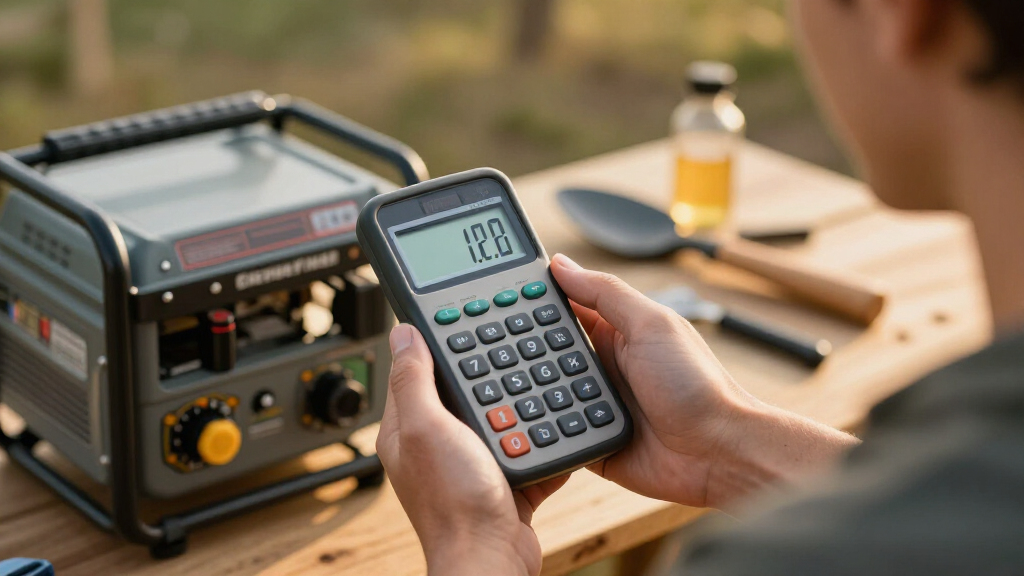
A generator wattage calculator is a handy tool that helps you figure out how much power your appliances and devices need. It’s as simple as entering wattage or amperage and voltage for each item, then letting the calculator do the math. The result? A clear number that tells you the size of generator required to run everything safely. Think of it like a shopping list, but for power.
For example, if your fridge pulls 700 watts, your laptop 100 watts, and your lights 300 watts, the calculator totals these figures and suggests a generator that can handle the combined load with some breathing room.
portable generator wattage calculator
As an affiliate, we earn on qualifying purchases.
As an affiliate, we earn on qualifying purchases.
How to Use a Generator Wattage Calculator in 3 Easy Steps
- List all your appliances: Find the wattage label or calculate using amperage × voltage. For example, a 15-amp fridge at 120 volts uses 1,800 watts.
- Input your devices: Enter each item’s wattage into the calculator, including surge wattage for motors like air conditioners or power tools.
- Review the total: The calculator gives you a recommended generator size, usually with a safety margin of 10-25%. For instance, if your total is 3,000 watts, a 3500-watt inverter generator would be a safe choice.
This straightforward process ensures you don’t buy too small or too big a generator—saving money and avoiding hassle.
best inverter generator for home backup
As an affiliate, we earn on qualifying purchases.
As an affiliate, we earn on qualifying purchases.
Comparison: How Different Generator Sizes Match Your Needs
| Generator Size | Best For | Approximate Capacity |
|---|---|---|
| 2000 watt portable | Basic essentials, small tools, camping setup | 2,000 watts |
| 3500 watt inverter | Mid-range needs, RVing, home backup for essentials | 3,500 watts |
| 5000 watt portable | Whole house, small business, multiple appliances | 5,000 watts |
Choosing the right size depends on what you want to power. For example, a 2000-watt generator can handle a fridge, lights, and a few small devices. If you need to run a full kitchen or several power tools, a 3500 or 5000-watt model is better.
As an affiliate, we earn on qualifying purchases.
Common Mistakes When Using a Wattage Calculator (And How to Avoid Them)
- Ignoring surge wattage: Motors need extra power at startup. Always include starting wattage in your calculations.
- Underestimating future needs: Add a safety margin of at least 10-20%. It’s better to have some headroom than to overload your generator.
- Using outdated appliance wattage: Check labels for current figures. Appliances can change, especially with new models.
For example, forgetting that your window AC needs 2,000 starting watts can trip your system. Always double-check labels and include surge wattage when calculating.
5000 watt portable generator for whole house
As an affiliate, we earn on qualifying purchases.
As an affiliate, we earn on qualifying purchases.
Why a Proper Wattage Calculation Saves You Money and Headaches
Choosing the right generator size means fewer breakdowns, less wear, and lower costs. Overestimating leads to unnecessary expenses on bigger units, while underestimating risks damage or failure when you need power most. Accurate calculations keep your appliances safe and your budget in check.
Beyond cost savings, precise wattage calculation impacts safety. An undersized generator may be pushed to its limits, increasing the risk of overheating or failure, which can be dangerous. Conversely, an oversized generator might waste fuel and produce unnecessary noise, leading to inefficiency and higher operational costs. Striking the right balance ensures reliable, safe power supply tailored to your needs, minimizing risks and optimizing performance.
Frequently Asked Questions
How do I find the wattage of my appliances?
Most appliances display wattage on a label. If only amperage and voltage are listed, multiply amperage by voltage (W = A × V). For example, a 10-amp device at 120 volts uses 1,200 watts.Why is starting wattage higher than running wattage?
Motors and compressors need extra power to start moving — called surge or starting wattage. Once running, they require less power, but your generator must handle that initial spike.How much safety margin should I add?
Adding 10-25% to your total wattage gives you breathing room for surges and future appliances. For example, if your total is 3,000 watts, consider a 3,500-watt generator.Can I run multiple appliances on one generator?
Yes, as long as the combined wattage stays below your generator’s capacity. Use the calculator to sum the load and match it to a generator size with some margin.Is an online wattage calculator accurate enough?
They provide good estimates for most needs. For critical or complex setups, consulting a professional ensures safety and proper sizing.Conclusion
A generator wattage calculator isn’t just a tool — it’s your first line of defense against power mismatches. Know your load, add some buffer, and you’ll keep your appliances safe while avoiding costly surprises. Next time you plan backup power, remember: size matters, and this little calculator makes it easy to get it just right.Generator Wattage Calculator
Estimate running and starting watts for a short list of common backup loads.
Your selected load fits the small-generator range. Compare 2,000 watt portable generators for essentials-only backup.
See small-generator matchesYour surge load points to a mid-size inverter generator. Compare 3,500 watt options and verify each appliance label.
See mid-size generator matchesYour list needs a larger generator class. Compare 5,000 watt portable generators and plan circuits with a qualified pro.
See larger generator matchesEstimate only. Check product specs, local rates, and site conditions before buying or planning around these numbers.