To track tool wear before performance drops, you should use continuous monitoring methods like visual inspections, laser measurements, or microscopes to catch early signs of wear. Keep records of cutting parameters, materials, and wear patterns over time to identify trends. Adjust cutting speeds based on material analysis to minimize wear and optimize performance. By staying proactive and analyzing these data points, you’ll be better prepared for timely tool maintenance. Keep exploring to discover more ways to stay ahead of wear issues.
Key Takeaways
- Implement continuous monitoring systems to track cutting forces, vibrations, and temperature changes indicative of tool wear.
- Use regular visual inspections and precise measurement tools to detect early signs of deterioration.
- Record cutting parameters and material interactions to identify wear patterns and potential performance decline.
- Adjust cutting speeds proactively based on material analysis to minimize excessive tool wear.
- Analyze wear data over time to predict remaining tool life and schedule timely maintenance or replacements.

Monitoring tool wear before it impacts your performance is vital for maintaining efficiency and reducing downtime. When you stay ahead of wear issues, you prevent costly delays and guarantee your operations run smoothly. One effective way to do this is through regular material analysis, which helps you understand how the tool interacts with different materials. By analyzing the material’s response during cutting, you can spot early signs of wear and adjust your approach accordingly. For example, if you notice increased cutting forces or changes in chip formation, these are indicators that your tool is beginning to degrade.
Regular material analysis helps detect early tool wear signs, preventing delays and maintaining smooth, efficient operations.
Adjusting cutting speed is another essential aspect of tracking tool wear proactively. Cutting speed influences how quickly a tool wears out, so optimizing it can extend your tool’s lifespan. If you observe a rise in wear patterns, reducing the cutting speed can minimize excessive stress on the tool, giving you additional time before performance drops. Conversely, if your material analysis shows that the tool still handles the current speed well, you can maintain or slightly increase it for better productivity. This dynamic balance between cutting speed and wear helps you optimize performance without risking early failure.
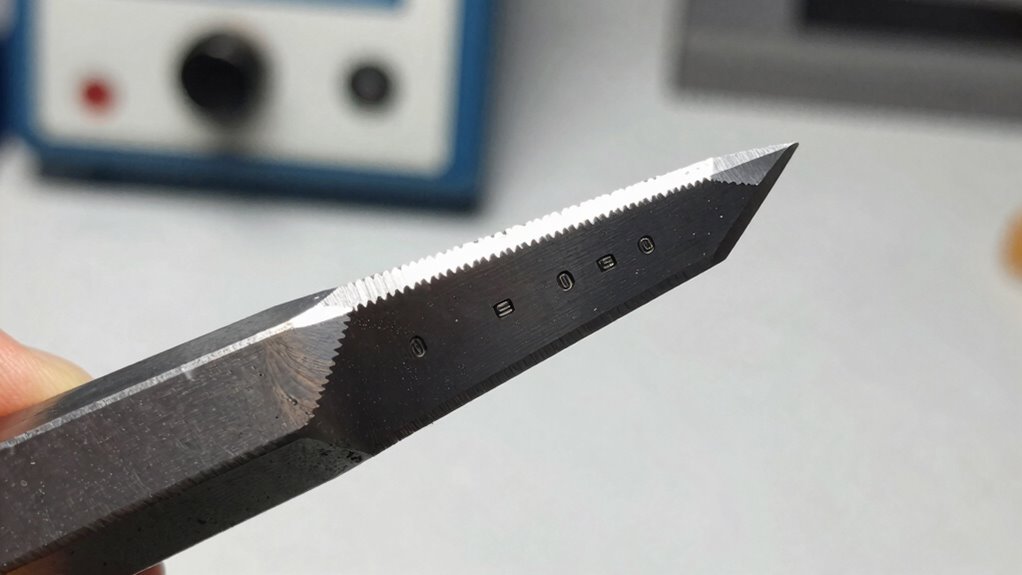
Implementing regular inspections is key to staying on top of tool wear. Visual checks can reveal obvious signs like chipping or built-up edges, but more subtle wear requires close monitoring. Using tools like microscopes or laser measurement devices allows you to quantify wear with precision. When combined with material analysis data, these measurements give you an extensive picture of your tool’s condition. This approach helps you determine the ideal moment for reconditioning or replacing tools before their performance deteriorates. Additionally, understanding material interactions can aid in predicting wear patterns more accurately. Regular data collection further enhances your ability to anticipate issues before they become critical.
It’s also important to record and analyze your data consistently. Keeping track of cutting parameters, material types, and wear patterns over time enables you to identify trends. For instance, if you notice that certain materials or cutting speeds lead to faster wear, you can adjust your process accordingly. This data-driven approach ensures you make informed decisions about tool management, reducing the risk of unexpected failures. Incorporating wear pattern analysis into your routine can help you develop more effective strategies for tool longevity.
Ultimately, the key to preventing performance drops lies in continuous monitoring. By combining material analysis with strategic adjustments to cutting speed and regular inspections, you stay ahead of wear issues. This proactive stance not only improves efficiency but also extends your tools’ lifespan, saving you money and minimizing downtime. When you understand your tools’ wear patterns and respond proactively, you keep your production running smoothly and efficiently. Emphasizing the importance of predictive maintenance can further optimize your overall process.
laser tool wear measurement device
As an affiliate, we earn on qualifying purchases.
As an affiliate, we earn on qualifying purchases.
Frequently Asked Questions
What Are the Most Common Signs of Tool Wear?
You’ll notice common signs of tool wear through changes on the tool surface, such as chipping, dullness, or discoloration. Wear patterns like uneven edges or built-up material also signal deterioration. These indicators affect cutting efficiency and surface finish. Regularly inspecting the tool surface and monitoring wear patterns helps you catch early signs of wear, allowing you to plan timely maintenance or replacements before performance drops or tool failure occurs.
How Often Should Tool Inspections Be Performed?
You should schedule regular, reliable inspections to guarantee your tool lifespan. Depending on your workload, inspection frequency may range from daily to weekly. Consistent checking helps catch wear early, preventing performance drops and costly damage. By maintaining a meticulous monitoring routine, you affirm your tools stay sharp and efficient, maximizing their lifespan. Remember, proactive inspections protect your productivity and prolong the life of your tools, saving you time and money.
What Tools Are Best for Measuring Tool Wear?
You should use precision tools like optical microscopes, profilometers, and coordinate measuring machines (CMMs) to measure tool wear accurately. These tools help you analyze wear patterns and assess the remaining tool lifespan. Regular measurements enable you to detect early signs of wear, preventing performance drops. By understanding wear patterns, you can schedule timely tool replacements, ensuring peak performance and extending the life of your tools.
Can Software Predict Tool Wear Accurately?
Yes, software can predict tool wear accurately through predictive maintenance and wear monitoring. You can rely on advanced algorithms that analyze data from sensors, such as vibration, temperature, and force. These tools identify patterns indicating wear progression, helping you anticipate failures before performance drops. By integrating predictive maintenance software into your workflow, you gain real-time insights, enabling timely interventions and reducing unexpected downtime or tool breakage.
How Does Ambient Temperature Affect Tool Wear?
Ambient temperature can dramatically accelerate tool wear, causing it to degrade faster than a snowball tumbling downhill. Higher temperatures lead to thermal expansion, making tool components swell like balloons, which increases friction and stresses. This rapid wear can turn your precision tools into scrap metal in no time. Monitoring ambient temperature helps you anticipate these effects, allowing you to adjust cutting parameters and prevent catastrophic tool failure before it happens.
digital microscope for tool inspection
As an affiliate, we earn on qualifying purchases.
As an affiliate, we earn on qualifying purchases.
Conclusion
By monitoring tool wear proactively, you prevent surprises that can halt production like a sudden storm. Think of it as checking weather forecasts before heading out—small signs can warn you of bigger trouble ahead. When you catch wear early, you keep operations smooth and efficient, much like adjusting sails to avoid rough seas. Staying vigilant guarantees your tools perform at their best, helping you navigate manufacturing challenges with confidence and ease.
vibration and temperature monitoring system for machining
As an affiliate, we earn on qualifying purchases.
As an affiliate, we earn on qualifying purchases.
As an affiliate, we earn on qualifying purchases.