
TL;DR

Get business pricing on tools and workshop supplies
- Business-only prices and quantity discounts
- Tax-exempt purchasing
- Multiple users, one account, clear invoices
The Ideal Home report advises turning central heating off and waiting for radiators to cool completely before opening bleed valves. After bleeding, check boiler pressure against the boiler’s recommended range before switching the heating back on.
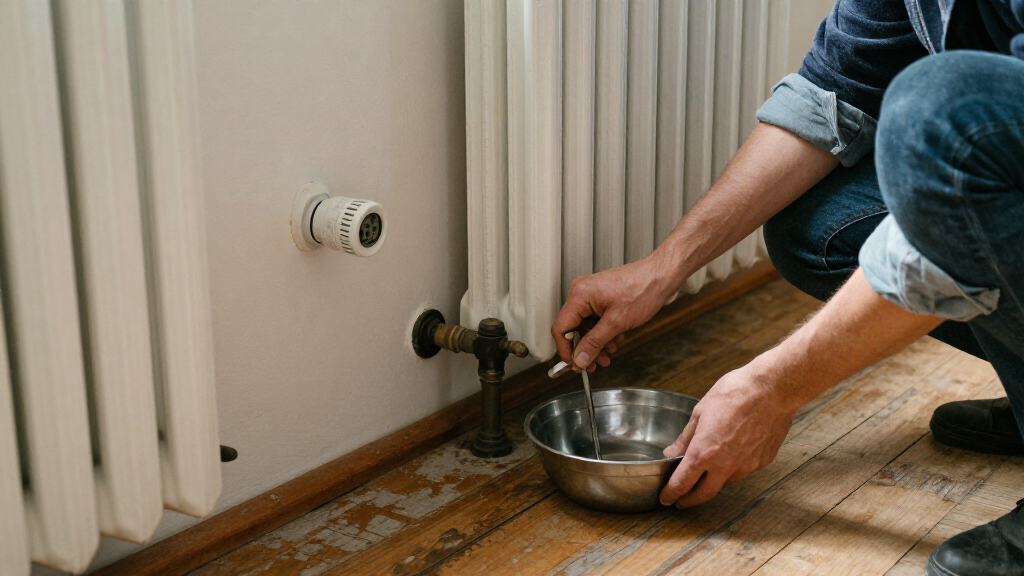
Turn the heating off and let radiators cool before bleeding them, according to guidance in an Ideal Home report, which cites radiator specialist Nick Duggan. Opening a valve while hot water is circulating can release hot water and increase the risk of burns; after the job, check boiler pressure before restarting the system.
Duggan, director of The Radiator Centre, advises waiting until radiators are completely cold before opening a bleed valve. The report says that although running the heating can help reveal a radiator that is warm at the bottom and cold at the top, the heating should be off for the bleeding itself. The two steps serve different purposes: heating can help identify a possible problem, while cooling makes the valve safer to open.
With the heating running, water may come out faster when the valve is opened, making the task messier and increasing the chance of contact with hot water. The report also says bleeding a hot radiator is less effective and that cold spots may return. Once the bleeding is finished, Duggan says there is no need to wait for a long period: give the system a few minutes, then check the boiler pressure before turning the heating back on.
Bleeding releases air from radiators. A cold area at the top can be a sign of trapped air, but Darren Danks, head of training at Worcester Bosch, says small pockets may not create noticeable cold spots. The report suggests considering all radiators rather than relying only on visible signs. It estimates the task takes about 30 seconds per radiator, or around 15 minutes for a home, though radiator covers can add time.
Avoiding Burns and Pressure Problems
Doing the job with the heating off is a straightforward safety measure: it lowers the risk of hot water escaping from an open valve and helps limit splashing. Waiting for the radiators to cool also gives the water and air inside time to settle, which Duggan says helps produce a better result.
Checking pressure matters because bleeding several radiators can cause it to fall, according to the report. The boiler’s recommended pressure range should guide whether the system is ready to run again. The article does not provide one universal pressure figure, so homeowners should refer to their boiler instructions rather than assume a single target applies to every system.
As an affiliate, we earn on qualifying purchases.
Spotting Air in the System
The report frames radiator bleeding as a check to do before putting central heating into regular use as cooler weather arrives. Its main diagnostic sign is a radiator that feels cold at the top while warmer lower down, which can indicate trapped air. A radiator that heats evenly does not prove there is no air anywhere in the system, Danks cautions.
The article says bleeding each radiator takes roughly half a minute once the homeowner has the required tool, commonly a radiator key, and a way to catch drips. That timing is an estimate from the report, not a guarantee for every heating system or radiator. Covers and awkward valve positions may make the job take longer.
““Make sure the heating is switched off and, ideally, wait until your radiators have gone completely cold.””
— Nick Duggan, director of The Radiator Centre, as quoted by Ideal Home
As an affiliate, we earn on qualifying purchases.
The report gives no single boiler-pressure reading for every household. The correct range depends on the boiler and should be checked in its manual or manufacturer guidance. It also does not establish that every radiator needs bleeding in every home: Danks’s comments indicate that air can be hard to detect, while the suggestion to check all radiators is practical advice attributed to the report, not a diagnosis of any particular system.
The guidance is general. It does not assess individual boiler faults, persistent pressure loss or radiators that remain cold after bleeding. Those issues may need a heating professional to investigate; the source material does not explain their cause in a specific home.
As an affiliate, we earn on qualifying purchases.
Check Pressure Before Restarting
After bleeding, leave the heating off for a few minutes and check the boiler pressure against the range specified for the system. If it is within that range, Duggan’s advice is that the heating can be turned back on. Homeowners should follow their boiler’s instructions for any pressure adjustment and seek qualified help if they are unsure or the system continues to lose pressure.
Once the heating is running again, check whether radiators warm evenly. If cold areas persist or performance remains poor, the report does not offer a diagnosis; further checks may be needed. The next useful step is to consult the boiler guidance or a heating specialist rather than repeatedly opening valves without understanding the problem.
As an affiliate, we earn on qualifying purchases.
Key Questions
Should the heating be on or off when bleeding radiators?
Off. Ideal Home’s report, citing Nick Duggan of The Radiator Centre, advises switching off the heating and waiting for radiators to cool completely before opening a bleed valve.
Why should radiators be cold first?
Hot water can escape when a valve is opened, creating a burn risk. The report also says water may come out faster with the heating on, making the task messier and less effective.
When can I turn the heating back on?
Duggan says to give the system a few minutes after bleeding, then check boiler pressure. Turn the heating back on if pressure is within the range recommended for your boiler.
Does a radiator need bleeding if it has no cold spots?
Not necessarily, but the absence of a cold spot does not rule out all trapped air. Worcester Bosch’s Darren Danks says small air pockets may not produce noticeable cold areas; the report suggests checking all radiators.
How long does bleeding radiators take?
The report estimates about 30 seconds per radiator and around 15 minutes for all radiators in a home. Covers or difficult access can make the job take longer.
Source: rss
Fall Picks
fall essentials
As an affiliate, we earn on qualifying purchases.