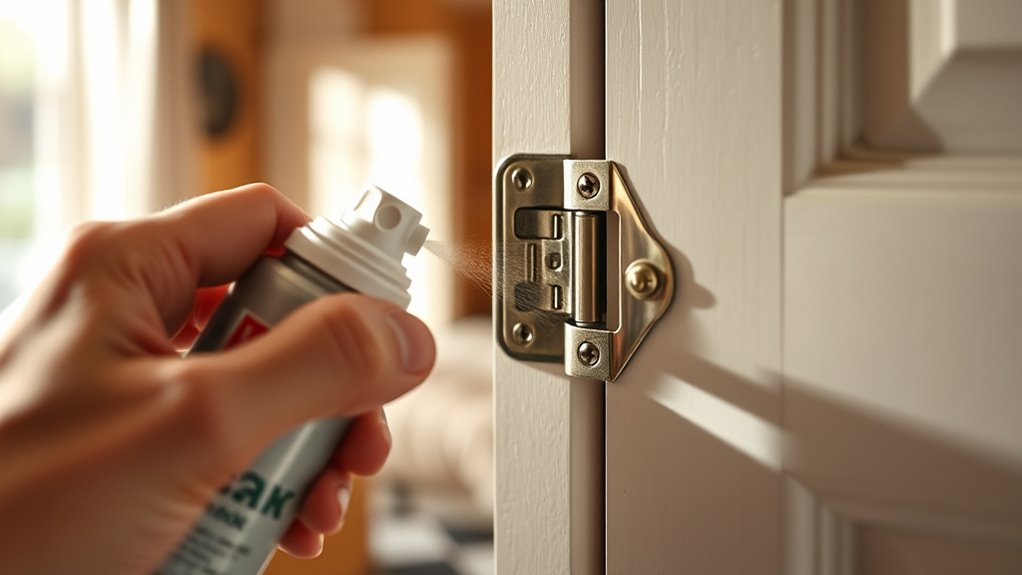

To fix a squeaky door hinge quickly, first open the door and apply a lubricant like WD-40 or silicone spray directly onto the hinge pin and moving parts. Then, open and close the door several times to spread the lubricant evenly. If the squeak persists, reapply or try a different lubricant. For more tips to keep your hinges quiet longer, stay tuned for additional advice.

Get business pricing on tools and workshop supplies
- Business-only prices and quantity discounts
- Tax-exempt purchasing
- Multiple users, one account, clear invoices
Key Takeaways
- Identify the squeaky hinge by opening and closing the door to pinpoint the source of noise.
- Apply a lubricant spray or oil directly onto the hinge pin while the door is open.
- Move the door back and forth to evenly distribute the lubricant and silence the squeak.
- Reapply lubricant or try a different type, like silicone spray, if the squeak persists.
- For stubborn squeaks, remove the hinge pin, clean, lubricate, and reassemble or replace the hinge if needed.
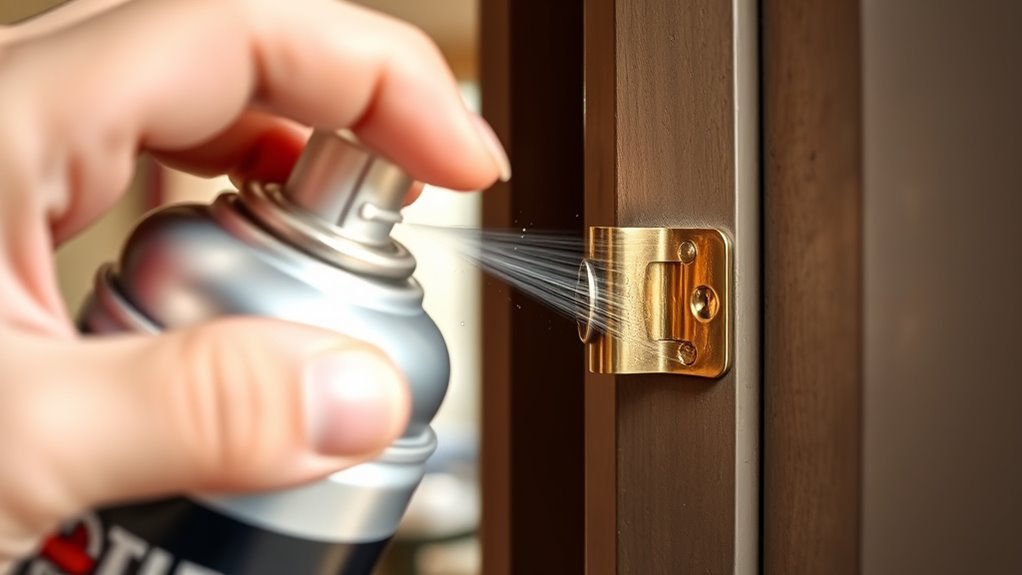
A squeaky door hinge can be both annoying and disruptive, but fixing it is a straightforward task you can do yourself. Most often, a squeak comes from lack of lubrication or dirt build-up, which makes the hinge parts grind against each other. The easiest fix is door lubrication—simply applying the right lubricant to the hinge pin can silence the noise quickly. To do this, you’ll need a few basic supplies: a lubricant spray or oil, a screwdriver, and some rags. Start by opening and closing the door a few times to identify the squeaky hinge. Then, use the screwdriver to remove any hinge pins if necessary, or simply spray the lubricant directly onto the hinge while the door is open. Be sure to cover the entire hinge pin and the surrounding area to guarantee thorough lubrication. After applying the lubricant, move the door back and forth to distribute the oil evenly. The squeak should diminish or disappear entirely. If it persists, repeat the process or try a different type of lubricant, like a silicone spray, which tends to last longer and resist dust accumulation.
Sometimes, the problem isn’t just lubrication but a worn or damaged hinge. Over time, hinges can become loose or bent, leading to persistent squeaks or misalignment. In these cases, hinge replacement might be necessary. To replace a hinge, start by removing the screws holding the old hinge in place with a screwdriver. Keep track of the screws, as you’ll need them to install the new hinge. Once the old hinge is off, align the new hinge in the same position and screw it into place. Make sure the screws are tight, but avoid overtightening, which can strip the wood or damage the hinge. If your door continues to squeak even after hinge replacement, double-check that everything is aligned properly and that the hinge fits snugly in its frame. Proper hinge installation is vital for smooth operation and avoiding future squeaks.
If the hinge shows signs of corrosion or wear beyond simple repair, replacing the entire hinge assembly may be the most effective solution to prevent further issues. Regular maintenance, including air purifier upkeep, can also help prevent dust and debris from settling into hinges or other moving parts, reducing squeaking problems in the long term. Remember, fixing a squeaky door hinge is usually a quick DIY task. With a little patience and the right approach, you can eliminate the noise and restore your door’s proper function in no time.
As an affiliate, we earn on qualifying purchases.
Frequently Asked Questions
How Often Should I Lubricate Door Hinges?
You should lubricate your door hinges every 6 to 12 months for ideal door hinge maintenance. Regular lubrication frequency helps prevent squeaks and keeps hinges operating smoothly. If you notice creaking or stiffness sooner, don’t hesitate to apply lubricant again. Keep an eye on how your hinges perform, and adjust the lubrication schedule accordingly to maintain quiet, effortless door operation. This simple step extends the lifespan of your hinges and reduces noise.
Can I Use WD-40 on Door Hinges?
Yes, you can use WD-40 on door hinges for maintenance and to eliminate squeaks. It acts as an effective lubricant alternative, penetrating deep into the hinge to reduce friction. Just spray a small amount onto the hinge pins and work the door back and forth. Remember, regular door hinge maintenance helps prevent squeaks, so keep a lubricant handy. If you prefer, you can also use other lubricants like silicone spray or household oils.
What if the Squeak Persists After Lubrication?
If the squeak persists after lubrication, you might need to contemplate door hinge replacement or professional repair. Sometimes, the lubricant only temporarily masks the noise, but worn hinges require more attention. Remove the hinge pin and check for damage or rust. If you’re unsure or the hinge is severely damaged, hiring a professional ensures a proper fix without causing further issues. Don’t hesitate to seek expert help if needed.
Are There Eco-Friendly Alternatives to Oil?
You seek eco-friendly options instead of traditional oil, and biodegradable lubricants or plant-based oils are excellent choices. These alternatives work just as well while being gentle on the environment. Imagine a squeaky hinge that gets smoothly lubricated without harmful chemicals, leaving a smaller carbon footprint. Using biodegradable lubricants or plant-based oils not only solves your squeak but also supports sustainability, making your home greener and your conscience clearer.
How Do I Prevent Future Squeaking?
To prevent future squeaks, keep up with regular door hinge maintenance by lubricating hinges every few months using eco-friendly options like beeswax or silicone spray. Follow squeak prevention tips such as tightening loose screws and ensuring hinges are free of dust and debris. Avoid over-lubricating, which can attract dirt. Consistent maintenance helps keep your door hinges quiet and functioning smoothly for years to come.
As an affiliate, we earn on qualifying purchases.
Conclusion
Now that you’ve fixed that squeaky hinge, you might find yourself suddenly noticing all the little squeaks around the house. It’s funny how a simple trick can turn into a reminder to check other hinges or creaky spots. Sometimes, fixing one thing unexpectedly reveals other tiny annoyances, making you appreciate the quiet moments even more. So, next time a squeak shows up, remember—sometimes, a quick fix is all you need to restore peace and quiet.
silicone spray lubricant for hinges
As an affiliate, we earn on qualifying purchases.
As an affiliate, we earn on qualifying purchases.
As an affiliate, we earn on qualifying purchases.
Fall yard work Picks
leaf blowers
As an affiliate, we earn on qualifying purchases.