TL;DR

Get business pricing on tools and workshop supplies
- Business-only prices and quantity discounts
- Tax-exempt purchasing
- Multiple users, one account, clear invoices
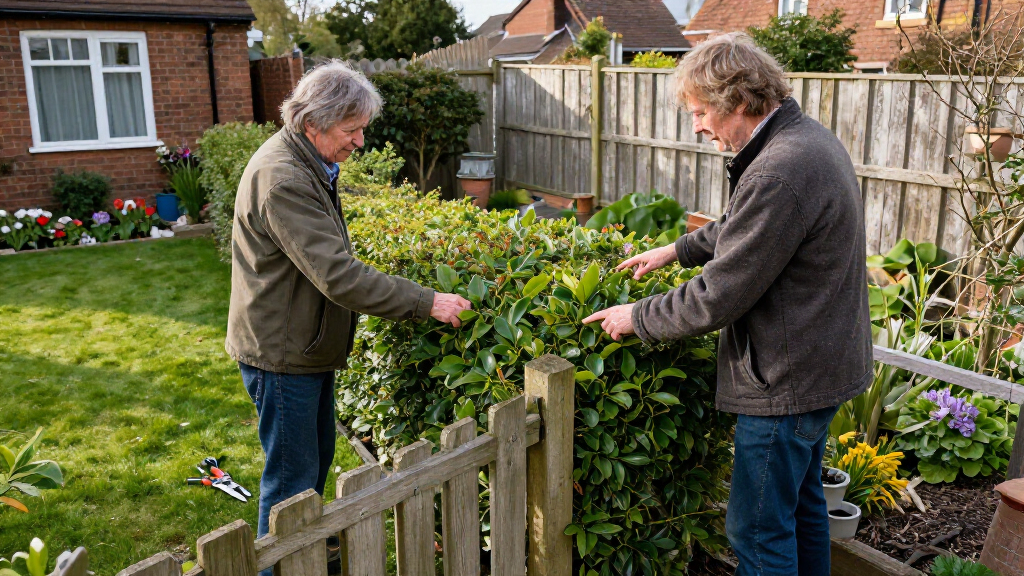
A tree or hedge is generally associated with the land where its trunk or main stems sit, but a fence alone may not establish the legal boundary. Ideal Home’s report advises checking property deeds and speaking with neighbours before substantial work; protected trees and nesting birds can restrict pruning.
Property deeds and the location of a tree’s trunk or a hedge’s main stems are among the first things homeowners should check when a boundary planting causes a dispute, according to an Ideal Home report. The guidance matters because a fence may not mark the legal boundary, and pruning can raise ownership, neighbour-relations and legal issues.
Lucie Bradley, a gardening and greenhouse expert at Harvst Automatic Watering, advises starting with the house deeds, which can be accessed through HM Land Registry. She says boundary lines are generally marked in red, but the plans are not precise to the millimetre. Deeds may also show “T” marks indicating responsibility for a boundary feature; paired marks resembling an “H” can indicate shared responsibility, according to Bradley.
The position of the trunk or main stem can help establish which property a tree belongs to. Kara Gammall, a home insurance expert at MoneySuperMarket, says a tree whose trunk is entirely on one property will generally belong to that landowner, even if branches or roots extend next door. If the trunk crosses the boundary, ownership and responsibility may be more complicated, and neighbours may need to agree how it is maintained.
For overhanging branches or roots, Gammall says people generally have a right to prune growth back to their side of the boundary. That does not mean they can enter a neighbour’s land or cut beyond the boundary without permission. The report advises speaking to the neighbour before substantial pruning, which could affect a tree’s health or stability. It also warns that Tree Preservation Orders and rules protecting nesting birds may restrict work.
Pruning Can Carry Legal Risks
Getting ownership wrong can turn routine garden maintenance into a disagreement or lead to damage to a tree on someone else’s land. Checking deeds and discussing plans with a neighbour can help clarify who is responsible before work begins, particularly where a trunk straddles a boundary or the boundary itself is disputed.
The report also distinguishes a general right to remove encroaching growth on one’s own side from permission to carry out extensive work. A protected tree may require local authority consent, and nesting birds must not be disturbed or harmed. Those restrictions mean homeowners should check the tree’s status and circumstances before pruning, rather than relying only on where branches hang.
As an affiliate, we earn on qualifying purchases.
Deeds Matter More Than Fence Lines
The report challenges the commonly repeated “left-hand rule” for deciding who owns a boundary feature, describing it as a property myth. It says the deeds are a better starting point, while cautioning that their boundary markings are indicative rather than exact measurements.
A fence’s current position is not definitive proof of the legal boundary, Gammall says, because fences can move over time. Historic documents may also help. Where the paperwork and physical features do not make responsibility clear, the report suggests discussing the issue with the neighbour rather than treating a hedge, fence or tree’s apparent position as conclusive.
“The place to start when trying to find out who owns a tree or hedge is to check your house deeds.”
— Lucie Bradley, gardening and greenhouse expert at Harvst Automatic Watering
garden pruning tools for boundary trees
As an affiliate, we earn on qualifying purchases.
As an affiliate, we earn on qualifying purchases.
Boundaries May Remain Disputed
The report does not establish ownership of any specific tree or hedge. Deed plans may not pinpoint a boundary precisely, and the position of a fence can be unreliable; where a trunk or hedge sits across a boundary, responsibility may need to be agreed or clarified using property records and, if necessary, further advice.
The report’s guidance is general and does not resolve every legal or local-authority situation. It does not identify a particular property, council decision or dispute. Whether a tree is protected, whether permission is required, and what restrictions apply must be checked for the specific site with the relevant local council.
As an affiliate, we earn on qualifying purchases.
Check Records Before Cutting
Homeowners concerned about a boundary tree or hedge can begin by reviewing their deeds and any available historic boundary documents, then compare those records with the tree’s trunk or hedge’s main stems. If the ownership or boundary remains unclear, they should discuss it with the neighbour before agreeing on care, heavy pruning or removal.
Before cutting, check with the local council whether a Tree Preservation Order or conservation-area rules apply, and avoid disturbing nesting birds. The supplied report does not give a date for a follow-up or describe any change in law; the next step depends on the property records, the neighbour’s agreement and any local protections.
As an affiliate, we earn on qualifying purchases.
Key Questions
How can I find out who owns a boundary tree?
Start with the property deeds and examine where the trunk sits in relation to the recorded boundary. A tree with its trunk entirely on one property will generally belong to that landowner, but a boundary that is unclear may need further investigation.
Does the fence show where the legal boundary is?
Not necessarily. The report says fences can move over time, so their current position is not definitive proof. Check the deeds and any historic documents before deciding who owns a boundary feature.
Can I cut branches that overhang my garden?
The report says you generally may prune encroaching growth back to your side of the boundary. You should not enter a neighbour’s land or cut beyond the boundary without permission, and it is sensible to discuss substantial work first.
Can a protected tree be pruned?
A tree subject to a Tree Preservation Order may require permission before pruning. Check with the local council, and take care not to disturb or harm nesting birds.
Source: rss
Halloween Picks
halloween
As an affiliate, we earn on qualifying purchases.