
Choosing woodworking tools is less about owning the biggest collection than having the right tools for the work you plan to do. A woodworking starter set bundles common tools into one purchase, often at a lower combined price. Curated individual tools let you build the shop piece by piece, choosing each item for its quality, use and fit with your projects. The tradeoff is convenience and immediate coverage versus control over where your money goes.

Get business pricing on tools and workshop supplies
- Business-only prices and quantity discounts
- Tax-exempt purchasing
- Multiple users, one account, clear invoices

KAKURI Japanese Woodworking Hand Tool Set
- ✔ Included tools: Japanese pull saw, two chisels, hand plane, woodworking hammer, marking gauge
- ✔ Number of items: 7
- ✔ Origin: Made in Japan

25-Piece Wood Carving Kit with Leather Storage Bag
- ✔ Set size: 25 pieces
- ✔ Included tools: 3 chisels, 8 whittling knives, 5 detail knives, scriber, hammer, marking knife
- ✔ Sharpening accessories: Sharpening stone, polishing paste, leather strop

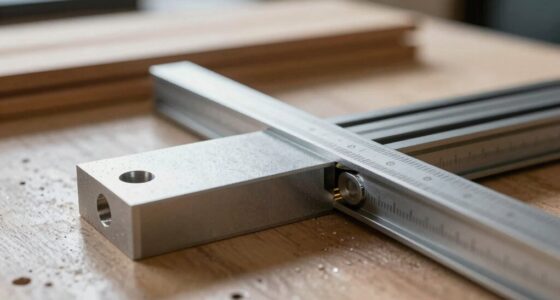
Aluminum Woodworking Measuring and Scribing Tool Set with Storage Case
- ✔ Material: Aluminum alloy
- ✔ Named tools: Angle ruler, dovetail gauge, scriber, and other measuring and marking tools
- ✔ Set size: Described as both 9-piece and 10-piece
A starter set can make sense for a new woodworker who wants to begin with basic hand tools and does not yet know which tasks will become regular. Buying individually usually suits someone with a clear project list, existing tools or a preference for investing in fewer, better pieces. Sets vary widely, so the label alone does not tell you whether the contents are useful: check the tools, sizes, materials and whether the kit includes duplicates or accessories you will not use.
At a Glance
| Criteria | Woodworking starter tool set | Curated individual woodworking tools | Winner |
|---|---|---|---|
| Upfront cost | Usually lower than buying the same number of tools separately, but value depends on how many pieces you need. | Can be higher at first if you buy premium tools, though you can spread purchases over time. | Depends |
| Tool selection | Contents are fixed; the set may include useful basics alongside tools that do not suit your work. | You choose each tool to match your projects, materials and preferred methods. | B |
| Quality control | Quality varies by set and by item; inspect specifications and replacement options. | You can prioritize quality and ergonomics on tools used often, while choosing economical options elsewhere. | B |
| Immediate coverage | Often stronger for getting a basic collection together in one purchase. | Builds more slowly; you may need to postpone projects until a missing tool is available. | A |
| Fit for changing projects | Limited to the included tools until you add or replace pieces. | Strong: purchases can follow the work you take on. | B |
| Risk of unused tools | Higher when the set includes unfamiliar or specialized items. | Lower when each purchase answers a known need. | B |
| Long-term flexibility | A simple starting point, but upgrades may leave some pieces unused. | Strong: easier to add, upgrade or replace individual tools. | B |
KAKURI Japanese Woodworking Hand Tool Set
For buyers who want to make basic cuts and joinery by hand, this is the most complete starting point in our comparison. The pull saw, two chisels, hand plane, hammer, and marking gauge represent different stages of a project, from laying out a line to refining a surface. The set is described as beginner-friendly and made in Japan, with a canvas bag for keeping the tools together. That functional spread is why we rank it ahead of the carving kit as an overall woodworking set: the carving kit offers many more pieces, but most are focused on shaping and detailing.The tradeoff is that breadth does not mean depth. There is only one saw, two chisels, and one plane, so buyers planning frequent joinery or specialized work may soon want more sizes or dedicated tools. The included sizes also define the work it suits: the 3/8-inch mortise chisel and 1-inch wood chisel cover particular tasks, not every cut. Compared with the aluminum set, KAKURI can actively cut and shape wood; the measuring set is more appropriate when we already have cutting tools and need layout equipment.This is the clearest choice for a newcomer who wants a coherent core kit for hand-powered woodworking. We should skip it if our priority is a large carving knife selection, a comprehensive measuring collection, or an expanded professional setup.
Pros:
- Combines sawing, chiseling, planing, marking, and hammering tools.
- The included tools form a coherent beginner-oriented woodworking set.
- Canvas bag supports storage and transport.
- Made in Japan, according to the listing.
Cons:
- Only two chisels and one hand plane limit size options.
- The set is described as a starter kit, not an expanded or specialized collection.
Best for: Beginners who want a compact, mixed set of hand tools for basic woodworking and joinery.
Not ideal for: Carvers seeking a wide range of knives, or experienced woodworkers who need specialized tools and multiple sizes.
Bottom line: We recommend KAKURI for the broadest entry into hand-tool woodworking among these three sets, provided its limited tool sizes fit our projects.
“We recommend KAKURI for the broadest entry into hand-tool woodworking among these three sets, provided its limited tool sizes fit our projects.”
25-Piece Wood Carving Kit with Leather Storage Bag
We choose this kit when the project is primarily about shaping and detailing wood. Its three chisels, eight whittling knives, and five detail knives give it a much stronger carving focus than KAKURI’s small number of chisels and general-purpose hand tools. The scriber, marking knife, hammer, and sharpening supplies add useful support, while the leather roll keeps a broad collection organized for storage or transport.The sharpening accessories are a practical differentiator: a stone, strop, and polishing paste give buyers tools for maintaining the edges, rather than leaving upkeep entirely outside the kit. The stainless steel blades are described as corrosion-resistant and reinforced with a Mo.V alloy, and the varnished walnut handles are intended for a non-slip, ergonomic grip. But the breadth of knives should not be mistaken for broad woodworking coverage. Unlike KAKURI, this set does not include a pull saw or hand plane, so it is not the better all-round starter option for building or joinery.We would favor it for whittling and soft-material carving, where the range of blade shapes is more useful than a saw-and-plane combination. It is a poor fit for hard materials or buyers who want a single kit for general carpentry. Sharp blades also require careful handling; the included safety gloves are a precaution, not a substitute for safe technique.
Pros:
- Broad carving selection includes chisels, whittling knives, and detail knives.
- Includes a sharpening stone, strop, and polishing paste.
- Walnut handles and a leather roll are specified.
- Storage roll includes handheld and shoulder straps.
Cons:
- Designed for wood and other soft materials, limiting its suitability for harder materials.
- Sharp blades demand careful handling even with safety gloves included.
Best for: Carving beginners and hobbyists who want a variety of knives plus basic sharpening and storage accessories.
Not ideal for: Buyers seeking a general hand-tool woodworking kit, or anyone who needs tools intended for harder materials.
Bottom line: We recommend this as the carving specialist in the lineup, but its knife-heavy contents do not replace KAKURI’s broader cutting, planing, and joinery tools.
“We recommend this as the carving specialist in the lineup, but its knife-heavy contents do not replace KAKURI’s broader cutting, planing, and joinery tools.”
Aluminum Woodworking Measuring and Scribing Tool Set with Storage Case
This set fills a narrower role: helping us measure, mark, and lay out woodworking cuts. The listing names an angle ruler, dovetail gauge, and scriber, along with other measuring and marking tools, and describes machined aluminum alloy construction. Its red case is designed to keep the tools together and is small enough to carry as a dedicated layout kit. Compared with the KAKURI set, it has more emphasis on preparing accurate lines and angles than on cutting, planing, or joining wood.That focus can make sense for a woodworker who already owns saws and chisels and wants a portable collection of marking tools. The problem is that the listing describes the set as both 9-piece and 10-piece, while leaving the full contents unspecified. That makes it harder to know whether the kit covers the measurements and marking tasks we need, and gives it less buying clarity than either of the other options. By contrast, KAKURI names its core tools and the carving kit itemizes its main blade and sharpening categories.We rank it third because the layout role is legitimate but the available details make the set’s actual scope uncertain. Choose it only if the named tools match our needs and we can confirm the full contents before purchase. If we need a first kit that can directly shape wood, KAKURI is more capable; if carving is the goal, the 25-piece kit has the more relevant selection.
Pros:
- Includes named layout tools such as an angle ruler, dovetail gauge, and scriber.
- Machined aluminum alloy construction is specified.
- Storage case keeps the set organized and portable.
Cons:
- Listing gives conflicting 9-piece and 10-piece set counts.
- Full contents are not specified, so coverage is difficult to judge.
Best for: Woodworkers who already have cutting tools and want a portable set of measuring and marking equipment.
Not ideal for: Beginners who need a complete working set, or buyers who require a confirmed item-by-item contents list.
Bottom line: We see this as a potentially useful layout companion, but unclear contents keep it behind the two more fully described task-focused kits.
“We see this as a potentially useful layout companion, but unclear contents keep it behind the two more fully described task-focused kits.”
As an Amazon Associate we earn from qualifying purchases.
Key Differences
The starter set’s main advantage is getting a collection in hand quickly. One package may cover measuring, marking, sawing, fastening or basic shaping, giving a beginner a workable base without researching every purchase. That convenience only pays off when the contents match actual work. A low price per piece can be misleading if several pieces duplicate what you own, lack useful sizes or are too crude for accurate results.
Curated tools trade speed for choice. You can buy a reliable saw, square or chisel first, then add tools as projects reveal what is missing. This approach can improve accuracy and comfort on frequently used tools, but it takes more research and patience. For an uncertain beginner with a modest budget, a well-reviewed starter set may be a sensible launch point. For someone who knows the projects ahead, selective buying is usually the stronger long-term strategy.
Detailed Comparison
Upfront cost and value (moderate difference)
A starter set often costs less than buying all of its contents separately, so it wins when most pieces are useful and serviceable. Curated tools can cost more if you choose premium versions, but you can spread spending across months and avoid paying for pieces that will sit unused. The gap is moderate and depends on the set’s contents, not just its advertised discount. Compare the price of the specific tools you need with the set price; a bargain bundle is poor value if you would replace several items.
Selection and project fit (Curated individual woodworking tools wins — major)
Curated buying wins by a major margin for project fit: you select tool types, sizes and features around the furniture, repairs or joinery you plan to do. A set provides a preset assortment that may suit common beginner tasks but cannot adapt to your priorities. In practice, a carver, cabinetmaker and homeowner doing repairs need different collections. Choose the set only if its inventory overlaps with your likely first projects.
Quality and control over spending (Curated individual woodworking tools wins — moderate)
Buying individually gives you direct control over where quality matters. You might choose a better measuring square or saw because errors there affect every cut, then buy a basic clamp for occasional use. A set can include a mix of quality levels, and the weakest or least accurate item may limit the kit’s usefulness. This is a moderate advantage for curated tools, especially when precision and regular use matter. Check tolerances, materials, handle comfort, sharpening needs and availability of replacements.
Getting started quickly (Woodworking starter tool set wins — moderate)
A starter set wins, with a moderate advantage, when it covers the essentials for a first project. A single purchase can reduce shopping time and help a beginner start practicing rather than comparing every tool category. Individually selected tools can take longer to assemble, and a missing item may delay work. Still, a set is only a shortcut if it includes the right basics; review the item list and avoid assuming that a high piece count means broad practical coverage.
Flexibility as skills develop (Curated individual woodworking tools wins — moderate)
Curated buying wins moderately because each purchase can respond to what you learn at the bench. If you discover that you do more hand-cut joinery, you can prioritize suitable saws and chisels; if you move toward larger projects, you can direct funds elsewhere. A fixed set does not change as your interests do. Its tools remain useful if they match evolving work, but upgrades can create overlap and leave starter pieces behind.
Risk of paying for unused tools (Curated individual woodworking tools wins — moderate)
Curated tools win by a moderate margin when you have a defined project list because every purchase can fill a known gap. Sets shift the selection risk to the buyer: an unfamiliar profile, duplicate size or accessory may add to the piece count without adding capability. For a beginner with no existing tools, some extra coverage can be helpful rather than wasteful. Before choosing, mark each set item as needed now, useful later or unlikely to use.
Convenience and storage (Woodworking starter tool set wins — minor)
Sets often arrive together and may include a case, which can help keep a compact starter collection organized. Curated tools arrive over time, and you must plan storage as the shop grows. The difference is minor: cases vary in usefulness, and a growing set may soon outgrow its original container. Pick based on the actual storage arrangement and whether it protects sharp edges, rather than assuming a bundled case is a lasting workshop solution.
Woodworking starter tool set: Pros and Cons
Pros:
- One purchase can provide a useful basic spread of tools.
- Often cheaper than buying every included piece individually.
- Reduces initial research and can help a beginner start sooner.
- May include a case or organized storage.
Cons:
- Fixed contents may not match planned projects.
- Quality can vary between tools in the same set.
- A large piece count can include duplicates or low-use accessories.
- Upgrades may make some starter pieces redundant.
Curated individual woodworking tools: Pros and Cons
Pros:
- Every purchase can match a real project or workshop gap.
- Lets you invest in quality where accuracy, comfort or frequent use matter.
- Makes it easier to spread costs over time.
- Adapts naturally as skills and project interests change.
Cons:
- Can cost more upfront for premium tools.
- Requires research and may take time to assemble a usable collection.
- Missing essentials can delay a project.
- Storage and compatibility decisions fall to the buyer.
Who Should Choose What
Choose Woodworking starter tool set if:
- You are new to woodworking and need a basic hand-tool collection quickly.
- The set’s listed contents match several projects you already plan to make.
- You have a firm budget and the bundle includes mostly useful, adequately specified tools.
- You value a single purchase and supplied storage more than choosing every tool.
Choose Curated individual woodworking tools if:
- You already know the projects, techniques or materials you expect to use.
- You own some tools and want to fill specific gaps without duplicating them.
- You would rather buy fewer dependable tools than a larger mixed-quality assortment.
- You want to spread purchases over time and upgrade based on real use.
Skip both if: You have not settled on a type of woodworking and either choice would require a large spend. Start with a short list of tools for one modest project, then add pieces as the work calls for them.
Value for Money
Paying more for curated tools is worthwhile when the added cost goes to tools you will use often, where accuracy, durability or comfort affects results. It is less compelling to buy premium versions of every item before you know your habits. A starter set is better value when its useful contents would cost more to acquire separately and its quality is suitable for the work you intend to do. Compare the set against the cost of the tools you actually need, not the sum of every listed accessory.
For most beginners, a carefully checked set can be a cost-effective first step if the price is modest and the core tools are credible. For a committed woodworker or someone with defined plans, curated buying usually delivers more value over time because spending follows use and avoids unnecessary pieces. A practical compromise is to buy a small, reliable core individually and use an inexpensive set only when it fills clear remaining gaps.
Final Verdict
Choose a woodworking starter set if you are beginning, want to start soon and have confirmed that its core tools fit your first projects. Choose curated individual tools if you already know what you want to build, have some equipment or care about directing quality toward the tools you use most. The biggest deciding factor is whether the set’s actual contents match your work. For a beginner without a plan, a modest, well-specified set is a reasonable entry; for anyone with clear projects, build selectively and buy fewer, better-matched tools.
Frequently Asked Questions
Is a woodworking tool set worth buying for a beginner?
It can be, if the set includes tools suited to your first projects and the quality is adequate for safe, accurate work. Check the inventory and specifications before judging by price or piece count. A small useful set is better value than a large assortment you will not use.
Are individual woodworking tools better quality than set tools?
Not automatically. Individual buying lets you select quality tool by tool, while a set may contain a mix of strong and weaker pieces. Compare the specific models, materials, accuracy and replacement options rather than assuming either format guarantees quality.
Should I buy a complete woodworking set or build my collection over time?
Buy a set when its core contents cover several planned tasks and convenience matters. Build over time when you have a clear project list, already own some tools or want to prioritize quality. Staged buying also lets your actual work guide the next purchase.
Does a higher price mean a woodworking tool is better value?
Only when the improvement matters in use. A more accurate square or comfortable saw can justify a higher price if you rely on it often. Premium features on a tool you rarely use may add little value. Match spending to frequency, precision and durability needs.