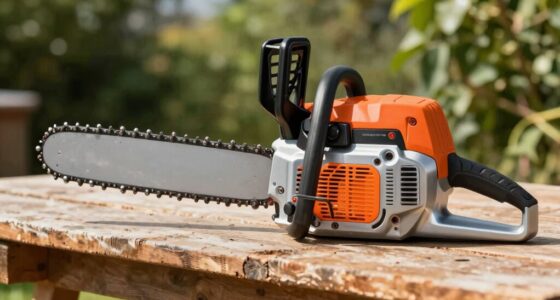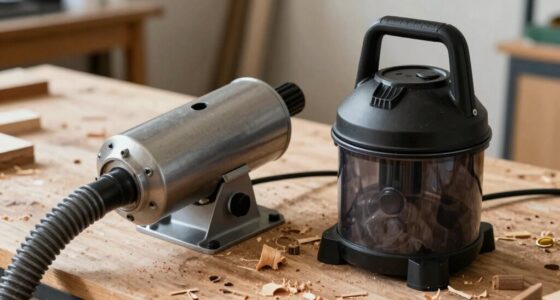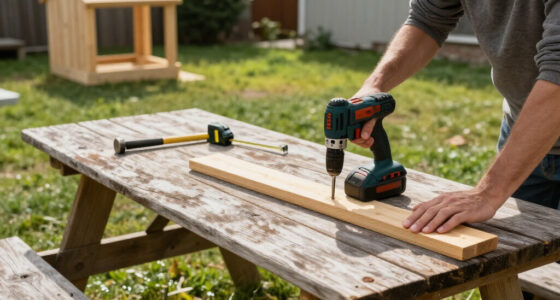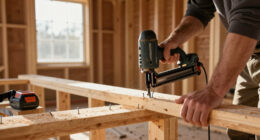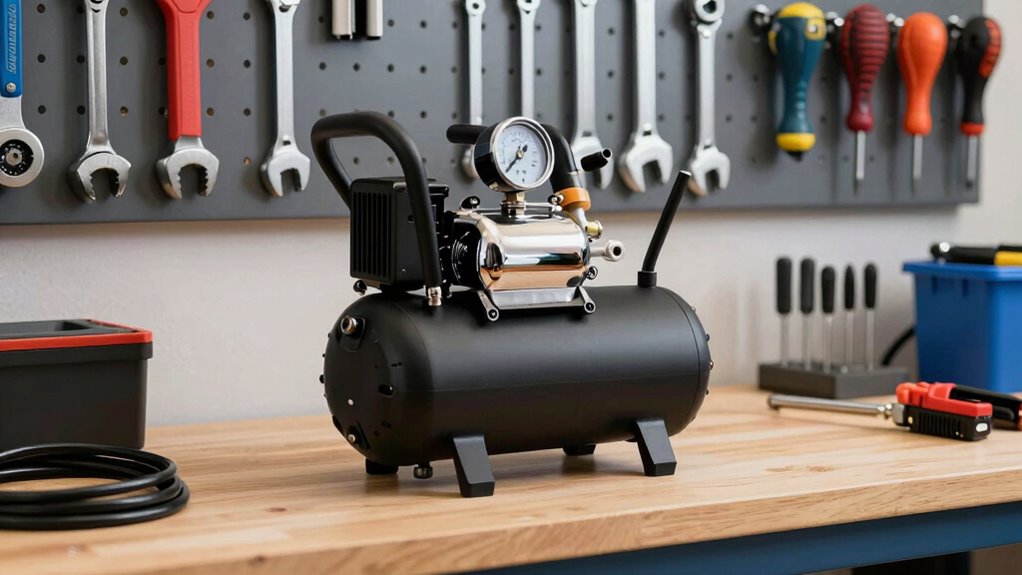
For a home garage, a 20 to 30-gallon air compressor usually works best, providing enough capacity for tools like nail guns, impact wrenches, and spray painters. If you do occasional lighter work, a smaller tank of 6-10 gallons might suit your needs, but larger tanks help sustain steady airflow for bigger projects. Keep an eye on PSI and CFM ratings to make certain your compressor matches your tools’ demands—more details on choosing the right size are just ahead.

Get business pricing on tools and workshop supplies
- Business-only prices and quantity discounts
- Tax-exempt purchasing
- Multiple users, one account, clear invoices
Key Takeaways
- A 20 to 30-gallon tank is ideal for most home garage projects involving multiple tools.
- Match the compressor’s CFM and PSI ratings to your specific tool requirements for optimal performance.
- Consider noise levels and energy efficiency features to ensure a comfortable and cost-effective workspace.
- Smaller tanks (6-10 gallons) are suitable for occasional light use, while larger tanks support bigger projects.
- Proper compressor sizing prevents work interruptions, enhances tool lifespan, and ensures consistent results.
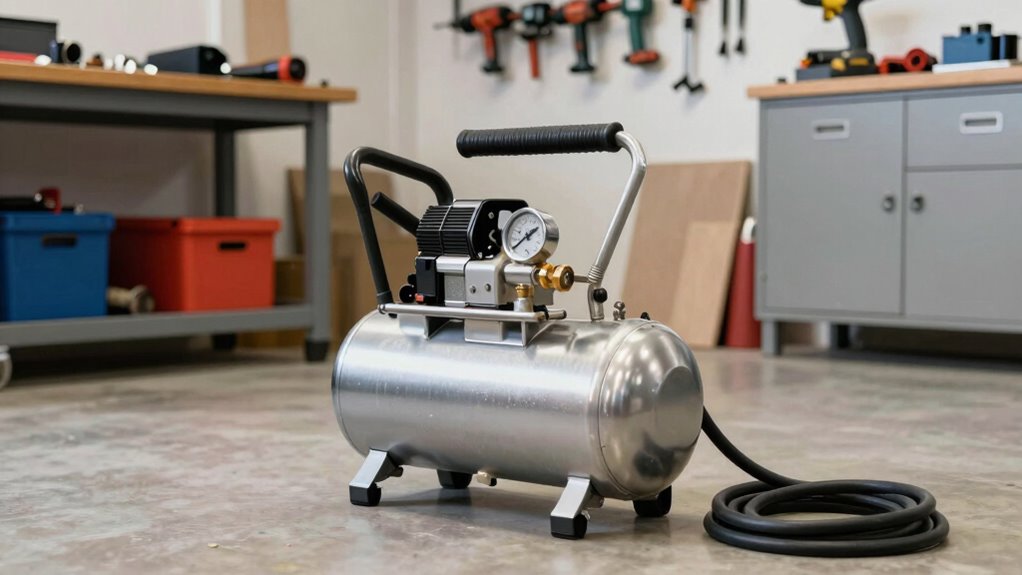
Choosing the right air compressor size for your home garage is essential to make sure you can handle your projects without constantly running into limitations. When selecting a compressor, you need to consider the types of tools you plan to use and how often you’ll need to operate them. A compressor that’s too small will struggle to keep up, causing delays and frustration, while one that’s too large might be unnecessarily costly and bulky. Striking the right balance guarantees you get the job done efficiently and comfortably.
Choosing the right compressor size ensures efficient projects without delays or unnecessary costs.
Industrial efficiency isn’t just a concern for large-scale operations; it also applies to your home setup. A compressor with adequate capacity allows your tools to operate at their best, providing a steady flow of compressed air without fluctuations. This not only improves the quality of your work but also extends the lifespan of your tools since they aren’t subjected to inconsistent pressure or overexertion. You want a compressor that can deliver consistent performance, especially if you’re working on projects that demand precision or prolonged use.
Noise levels are another critical factor to think about. Many home garage compressors tend to be loud, which can be disruptive if you live in a shared space or want to keep your workspace comfortable. Opting for a unit with lower noise emissions can make a significant difference. Look for models with noise-reduction features or sound-insulating enclosures. The right size compressor, combined with noise control, creates a more comfortable environment and lets you work more efficiently without disturbing others. Additionally, selecting a compressor with noise-reduction features can help minimize disruption during use. It’s also worth considering the overall energy efficiency of your compressor to reduce long-term operating costs.
In terms of size, most home garage projects benefit from a compressor with a tank size between 20 and 30 gallons. This range offers enough capacity to run multiple tools without frequent pauses, especially when dealing with nail guns, impact wrenches, or spray painters. For occasional light use, a smaller 6 to 10-gallon compressor might suffice, but if you’re planning bigger projects, bigger tanks help maintain a steady air supply. Remember, larger tanks do add weight and take up more space, so consider your garage layout and storage capabilities.
Additionally, understanding air delivery specifications such as PSI and CFM ratings is crucial to ensure your compressor can meet your project demands effectively. When you choose the right size, you set yourself up for smoother work sessions, fewer interruptions, and an overall more enjoyable DIY experience in your home garage.
20 gallon air compressor for home garage
As an affiliate, we earn on qualifying purchases.
As an affiliate, we earn on qualifying purchases.
Frequently Asked Questions
How Loud Are Different Air Compressor Sizes?
Different air compressor sizes vary in noise levels, affecting your workspace. Small, pancake-style compressors typically have a lower sound level, around 60-70 dB, making them quieter for home use. Larger, upright models can reach 80-90 dB, producing more noise. For a quieter environment, compare noise levels through sound level charts and opt for models with noise-reduction features. This way, your noise comparison helps you choose a compressor that suits your comfort.
Can a Small Compressor Handle All Garage Tools?
A small compressor can handle basic garage tools, but it’s like trying to power a marathon with a bicycle—eventually, you’ll struggle. For versatile use, aim for an air compressor with at least 6-8 gallons capacity and 2-3 CFM at 90 PSI, ensuring ample garage air pressure. This setup handles inflation, nail guns, and paint sprayers without lag, keeping your projects running smoothly.
What’s the Maintenance Required for Various Compressor Sizes?
You need to regularly check oil levels and perform filter maintenance to keep your compressor running smoothly, regardless of size. For smaller units, change the oil and clean or replace filters every few months. Larger compressors may require more frequent oil checks and filter replacements due to higher usage. Always follow the manufacturer’s instructions, and keep an eye on these aspects to prevent breakdowns and extend your compressor’s lifespan.
How Energy-Efficient Are Larger Versus Smaller Compressors?
Larger compressors tend to be less energy-efficient than smaller ones, with some consuming up to 50% more energy during operation. You might notice increased energy consumption, which impacts your utility bills. However, bigger compressors often have greater compressor longevity, meaning they last longer with proper maintenance. If you prioritize efficiency and cost savings, a smaller compressor could be a smarter choice, especially for typical home garage tasks.
Are There Portable Air Compressors Suitable for Home Garages?
Yes, there are portable air compressors suitable for home garages. Look for models with a compact design that easily fits into tight spaces and is lightweight for easy transport. Portable options are perfect if you need flexibility or have limited space, while still providing enough power for tasks like inflating tires, powering small tools, or cleaning. Choose one with sufficient CFM and PSI to match your typical home garage projects.
quiet impact wrench air compressor
As an affiliate, we earn on qualifying purchases.
As an affiliate, we earn on qualifying purchases.
Conclusion
Choosing the right air compressor for your home garage guarantees you get the job done efficiently without overspending. A 20-30 gallon tank typically balances power and practicality for most DIY projects. Did you know that using an appropriately sized compressor can increase your work speed by up to 30%? Investing in the right size not only saves you time but also prolongs your equipment’s lifespan. Make smart choices today for a more productive and enjoyable garage experience.
air compressor with low noise levels
As an affiliate, we earn on qualifying purchases.
As an affiliate, we earn on qualifying purchases.
energy-efficient air compressor for DIY projects
As an affiliate, we earn on qualifying purchases.
As an affiliate, we earn on qualifying purchases.
Fall Picks
fall essentials
As an affiliate, we earn on qualifying purchases.