
To compare power tools effectively, focus on genuine needs rather than marketing claims. Check real-world reviews and manufacturer specs, especially battery life, motor power, and build quality. Hold the tool to assess comfort and ergonomic features, and guarantee it fits your task requirements. Balance price with durability, and look into warranty and support. If you’re curious how to spot these details and avoid sales hype, there’s more to discover that can help you make smarter choices.

Get business pricing on tools and workshop supplies
- Business-only prices and quantity discounts
- Tax-exempt purchasing
- Multiple users, one account, clear invoices
Key Takeaways
- Focus on genuine needs and practical features like battery life, ergonomics, and build quality over marketing claims.
- Read real-world user reviews and manufacturer specifications to verify performance and durability.
- Test the tool’s comfort and ergonomics in person before purchasing.
- Evaluate brand reputation, warranty coverage, and availability of accessories for long-term reliability.
- Compare long-term costs, including replacement parts and support, rather than just initial price.

Are you overwhelmed by the wide variety of power tools available and unsure how to choose the best one? It’s easy to get caught up in marketing claims about features, but to make a sound decision, you need to look beyond the hype. Start by considering what you genuinely need from a tool, rather than what the ads emphasize. One essential factor is battery life. If you plan to work on large projects or in areas where plugging in isn’t practical, a tool with a long-lasting battery will save you time and frustration. Check the manufacturer’s specifications and user reviews to gauge real-world battery performance. Keep in mind that a high-capacity battery may add to the weight, so balance power with comfort.
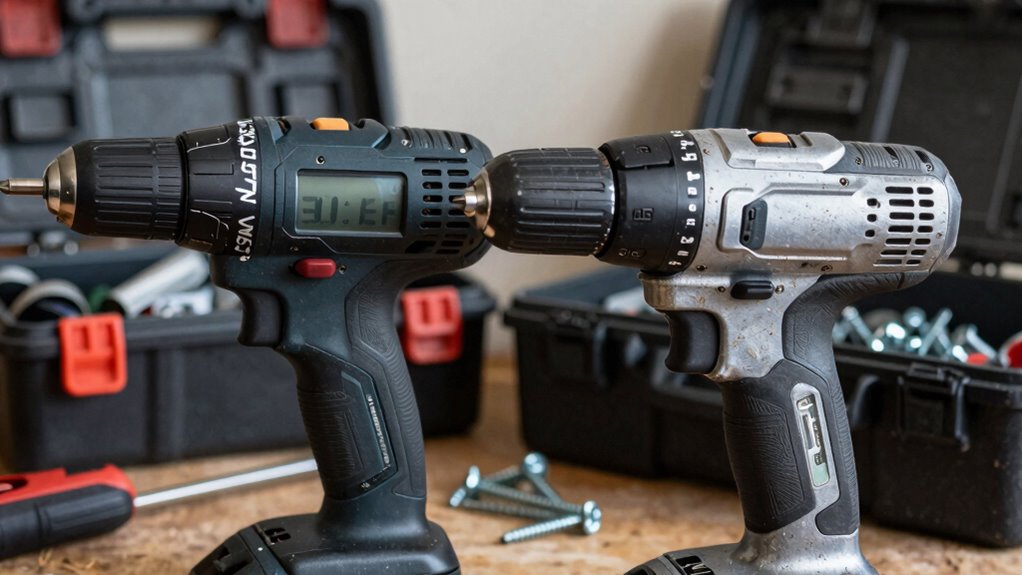
Prioritize battery life and comfort to ensure efficient, hassle-free handling during large projects or remote work.
Next, pay attention to the ergonomic design of the tool. A well-designed tool fits comfortably in your hand, reducing fatigue during extended use. Look for features like a textured grip, balanced weight distribution, and a comfortable trigger placement. If possible, try holding the tool before buying—what feels good in the store often translates into better control and less strain during long work sessions. Many brands now focus on ergonomic design to improve user comfort, so compare different models to find one that suits your hand size and strength. Additionally, understanding battery technology can help you choose tools with longer-lasting and more efficient power sources. Familiarity with power tool features can also assist in identifying which models offer the best value for your specific needs. Recognizing the importance of safety features can further ensure you select tools that prioritize user protection during operation. Moreover, exploring innovative safety measures can provide insights into the latest advancements in power tool safety technology.
When comparing power tools, it’s also indispensable to evaluate their build quality. A tool with sturdy construction and quality materials will last longer and perform more reliably. Consider the motor’s power output and its ability to handle the tasks you intend to tackle. You don’t want a tool that’s underpowered for heavy-duty work or one that’s overkill for simpler projects. Assess compatibility with accessories and attachments, which can expand a tool’s versatility and value. Furthermore, researching brand reputation can give you insights into the overall reliability and customer satisfaction associated with different manufacturers, helping you make a more informed choice.
Don’t forget to review warranty coverage and customer support. A reputable brand often offers better service, helping you troubleshoot issues and replace parts if needed. Price is important, but avoid choosing solely based on cost; investing in a durable, well-designed tool can save you money in the long run. Also, consider the availability of replacement parts and accessories, which can extend the lifespan of your investment.
In the end, comparing power tools requires careful consideration of practical features like battery life and ergonomic design, along with build quality and brand reputation. By focusing on your specific needs and doing thorough research, you’ll avoid falling for marketing tricks and select a tool that genuinely fits your projects and enhances your work experience.
Products Worth Considering

Dyson Cyclone V10 Origin Cordless Vacuum

Dyson V15 Detect Cordless Vacuum

Google Nest Doorbell (Wired, 3rd Gen, 2025) – Snow
As an affiliate, we earn on qualifying purchases.
Frequently Asked Questions
Are Higher Wattage Tools Always Better?
Higher wattage tools aren’t always better, as it depends on your needs. Look beyond wattage and consider battery compatibility to guarantee you can use the same batteries across different tools. Also, weigh price versus quality; a more expensive tool with higher wattage might offer better durability and performance. Ultimately, choose a tool that matches your project requirements, balancing power, battery life, and value for money.
How Important Is Brand Reputation in Power Tool Choice?
Brand reputation plays a significant role in your power tool choice because it reflects quality and reliability. While brand loyalty can influence your decision, don’t let marketing tactics sway you solely. Instead, research reviews, compare features, and consider warranties. A reputable brand often offers better customer support and durable tools, reducing the risk of failure. So, weigh the brand’s credibility alongside other factors to make an informed, confident purchase.
Should I Prioritize Cordless or Corded Tools?
You should prioritize cordless tools, especially since 70% of users value convenience and portability. With better battery life and ergonomic design, cordless options let you work flexibly without being tethered to a power source. Look for models with long-lasting batteries and comfortable grips, ensuring ease of use during extended projects. Corded tools are reliable but limit mobility, so weigh your project needs before making the choice.
What Safety Features Should I Look For?
You should look for safety features like ergonomic design, which reduces fatigue and improves control, and safety certifications, guaranteeing the tool meets industry standards. Check for features like blade guards, anti-kickback mechanisms, and easy-to-access emergency stops. These elements help prevent accidents and enhance safe operation. Prioritizing tools with respected safety certifications and ergonomic features ensures you work more comfortably and reduce the risk of injuries.
How Does Tool Weight Affect Usability?
The weight of a power tool is like its heartbeat—affecting how smoothly it moves through your hands. Heavier tools challenge your ergonomics and comfort, making prolonged use feel like wrestling with a stubborn beast. Lighter options offer agility but may compromise durability and longevity. Striking a balance guarantees you’re wielding a tool that’s both easy to control and built to last, transforming work into a dance rather than a struggle.
Conclusion
When you sift through the noise and focus on the facts, comparing power tools becomes a dance, not a duel. Cut through marketing hype like a sharp blade, and let your needs be your guiding star. Think of each feature as a step in your rhythm, leading you to the perfect match. With clear eyes and steady hands, you’ll pick a tool that feels like an extension of your own craft—ready to turn your vision into reality.