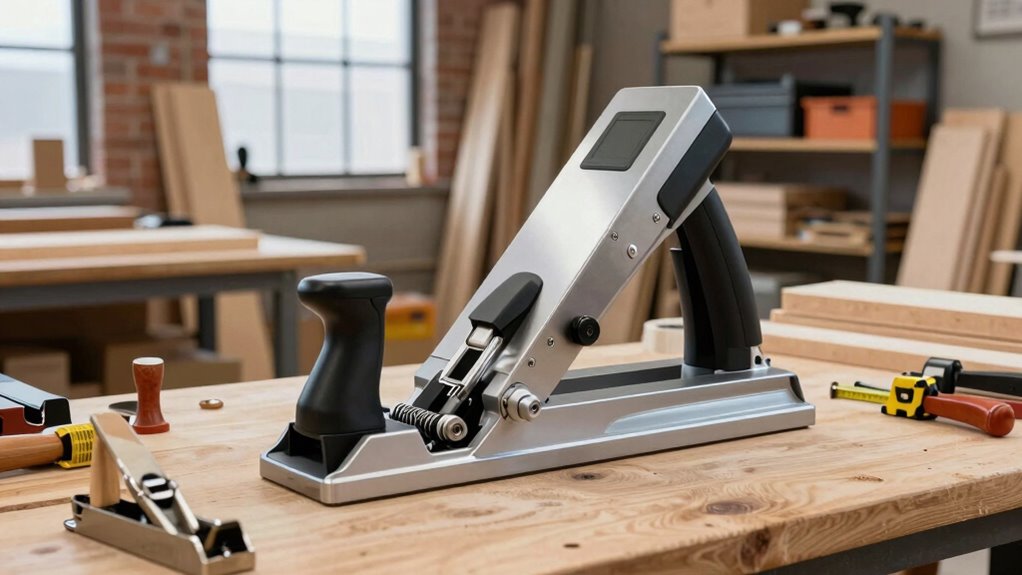

Before adding a thickness planer, consider your shop’s space and power requirements, as well as the benefits of achieving consistent, smooth surfaces on rough lumber. Make sure you have a good dust collection system to keep your workspace clean and safe, and always follow safety precautions like using push sticks and wearing protective gear. Regular maintenance is key for safe, efficient operation. Want to discover more tips for a successful addition? Keep exploring.
Key Takeaways
- Ensure your workspace has adequate space and proper dust collection setup for safety and cleanliness.
- Understand the safety features and always follow manufacturer instructions to prevent injuries.
- Choose a dust management system suitable for your shop size to maintain air quality and equipment longevity.
- Regularly maintain and replace blades to ensure consistent cuts and safe operation.
- Consider your project needs and wood types to select a planer with appropriate capacity and features.
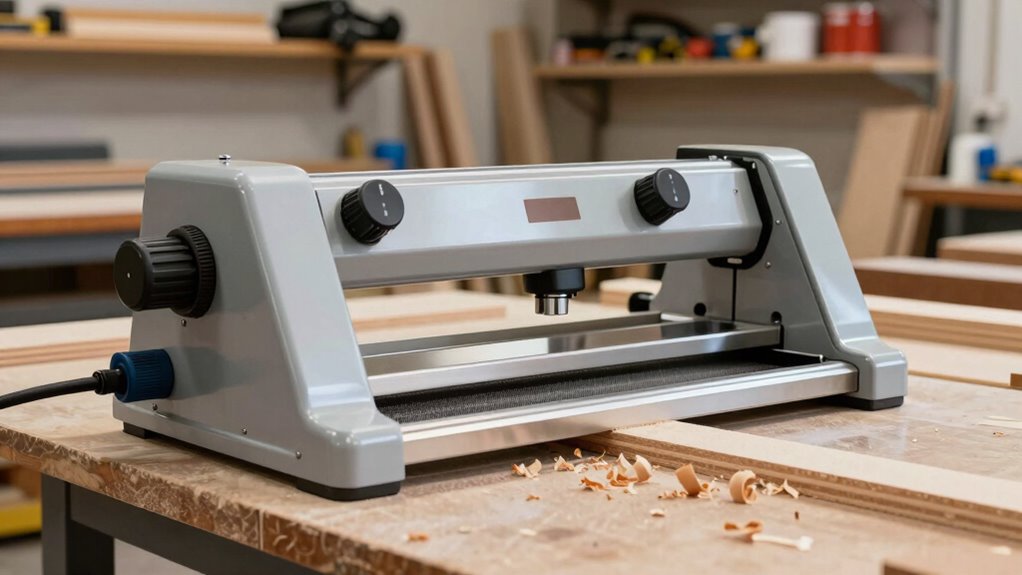
Adding a thickness planer to your shop can considerably improve your woodworking projects, but it’s important to understand what to expect before making the investment. This powerful tool helps you achieve consistent, smooth thicknesses on rough-sawn lumber, saving time and effort. However, it also produces a significant amount of sawdust and wood chips, making dust collection an essential part of your setup. You’ll want to invest in a good dust collection system or shop vac to keep your workspace clean and to prevent airborne dust from becoming a health hazard. Proper dust management not only keeps your shop tidy but also reduces the risk of fire and improves air quality, which is especially important if you work for extended periods. Additionally, understanding the importance of dust collection can help you choose the right system for your shop’s size and needs. Ensuring proper dust extraction can also extend the lifespan of your equipment by preventing dust buildup that may interfere with its operation.
Safety precautions should be at the top of your list when considering a thickness planer. These machines have powerful cutting heads that can cause serious injuries if not operated correctly. Always read the manufacturer’s instructions thoroughly before use, and never bypass safety features like blade guards. Keep your hands clear of the cutting zone, and use push sticks or push blocks when feeding wood through the planer to maintain control and keep your fingers safe. Wearing eye and ear protection is non-negotiable, as the machine produces loud noise and flying debris. Additionally, make sure your work area is well-lit and free of distractions so you can focus entirely on operating the planer safely. Properly machine maintenance is also crucial to ensure safe operation and longevity of your equipment. Regularly checking and replacing worn blades can prevent accidents caused by blade failure or uneven cuts, further enhancing safety.

VEVOR Thickness Planer, Two Speed, 13-Inch Width Worktable Power Benchtop Planer, Three-Blade, 2000W 23500 RPM Powerful Motor, Dual Rollers, Over Protection, Woodworking for Hard & Soft Wood Material
- Dual-Roller Feeding System: Ensures precise, vibration-free feeding
- Large Worktable: Supports long and warped boards
- Powerful 2000W Motor: Handles hardwoods with ease
As an affiliate, we earn on qualifying purchases.
As an affiliate, we earn on qualifying purchases.
Frequently Asked Questions
What Is the Average Cost of a Thickness Planer?
The average cost of a thickness planer ranges from $300 to $1,200, depending on features and brand. As you shop, consider dust collection and noise levels, since these can considerably affect your workspace comfort. Higher-end models often include better dust extraction systems and quieter operation, making your woodworking experience more enjoyable. Budget accordingly, and prioritize models that balance cost, performance, dust control, and noise reduction.
How Much Space Does a Thickness Planer Require?
Imagine a compact corner of your shop welcoming a new tool, fitting comfortably without crowding your space. A thickness planer usually needs about 4 to 6 feet of clearance in width and length, allowing for safe operation and dust collection. Keep in mind, noise levels can be loud, so consider placing it where dust collection systems can manage debris effectively, ensuring a quieter, cleaner workspace.
What Safety Features Should I Look For?
You should look for safety features like robust safety guards that prevent accidental contact with blades, and an effective dust collection system to keep your workspace clean and safe. These features help protect you from injuries and reduce dust inhalation risks. Make certain the planer has easy-to-access safety mechanisms and a reliable dust port, so you can operate confidently while maintaining a safe and clean shop environment.
Can a Thickness Planer Handle Hardwoods?
Think of your thickness planer as your trusty sidekick, even in the age of robots—it’s great for hardwoods. Yes, it can handle tough woods, but focus on maintaining sharp blades and adjusting for wood grain. Dull blades or ignoring grain direction can cause tear-out or uneven surfaces. Regular blade sharpening guarantees smooth cuts, letting you work confidently with hardwoods, even when they’re as tough as a knight’s armor.
What Maintenance Is Needed for a Thickness Planer?
To keep your thickness planer running smoothly, regularly replace the blades when they become dull to guarantee clean cuts. Also, maintain your dust collection system by emptying and cleaning filters often, which helps prevent buildup and keeps the machine operating efficiently. Check and tighten any loose belts or screws periodically. Proper maintenance reduces downtime, extends your planer’s lifespan, and ensures consistent, high-quality results in your woodworking projects.

Push Stick, 2pcs V-Shaped Woodworking Push Tools, Safety Woodworking Push Stick for Table Saws, Router Tables, Jointers and Band Saws
- V-Shaped Design: Enhances workpiece control and fixation
- Durable ABS Material: Resistant to wear and impact
- Safety Enhancement: Protects hands and fingers during use
As an affiliate, we earn on qualifying purchases.
As an affiliate, we earn on qualifying purchases.
Conclusion
Adding a thickness planer elevates your woodworking game to a whole new level, turning rough lumber into smooth masterpieces with ease. Just remember, this machine isn’t just a tool—it’s your secret weapon against uneven boards and inconsistent results. As long as you understand its capabilities and limitations, you’ll discover a world of precision and craftsmanship that’s nearly as powerful as a supernova. Prepare to impress, because with a planer, your projects will truly stand out in a universe of ordinary.

DEWALT Thickness Planer, 13-inch Wood Planer, Three Knife Two Speed, 15 Amp, 20,000 RPM Motor (DW735X)
- Powerful Motor: 15 amp, 20,000 rpm motor for tough cuts
- Longer Knife Life: Three knife cutter head extends knife durability
- Easy Knife Changes: Quick and simple knife replacement process
As an affiliate, we earn on qualifying purchases.
As an affiliate, we earn on qualifying purchases.

FOXBC 3-1/4 Inch Planer Blades, 10 Pack 82mm Planer Blades Replacement for Bosch, Makita, DeWalt, Wen 6530, Ryobi, Craftsman and More 3-1/4 Hand Portable Planers (HSS)
- Compatible Brands: Bosch, Makita, DeWalt, Ryobi, Craftsman
- Blade Size: 3-1/4 inch planer blades
- Material: Premium High Speed Steel
As an affiliate, we earn on qualifying purchases.
As an affiliate, we earn on qualifying purchases.




![There Will Come Soft Rains (1950) [Pdf]](https://tooltrekpro.com/wp-content/uploads/2026/08/there-will-come-soft-rains-1950-pdf-featured-260x140.jpg)