For serious DIY builds, a full-size router is your best choice if you need more power, versatility, and better dust control for demanding tasks like deep cuts and complex projects. It offers higher horsepower, wider access to bits, and greater stability for heavy-duty work. A trim router suits lighter, detailed tasks like edge profiling and laminate trimming, but isn’t ideal for large projects. Keep exploring to find out which option fits your needs best.

Get business pricing on tools and workshop supplies
- Business-only prices and quantity discounts
- Tax-exempt purchasing
- Multiple users, one account, clear invoices
Key Takeaways
- Full-size routers provide higher power and stability for demanding, large-scale DIY projects.
- Trim routers are more maneuverable and ideal for detailed, small-scale work in intricate areas.
- Full-size models often have better dust collection and accessory compatibility for versatile tasks.
- Trim routers are affordable and best suited for light-duty, precision finishing tasks.
- Consider project scope, budget, and required power when choosing between the two for serious DIY builds.
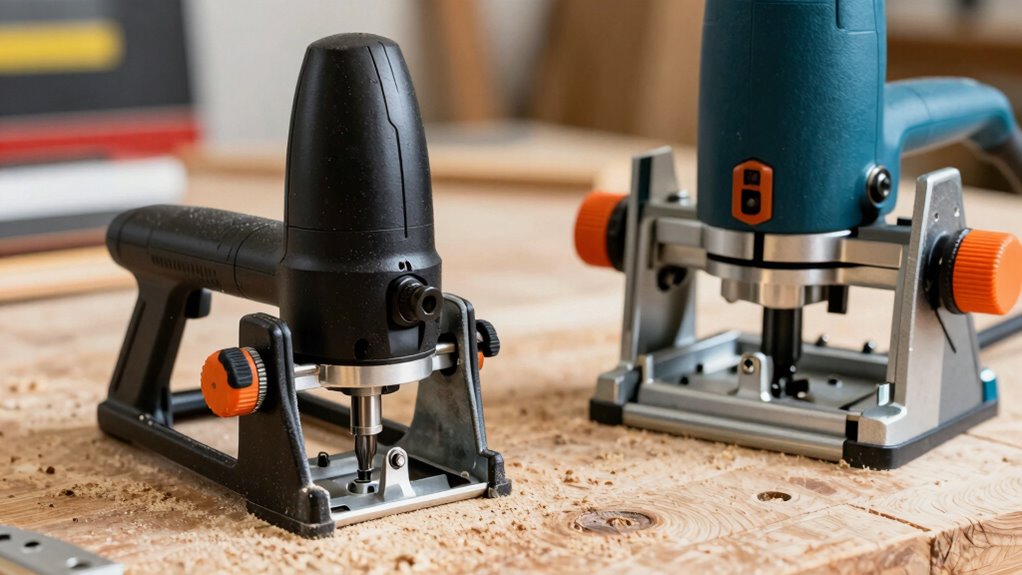
When tackling serious DIY woodworking projects, choosing the right router can make all the difference in your results. You need a tool that’s comfortable to handle for extended periods, offers precise control, and keeps your workspace clean. That’s where understanding the differences between trim routers and full-size routers comes into play. One of the key factors to evaluate is power tool ergonomics. A full-size router typically has a larger body and handles, which can provide better stability and control for heavy-duty tasks. If your projects involve routing large panels or deep cuts, a full-size model can reduce fatigue because it distributes effort more evenly and offers more substantial grip options. On the other hand, a trim router is smaller and lighter, making it easier to maneuver in tight spaces or for detail work. But because it’s less bulky, it might not offer the same level of ergonomic comfort during prolonged use, especially when performing tasks that require significant pressure or precision.
Another essential aspect is dust collection systems. Serious DIY projects generate a lot of sawdust, and a good dust collection setup can keep your workspace cleaner and improve visibility. Full-size routers often come with better dust port options, allowing you to connect a shop vacuum more effectively. This means less airborne dust and a safer, healthier work environment. Trim routers, while more portable, might have smaller or less efficient dust ports, which can lead to dust escaping into the air. If dust management is a priority, you need to evaluate how well each router integrates with your existing dust collection system. Some models even feature built-in dust extraction features, but these are more common in full-size routers designed for professional or serious hobbyist use. Additionally, power and control are crucial factors to consider, as full-size routers usually have higher horsepower motors and variable speed controls, making them suitable for demanding tasks like grooving, rabbeting, or deep cuts. They often come with adjustable speed settings, allowing you to optimize performance based on the material you’re working with. For best results, choosing a router with reliable motor performance is essential to handle tougher woods without bogging down. Moreover, the motor power of a full-size router can be a significant advantage, especially on tougher woods, providing the necessary force for challenging cuts. Furthermore, the versatility of a full-size router allows it to adapt to a wider range of accessories and bits, expanding its functionality for various projects.
Furthermore, the cost of each type of router can vary significantly, with full-size models generally requiring a larger investment but offering greater versatility. Trim routers, with their lower power, excel at light-duty tasks like edge profiling, trimming laminates, or small template routing. They’re easier to handle for quick adjustments, but might struggle with larger, more complex projects. Ultimately, your choice should reflect your specific needs, budget, and the scale of your DIY woodworking endeavors.
full size router for woodworking
As an affiliate, we earn on qualifying purchases.
As an affiliate, we earn on qualifying purchases.
Frequently Asked Questions
Can a Trim Router Handle Heavy-Duty Woodworking Projects?
A trim router isn’t designed for heavy-duty woodworking projects, so it struggles with demanding tasks. You won’t get the precision control or material versatility needed for larger jobs. For serious DIY builds, a full-size router handles thicker materials, offers better power, and provides more control, making it suitable for complex, heavy-duty projects. Stick with a full-size router if you want reliable performance and quality results on bigger woodworking tasks.
Which Router Type Offers Better Dust Collection Options?
A full-size router typically offers better dust management options due to its larger size and more advanced dust collection ports. You’ll find it easier to connect vacuum systems or shop vacuums, improving cleanliness and visibility during your work. Trim routers usually lack extensive dust collection features, making a full-size router a smarter choice if vacuum compatibility and dust management are priorities for your serious DIY projects.
Are There Safety Concerns Specific to Full-Size Routers?
Yes, there are safety concerns specific to full-size routers. You should always follow safety precautions, like securing your workpiece and keeping your hands away from the bit. Wearing protective gear such as safety glasses and hearing protection is essential. Full-size routers are powerful, so never operate them without proper training or understanding of their controls. Staying alert and cautious guarantees safe, effective use during your DIY projects.
How Do Power Cord Lengths Affect Router Usability?
You’ll find that longer power cords, averaging around 6 to 10 feet, considerably boost router usability. A 12-foot cord provides better flexibility, letting you move freely without constantly changing outlets. Good cable management prevents tangles and tripping hazards, making your work safer and more efficient. So, choosing a router with an ideal cord length and flexible cables ensures smoother operation, especially for larger projects, reducing interruptions and increasing precision.
Can Both Routers Be Used Interchangeably for All Tasks?
Yes, you can often use both routers interchangeably for many tasks, but keep in mind their differences. The trim router offers precision control and is ideal for detailed work or edge trimming. On the other hand, the full-size router provides portability advantages for larger, more demanding projects. While versatile, selecting the right router depends on the specific task, making it best to have both in your toolkit for peak results.
As an affiliate, we earn on qualifying purchases.
Conclusion
Choosing between a trim router and a full-size router is like selecting a trusted steed for your woodworking journey. The trim router is nimble and precise, perfect for intricate tasks, while the full-size router is a mighty charger, ready to tackle larger projects with strength. Your decision shapes your craft—know your terrain, and ride accordingly. With the right tool, you’ll navigate your DIY adventure with confidence, transforming raw material into masterful creations.
dust collection router attachment
As an affiliate, we earn on qualifying purchases.
As an affiliate, we earn on qualifying purchases.
variable speed woodworking router
As an affiliate, we earn on qualifying purchases.
As an affiliate, we earn on qualifying purchases.
Fall yard work Picks
leaf blowers
As an affiliate, we earn on qualifying purchases.