TL;DR
A practical guide outlines five ways to remove pallet boards while reducing the chance of splitting them. Cutting through nails with a reciprocating saw is one method; a pallet buster and patient use of a pry bar and hammer are alternatives. Secure the pallet and wear eye protection and gloves when using tools.
A DIY guide from Hunker outlines five approaches to removing pallet boards while reducing the risk of splitting the wood, including cutting through fasteners with a reciprocating saw and using a pallet buster or hand tools. The methods matter to people reusing pallet lumber because pulling a board against nails that remain fixed can break it and leave less usable material.

Get business pricing on tools and workshop supplies
- Business-only prices and quantity discounts
- Tax-exempt purchasing
- Multiple users, one account, clear invoices
According to the Hunker guide, the main method is to use a reciprocating saw with a demolition blade rated for nail-embedded wood. With the pallet held securely and safety glasses and work gloves on, the operator slides the blade into the gap between a top board and its thicker support. Cutting the nails at that seam frees the board without forcing it to bend around fasteners.
The guide advises keeping the saw’s shoe supported against the workpiece and avoiding excessive pressure. After freeing the top boards, turn the pallet over and repeat the process where needed. It says longer blades can help reach fasteners farther from the edge, and notes that blades differ in durability, particularly when metal screws may be present.
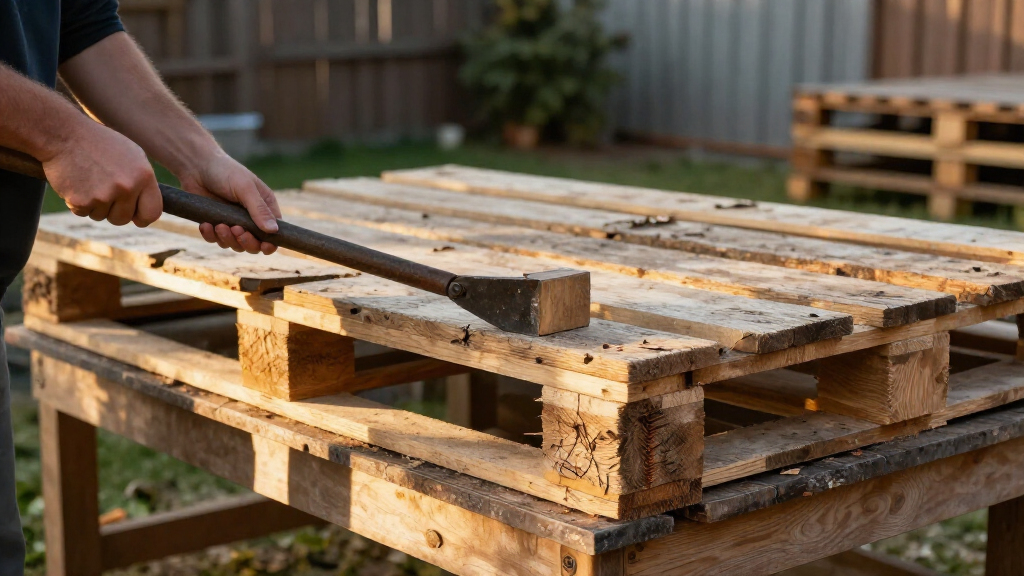
For people without a reciprocating saw, the guide offers two hand-tool options: a pallet buster, whose forked head spreads lifting force across the support, and a pry bar and hammer. With either approach, work gradually near each nail rather than lifting one end of a board forcefully. The guide also describes leaving nail heads in place for a rustic finish, or using a nail punch, hammer and pliers to deal with remaining metal.
Remove pallet boards with less splitting
The way you release fasteners affects how much pallet wood stays usable. Choose a method that fits your tools, and work carefully.
Why boards split
Pulling against nails that remain fixed can bend the wood until it breaks.
- Fasteners still hold the board
- Force lifts one end at a time
- Release fasteners first
- Apply lifting force gradually
Choose a removal method
The guide describes a saw method and two hand-tool alternatives.
Cut through nails
Use a reciprocating saw with a demolition blade for nail-embedded wood in the seam between board and support.
Use a pallet buster
Its forked head spreads lifting force across the support.
Pry gradually
Work near each nail with a pry bar and hammer instead of lifting one end forcefully.
Work safely
Check the pallet and fasteners, then stabilize the workpiece before starting.
Wear safety glasses and work gloves when using tools.
With a saw, support its shoe against the wood and avoid excessive pressure.
Keep More Boards Usable
The practical benefit identified by the Hunker guide is a better chance of keeping boards intact for reuse in DIY projects. Pallets are built to carry loads, and their fasteners can hold tightly; prying up one end while nails still secure the rest puts stress on the wood. Cutting or loosening the fasteners first addresses that problem directly.
Board condition affects how much material is available after disassembly. A method that reduces breakage can save time and avoid discarding pieces that are too short or damaged for a planned project. The guide offers alternatives based on the tools readers have, though the hand-tool approaches call for patience and physical effort.
Tool safety remains part of the process. The guide calls for eye protection and work gloves, and for stabilizing the pallet before sawing. A reciprocating saw can contact metal fasteners, so using an appropriate blade and controlling the tool matter. These are practical instructions, not a guarantee that every board will come free without damage.
Products Worth Considering

Arlo Pro Wireless Security Camera, 2K HDR, 6th Generation, 4-Camera Set

Philips Hue Festavia Permanent Outdoor String Lights, 80 Lights, 150 ft

Google Nest Learning Thermostat (4th Gen) with Nest Temperature Sensor (2nd Gen), Obsidian
As an affiliate, we earn on qualifying purchases.
Why Pallet Boards Split
As the Hunker guide explains, pallets are assembled to withstand handling and heavy loads, using nails designed to keep their parts joined. That strength can make dismantling difficult. When a board is lifted while some nails remain in place, it can flex around the fixed points and split rather than release cleanly.
The guide presents cutting through nails as a way to avoid that bending force. Its other options—spreading lifting force with a pallet buster or applying careful pressure with a pry bar and hammer—also focus on releasing boards gradually. The article does not identify a specific pallet type, wood species, or fastener layout, so its advice is general rather than tailored to a particular pallet.
Results Depend on Each Pallet
The Hunker guide does not provide test results comparing the five approaches or figures for how often boards remain intact. It also does not specify a preferred method for every pallet, since the wood condition, fastener type and placement can vary. Its saw-blade suggestions are examples, not a guarantee that a particular blade will suit every job.
It remains unclear what kind of pallet a reader has until it is inspected. Damaged or unusually assembled pallets may not respond as expected, and the guide does not give project-specific advice about whether recovered wood is suitable for a planned use. Readers should check the pallet and fasteners before choosing a method.
Choose Tools and Work Carefully
Following the Hunker guide, the next step is to inspect the pallet, decide whether a reciprocating saw or hand tools are available, and secure the workpiece before beginning. If using a saw, fit a blade intended for nail-embedded wood, wear eye protection and gloves, and cut in the seam between the board and its support. Avoid forcing the blade or board.
Without a saw, use a pallet buster or work slowly with a pry bar and hammer near the fasteners. Once boards are free, handle protruding nails carefully; the guide suggests a nail punch and hammer followed by pliers when removing exposed metal. The likely result depends on the pallet and the care taken during disassembly, and the article reports no further development or testing.
Key Questions
What is the main method for removing pallet boards intact?
The Hunker guide recommends using a reciprocating saw with a demolition blade to cut through nails in the gap between each board and its support. This reduces the need to bend the board against fasteners that remain in place.
Can I take apart a pallet without a reciprocating saw?
Yes. The guide describes a pallet buster, which distributes lifting force across a support, and a pry bar and hammer as alternatives. It advises applying force gradually near each nail rather than lifting one end of a board all at once.
What safety steps does the guide recommend?
The guide advises wearing safety glasses and work gloves, and making sure the pallet cannot move while you cut or pry. When using a saw, use a suitable blade and keep the saw’s shoe supported against the workpiece.
What should I do with nails left in the boards?
The guide says nail heads can be left in place for a rustic look. To remove them, it suggests driving leftover metal through with a nail punch and hammer, then pulling out exposed pieces with pliers.
Source: hunker.com