
TL;DR
YouTube creator Woodworking Skill made a short picket fence for a ground-level porch using reclaimed pallets, with planter boxes that support the fence sections. The design reuses pallet boards and adds space for plants, but pallet wood can vary in quality and may have been treated with hazardous chemicals.
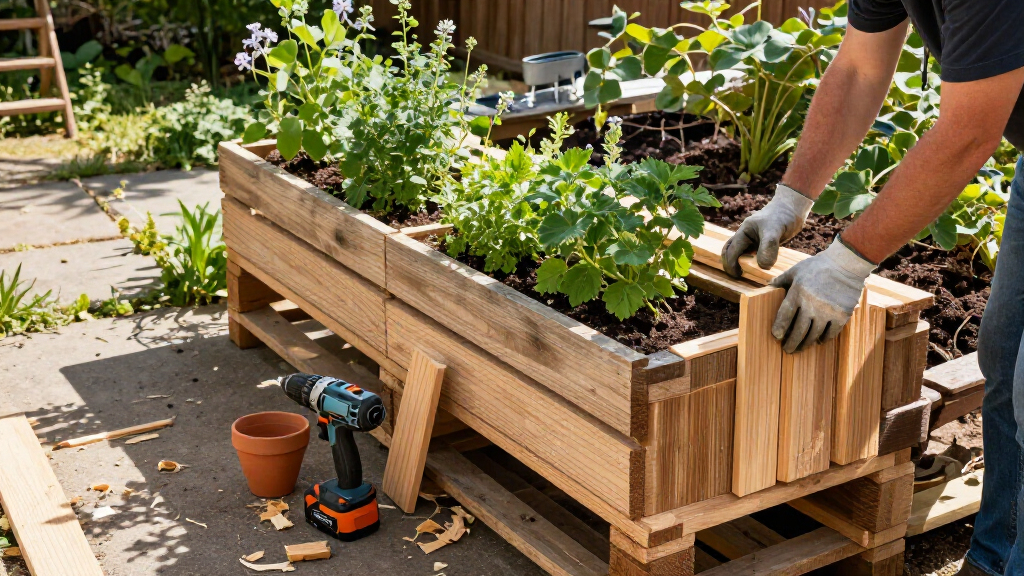
YouTube creator Woodworking Skill, in a project featured by Hunker, turned reclaimed pallets into a short picket fence with built-in planter boxes for a concrete porch. The Hunker account describes the planters as supports for the fence sections, rather than separate posts. The reported pickets are too short for a typical yard fence or raised-deck railing.

Get business pricing on tools and workshop supplies
- Business-only prices and quantity discounts
- Tax-exempt purchasing
- Multiple users, one account, clear invoices
According to Hunker’s account of the project, the pallets were about 4 feet wide and made from apparently blemish-free fir or pine, with boards attached to thicker stringers. Woodworking Skill cut the pallets down the middle with a circular saw, then trimmed the lower boards to create two sections with pickets about 2 feet long. He cut triangular points into the picket tops.
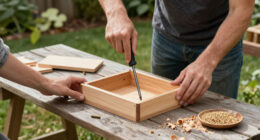
The account says he cut leftover pallet wood into uniform pieces around 6 to 8 inches long and nailed them to corner sections to form the planter-box sides. Four assembled side sections made each box. He added 1-by-2-inch trim at the top and bottom, then attached wooden holders to opposite sides so the fence sections could be fastened to the planters. Hunker reports that he applied a clear spray finish.
Hunker describes the finished arrangement as intended for a ground-level porch, where the short sections create a decorative border and the boxes provide space for plants. The account notes that a liner can be added inside the planters before planting. It documents one build, not a tested design specification; it provides no measurements for the completed planter boxes or information about their load capacity.
A Pallet Fence With Built-In Planters
Woodworking Skill turned reclaimed pallets into a low porch border, with planter boxes supporting the fence sections. The idea adds planting space, but material safety and stable support matter.
A Porch Border With Two Jobs
The planter boxes support the short fence sections while providing room for plants.
Pallet pickets
Pallet boards were cut into short sections with pointed tops for a decorative ground-level edge.
Planter supports
Wooden holders on the boxes secure the fence sections; a liner can be added before planting.
How the Sections Come Together
The reported build uses pallet leftovers to make the boxes that hold the fence.
Cut each pallet down the middle, then trim lower boards to form short sections.
Nail uniform leftover pieces into four side sections for each box and add top and bottom trim.
Attach wooden holders to opposite sides of each planter, then fasten the fence sections.
Where It Fits
The described design is for a concrete, ground-level porch.
- Decorative low border
- Ground-level porch or patio
- Planter boxes paired with fence sections
- Typical yard fence
- Raised-deck railing
- Lawn or garden installation, which needs buried posts
Check Before Building
A clean appearance alone does not establish that pallet wood is safe or suitable.
- Inspect the wood and establish its treatment history.
- Some pallets may have been treated with hazardous pesticides.
- Choose supports for the actual site and check local rules if the structure will serve as more than a decorative border.
A Porch Border That Reuses Pallets
The project, as described by Hunker, combines two functions: the planter boxes support the fence, and the fence gives a porch or patio a defined edge. Using reclaimed boards can give discarded pallets another use, while the built-in planting area provides space for flowers or other suitable plants without requiring separate containers.
Its usefulness depends on where it is installed. The reported pickets are about 2 feet long, making them appropriate for a low boundary at ground level, not a barrier intended to provide substantial height or protection. The Hunker account describes the design without buried posts on a concrete slab; a lawn or garden installation would need a different support approach.
Products Worth Considering

TCL F8D Series 75-Inch 4K QLED Smart Fire TV, 144Hz, HDR (75F8D, 2026)

Samsung 55-Inch QN70H Neo QLED 4K Smart TV (2026)

Levoit Vital 100S-P Air Purifier with Washable Pre-Filter
As an affiliate, we earn on qualifying purchases.
How the Pallet Sections Fit
Hunker describes the pallets as having boards attached across thicker supporting pieces, a construction similar to stringer-style pallets. Their size allowed Woodworking Skill to divide each pallet into two short fence sections. The remaining wood supplied material for the planter boxes, although the account gives neither a total pallet count nor a full materials list.
The article reports that about 400 million wooden pallets are made in the United States each year. That figure offers broad context for the availability of pallet wood, but does not establish how many are suitable for reuse or how often they are discarded. Pallets differ in wood species, condition and treatment, so usable-looking boards alone do not establish that a pallet is appropriate for a home project.
Pallet Safety and Outdoor Use
Hunker describes the pallets used in the project as good-quality fir or pine, but its account does not document their treatment history or provide a test of the finished structure. Pallet wood varies: some pallets are made from softwood, others from hardwood, and some may have been treated with hazardous pesticides. The project should not be taken as evidence that any pallet found or offered for free is safe to handle or use around plants.
Hunker’s account also does not specify how the planters were secured against movement, how much soil they can hold, how the wood finish performs outdoors, or how long the assembly lasts in different weather. It does not establish that the design meets local requirements for a fence or railing. The stated use is a decorative, low boundary on a ground-level porch—not a safety railing.
Check Materials Before Building
Anyone adapting the idea would first need to inspect the pallet’s condition and establish its treatment history rather than assuming that clean-looking wood is untreated. Hunker’s project account does not specify a method for identifying safe pallets, so uncertain material should not be treated as confirmed safe for planting or indoor use. The account suggests a liner may be added, but does not test or verify a particular liner or coating.
Builders would also need to adapt the support method to the site. Hunker describes the creator’s boxes on concrete and says an installation along a lawn or garden would need buried posts, suggesting 4-by-4 material from heavy-duty pallets. That alternative is not shown in the porch build. Practical next steps are to confirm the wood is suitable, determine stable supports for the location, and check local rules if the structure is intended to serve as anything more than a decorative border.
Key Questions
Where is this pallet fence design intended to be used?
Hunker describes the project for a ground-level porch with a concrete slab. Its roughly 2-foot pickets are too short for a typical yard fence or a railing on a raised porch or deck.
How do the fence sections stay upright?
According to Hunker’s project account, planter boxes support the sections. Wooden holders are attached to opposite sides of each box, and the fence sections are fastened to those holders. The reported porch design does not use separate posts.
Can any pallet be used for the project?
No. As the Hunker article notes, pallet wood can vary in condition, species and treatment, and some pallets may have been treated with hazardous pesticides. The project account does not provide a treatment test or a way to verify an unknown pallet’s history.
Could the design be placed beside a lawn or garden?
Hunker says an installation along a lawn or garden would need buried posts, unlike the version on concrete. That support approach was not demonstrated in the porch project and would need to be adapted to the site.
Source: hunker.com