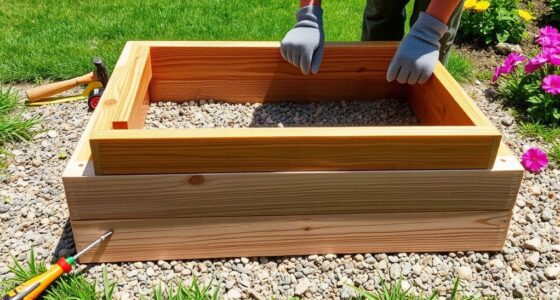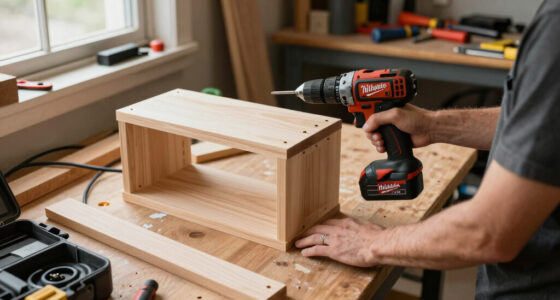
When choosing fasteners, you’ll find screws, nails, and bolts each have unique strengths. Screws provide strong, secure holds, especially for wood and metal, and need to be drilled in. Nails are quick to install and work well for lightweight projects like framing. Bolts offer the highest strength for heavy-duty tasks but require nuts and washers. Understanding their differences helps you pick the right fastener for your project’s needs; keep exploring to learn more.

Get business pricing on tools and workshop supplies
- Business-only prices and quantity discounts
- Tax-exempt purchasing
- Multiple users, one account, clear invoices
Key Takeaways
- Screws provide strong, secure fastening with thread engagement, ideal for wood, metal, and precise projects.
- Nails are quick to install, suitable for lightweight or framing tasks, but less secure than screws or bolts.
- Bolts offer high strength and durability, best for heavy-duty applications and structural connections.
- Material choice impacts corrosion resistance; stainless steel is best for outdoor use, while aluminum is lightweight.
- Selection depends on load requirements, material type, and whether quick installation or long-term durability is prioritized.
Understanding the Basics of Fasteners
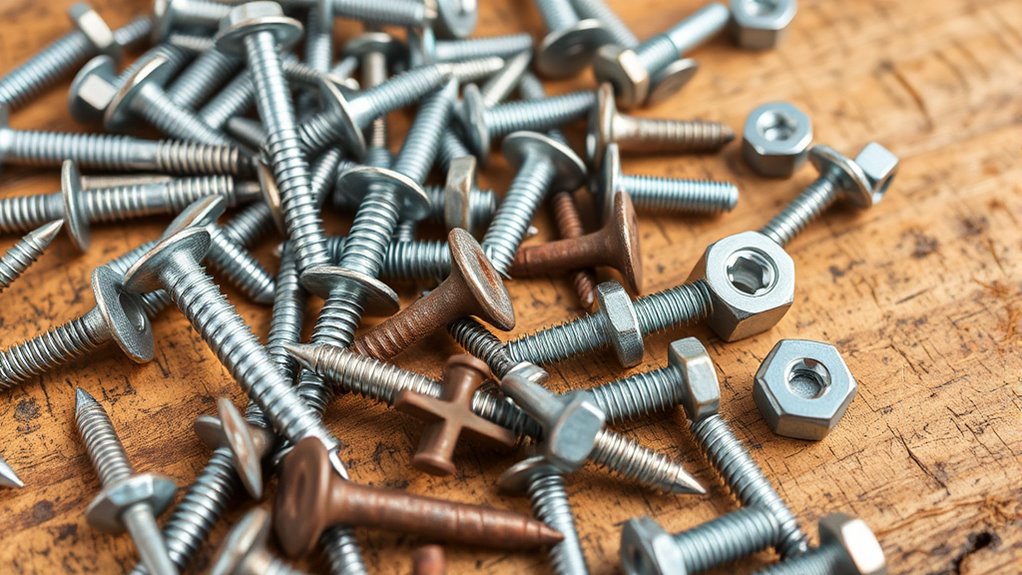
Fasteners are essential components used to join materials securely, and understanding their basic types is key to choosing the right one for your project. Different fasteners have unique material properties that influence strength, corrosion resistance, and suitability for specific applications. For example, stainless steel fasteners resist rust, making them ideal for outdoor use, while aluminum fasteners are lightweight but less strong. Installation techniques vary depending on the fastener type; screws often require drilling and driving, nails are hammered in quickly, and bolts need nuts and washers for secure fastening. Recognizing how material properties affect performance helps you select the best fastener. Additionally, understanding proper installation techniques guarantees your fasteners hold tight and last longer, making your project safer and more durable. Material properties such as corrosion resistance are crucial factors to consider when selecting fasteners for different environments. Incorporating smart home technology can also help monitor fastener integrity in critical applications, ensuring long-term safety and performance. Properly selecting and installing fasteners ensures the overall safety and durability of your project, especially in applications exposed to water or moisture where corrosion can be a concern. For instance, knowing how different fasteners perform in harsh environments can help prevent failures over time. Moreover, selecting fasteners with appropriate material compatibility is essential to avoid galvanic corrosion and ensure longevity.
Comparing Screws, Nails, and Bolts: Strengths and Uses
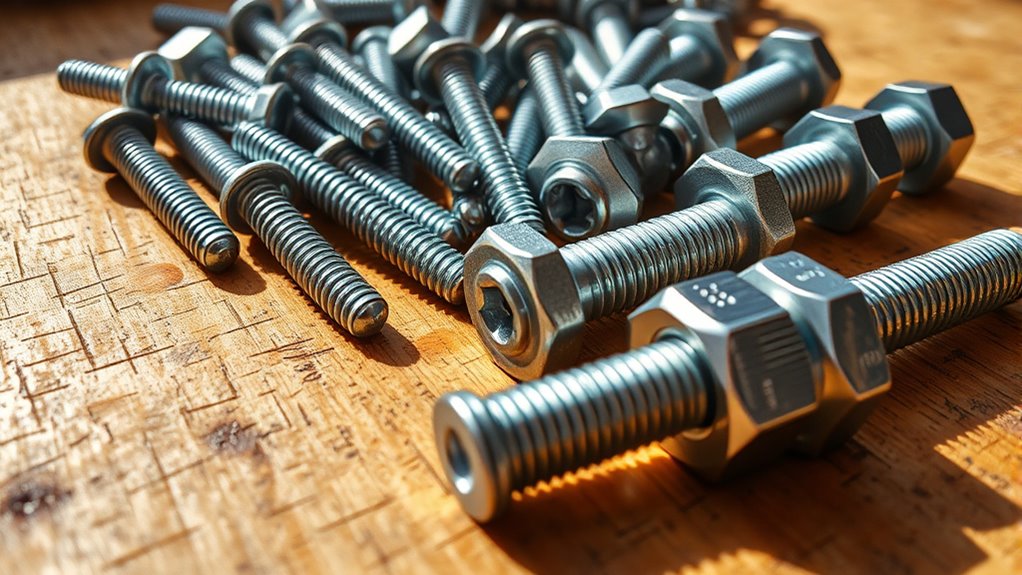
Screws, nails, and bolts each serve distinct roles in fastening, and understanding their strengths and ideal uses helps you choose the right one for your project. Screws excel with strong thread engagement, providing secure holds, especially in wood and metal. Nails are quick to install, suitable for lightweight, less demanding tasks, but offer less holding power. Bolts are best for heavy-duty applications, offering high strength through nut engagement, often in machinery or structural work. Material compatibility is key: screws work well with most materials, nails are versatile but less ideal for dense woods, and bolts require precise holes for maximum strength. Use this table as a quick guide:
| Fastener | Strengths | Ideal Uses |
|---|---|---|
| Screws | Thread engagement, material compatibility | Wood, metal, heavy loads |
| Nails | Speed, simplicity | Framing, lightweight projects |
| Bolts | High strength, secure fastening | Heavy machinery, structural work |
Choosing the Right Fastener for Your Project
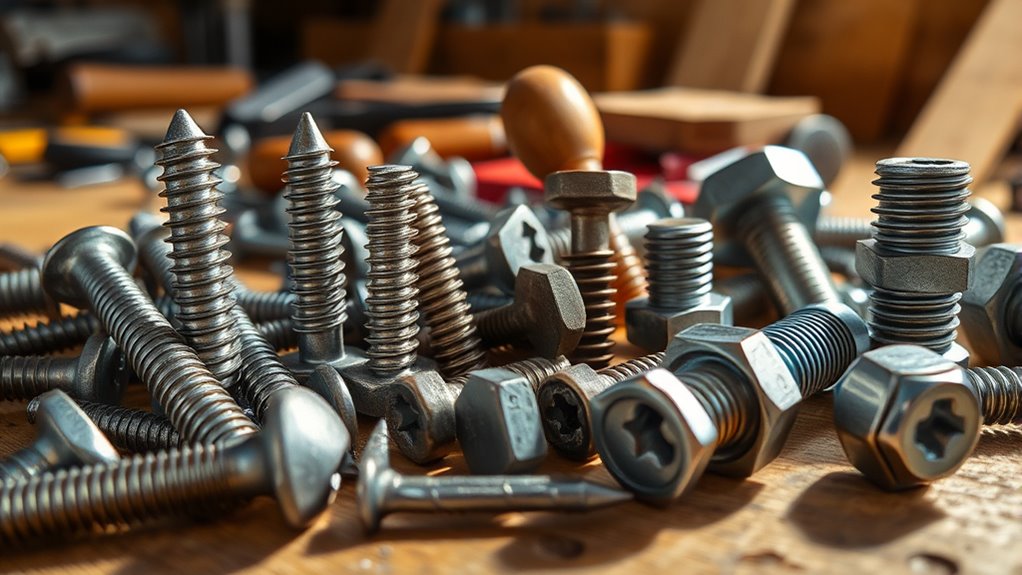
Choosing the right fastener depends on your project’s specific requirements, including the materials you’re working with, the load it must support, and whether quick installation or long-term durability matters most. Consider material compatibility to guarantee the fastener won’t cause corrosion or damage. Material compatibility is especially important when working with different substrates to ensure a secure and lasting hold. Cost considerations also influence your choice, especially for large projects or budget constraints. To select effectively, keep these points in mind:
- Match fastener type to material (wood, metal, concrete)
- Evaluate load-bearing needs
- Prioritize quick installation or long-term hold
- Balance material compatibility with cost
- Choose durable options for outdoor or heavy-duty use
- Understanding fastener materials can help you select the best option for your specific application.
Frequently Asked Questions
Are There Eco-Friendly Fastener Options Available?
Yes, eco-friendly fastener options are available. You can choose fasteners made from recyclable materials like stainless steel or aluminum, which reduce waste and are easier to recycle. Biodegradable options, such as those made from plant-based plastics or natural fibers, also exist and break down more quickly after disposal. By selecting these alternatives, you help minimize environmental impact while ensuring your projects stay strong and sustainable.
How Do Weather Conditions Affect Fastener Performance?
Weather conditions can considerably impact fastener performance. Rain, humidity, and snow cause corrosion, weakening the fasteners over time. To prevent this, choose fasteners with good corrosion resistance and apply weatherproof coatings. These coatings protect against moisture and rust, extending the fastener’s lifespan. In harsh weather, always opt for stainless steel or galvanized fasteners to ensure durability and maintain secure joints regardless of environmental challenges.
Can Fasteners Be Reused After Removal?
Yes, you can often reuse fasteners after removal, especially if they’re in good condition. Reusable fasteners, like certain screws and bolts, are designed for multiple uses. However, consider fastener recycling; if the fastener is damaged or corroded, it’s best to discard it. Inspect the fastener carefully for wear or deformation before reusing it to guarantee safety and proper performance.
What Safety Precautions Should I Take When Installing Fasteners?
When installing fasteners, you should always wear personal protective equipment like gloves and safety glasses to protect yourself. Use proper handling techniques to avoid slips or injuries, and make certain you’re working in a well-lit area. Follow the manufacturer’s instructions carefully, and keep your workspace clean to prevent accidents. Taking these safety precautions helps you install fasteners securely while reducing the risk of injury.
How Do I Identify the Right Fastener Size for My Project?
When choosing the right fastener size, don’t rely on guesswork—think of it as precision versus improvisation. Measure your fastener measurement carefully using sizing tools like a caliper or fastener gauge. Match it to your project’s requirements, considering material thickness and load. Always double-check the specifications on packaging or instructions, ensuring your fastener fits snugly without overtightening or slipping, so your project stays secure and durable.
Conclusion
Now that you know the differences, choosing the right fastener is like selecting the perfect tool for a specific job. While nails offer quick, simple fixes, screws provide sturdy, long-lasting holds. Bolts, on the other hand, give you extra strength for heavy-duty tasks. Think of it as the contrast between a quick handshake and a secure lock — each has its place. By understanding these differences, you can confidently select the best fastener for your project.
Fall yard work Picks
leaf blowers
As an affiliate, we earn on qualifying purchases.