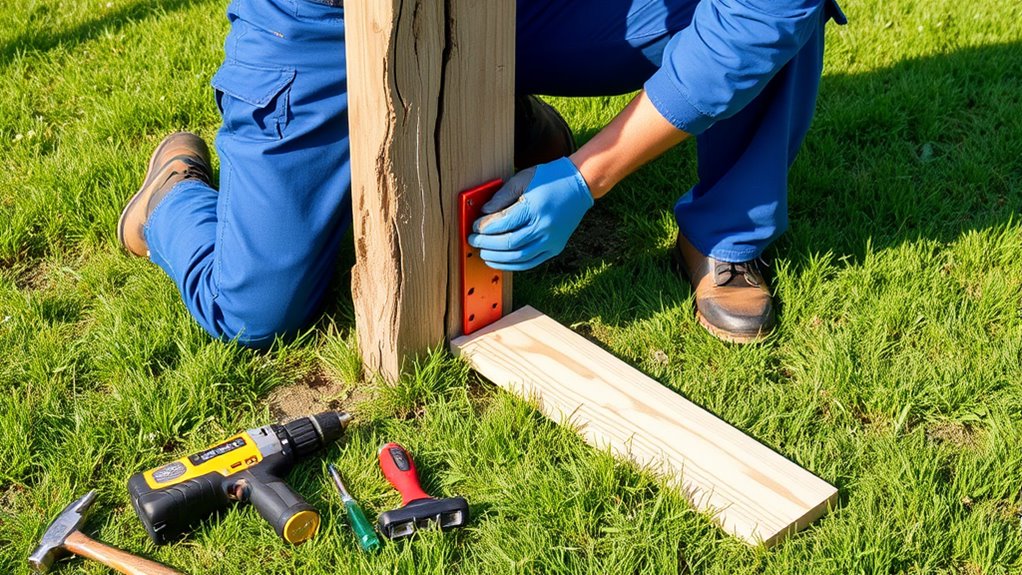

To repair your broken fence post or panel, first assess the damage and gather your tools: hammer, saw, drill, shovel, level, and concrete mix. Remove any loose or damaged parts, then dig out and replace rotten posts with new ones, ensuring they stay level as the concrete sets. Repair or reattach panels securely, then finish with fresh paint or stain for a uniform look. If you keep exploring, you’ll find more detailed step-by-step instructions to make your repair seamless.

Get business pricing on tools and workshop supplies
- Business-only prices and quantity discounts
- Tax-exempt purchasing
- Multiple users, one account, clear invoices
Key Takeaways
- Assess damage to determine if repair or full replacement is needed for posts or panels.
- Gather essential tools like a hammer, crowbar, shovel, level, and concrete mix before starting.
- Remove damaged components by detaching panels and digging out rotten or leaning posts.
- Install new posts by setting them in concrete, ensuring they are level and upright during curing.
- Reattach or replace fence panels securely, then finish with paint or stain for weather protection.
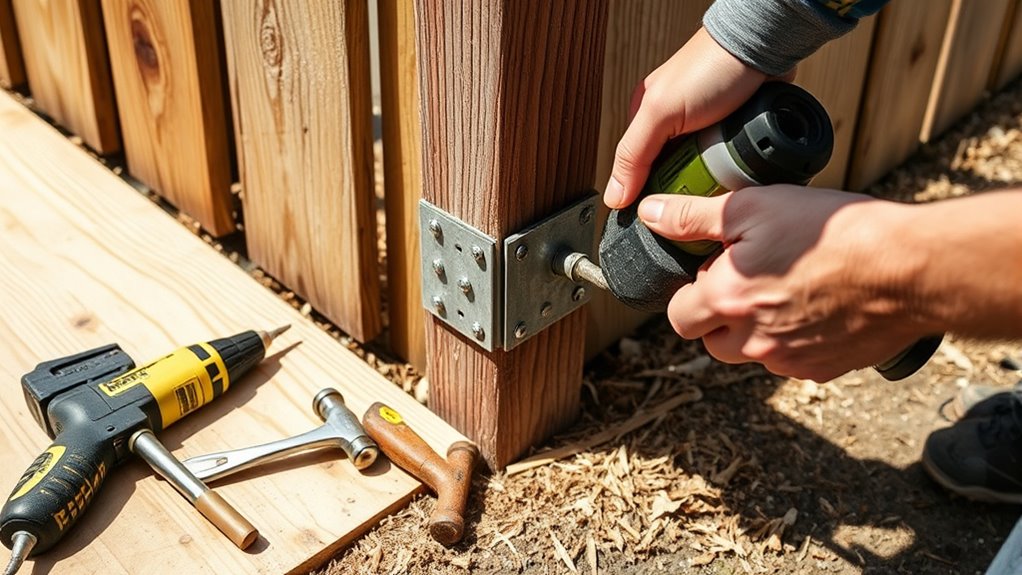
A damaged or wobbly fence can quickly turn a tidy yard into a messy one, but fixing it doesn’t have to be complicated or expensive. Whether you’re aiming to restore your garden privacy or refresh the look with some fence painting, repairing broken fence posts or panels is straightforward when you know the right steps and tools. First, assess the damage carefully. If a single panel is loose or a post is leaning, you can often fix it without replacing the entire fence. Start by gathering the necessary tools: a hammer, crowbar, shovel, level, concrete mix, and possibly a saw if you need to cut new panels or posts.
To begin, remove any damaged panels or posts. For posts, loosen the surrounding soil with a shovel. If the post is rotten or severely damaged, you’ll need to dig it out completely. When removing the old post, make sure to clear out all the loose concrete or dirt surrounding the base. This step is vital because a stable foundation ensures your repair lasts longer. Once you have a clean space, prepare your new post by cutting it to the exact height needed. Position it in the hole, then fill it with concrete mix, making sure it’s perfectly upright using a level. Hold it steady until the concrete sets, which usually takes a few hours.
Remove damaged panels or posts, clear debris, and set new posts in concrete for a sturdy repair.
For panels, if a section is broken or loose, unfasten the damaged part using a screwdriver or drill. Replace or repair the panel as needed, then secure it back onto the fence line with nails or screws. Tighten any loose brackets or hinges to keep everything sturdy. After the repair, consider applying fresh paint or stain to the repaired section. This is a good opportunity to enhance your garden privacy by choosing darker or more opaque fence paints, which can help conceal repairs and give your fence a uniform look. Fence painting also protects the wood from weather damage, extending its lifespan. Additionally, using appropriate tools and following proper techniques will ensure a cleaner and more durable finish.
Regular maintenance, like checking for loose panels or leaning posts, will save you time and money later on. A well-maintained fence not only keeps your yard looking tidy but also boosts your home’s curb appeal. By taking these simple repair steps, you can restore your fence’s functionality and appearance, making your outdoor space more inviting and private. Whether you’re just fixing a wobbly post or giving your entire fence a fresh coat of paint, these repairs are manageable and can greatly improve your yard’s overall look.
As an affiliate, we earn on qualifying purchases.
Frequently Asked Questions
How Long Does a Typical Fence Repair Take?
A typical fence repair usually takes a few hours, but timing considerations depend on the extent of damage and your experience. You should plan your repair scheduling for a clear day with good weather, especially if you’re working outdoors. Smaller fixes like replacing a post or panel can be completed quickly, often within a few hours, while more extensive repairs may require additional time or multiple sessions.
Can I Repair a Fence Without Professional Help?
You can definitely tackle DIY fencing repairs yourself, turning your fence into a fortress again. With the right tools and basic skills, you’ll navigate fence maintenance like a pro builder. While it feels like piecing together a puzzle, patience and attention to detail make all the difference. Don’t wait for help—repairing a broken post or panel is doable and rewarding, giving your yard a fresh look and sturdy boundary.
What Are the Signs of a Failing Fence Post?
You’ll notice signs of a failing fence post when you see post instability or leaning posts, which indicate the post isn’t firmly anchored. Other signs include sagging sections or gaps between panels. If the post wobbles when pushed or feels loose, it’s a clear sign it needs repair. Addressing these issues early prevents further damage, saving you time and money on more extensive fixes later.
How Much Does Fence Repair Usually Cost?
Imagine walking past your fence, and suddenly, a post leans, catching your eye. Fence repair costs typically range from $150 to $450, depending on the extent of damage and materials. You should prepare a repair budget that includes labor and materials. Getting a cost estimate from a professional helps you plan better, ensuring you’re not caught off guard when fixing that wobbly or broken section.
Are There Eco-Friendly Options for Fence Repairs?
Yes, you can choose eco-friendly options for fence repairs. Look for sustainable materials like reclaimed wood or bamboo, which reduce environmental impact. Use eco-friendly sealants and stains that are non-toxic and biodegradable to protect your fence. These options help you maintain a durable fence while caring for the environment. By selecting sustainable materials and eco-friendly sealants, you guarantee your fence repair is both effective and environmentally responsible.
As an affiliate, we earn on qualifying purchases.
Conclusion
Just like a sturdy fence keeps your yard secure, fixing your fence restores peace of mind. With the right tools and steps, you can tackle broken posts or panels confidently, turning chaos into order. Remember, every repair is a small act of preservation—like mending a broken link in a chain. Soon enough, your fence will stand tall again, ready to face whatever storms come your way, just as a well-kept home stands resilient through time.
As an affiliate, we earn on qualifying purchases.
fence staining and painting supplies
As an affiliate, we earn on qualifying purchases.
As an affiliate, we earn on qualifying purchases.
Fall Picks
fall essentials
As an affiliate, we earn on qualifying purchases.