
TL;DR

Get tools and workshop supplies delivered free — and shop member deals
- Fast, free delivery on millions of items
- Access to Prime Big Deal Days deals on October 6–7
- Prime Video, Amazon Music and more included
A Hunker report describes printed maps and map-patterned peel-and-stick murals as alternatives to traditional tile backsplashes. The approach can personalize a kitchen and may cost less, but paper maps need careful sealing and may be less durable around heat and moisture.
Hunker has reported on printed maps as an alternative to conventional kitchen tile backsplashes, describing both peel-and-stick map designs and a do-it-yourself method using paper maps mounted on plywood. The idea offers homeowners a way to add personal imagery to a kitchen, but the report cautions that repurposed maps may not withstand everyday conditions as well as purpose-made products.
The report presents map imagery as a decorative option for people who want something other than plain subway tile. A printed map can bring a travel or nautical theme into the room, while an old map from a personal collection can make the backsplash more individually meaningful. Hunker also points to a commercially sold peel-and-stick wall mural as one ready-made option; the article does not provide independent testing or product-performance data.
Hunker compares an estimated $700 to $1,000 installation cost for a traditional tile backsplash with peel-and-stick wallpaper that, it says, can cost less than $30. Those figures are presented in the report, not as a quote for every kitchen: the final cost can vary with the size of the wall, materials, labor, and installation needs. The article’s price comparison does not establish that every map product or complete installation will cost less than tile.
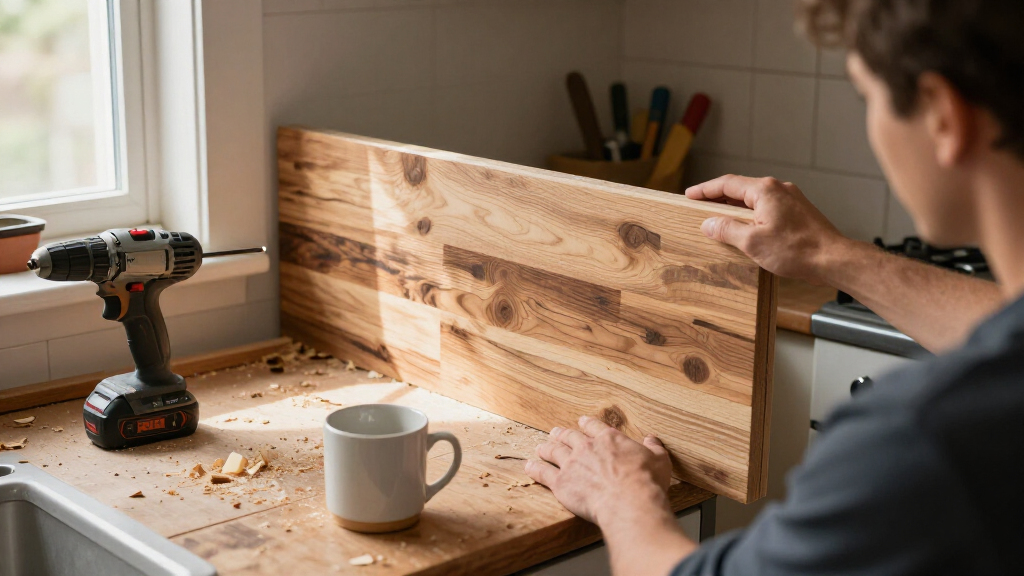
For a paper-map project, the report recommends cleaning the wall, measuring the area, and cutting a half- to three-quarter-inch plywood panel to fit, including openings for outlets. It describes adhering the map to the panel, smoothing bubbles, applying several coats of clear water-based polyurethane or polycrylic, and mounting the finished panel with construction adhesive. For peel-and-stick material, it advises pressing the surface smooth and applying a sealant. These are the source’s suggested steps, not a guarantee of performance or a substitute for following product instructions.
A Personal Look With Practical Limits
A map backsplash changes the role of the kitchen wall from a plain protective surface into a display of imagery tied to travel, geography, or family history. For renters or homeowners seeking a visual update, a paper-based treatment may also avoid some of the demolition and installation associated with tile, though the report does not establish that the approach is suitable for every wall or lease.
The main trade-off is durability. Kitchens expose backsplashes to moisture, splashes, cleaning, and heat, and Hunker says a repurposed paper map will not be as durable as a dedicated peel-and-stick product. A lower initial materials cost may not be the whole calculation if the surface needs extra protection or replacement sooner. Readers should check the manufacturer’s instructions and suitability for the location before choosing a product.
The design suggestion also illustrates a broader practical distinction: an inexpensive decorative finish is not automatically equivalent to tile as a long-lasting, easy-to-clean surface. The article describes ways to seal paper, but it supplies no comparative lifespan, water-resistance rating, or independent assessment of how the finished panel performs behind a sink or cooktop.
printed map peel and stick wallpaper
As an affiliate, we earn on qualifying purchases.
As an affiliate, we earn on qualifying purchases.
How the Map Idea Is Installed
Traditional tile usually involves placing individual pieces on a prepared wall and finishing the joints. The map method described by Hunker instead uses a large printed surface, either as a purchased adhesive mural or as paper fixed to a separate backing panel. That difference is central to the appeal: the design can be created from one image rather than assembled from many tiles.
For the homemade version, the report recommends attaching the paper to plywood rather than directly to the wall, then sealing it with multiple coats of water-based clear finish. It suggests mounting the panel with Loctite PL adhesive and says this can avoid drilling holes into the wall. That is the article’s installation guidance; adhesive compatibility, wall condition, panel weight, and the product label still matter for an actual project.
Hunker advises against shellac for this use, saying it does not hold up well in warm, moist environments such as kitchens and bathrooms. It also suggests under-cabinet LED lighting to bring out map details and recommends cleaning the finished surface with a soft towel and warm, soapy water. The report does not specify a tested sealant system or provide a maintenance schedule.
““A definite conversation starter, printed map backsplashes are an alternative to tile.””
— Hunker report
As an affiliate, we earn on qualifying purchases.
Durability and Costs Vary
The supplied report does not give a publication date, identify a tested installation, or provide independent data on how long map backsplashes last. It also does not specify the full costs of plywood, adhesive, sealant, tools, or labor, so its comparison between tile installation and low-cost peel-and-stick wallpaper should be treated as an illustrative estimate rather than a like-for-like project quote.
It remains unclear how well a particular paper, adhesive, and sealant combination will resist repeated splashes, steam, cleaning products, or heat. The report does not say whether its suggested method meets any particular building or product standard. Homeowners should verify the product’s intended use, follow its instructions, and take extra care around sinks and cooking areas; a decorative paper finish should not be assumed to provide the same protection as tile.
As an affiliate, we earn on qualifying purchases.
Check Products Before Installation
Anyone considering the project should first measure the backsplash area and compare the cost of a map mural with the complete materials list for a homemade panel. Check that the selected map, adhesive, backing, and clear finish are compatible and appropriate for a kitchen environment, and follow the manufacturers’ application and curing instructions. The report offers no follow-up testing or announced product evaluation, so performance claims remain unverified beyond the article’s guidance.
Before mounting a panel, confirm that it will fit around outlets and cabinets and that the wall can support it. Use suitable protective equipment while cutting or applying materials, and avoid blocking electrical access. If the project requires moving or modifying electrical fixtures, consult a licensed electrician rather than altering wiring as part of a decorative installation.
As an affiliate, we earn on qualifying purchases.
Key Questions
What is a map backsplash?
It is a backsplash surface decorated with printed map imagery. Hunker describes both peel-and-stick map murals and paper maps mounted on a plywood panel.
Is a map backsplash cheaper than tile?
Hunker cites a traditional tile backsplash installation estimate of $700 to $1,000 and says peel-and-stick wallpaper can cost less than $30. Those are broad figures from the report, not a project-specific quote, and they do not include every possible material or labor cost.
Will an old paper map hold up in a kitchen?
The report cautions that a repurposed map may be less durable than a dedicated peel-and-stick product. It recommends sealing the paper but supplies no independent testing or lifespan estimate, so performance in a particular kitchen is uncertain.
How does Hunker suggest installing a paper map?
The report describes gluing the map to a cut plywood panel, smoothing it, applying multiple coats of clear water-based polyurethane or polycrylic, and attaching the panel to the wall. Check material compatibility and product instructions before starting.
How should a map backsplash be cleaned?
Hunker recommends wiping it with a soft towel and warm, soapy water. The report does not provide tested guidance for harsher cleaners or repeated exposure to water and heat.
Source: rss
Halloween Picks
halloween
As an affiliate, we earn on qualifying purchases.