If your toilet keeps running, start by turning off the water supply and flushing to drain the tank. Check the flapper for damage or misalignment and replace it if needed. Adjust the fill valve so the water level stays about an inch below the overflow tube by turning the adjustment screw or bending the float arm. Gently clean inside the tank if debris is causing issues. Keep going, and you’ll discover simple steps to keep your toilet functioning perfectly.
Key Takeaways
- Turn off the water supply, drain the tank, and replace a faulty flapper to stop continuous water flow.
- Adjust the fill valve’s screw or float arm to set the water level about an inch below the overflow tube.
- Clean any debris or mineral buildup inside the fill valve and flush valve for proper operation.
- Ensure all parts are properly seated, free of obstructions, and replace worn components with basic tools.
- Regular maintenance and inspections help prevent future running issues and maintain efficient toilet function.
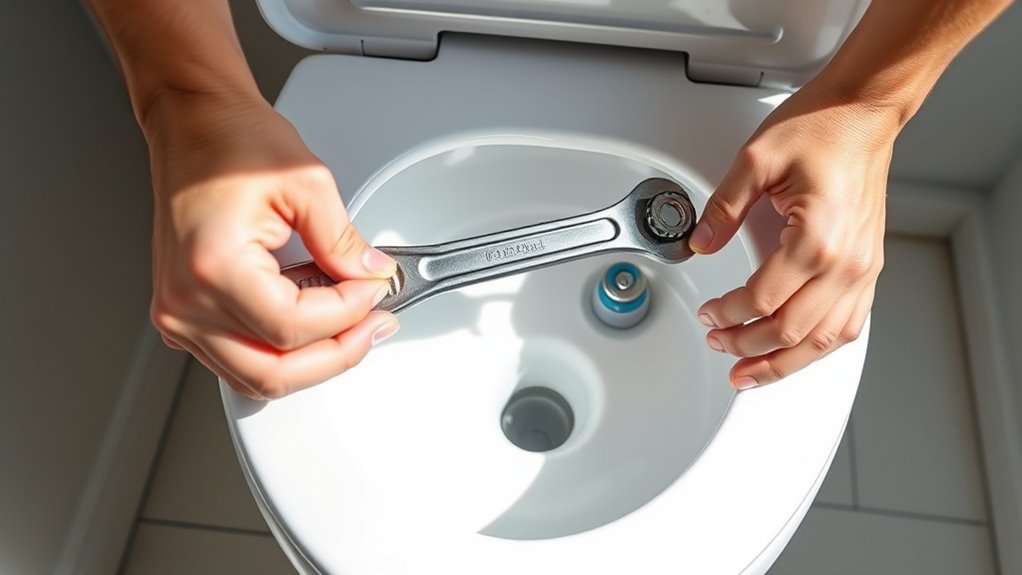
A running toilet can waste a lot of water and increase your utility bill, but fixing it is often simpler than you might think. The most common culprit is a faulty toilet flapper, which fails to create a proper seal and allows water to continuously flow from the tank into the bowl. To start, lift the tank lid and observe what’s happening when the toilet runs. If you see water constantly trickling into the bowl, it’s likely the flapper is worn or misaligned. Replacing the flapper is straightforward: turn off the water supply, drain the tank by flushing, and disconnect the old flapper from the flush valve. Install a new one, making sure it sits snugly over the opening, then turn the water back on and test the flush. If the toilet still runs, the issue might be with the fill valve, which controls the water level in the tank.
Adjusting the fill valve can often resolve the problem. Locate the fill valve, which is typically on the left side of the tank. Most modern fill valves have an adjustment screw or a float arm. If your fill valve has a screw, turn it clockwise to raise the water level or counterclockwise to lower it. If your fill valve uses a float arm, gently bend the arm downward to decrease the water level or upward to increase it. The goal is to set the water level approximately an inch below the top of the overflow tube. When you’ve made the adjustment, turn the water supply back on, let the tank fill, and observe if the running stops. It might take a few tweaks to get it just right.
Sometimes, the problem isn’t with the flapper or the fill valve, but with debris or mineral buildup inside the tank components. If adjusting the fill valve doesn’t work, turn off the water again and flush the tank to clear out any obstructions. Clean the parts carefully before reassembling. Remember, most of these repairs require only basic tools like pliers, a screwdriver, and a replacement flapper, which you can find at any hardware store. With a little patience, you can fix your running toilet yourself, saving water and money. Regular maintenance, like checking the flapper and adjusting the fill valve when needed, can prevent future problems and keep your toilet running smoothly. Additionally, preventative maintenance can extend the life of your toilet components and ensure efficient operation over time.
Frequently Asked Questions
How Often Should I Check My Toilet for Leaks?
You should check your toilet for leaks at least once a month through leak detection. Regular inspections help catch any silent leaks early, saving water and reducing your bills. Keep an eye on the water level and listen for hissing sounds, which can indicate a leak. Consistent leak detection promotes water conservation and prevents costly repairs, ensuring your toilet functions efficiently without wasting water.
Can I Fix a Running Toilet Without Professional Help?
Yes, you can fix a running toilet yourself. Start by inspecting the toilet tank components, especially the flapper, which often causes running. If it’s worn or damaged, replace the flapper with a new one. Turn off the water supply, drain the tank, and install the new flapper. This simple DIY repair often solves the problem without needing professional help, saving you time and money.
What Tools Are Necessary for Basic Toilet Repairs?
Did you know that a leaky toilet can waste up to 200 gallons of water daily? To fix it yourself, gather essential plumbing tools like a wrench, screwdriver, and pliers, along with repair supplies such as a new flapper or fill valve. These basic tools and supplies will help you efficiently tackle common toilet repairs, saving you time, money, and water without needing professional help.
How Long Does a Typical DIY Toilet Repair Take?
A typical DIY toilet repair takes about 30 minutes to an hour, depending on your familiarity with the process. You’ll likely replace the toilet flapper or adjust the fill valve, which are quick fixes. If you have the right tools and follow instructions carefully, you can usually complete the repair efficiently. Be patient, and you’ll have your toilet running smoothly again in no time.
Are There Preventive Measures to Avoid Future Running Toilets?
Think of your toilet as a trusted friend who needs regular check-ins. To prevent future running, you should perform preventive maintenance, like inspecting the flapper and fill valve for wear. Leak prevention becomes easier when you clean and replace worn parts promptly. Additionally, avoid using harsh chemicals that can damage components. Regularly checking your toilet’s inner workings helps catch issues early, saving you time, money, and headaches down the line.
Conclusion
Remember, fixing a running toilet is often simple and cost-effective if you stay calm and follow these steps. It’s worth noting that many plumbing issues, like a running toilet, are caused by minor faults that can be easily fixed with basic tools. Don’t assume you need to call a professional immediately—sometimes, a little investigation and DIY effort can save you time and money. Trust your ability to troubleshoot; you might just discover a quick solution!