
To successfully paint your kitchen cabinets, you’ll need high-quality brushes, rollers, and foam brushes for smooth coverage, along with painter’s tape, drop cloths, and sanding tools for prep. Start by thoroughly cleaning and sanding the surfaces, then apply a primer for a perfect base. Use long, even strokes and multiple thin coats for a flawless finish. For more tips on achieving a professional look, keep going—you’ll learn the best techniques and tricks.
Key Takeaways
- Gather high-quality brushes, rollers, foam brushes, and painter’s tape suited for cabinetry and furniture.
- Properly prepare surfaces by cleaning, sanding, and applying primer for adhesion and smoothness.
- Use long, even strokes and multiple thin coats for a professional, durable finish.
- Select the appropriate paint finish (high-gloss, satin, matte) based on desired look and durability.
- Protect surrounding areas with drop cloths and tape to ensure a clean, professional-looking makeover.
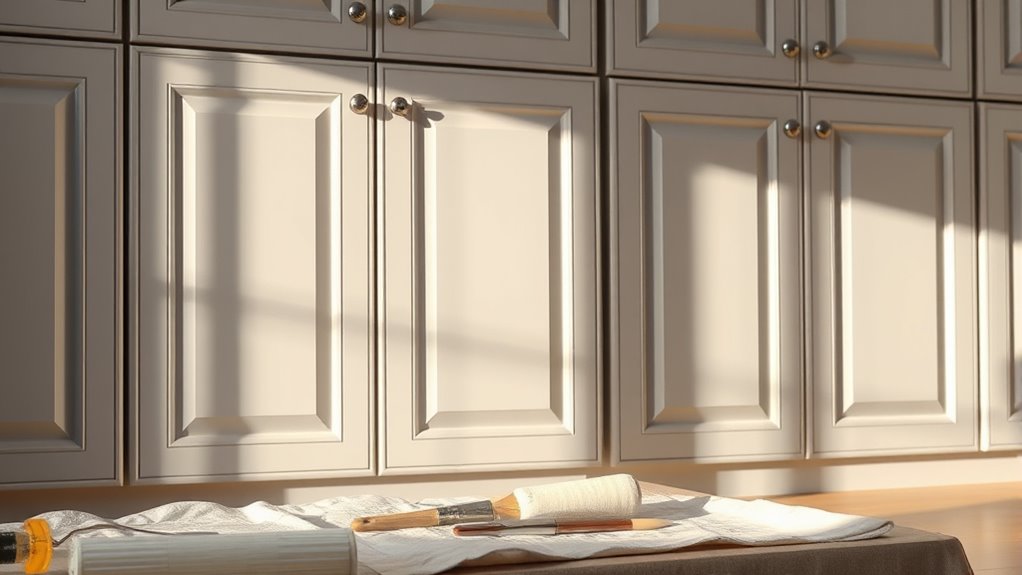
Are you considering giving your kitchen a fresh new look? If so, painting your cabinets can be a fantastic way to transform the space without a full overhaul. Before you start, it’s essential to plan your approach carefully. First, think about your desired aesthetic and choose a suitable color palette. Do you want a crisp, modern white, a bold navy, or a soft pastel? Your choice of color will set the tone for the entire kitchen. Once you’ve selected your colors, consider how different paint finishes will impact the overall look and durability. For example, a high-gloss finish offers a shiny, reflective surface that makes colors pop and is easy to clean, making it ideal for a busy kitchen. Satin or semi-gloss finishes also work well, providing a subtle sheen that balances durability with a softer appearance. Matte finishes, while stylish, tend to hide imperfections but may require more frequent touch-ups.
Choosing the right tools is just as important as picking your colors. You’ll need high-quality brushes and rollers designed for cabinetry and furniture. Foam brushes work well for smooth, even coverage, especially on flat surfaces, while a small, angled brush helps reach corners and detailed edges. For larger areas like cabinet doors, a roller with a medium nap can speed up the process while maintaining a smooth finish. Don’t forget painter’s tape to shield adjacent surfaces and a drop cloth to protect your countertops and flooring. Sanding tools are also necessary to prep your cabinets properly—lightly sanding between coats ensures better paint adhesion and a more professional look.
Before applying paint, thoroughly clean and sand your cabinets to remove grease, dirt, and old finish flaking. Use a degreaser or mild detergent, then sand with fine-grit paper to smooth the surface. This step is vital because it helps the paint stick better and prevents peeling later on. Primer is another key element; it creates a uniform base and enhances the adhesion of your chosen paint. Apply the primer evenly, let it dry completely, then lightly sand again if needed. When it’s time to paint, use long, even strokes, and work systematically to cover all surfaces. Multiple thin coats will give you a more polished look than one thick layer, so patience is key.
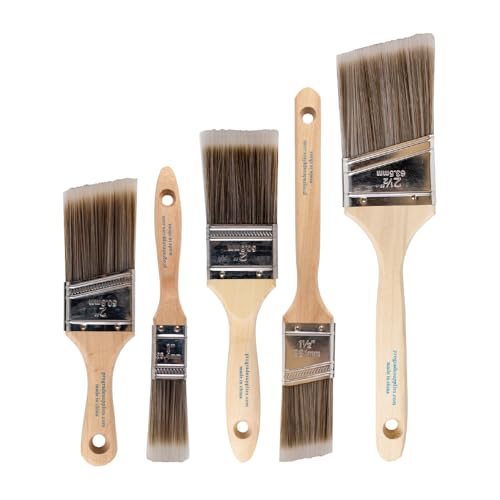
Pro Grade Paint Brushes, 5-Piece Paint Brush Set, Flat & Angle Brushes for Walls, Trim, Cabinets, Interior & Exterior Latex and Oil Paints, Stains
COMPLETE 5-PIECE BRUSH SET FOR EVERY PAINTING TASK — Includes 1 Inch Flat, 1.5 Inch Angle, 2 Inch…
As an affiliate, we earn on qualifying purchases.
As an affiliate, we earn on qualifying purchases.
Frequently Asked Questions
How Long Does a Typical Kitchen Cabinet Painting Project Take?
A typical kitchen cabinet painting project takes about 3 to 5 days, depending on your project planning and drying time. You’ll need to allow for proper drying between coats, which usually takes 4-6 hours, and longer if humidity is high. By organizing your work efficiently and scheduling enough drying time, you’ll complete your makeover without rushing, ensuring a smooth, professional-looking finish.
What Are the Best Eco-Friendly Paint Options for Cabinets?
Imagine transforming your kitchen with vibrant, eco-friendly paints that breathe life into your cabinets while caring for the planet. You’ll love choosing eco-friendly paints, which are low in VOCs and free from harsh chemicals, ensuring a healthier space. Opt for natural finishes like milk paint or plant-based options, so your cabinets shine with sustainable beauty. These choices make your DIY project both stylish and environmentally responsible.
Can I Paint Over Existing Stained or Lacquered Cabinets?
Yes, you can paint over stained or lacquered cabinets if you prep properly. Start with thorough cabinet prep by cleaning, sanding, and applying a deglosser or primer to guarantee good adhesion. Then, choose the right paint selection—preferably a high-quality, durable paint designed for cabinetry. By following these steps, your new coat will adhere well and look professional, giving your cabinets a fresh, updated look.
How Do I Prevent Paint Chipping or Peeling Over Time?
To prevent paint chipping or peeling over time, focus on proper surface preparation and paint adhesion. Clean your cabinets thoroughly, remove any grease or old finish, and lightly sand the surface to ensure good grip. Use a high-quality primer suited for your material, then apply your paint evenly. This preparation creates a strong bond, reducing the risk of peeling and guaranteeing your cabinet makeover lasts longer.
What Are the Costs Associated With a Professional Cabinet Painting Service?
The cost estimates for a professional cabinet painting service typically range from $1,200 to $4,000, depending on cabinet size, material, and complexity. You should include budget planning for labor, materials, and any repairs needed. Keep in mind that investing in quality paints and skilled painters guarantees a durable, high-quality finish that can save you money long-term by reducing the need for future touch-ups or re-painting.

4 Rolls Premium Painters Tape, Blue Tape, Masking Tape, Paint Tape for Multi-Purpose, Painting, Painter's, DIY Crafts Arts (88yd =0.94IN*22yd*4) Decoration Labeling No Residue, Easy Removal
Professional Mask Tape – Multi-Surface adhesive tape made of high quality blue crepe paper not easy to lift…
As an affiliate, we earn on qualifying purchases.
As an affiliate, we earn on qualifying purchases.
Conclusion
By now, you’re well-equipped to transform your kitchen with a fresh coat of paint. Remember, a well-painted cabinet isn’t just a surface—it’s a reflection of your effort and style. Like a blank canvas waiting for your masterpiece, your cabinets hold the potential for a stunning makeover. So pick up your tools, embrace the process, and let your creativity shine through. After all, the true magic happens when you turn everyday spaces into extraordinary places.

Mister Rui 4 Inch Foam Paint Roller Kit, 8 Pack – Mini Roller Set with 4” Small Roller Covers, Frame, Tray & Liner for Smooth Painting on Walls, Trim, Furniture, Home DIY Projects
Complete 4" Mini Paint Roller Kit: This all-in-one professional painting kit includes (5) high-density foam roller covers, a…
As an affiliate, we earn on qualifying purchases.
As an affiliate, we earn on qualifying purchases.

YNZDRWA 8 Pack Sanding Sponge, Washable and Reusable Sanding Blocks for Drywall Wood Metal Furniture, 60/80/120/220 Grit Sandpaper Block Assortment
【ASSORTED GRIT SANDING BLOCKS】Includes 8 sanding blocks in 4 grits, from coarse to superfine specifications in 60/80/120/180/220 grit,…
As an affiliate, we earn on qualifying purchases.
As an affiliate, we earn on qualifying purchases.